Bedroom Trends 2026: Layered Textures, Organic Shapes and a Room That Gives You Energy
Bedroom Trends 2026: Layered Textures, Organic Shapes and a Room That Gives You Energy
The big change of the year isn't a new colour or a fashionable bed shape. It's a change in the very attitude to the bedroom. In 2026 it stops being a "suite" bought as one set and forgotten, and becomes the most personal room in the home — the one meant to relax you, inspire you and restore your energy. That's where all the bedroom trends 2026 come from: the bedroom now tells your story, reflects your habits and sets a mood, rather than simply "looking nice".

Interior design — Insha Design Studio
So the main move is away from grey and beige "all-one-tone" rooms towards a space with character. Uniformity gives way to layered textures and organic shapes, the warmth of natural materials and a mood you want to feel every evening. This is a big guide to every layer of the on-trend bedroom — from the core shift to the specific pieces that embody it, and to what's on its way out this year.
The core shift: a bedroom with a mood, not a suite
For a few years bedrooms were made "safe": grey and beige tones, matching furniture from a single set, nothing extra — and nothing of your own. In 2026 that approach is fading. Instead of "picking a set", a room is assembled the way you build a favourite playlist: from pieces that mean something and have different texture and character. Designers say it plainly — a bedroom should reflect the person who lives in it, not a catalogue page.

Interior design — Ptaha ID
In practice it works through three things. First — mood: the room is designed from a feeling (relaxation, inspiration, recovery) rather than from a "style off a picture". Second — habits: a place to read, morning coffee, a self-care corner become part of the plan. Third — energy: a warm palette, soft light and tactile surfaces literally affect how you wake up and fall asleep. With these three anchors, the room stops being just "a place to sleep" and becomes a space you want to come back to. And one more thing: personality now matters more than perfection — a favourite painting, an inherited chest or ceramics from a trip do more than a flawlessly matched set.
Layered textures instead of colour
The main tool of the new bedroom isn't colour but layered textures. The idea is simple: take a muted, almost monochrome palette and "bring it to life" with the touch of different materials. Matte linen next to coarse wool, smooth wood next to weaving, ceramics next to boucle — the eye reads such a room as rich and warm even though there's little colour in it. That's the depth plain grey interiors never gave.
It works in textiles too. Bedding in 2026 is layers: dense linen underneath, a soft coverlet, a knitted throw, several cushions in different weaves. One designer trick is tone-on-tone but with different textures: when everything sits in one palette yet each piece feels different to the touch, the bed looks expensive and cosy at once. The dosing rule is simple: take three or four textures and repeat them around the room rather than piling everything on at once. For an "anchor" to the whole natural palette, choose something with a living surface — for instance, a wooden bed with open texture, from which all the other touches radiate.
Rattan and weaving: the season's key natural texture
Rattan in the bedroom is the very texture that's easiest to start layering with. It's back not as a nod to boho but as a way to add air and "handmade" warmth to a room: weaving catches the light, casts a soft shadow and instantly softens strict furniture. There's plenty of room for it in a bedroom — a woven headboard, a bench at the foot of the bed, the fronts of nightstands and chests, a floor-lamp or pendant shade, light storage baskets.

Interior design — Insha Design Studio
A few practical nuances make the difference. First, dosing: one or two woven "spots" in a room and it already breathes, but weave everything and the space starts to look like a basket. Second, the material: natural rattan is happiest in a dry bedroom and doesn't like years of direct sun, whereas dense machine weaving is easier to care for — a soft vacuum attachment and a damp cloth are enough. Third, pairing: rattan sounds most beautiful next to warm wood, linen and clay ceramics — exactly the natural company the year dictates. And one more thing: over time natural weaving doesn't "age", it gains character, so it's an investment for the long run.
Organic shapes and a statement bed
Organic shapes are the year's second pillar. Sharp corners and strict rectangles give way to curves: softly bowed headboards, oval mirrors, rounded nightstands, sculptural lines. The reason isn't only aesthetic — flowing shapes physically calm you, which is exactly why they suit a room designed "for relaxation". A rounded headboard easily becomes a "quiet" piece of art and the main accent of the bedroom.

Interior design — Yana Molodykh
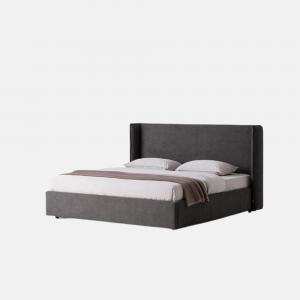
Alongside this comes the idea of a statement bed as the room's lead character. It can be a soft headboard in a rich colour or texture, a sculptural arch, or a slim canopy-style frame — light, graphic, adding height. The logic is one: if the bed is the statement, keep everything around it restrained so the accent rings out, and it's enough to echo the colour in a few cushions and a throw. A tall frame almost always asks for a bench at the foot to balance the verticals. The easiest way to build that focus is to start with a selection of beds and add a headboard with character.
Balancing modern and classic
2026 doesn't make you choose between minimalism and classic — it reconciles them. Modern geometry beside restrained joinery, a minimalist frame beside soft textiles. So it doesn't look accidental, the mix has rules: keep roughly a 70/30 proportion (one language leads, the other accents), repeat at least one shared material or metal finish, and keep a single colour temperature so the pieces "talk" to each other.

Interior design — Olga Naida
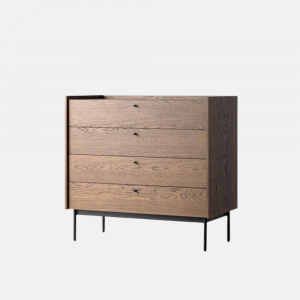
Classic joinery is having a renaissance — but now as a design decision, not "grandma's wardrobe". A neat chest of drawers with good hardware settles the storage question and doubles as a standalone accent: place it under a painting or a mirror and the corner already reads as "put together". Such a piece also adds story to the room — especially if it's an item with character rather than a faceless "goes-with-anything" unit. That's the bridge between modern and classic that holds the bedroom together.
Colour and pattern on the walls: careful eclecticism
As the "all white and grey" era fades, the wall behind the headboard regains its right to character. Eclecticism, but controlled: coloured paint, panelling, a delicate pattern or even a mural make this zone the main accent. A few working techniques — colour-drenching (walls, ceiling and doors in one muted tone, a cocoon of a room), an accent only on the height of the headboard (a painted or panelled zone "seats" the bed in place), a fine pattern instead of a large print (adds depth without tiring you before sleep).

Interior design — Arkush Bureau
The year's palette is earthy, "scraped-back" shades: terracotta, clay, olive, burnt ochre, warm chocolate. They're warm, deep and surprisingly calming, unlike cold grey. One rule: if the wall speaks "loudly", keep the furniture around it restrained so there's no visual noise. And vice versa — if the furniture is expressive, leave the wall as a calm backdrop.
The bedroom as a "room within a room": architectural wardrobes and a lounge zone
Since the bedroom now reflects your habits, a lounge zone appears in it: an armchair under a floor lamp, a bench at the foot of the bed, a little island for reading and morning coffee. In a spacious room such an island also saves you from a sense of emptiness — a "room within a room" makes a large bedroom cosy rather than a "hall". Even in a modest room an armchair and a slim table are enough to create a separate "scenario" for the evening.
In parallel — a renaissance of built-in wardrobes: the neat system no longer hides but works as part of the architecture; the season's key trick is to paint the front the wall colour so the wardrobe "dissolves" into the room, while sculptural hardware and textured inserts give it character. In practice it looks like this: a wardrobe hides all the storage behind a clean front, a bench at the foot of the bed adds both seating and a finished look (and a model with a chest inside also holds spare pillows and throws), while a soft armchair in the corner with a floor lamp and a small table turns the bedroom into a place you want to spend time, not just sleep.
Japandi and Balinese notes: warm quiet
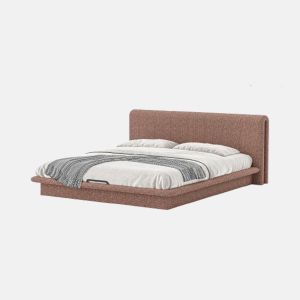
Japandi remains one of the strongest directions — and in 2026 it's firmly about warmth, not cold minimalism. The principle is simple: every object has a reason to be here. Low platform beds (they lower the eye line and "raise" the ceiling), a muted earthy palette, plenty of "air" and a play of textures within one palette — matte wood, coarse ceramics, linen, a little paper. Little colour, yet the room is interesting to "read" through touch — the same layered-texture principle, taken to an ascetic extreme.

Interior design — Insha Design Studio
Alongside come Balinese notes and their materials — teak, rattan, natural stone, handwork. Bali is a feeling of sanctuary: natural textures, greenery and objects made by hand rather than by a conveyor. Teak here is no accident: thanks to its natural oils it resists moisture and ages beautifully, so such furniture lasts for decades. Both directions work best on natural wood with a living texture, while one or two ceramic pieces and a live plant complete the mood. Add soft diffused light — and the room really does start to "breathe more slowly".
Modern Provence without the kitsch
Modern Provence is Provence with the excess removed. No overload of florals or fake "distressing": what remains is a soft natural palette (bleached linen, sage, dusty lavender, warm ochre), natural fabrics instead of gloss and a little wrought iron or rattan, but in moderation. The modern version keeps the same tenderness yet breathes with space rather than being cluttered with trinkets — this is Provence for someone who loves calm, not a museum.

Interior design — Insha Design Studio
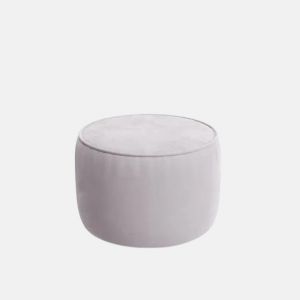
Provence reveals itself best in the details. A light dressing table by the window, a mirror in a slim frame, and beside it a soft pouf matching the textiles: a small zone that sets the whole mood of the room. It's exactly these scenes that make a bedroom feel "alive" rather than just a place to sleep.
The bedside zone: a nightstand on one side, a table on the other
One of the year's most interesting micro-trends is dropping the obligatory symmetry beside the bed. Instead of two identical nightstands, designers deliberately place a nightstand on one side and a bedside table on the other. It doesn't look chaotic but intentional, "like real life". By the way, symmetry hasn't gone anywhere: two identical nightstands remain the basis of calm minimalism — and that's exactly what gives you the "freedom" to be bolder with the bedding pattern.

Side table Pecherytsia
To keep the mix from falling apart, follow a few rules. The most important is height: the top of the nightstand and the table should sit roughly level with the mattress (give or take a few centimetres) so it's easy to reach a lamp or a glass of water. Next — a common denominator: colour, metal finish, wood species or a texture that echoes across. And a bit of function: on one side a nightstand with drawers to hide chargers and medicines, on the other a light table for a lamp and a book. Then nightstands and lighter bedside tables read as a pair even while different: the nightstand gives you somewhere to tuck things away, the table gives lightness.
Tile-top tables and "light" side tables
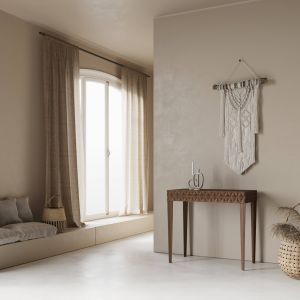
A separate love of the season is the tile-top table. A ceramic or terracotta top, sometimes zellige-style with its handmade imperfection, brings texture and character into the bedroom while easily surviving a cup of coffee, hand cream or a drop of perfume: the tile just wipes clean. It's a small piece that holds attention and adds the handcrafted feel gloss so often lacks.

Interior design — Insha Design Studio
And for those who want to "lighten" the design — simple but interestingly shaped tables on slim legs. Metal, glass, travertine or thin wood: they don't take up air, move easily and work both instead of a nightstand and as an extra surface beside an armchair. Take a look at tile-top tables for a textured accent and at graphic side tables where you want lightness rather than bulk.
Modern Ukrainian style: weaving and local craft
One of the warmest trends is betting on the local. Ukraine has its own long school of weaving, and today's makers bring it back into the bedroom in the language of design: woven headboards, light frames, shades and benches in which you can see the author's hand rather than a mass run. It's the same "living imperfection" prized in Bali and japandi, only born here — and, unlike imports, such a piece has its own story and supports our makers.

Such pieces don't argue with a style — they warm it up. A woven accent saves even the most minimal bedroom from a "showroom" feel, and over the years the natural material only gains character. It's exactly the year's core idea: choosing things that mean something rather than "just to fill space". If you want to add that warmth, take a look at the woven furniture of the Pleteno collection — it holds both a modern and an ethnic context well.
Light as the finishing touch
Light in the on-trend bedroom of 2026 works in layers: soft general light from above, warm local light by the bed and one sculptural accent noticed at once. The chandelier is no longer just a light source — it's a decoration; a woven, wooden or paper shade supports the room's natural story and itself becomes an organic shape under the ceiling.

Interior design — Yana Molodykh
A few pointers that are easy to miss yet define the mood. A warm bulb temperature (around 2700K) makes an evening bedroom cosy rather than "office-like". Light on a dimmer lets you soften it before sleep — that works directly on the room's "energy". And a wall light or pendant over each nightstand frees up the surface and gives separate reading light, so you won't need the overhead. Choosing a shape that becomes the accent is easy among bedroom chandeliers.
What's going out of style in 2026
Trends aren't only about what to add but also about what to let go. This year a few familiar choices are leaving the game. The "all-matching" furniture suite — bed, two nightstands, chest and bench from one set — now reads as a catalogue rather than a living home. Total grey and "safe" beige are going too: cold uniformity gives way to warm earthy tones and layered textures. "Bare" minimalism with not a single texture tires the eye — a room without materiality feels uninviting. Also on the way out: a single overhead light for the whole bedroom, tiny decorative nightstands you can't put anything on, and over-"themed" decor where a style is followed too literally. A simple filter: if a decision is about "showing a style" rather than "living here", it's already dating.
How to build an on-trend 2026 bedroom, step by step
You don't have to take every trend at once — it's enough to move from the main thing. First decide what mood the room should give (calm, inspiration, recovery) — that answer will define everything else. Next choose the lead piece: a bed with an expressive or organic headboard, from which the whole composition flows. Third — layer three or four textures instead of bright colour (wood, linen, wool, weaving, ceramics) and set the character with a wall in an earthy tone. Fourth — carve out a corner for a lounge zone around your habits: a reading armchair, a dressing table, a bench. Fifth — assemble the bedside zone asymmetrically, keeping the nightstand and table at the same height. And finally — light in layers (general, local, accent) and one or two handmade pieces that make the room yours. If you want it all in one place, it's convenient to start with a selection of bedroom furniture and move from the lead piece to the details.

Chest Beaded
Frequently asked questions
What are the main bedroom trends in 2026?
The main one is a move away from grey and beige matching suites towards a room with a mood: layered textures instead of bright colour, organic shapes, a warm earthy palette. The bedroom now reflects your habits and gives energy, while the styles (japandi, Bali, modern Provence) and pieces are just ways to make that happen.
Why are grey and beige bedrooms going out of style?
A single-tone "safe" palette looks flat and impersonal. It's being replaced by a warm palette with layered textures — wood, linen, wool, weaving, ceramics: little colour, but far more depth and cosiness.
What is layering textures in simple terms?
It's combining different materials within a restrained palette: matte linen, coarse wool, smooth wood, weaving, ceramics. The eye reads such a room as rich and warm even without bright colours. Three or four textures repeated around the room are enough.
Is rattan in the bedroom outdated?
No, quite the opposite — it's the season's key natural texture. In 2026 rattan and weaving add tactility and warmth to a room: a headboard, a bench, nightstand fronts, a shade. The key is to dose it: one or two woven accents on natural wood, not "everything woven at once".
Do bedside nightstands have to match?
Not anymore. Both a symmetrical option and a deliberate mix work — a nightstand on one side and a bedside table on the other. The key is to keep the tops of both roughly level with the mattress and a common denominator in colour or material.
What table can go by the bed besides a nightstand?
A light bedside or side table on slim legs, and for an accent — a tile-top table: it adds texture and isn't afraid of moisture or stains.