Interior paintings

When a wall looks as though it has nothing to say, it is time for paintings for interiors. Choose a piece you cannot stop looking at and let the room finally speak in your voice.
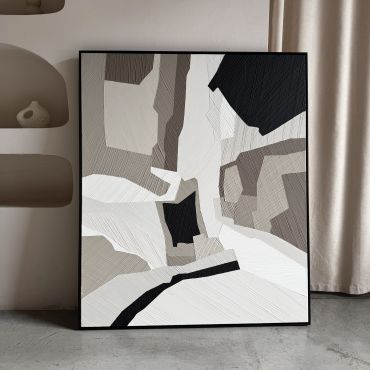

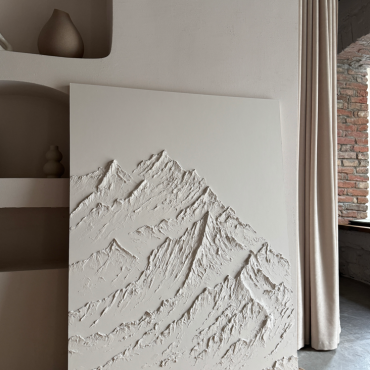
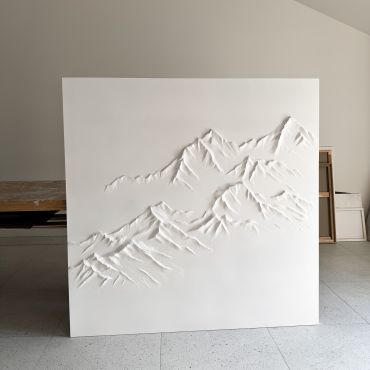
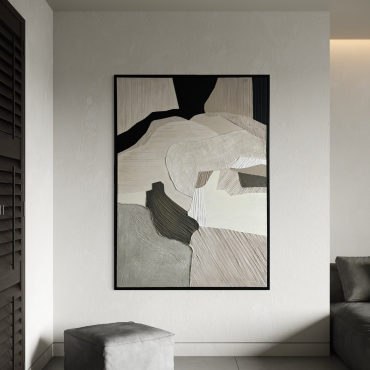


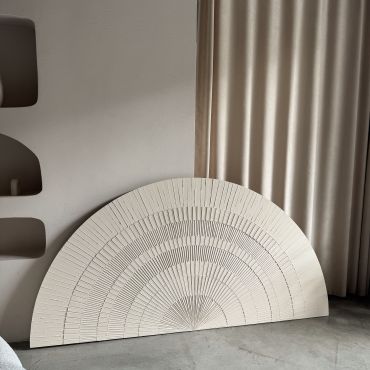
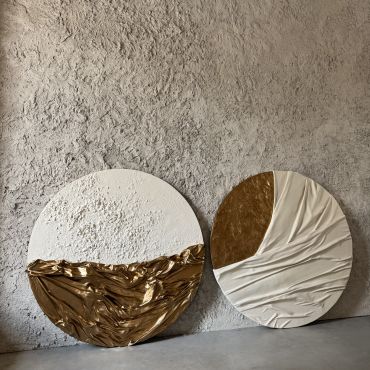
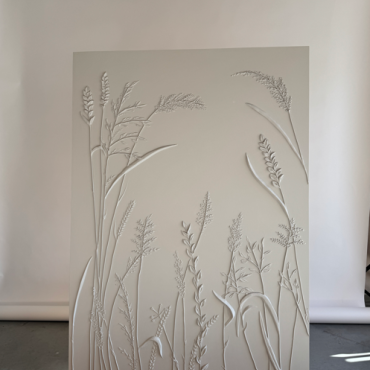
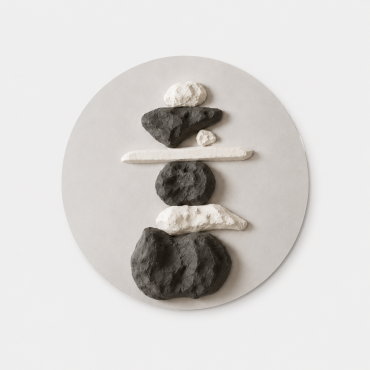




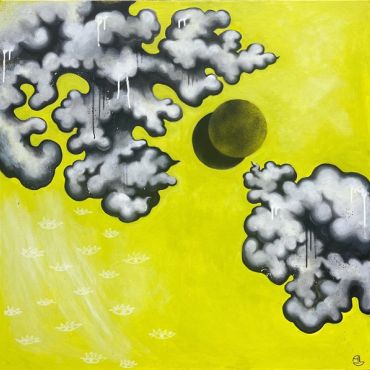
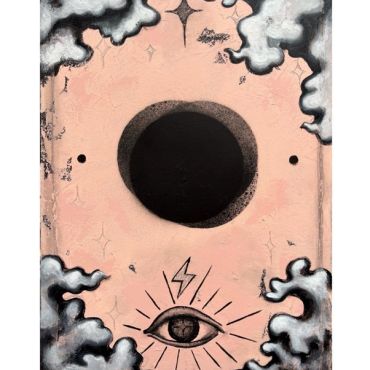
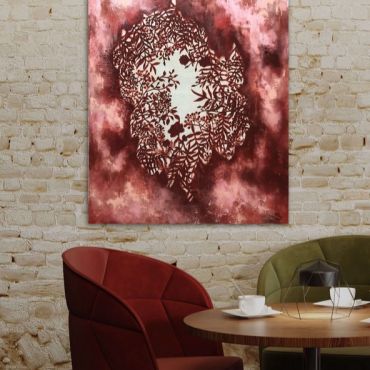
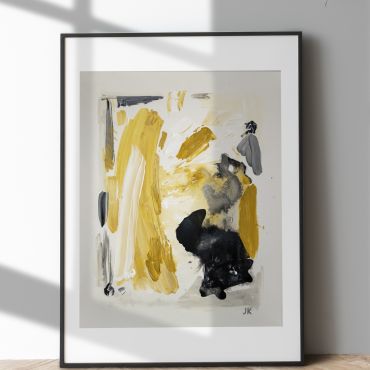
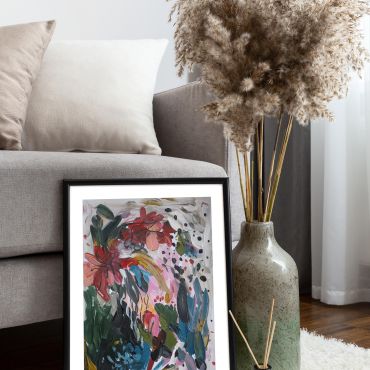
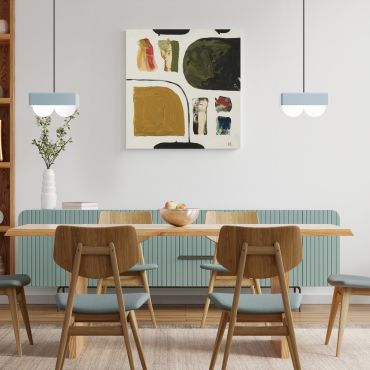
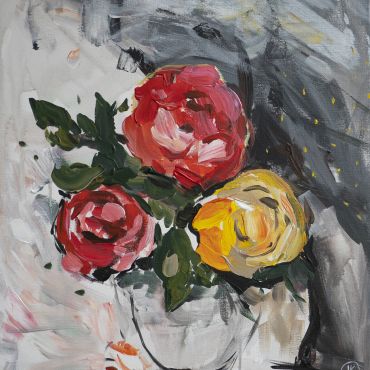
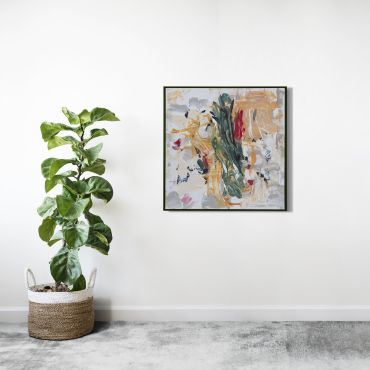


Paintings for interiors with character
Paintings for interiors change a room faster than a new wall color or a major rearrangement. The canvas gathers furniture, light and textiles around it, sets the mood and explains who lives here. Sometimes one well-chosen piece is enough to make a neutral space stop looking random.
Good paintings for interiors are not selected according to the principle "this shade matches the sofa". Color is important, but composition, scale, brushstroke energy, and personal response are just as important.
We see in practice: the desire to buy paintings for interiors often begins with an empty wall, and the right decision — with a life scenario. Where will you see the canvas for the first time in the morning? From what distance will you watch in the evening? Should it calm, hold focus or create a strong accent?
Modern paintings for interiors can be quiet and almost monochrome, sharp and contrasting, subject or abstract. There is no universal formula.
What makes a painting work in an interior
A painting for an interior takes space into account, but does not become its submissive accessory. It has its own composition, materiality and character, and the room gives it context.
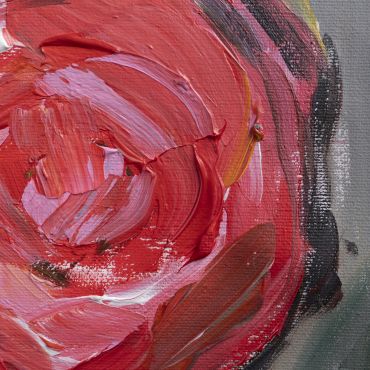
Physical presence is important for an original painting. A real brushstroke, an uneven edge of paint, a visible texture of a canvas or a hand-drawn line changes with the light.
Paintings by Ukrainian artists matter for their distinct artistic voices, not for origin alone. The MAIIMO edit moves between restrained abstraction, expressive colour, delicate graphic work and recognisable subjects.
Not every decorative item should be the main thing. One painting in the interior can hold the whole composition, while the other works quietly, supporting the materials and the rhythm. Define the role in advance.
The most honest test for a painting for an interior is simple: imagine the work without the current sofa, vase or cushions. If you only like it because of an exact colour match, the connection will be fragile.
How to choose the right painting size
Painting size determines whether the work will have the necessary presence. A small canvas on a wide, empty wall often looks lost, even if it looks great up close. Too much can put pressure on the furniture and leave not enough air. Here, a few centimeters really change the balance.
Before buying a painting for an interior, mark its outline with masking tape or sheets of paper. Look at the layout from the entrance, from the sofa and from the next room.
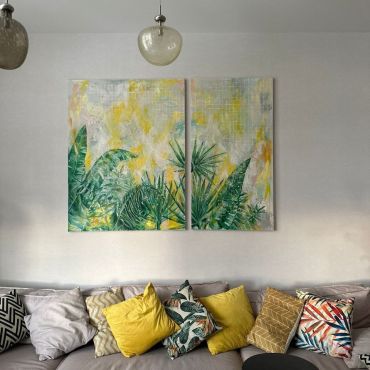
A wall painting above a sofa usually looks better when its width is proportional to the furniture, not the entire wall. It is not necessary to catch a mathematically perfect share.
If the room is spacious, explore the selection of large paintings. A large format reads clearly from several metres away, holds its own beside substantial furniture and can replace a cluster of small decorative objects.
In a narrow space, a vertical painting is appropriate, which maintains the height and does not constrict the passage. A horizontal format often works above a chest of drawers or a headboard. The square holds a separate section of the wall well.
Proportion, hanging height and space around the artwork
Painting proportions should rhyme with the wall or deliberately oppose it. A tall, narrow opening supports the vertical, the long wall adopts a horizontal composition.
The center of the wall painting should be better aligned with eye level in a real scenario. In the corridor you look while standing, in the living room you often sit, near the stairs you move. One universal height does not account for these differences. First attach the layout, then drill.
The distance between the furniture and the painting for an interior should create a connection. If the canvas hangs over the sofa too high, the items are read separately. If it is lowered close, the backrest visually presses it down and the risk of accidental contact increases. Leave a gap that looks like part of the composition, not a void.
For a group of several works, first define a common outer outline. A composition of paintings has its own width, height and center of gravity. Lay out the elements on the floor, photograph it, transfer the markup to paper. Improvisation with the first nail often ends up with extra holes.
The air around original painting is not needed for the sake of minimalism. It gives the eye a place to stop and see the whole composition. If there is a tall plant, a shelf or an active curtain nearby, check them in the joint frame. The edge of the canvas should not accidentally merge with other verticals.
Painting colours and the room palette
Painting colour can support the interior, create a contrast or introduce a shade that is not found anywhere else. All three approaches are normal. The weakest option is to mechanically collect the colors of the sofa, curtains and carpet on the canvas, without thinking about the work itself. Then art becomes a table of coincidences.
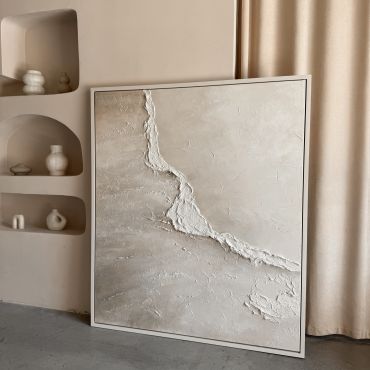
Neutral paintings are not necessarily quiet. White, black, earth and gray tones can have a strong rhythm, deep relief or sharp graphics.
A bright contemporary painting works well as a single color solution. It is not necessary to repeat every tone of it in pillows and vases. One delicate feedback or none at all is enough.
Compare the painting colours in daylight and evening light. A warm lamp enhances ochres, reds and beiges, while a cooler light can make blues and grays sharper.
Beside bold upholstery or patterned textiles, a painting for an interior needs visual breathing room. A broad calm field, simpler composition or limited palette can provide it. When viewing rugs, consider them together with the painting: two strong rhythms in one zone need a clear relationship.
Which painting format to choose
Painting format affects how the eye moves along the wall. The rectangle sets the direction, the square focuses attention, the circle softens the hard geometry. Several pieces create rhythm, and one large work gives the space a clear center. The choice depends on the architecture and the number of neighboring objects.
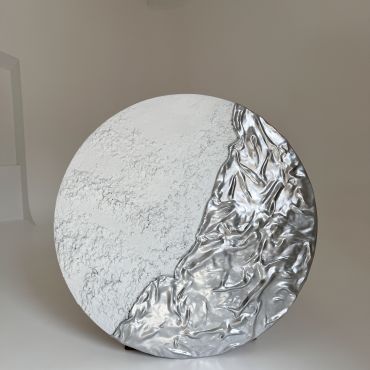
If the room lacks a soft line, look at round paintings. A circle works well with arched passages, rounded chairs, a round table or mirror, but does not have to repeat every curve literally. One expressive rhyme is usually enough.
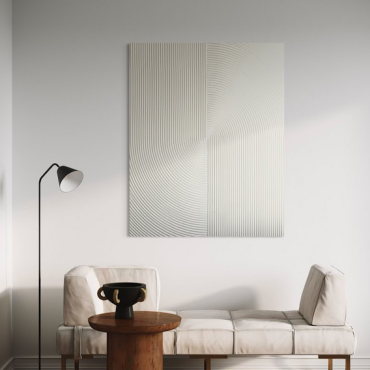
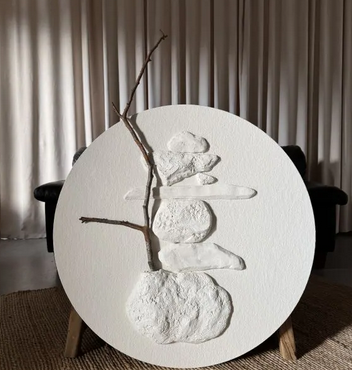
When surface and shadow are important, a separate category of textured paintings will help narrow down the selection. The relief reacts to side light, changes during the day and adds materiality even to a restrained palette.
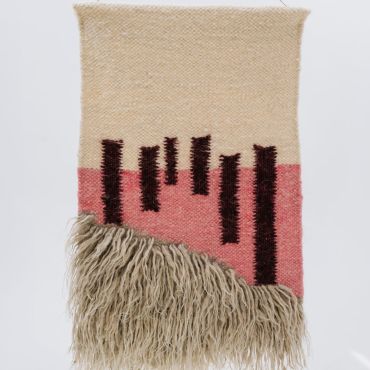
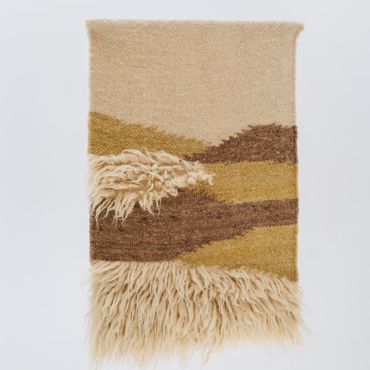
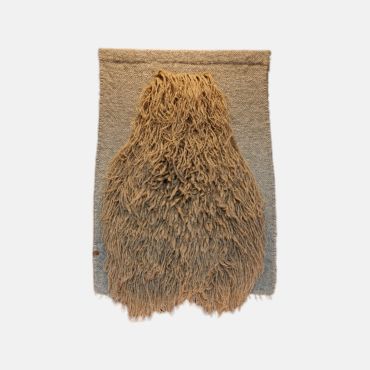
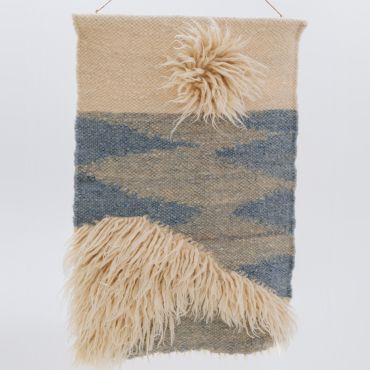
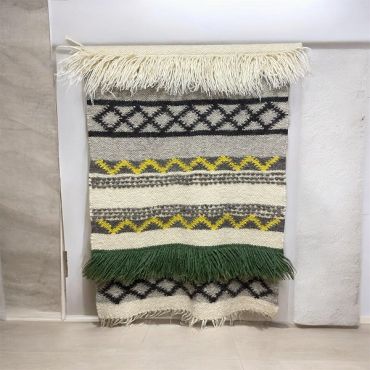
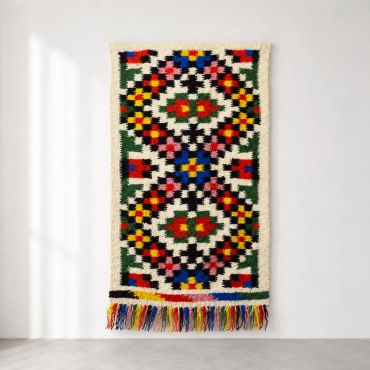
If a painting feels too narrative and the wall needs a more tactile object, consider decorative wall panels. Textile, wool and other textured materials bring the composition closer to three-dimensional decor.
For a diptych or triptych, not only the sum of dimensions is important. Modular composition lives by the spaces between the parts, and they change the overall scale. Lay out the entire group with precise intervals before installation.
Art for the living room, bedroom and workspace
Living room art can be seen from different points: from the entrance, from the sofa, at the dining table. Here it is important to check the long distance and how the canvas behaves next to the TV, shelf or fireplace. Strong work can become a focal point, but it needs a wall without random competition.
A painting above the sofa needs to hold its own against the furniture’s long horizontal line. One large work creates a calmer composition; several smaller works add rhythm. The lighting selection can help you consider different light scenarios.
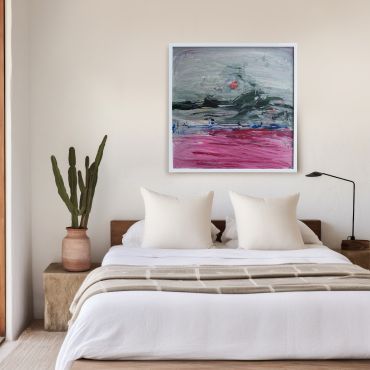
Bedroom art do not have to be pastel, but their rhythm should be appreciated at the moment of rest. Work opposite the bed greets you in the morning, above the headboard more often forms a general background.
In the office, a painting can maintain concentration or give the eye a short break. Too small detail is distracting if the canvas is constantly in the field of view.
In an entrance hall, a wall painting is usually seen in motion. A clear silhouette, readable colour and a format that does not project into the walkway work well here. Leave enough distance beside a wall mirror: the two objects should form a composition rather than compete for one focal point.
Paintings for different interior styles
Paintings in minimalism can be bolder than the space itself. Clean architecture can withstand high contrast, active gesture and deep color. If the furniture is already sculptural, choose a more restrained work with an expressive surface. Minimalism does not require an empty white wall.
For the Scandinavian style, paintings often work through a light palette, graphics, natural motifs and human scale. But a too literal "northern" selection quickly becomes a decoration.
In the loft, the painting must withstand rough brick, concrete, metal and a high ceiling. It can be a large canvas, a dense color or a graphic composition.
Modern style easily accepts various original painting, so the connection with the forms of furniture becomes the main thing. A rounded sofa supports the smooth movement of the composition, a thin metal table - clear graphics, warm wood - complex natural shades. Do not copy the form verbatim; look for a common rhythm.
For japandi, a artwork at home can rest on an uneven line, a natural palette, a noticeable hand gesture and quiet asymmetry. Sterile smoothness is less convincing here than a material with a slight imperfection.
Mid-century modern loves paintings for interiors with strong geometry, warm complex colors and confident scale. Mustard, terracotta, olive or deep blue can support the wood and the characteristic silhouettes of the furniture.
Eclecticism gives artworks in a space the most freedom and at the same time requires discipline. Old and new, graphics and painting, different frames can live together if there is a common scale, color or rhythm of placement. A random number of things does not become eclectic just because of courage.
In a soft modern interior, modern paintings interact well with bouclé, rounded furniture, light stone and warm wood. Blurred transitions, plastic lines and a tactile surface work here. To keep the space from becoming too sweet, add a graphic or dark accent.
Materials, techniques and framing
Painting on canvas can be done in oil, acrylic or mixed media. Oil often gives depth of color and a long transition time, acrylic dries faster and is easy to build up in layers. But technique alone does not determine quality: design, execution and correctly specified materials are important.
In oil painting the surface can remain smooth or have a pronounced brush stroke. Acrylic can also be thin, dense, matte or shiny. Do not make a conclusion based on the name of the paint.
Mixed media can combine paint, modelling paste, metal leaf, textiles or other materials. Weight, surface sensitivity and care instructions are especially important for this kind of work.
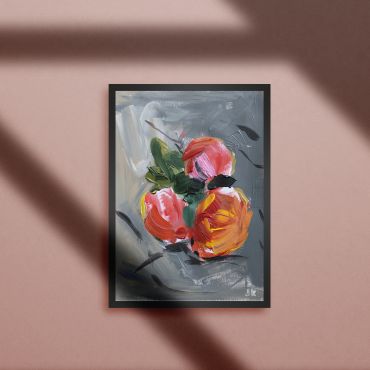
The frame around a painting for an interior need not match the furniture. A slim black profile adds definition, natural wood adds warmth, and a pale frame softens the edge against the wall.
Before ordering, please check if the original painting is stretched on a stretcher, has a ready mount, and its actual weight and depth. These details affect installation and the view from the side.
How to assess and buy original paintings online
To buy original paintings online without disappointment, start with accurate dimensions and multiple image types. A frontal shot without perspective distortion, a close-up of the surface, a the view from the side and a scale photo are required. One beautiful interior shot is not enough for a decision.
Ask for a video where the painting for an interior is shot from different angles. This is how you can see the shine, relief, color change and the edge of the canvas.
Before buying a painting for an interior, check the artist, title, technique, materials, size, year, completeness and condition. Confirm whether it is an original, an artist-approved reproduction, a print or a commissioned work. These terms are not interchangeable and describe objects with different values.
The color of the painting shown online depends on the shooting and the screen. Compare photos on your phone and laptop, turn off excessively warm display mode, ask for a shot in daylight. If the exact shade is critical, please let us know before purchasing. The promise of complete coincidence with the screen would be dishonest.
Specify the terms of packaging and delivery of original painting. A large canvas needs corner and surface protection, textured work needs a space without contact with the relief.
Common mistakes when choosing a painting
The most common mistake is to choose an painting for an interior only by color. Matching the pillow gives a quick sense of correctness, but does not guarantee that the composition will withstand daily glances. First evaluate the work itself, then its scale, and only then compare the palette.
The second mistake is to buy too small wall decor because of the fear of large format. A small canvas is not always safer: it may require additional frames, shelves and objects so that the wall does not look empty. One sure format is often simpler than a complex gallery.
The third mistake is to hang a painting above the furniture without a layout. Even the correct size can be ruined by height or off center. Mark the contour, move away, photograph it, live with the marking for a day. It is cheaper and quieter than moving the fasteners after installation.
Another trap is to try to repeat all the colors of the room in paintings for interiors. This makes the composition predictable. Give art the right to bring a new tone, a different energy or a pause. The interior looks more mature when not every item explains the next one.
And finally, do not order an original painting with changes that contradict its composition. To increase the format, change the palette and rearrange the main element is to create a different work. Customization has limits. A good result begins with trust in the author and a clear brief.
Care, lighting and safe installation
Care for a painting depends on its materials and finish. Most artworks prefer a dry room, stable temperature and protection from prolonged direct sunlight. Do not use household sprays or a damp cloth unless the artist recommends it. Even a clear cleaning product can alter the surface gloss or colour.
Remove dust from a painting on canvas very gently, and only when the technique allows it. Textured areas, metal leaf and unprotected pigment are sensitive to friction.
Lighting for a painting should show the work, not create a glare in the center. The side beam emphasizes the relief, the frontal beam conveys color more evenly.
Mounting a painting on a wall is determined by its weight, format, type of fastening and base material. Drywall, concrete and brick require different solutions. Don't just rely on the one-size-fits-all packaging statement of the fastener.
Once every few months, inspect the original painting from the side: whether the fastening has loosened, whether the tension of the canvas has changed, whether there are any traces of moisture. A small problem is easier to solve at the beginning.
Paintings in small and large spaces
Paintings for interiors in a small room do not have to be small. One canvas of medium or large format often makes the space more peaceful than a dozen small objects. It creates a clear center and does not crush the wall.
In a studio apartment, a painting can mark a functional zone without a partition. A horizontal work gathers a seating group; a vertical work suits a desk or narrow wall. Do not centre the canvas on the wall by default. It often makes more sense to align it with the furniture you actually use.
Distance is important for a small room. A very detailed painting wants to be viewed up close, while a large contrasting composition may require several meters. Stand at the main point of view and check whether the eye has time to see the work in its entirety. If not, try a calmer composition or a different format.
In a spacious living room, paintings for interiors should withstand a high ceiling, wide aisles and large furniture. Here, small work needs a thoughtful group or an expressive frame. One large painting usually reads more confidently, but leave room for the ceiling and corners. Scale does not mean to fill every free centimeter.
In the open layout, the canvas is visible simultaneously with the kitchen, dining room and lounge area. Check how its color behaves next to facades, chairs and lamps, but do not try to combine all areas with one set of shades. The painting can set the direction without repeating the entire interior literally.
The price of an original painting and its practical value
The price of an original painting depends on the artist, format, technique, materials, complexity, frame and whether it is a finished work or a commission. Comparing canvas area alone is misleading.
When you plan to buy paintings for interiors, compare the same set. Check if the subframe, outer frame, mounts, packaging and shipping are included. A lower price without these elements may not be complete. The final specification should describe exactly the work you have seen and agreed to.
The practical value of a painting is not measured like storage or lighting. It shapes how the room feels every day, holds the composition together and remains relevant when smaller details change.
An original painting should not be bought only as a promise of future value growth. Without special expertise, such motivation easily turns into speculation.
Before paying, check the information about original artwork, terms of transfer, care and review. If a different format or palette is ordered, fix the change limits in writing. A good purchase does not need to be rushed.
Keep the photo and name of the painting in the specification, not just a verbal description. This is especially useful when an author has a series with similar titles or multiple formats of the same composition. The document must match the size, orientation, technique, frame and final cost. Such precision removes awkward assumptions on both sides.
If the budget is limited, don't reduce the canvas automatically to a format that gets lost on the wall. It is better to change the place, consider another work of the author or postpone the purchase. A failed scale does not become a successful one because of a lower price.
Commissioned art and working with an interior designer
Commissioned painting is justified when you need a specific format that is difficult to find ready-made, or when you already feel the language of a certain author. This is not a way to mechanically copy someone else's work in a different color. A strong order leaves the artist room for his own decision.
The specification for an commissioned original painting should include the size of the wall, the desired format, photos of the space in daylight and evening light, important limitations and a few references from the artist himself. It is better to describe the feeling and role of the work than to demand an exact repetition of all the colors of the room.
Before starting an commissioned painting, agree on the technique, basis, dimensions, orientation, palette, frame, terms, cost and number of stages of agreement. Separately specify what can be changed after the sketch. Paint and hand texture doesn't work as a graphic file with infinite edits.
An interior designer helps you see a painting in the interior alongside furniture, light and sightlines. The final emotional response is still yours. Do not choose a work simply because it matches the project palette perfectly. You will live with the artwork longer than the presentation lasts.
For a commercial space, custom paintings can support the scale, identity and character of a place without a direct logo. Wear resistance, safe installation and how the work looks in the frame and live are important here. A series of several canvases often provides a more flexible solution for a long wall.
Why buy original paintings at MAIIMO
At MAIIMO, we select paintings for interiors as complete works, not quick decoration for an empty wall. We look for an artist’s distinct voice, material presence, confident scale and a natural relationship with contemporary Ukrainian furniture and lighting.
The category contains paintings by Ukrainian artists with different techniques, formats and mood. We are not trying to reduce them to one style.
Before buying a painting from MAIIMO, you can specify the actual size, technique, texture, configuration and available options. If the photos do not convey the surface, ask for an additional video.
We help to correlate paintings for interiors with the real viewing distance, lighting and scale of the room. Such advice does not replace your taste.
A successful original painting does not ask to change the whole house for its sake. It enters the space and makes it more precise.
Frequently asked questions
How do you choose a painting for an interior?
Choosing a painting for an interior is easier when you first define its role, the wall size, the main sightlines and the mood you want. Mark the outline on the wall, check it from several positions, then assess the composition, colour and technique.
What size painting works above a sofa?
The size of the painting above the sofa should correspond to the width of the furniture and leave air on the sides. Instead of a universal formula, make a paper model on a real scale. Check it out from the entrance and from a seated position.
How high should you hang a painting?
Hanging a painting on the wall should account for eye level in that particular room. In a corridor you usually look while standing; in a living room, mostly while seated.
How do you match painting colours to an interior?
You can match a painting’s colours to an interior through harmony, contrast or a new accent. There is no need to repeat every shade in the room. Choose one connection with the furniture or textiles, or let the canvas be the only bright point. Check how it behaves in daylight and evening light.
What art works well in a living room?
Living room art should be read from several points and correspond to the scale of the main furniture. For a wide wall, a large canvas or a collected group is suitable, for an active interior - a calmer composition.
What painting should you choose for a bedroom?
A painting for the bedroom should be chosen according to the feeling with which it is comfortable to wake up and end the day. Peace does not always mean a beige palette: rhythm, contrast and personal reaction are important.
How is an original painting different from a print?
The original painting has an original physical surface created by the artist: stroke, line, relief and material nuances. A print reproduces an image by printing and can be a quality decorative solution, but it is a different type of object.
Can you buy original paintings online?
You can buy paintings for interiors online after checking the dimensions, mounting details, condition and real appearance of the surface. Ask for frontal photos, close-ups, angled videos, and zoom shots.
How do you care for a painting on canvas?
Care for a painting on canvas should follow the technique and the artist’s recommendations. Protect the work from prolonged direct sunlight, moisture, sudden temperature changes and household products. Remove dust only with a method that is safe for the surface. Texture, metal leaf and unprotected pigment must not be rubbed with a damp cloth.
Where can you buy paintings by Ukrainian artists?
You can buy paintings for interiors by Ukrainian artists at MAIIMO. The category brings together original works for different spaces, and our team can clarify the technique, size, texture and relationship with your interior.