Extending Table Mechanisms: Pull-Out, Butterfly and Removable Leaves
- Extending Table Mechanisms: Pull-Out, Butterfly and Removable Leaves — How to Choose
- The pull-out mechanism — when the table glides on runners
- The butterfly leaf — when the panel lives inside
- Removable leaves — when the table grows to two metres
- Which mechanism is right for you
- Frequently asked questions
Extending Table Mechanisms: Pull-Out, Butterfly and Removable Leaves — How to Choose
When we buy an extending table, we usually look at the top: the colour, the shape, the species of wood. Yet the most important part hides underneath — in the mechanism. It's what decides whether the table opens with one easy hand, or turns into a Saturday wrestle with a heavy top for two.
So it's worth understanding in advance. Extending table mechanisms come in three main types, and each has its own character: one glides on metal runners, another hides the leaf inside, the third asks for somewhere to store the panels. Here's how they differ — with real examples.
The pull-out mechanism — when the table glides on runners
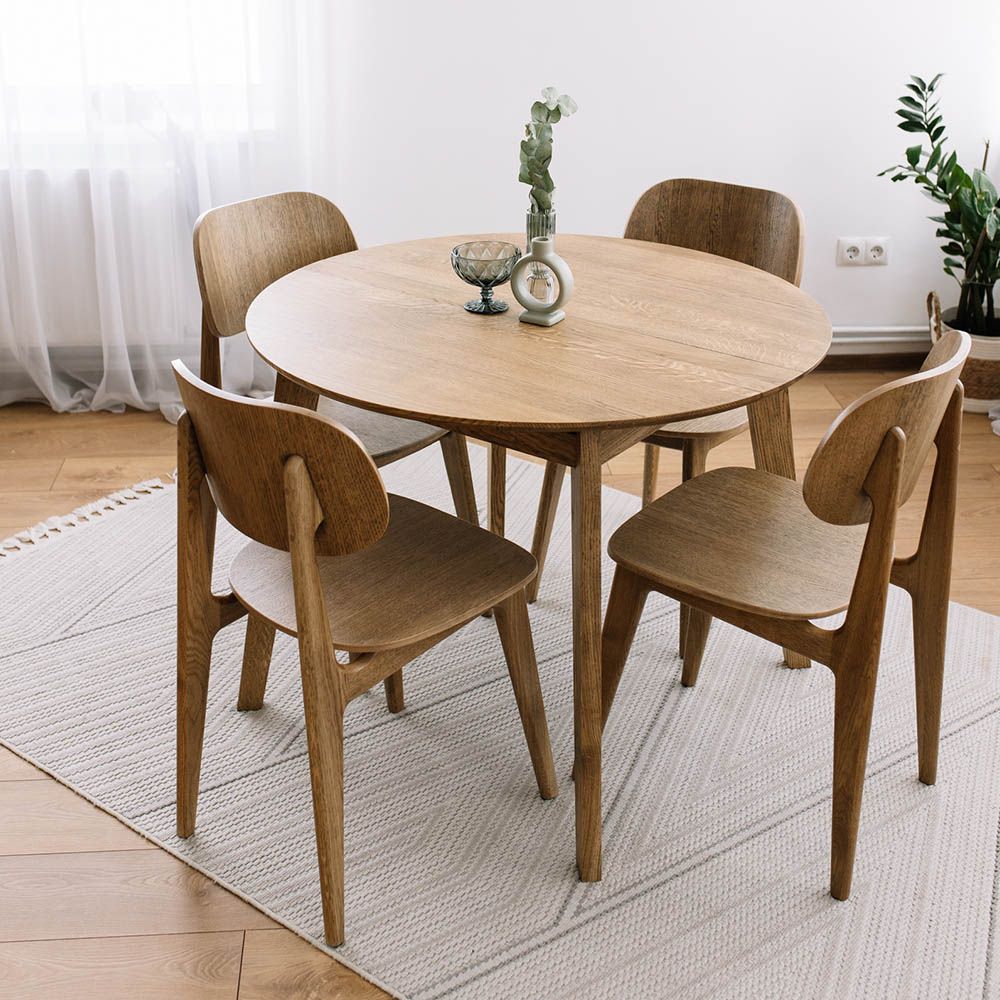
The most common type. A pull-out mechanism works simply: the two halves of the top slide apart on metal runners, and an extra leaf drops into the gap that opens up. Good runners — on ball bearings — move smoothly and quietly, without jerks and without needing two people to pull.
This is exactly how Eclipse works: with its 60 cm leaf it grows from 130 to 190 cm — from everyday dinners to a table for a big crowd. Closed, it stays clean and spare, with all the hardware tucked neatly under the top. The difference between a cheap and a good mechanism shows at once: the first drags and starts to sag in the middle over time, the second slides open with one hand for years.
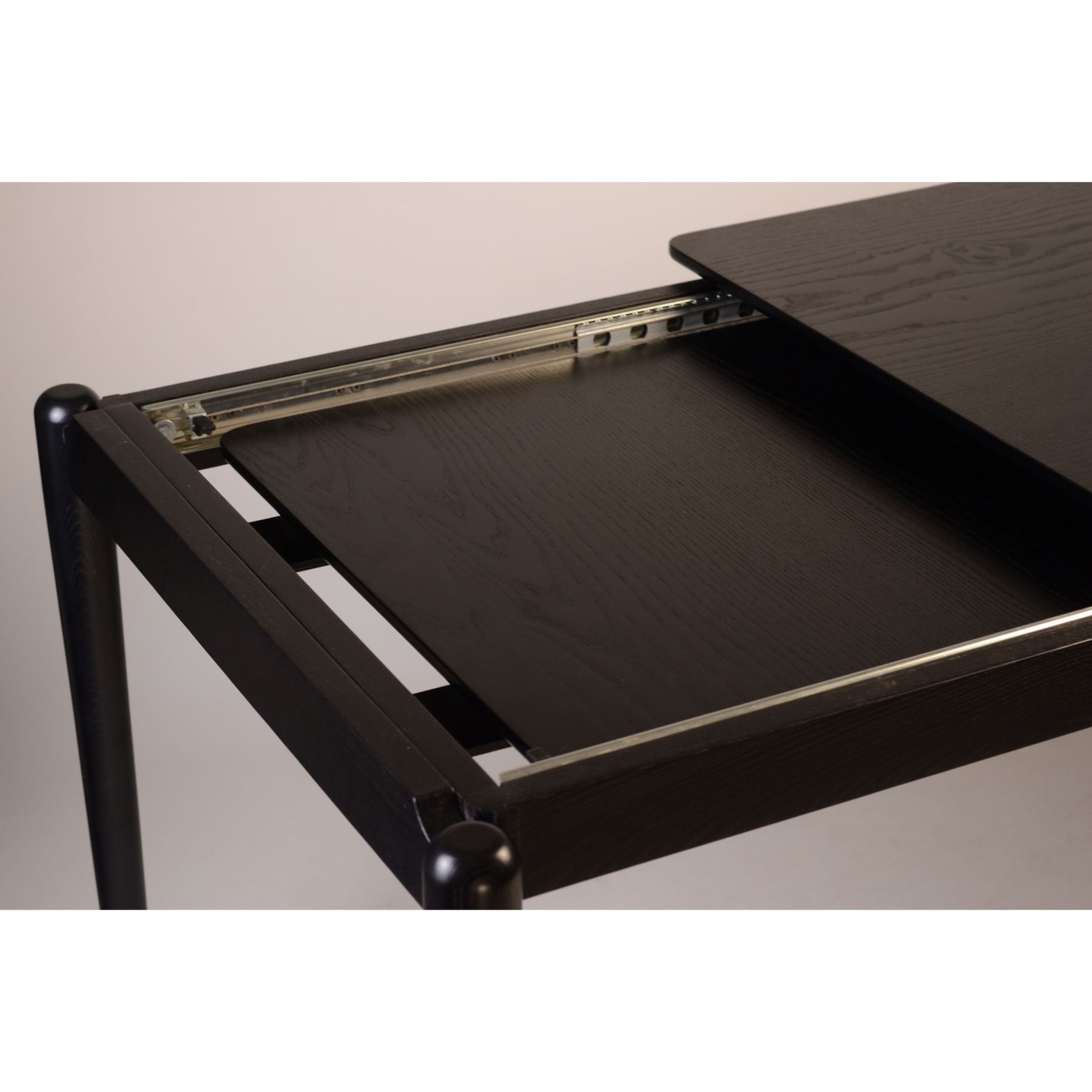
Underneath it looks like this: a pair of steel rails along which the top moves like a drawer. The better the metal and the more precisely the parts are fitted, the longer the table runs without play or misalignment. This "hardware" deserves as close a look as the wood itself, because it's the part that wears first.
The butterfly leaf — when the panel lives inside
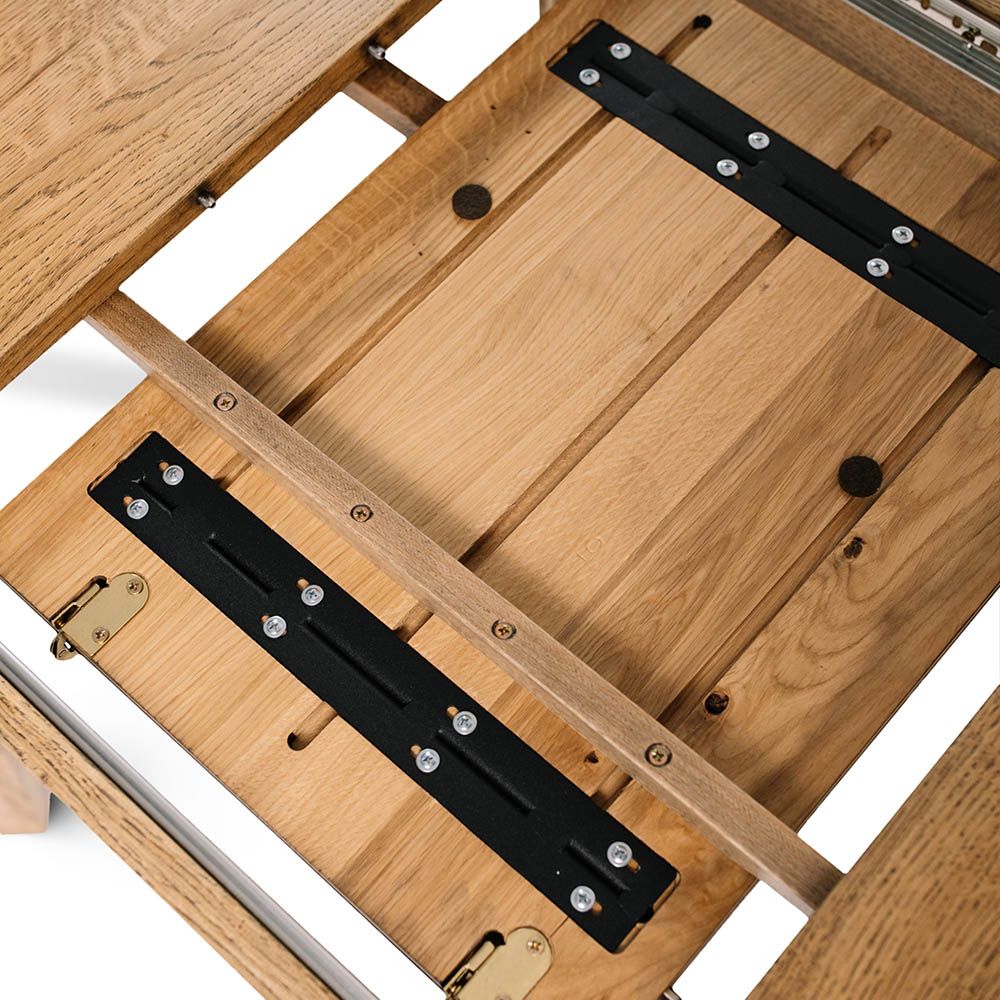
An elegant solution for those who don't want to keep a separate leaf in a cupboard. In the butterfly mechanism the extra folding leaf is built into the table itself: you slide the halves apart, and a panel folded in half rises from under the top and opens like a wing. Nothing to fetch and nowhere to store it — it's all inside.
This is how SPACE works — a round extendable table 100 cm across that opens to about 128 cm and turns from a circle into an oval. The ceramic HPL top fears neither heat nor moisture, and the leaf waits for its moment beneath the surface, so closed the table looks solid, without a hint of "transformer". For small kitchens it's nearly ideal: a circle has no sharp corners and takes up the least room day to day, yet adds just enough for guests to seat another two or three.

Removable leaves — when the table grows to two metres
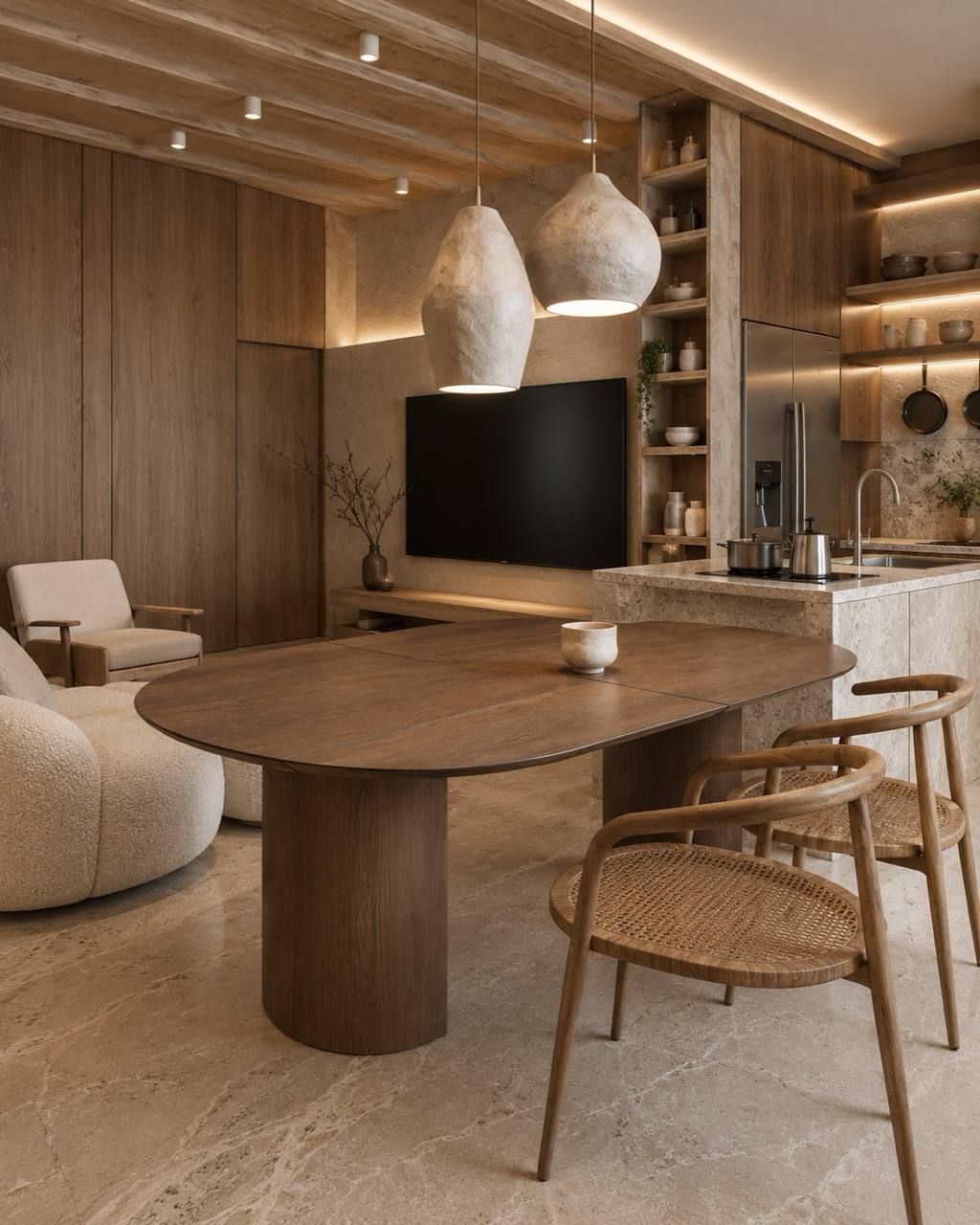
The classic for big gatherings. Here the table slides apart and you add one or several removable leaves in the middle, stored separately. The logic is simple: the more leaves, the longer the table — you can reach almost banquet length. The trade-off is honest too: the leaves need somewhere to wait for their party — a mezzanine, a cupboard or a niche nearby. But the gain in length is the greatest here, and it's exactly this table that saves the day when twenty people gather once a year.
KOLO is precisely about that: a round table on rounded column legs that, thanks to removable leaves, stretches to almost two metres and turns from an intimate circle into an oval for a large company. Natural oak or a tinted black — and either way it's one of those wooden tables that only grow more interesting with the years.
Which mechanism is right for you
Choose by your own scenario, not by how "clever" the mechanism looks. If you extend the table often — take a pull-out on quality runners: it's the fastest in daily life. If you value a clean look and don't want to store a leaf separately — the butterfly with its built-in insert is your choice. And if you extend the table rarely but "all the way" — removable leaves give the biggest gain in length.
One more thing that's easy to miss: check the table in its opened state — for stability, and for whether the central support gets in the way of your knee. All the current models with different mechanisms are gathered in the extending tables category — there you can see how the type of extension pairs with shape, size and material. And if you're only starting to narrow things down, look wider, at the dining tables section.
Frequently asked questions
Which extending table mechanism is the most reliable?
Reliability depends less on the type than on the quality of the runners and hardware. The simplest and most repairable is the pull-out on metal runners; the butterfly is handier in daily use because the leaf never gets lost; removable leaves give the most length but need storage space.
Can you extend the table on your own, without help?
Yes, if the mechanism is good. Pull-out runners on bearings and the butterfly are designed for one hand. It's harder with heavy removable leaves — there two people are sometimes more comfortable.
Does a round table really become oval?
Yes. Both the butterfly and removable leaves add length through the centre, so the circle turns into an oval — room for a few more people, without extra centimetres in everyday use.


