Chest of drawers: what height, width and how many drawers
- Chest of drawers: what height, width and how many drawers to choose for your things
- Height: 80 cm is universal, taller is for accumulation
- Width: narrow for a passage or wide as an accent
- Depth of 40–50 cm — and it's what decides capacity
- How many drawers — and for what exactly
- How to size it for the room
- Questions that come up most often
Chest of drawers: what height, width and how many drawers to choose for your things
A chest of drawers is easy to pick with your eyes — by texture, colour, silhouette. Then it arrives, and it turns out: it won't fit the passage, the drawers hit the bed, and there's still nowhere to put your things. So before falling for the looks, it's worth honestly counting the centimetres. Let's work out how to choose a chest of drawers by size — so it holds everything you need and doesn't eat the room.
Three numbers decide almost everything: height, width and depth. And one more — the number of drawers — determines whether the chest becomes real storage or just a pretty surface. Let's go through each.

Height: 80 cm is universal, taller is for accumulation
A classic chest is about 75–90 cm tall, roughly at waist height. That's no accident: at this height it's comfortable both to pull out drawers and to use the top as a surface — for a lamp, a box, a mirror. If the chest stands by the bed as a bedside piece, go by the mattress height: the top slightly above it, and everything's within reach.

When you have a lot of things but little free floor, the tall format comes in — a highboy: the same width but more tiers of drawers going up. It takes less floor and holds noticeably more. One rule only: the taller the chest, the more important to fix it to the wall — a tall, loaded piece shouldn't have a chance to tip.
Width: narrow for a passage or wide as an accent
Width is a trade-off between capacity and free space. A narrow, small chest (60–90 cm) saves a hallway and tight rooms: it fits the passage, doesn't block the path, and still gives volume and a spot for decor up top.
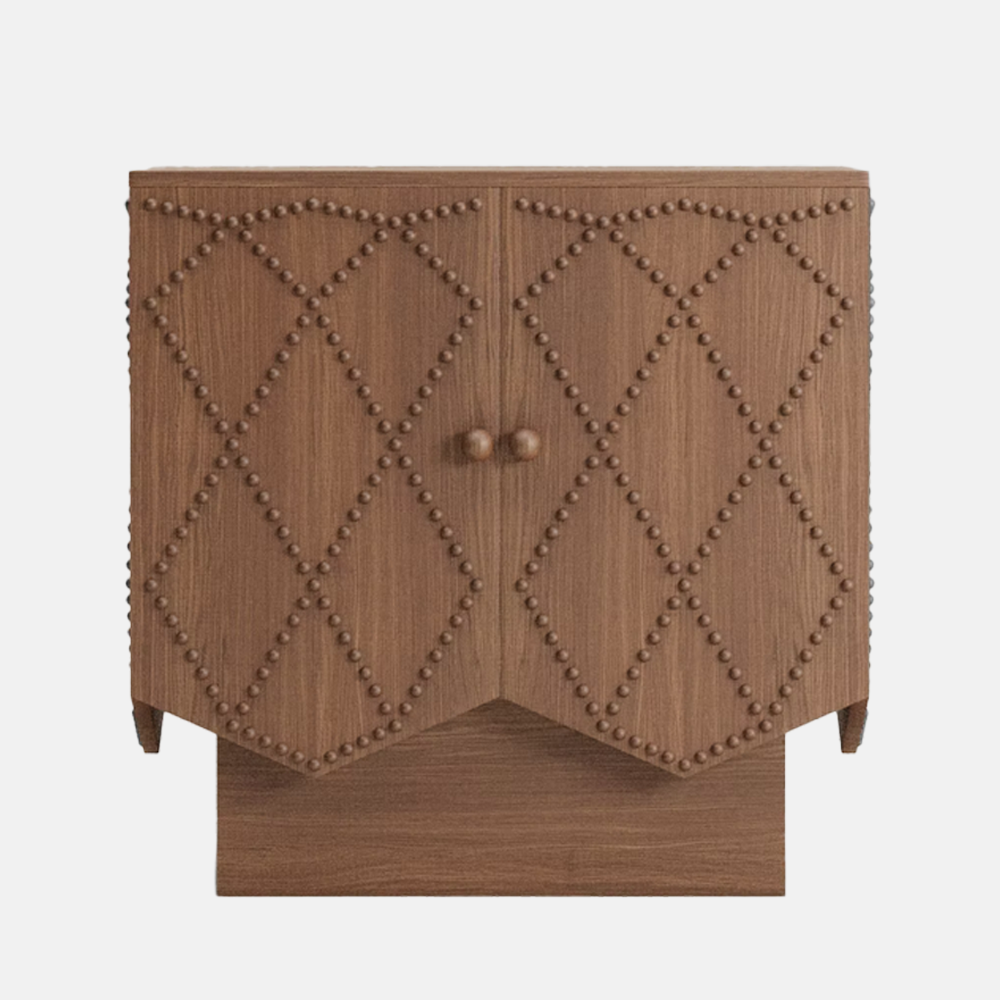
A wide one (120 cm and more) works differently — it becomes a wall accent, a long top for a composition, and at the same time the most capacious option. In a living room it's the wide chest that best takes on the role of main storage: electronics, documents and small things hide behind the front, and the room stays composed.
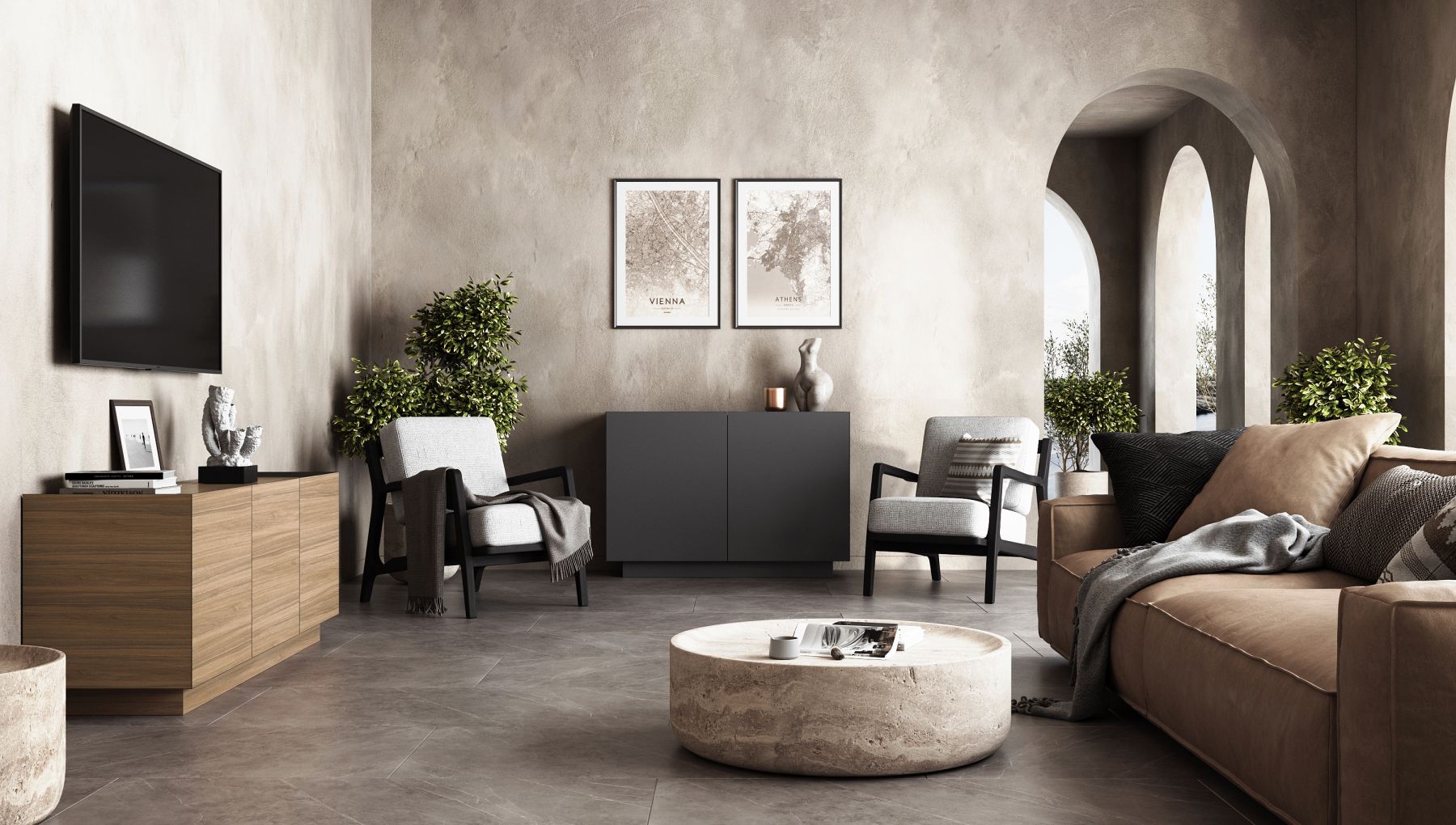
A practical rule for wide models: leave at least 70 cm of free space in front of the chest to pull a drawer out fully and stand comfortably. And if a TV will sit on the chest, aim for the screen to be roughly at eye level when you're seated.
Depth of 40–50 cm — and it's what decides capacity
Depth gets mentioned last, and wrongly so — it quietly determines how much actually fits. The standard is 40–50 cm: a folded sweater lies in such a drawer without bunching up. A smaller depth (35–40 cm) is a win for a narrow hallway, but sweaters and bedding will have to be packed tighter. So look beyond the width of the front: two chests of the same width but different depth hold differently.
How many drawers — and for what exactly
The number of drawers isn't about the look of the front, it's about the storage scenario. Deep lower drawers take the bulky things — sweaters, bedding, sportswear. Shallow upper ones take the small stuff that otherwise gets lost: underwear, socks, accessories, documents. The search "a chest with 6 drawers" is exactly about this: more tiers, like the six-drawer model above, mean a clearer split of "what goes where". If you don't have many things, a "couple of drawers plus an open niche" combination looks lighter and leaves room for books or a basket.
The guideline is simple: count not the drawers but their total volume against your actual wardrobe. Two wide deep drawers often hold more than six small ones — so look at proportions, not just the number in the description.
How to size it for the room
In a bedroom a chest often doubles or replaces a nightstand — here a version with pull-out drawers is handier: the height relative to the bed and shallow upper drawers for small things keep everything within reach. In a hallway a narrow, not-too-deep piece wins, like the small chest above: getting past it should be easy. And a living room has space for a wide accent — long, capacious, with niches for books or vinyl.

Once the three numbers and the scenario line up, the pleasant part remains — choosing character: colour, texture, legs. Models for different sizes and rooms are easy to compare in the selection of chests of drawers — from narrow hallway pieces to wide accents.
Questions that come up most often
What is the standard height of a chest of drawers? About 75–90 cm, at waist level — comfortable both to pull out drawers and to use the top. Taller models hold more in a smaller footprint.
What width of chest should you choose? Narrow, small (60–90 cm) for a hallway and tight rooms; wide (120 cm+) as an accent and the most capacity. Leave 70 cm in front to pull a drawer out.
What depth do you need? 40–50 cm so folded clothes lie flat. 35–40 cm helps in a narrow space, but capacity is smaller.
How many drawers is optimal? Look at volume, not the count: deep lower drawers for bulky things, shallow upper ones for small. Two large drawers are sometimes more capacious than six small ones.


