Wall Shelves
Add life to walls
Wall shelves free up the floor and give your favorite things their own place in the interior: books near the armchair, ceramics above the chest of drawers, a small picture next to the mirror. Laconic wall shelves can almost dissolve on the wall or become a graphic accent - everything is decided by the shape, material and composition. One long line visually calms the room, and several short modules add rhythm to it. Choose a model for the real load, wall material and your life scenario, and not just for a beautiful frame: then the shelf will be comfortable every day, will not lose its character after the first change of decor, and will easily accept new favorite things without complicated rearrangement of furniture.
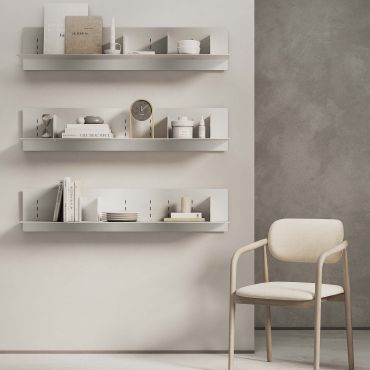
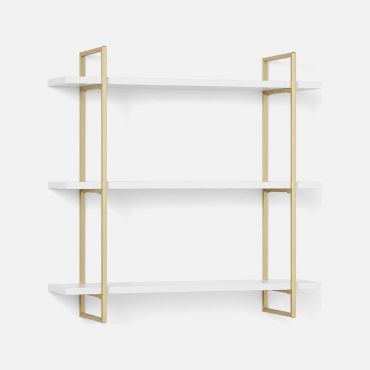
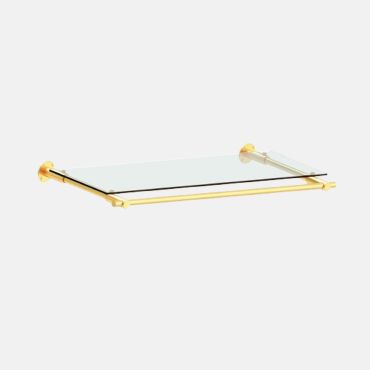
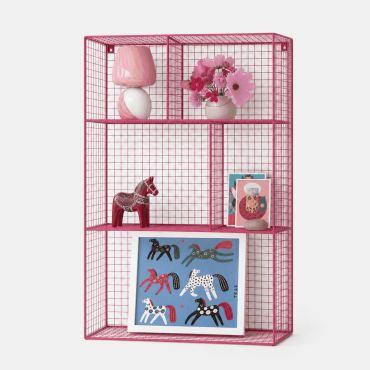
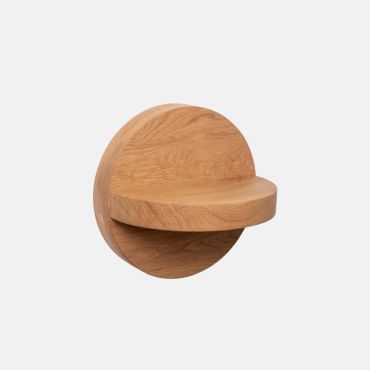
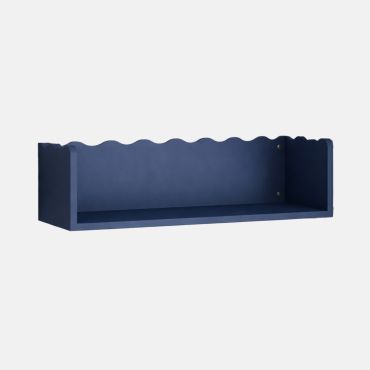
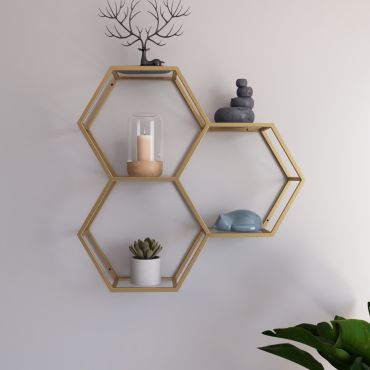
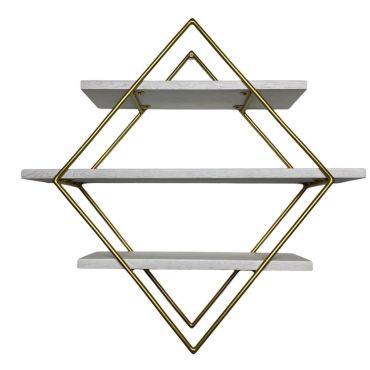
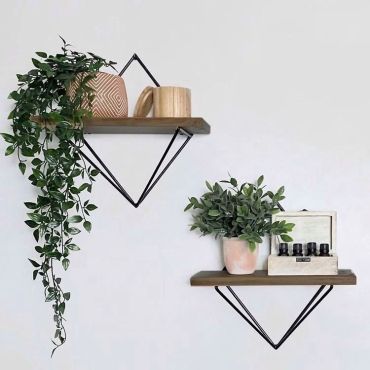
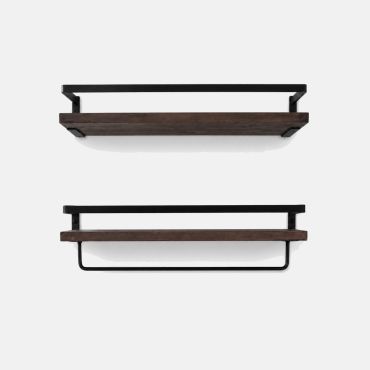
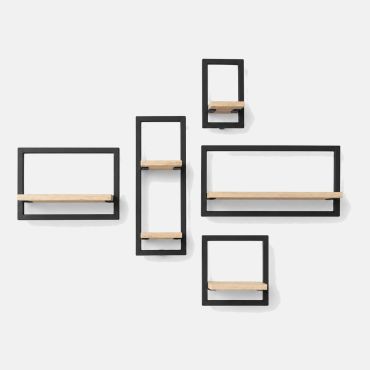
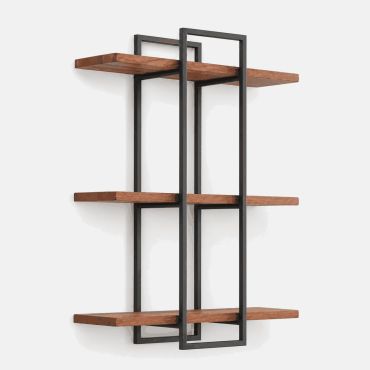
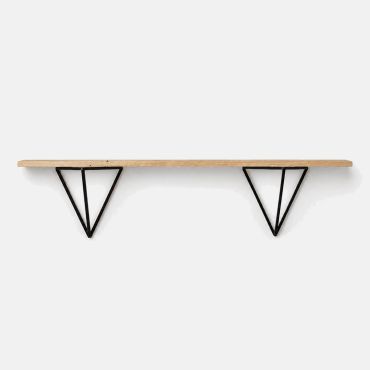
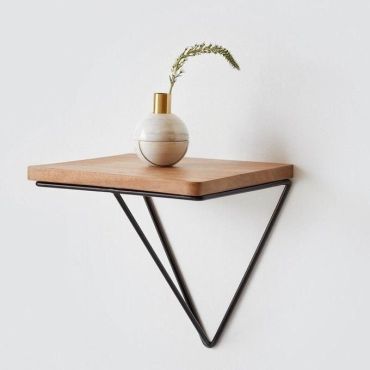
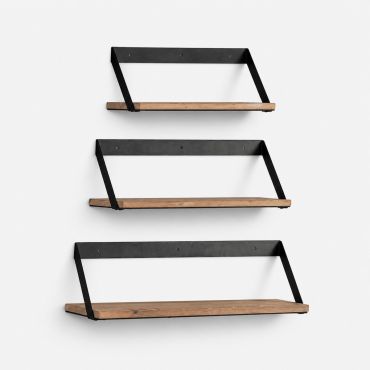
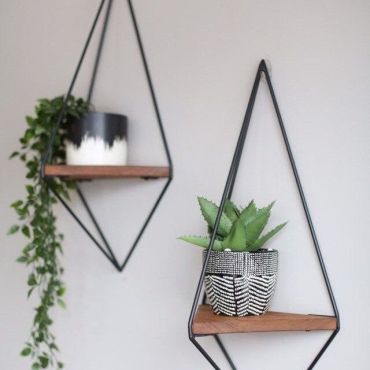
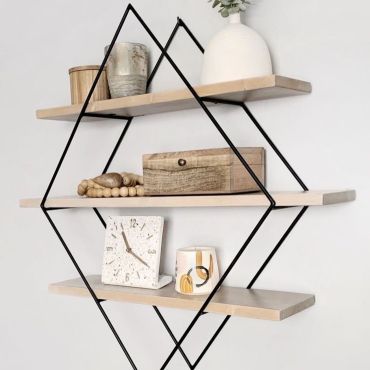


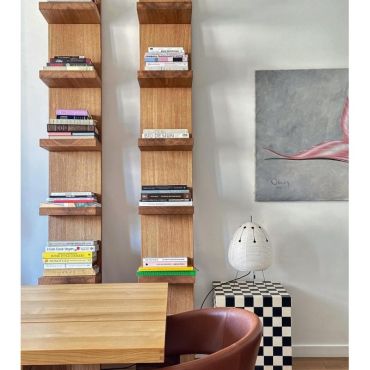
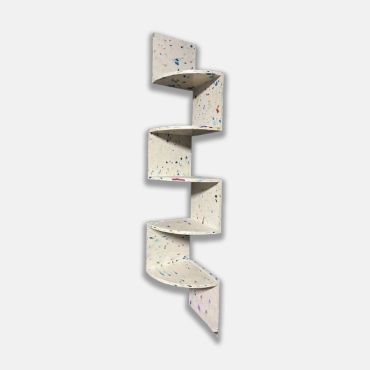
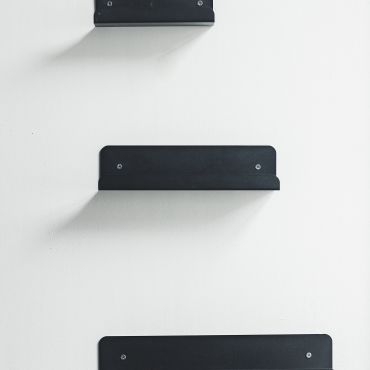
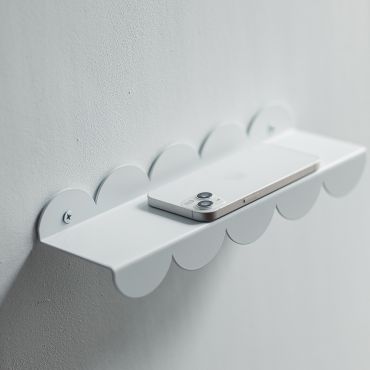
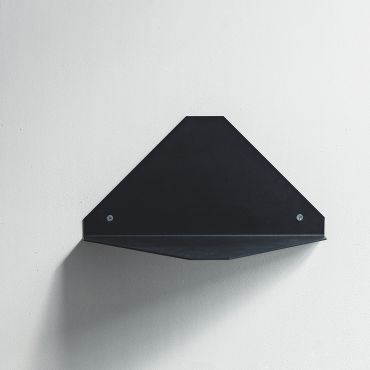
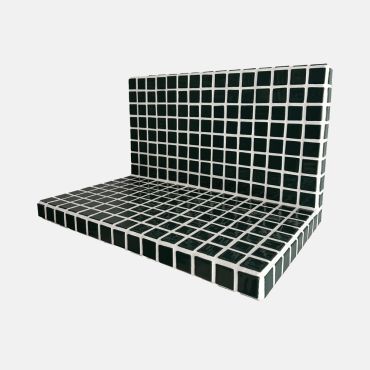
Wall shelves for books, decor and living interior
An empty wall sometimes asks not for pictures, but for a place to live. Wall shelves collect books, ceramics, light and personal items on one level without taking up floor space. It is a simple object with a noticeable effect: the room becomes more organized, but does not lose lightness.
Well-chosen wall shelves don't look like they were added at the last minute. They continue the line of the dresser, support the proportions of the sofa or fill an uncomfortable niche. The best result does not start with color, but with the question: what exactly will stand here and how often will you use it?
One logic is needed for a home library, another for a vase and two artbooks. Therefore, wall shelves for books are evaluated by depth, length, rigidity and method of fastening, and decorative models are also evaluated by visual weight. Beauty lasts longer when the design matches things.
Wall shelves: when the wall works for space
Wall shelves work especially well where every centimetre of floor space already has a purpose. They hold reference books above a desk, replace part of a bedside table, or create a dedicated place for keys in the hallway. The wall gains a useful role without making the room feel crowded.
What are the shelves on the wall
By design, wall shelves are open, modular, corner and with hidden fastening. This is not theory for theory's sake. The type immediately tells you how the item will look, how many things it will take and how difficult the installation will be. The material and color are chosen after that.
Not all wall shelves have to be identical. One composition can combine a long shelf for books with a shorter display shelf for ceramics. Keep a shared detail in the brackets, thickness or colour; without it, the wall can quickly look like a random collection of parts.
Open wall shelves
Open wall shelves are the most straightforward format: a horizontal surface, visible or concealed fixings, and easy access to everything on display. They work well above a desk, dresser or sofa. Everyday items stay within reach, and the arrangement can change in minutes.
The main nuance of such wall shelves is that everything remains in view. If the open surfaces quickly collect random checks, cables and packaging, it is better to immediately provide a small box or basket. Open storage loves discipline, although it does not require museum sterility at all.
Hinged shelves and modular compositions
Hanging shelves are often the same wall structure, only named by the method of installation. In modular series, individual elements can be arranged in steps, in a grid or asymmetrically. This is convenient when the wall has complex proportions or the composition is planned to be gradually supplemented.
Before buying modular wall shelves, draw the future group in real scale with masking tape. This way you can see whether the upper module does not hang too high, whether there is enough space for books and whether the rhythm does not conflict with the door, lamp or the edge of the cabinet.
Hidden installation shelves
Hidden mounting wall shelves create a clean horizontal line without visible supports. Often called floating shelves, they appear to emerge directly from the wall. The format suits minimalist interiors, but it requires accurate installation and a wall capable of holding the specified fixings.
The long concealed mounting shelf is more sensitive to deflection than the model with several visible brackets. Check the load recommended by the manufacturer, the distance between the fixing points and the permissible type of wall. If heavy albums are planned, a clean silhouette should not outweigh structural reliability.
Corner wall shelves
Corner shelf on the wall uses an area that would otherwise stay empty. It can fit beside a desk, in a compact hallway or inside a niche. The most balanced models are shallow enough to keep the passage clear and do not project beyond neighbouring furniture.
The angular geometry reacts noticeably to the unevenness of the walls. Therefore, before ordering a corner wall shelf, check the angle at several points, and do not assume that it is perfectly straight. For an individual product, the master can take into account deviations, plinth or vertical communication.
Wall shelves for books and decor
Wall shelves for books and decor may look the same in the photo, but they work differently. Books give a constant and tangible load; ceramics need a reserve of depth; a small graphic rests on the back edge. A script defines a construct more precisely than a style name.
If there are objects of different scales on one decorative shelf, choose the main one. Let it be a tall vase, painting or sculpture. The rest supports it in form and color. When every thing tries to be an accent, the eye has nowhere to stop.
Book shelves: depth, length and load
Wall shelves for books should be deeper than the largest publications that will stand on them regularly. For standard prose, one supply is required, for albums and magazines, much more. Measure real books at home and add a few inches so the roots don't hang over the edge.
Length also affects how a bookshelf performs. A longer span between supports increases the risk of bowing. Board thickness alone is no guarantee: the material, internal construction, number of brackets and the way they are anchored to the wall all matter.
For a large home library, it is worth honestly assessing the scale. A few wall shelves hold a selection of your favorite publications well, but dozens of heavy volumes may require a floor system. For such a scenario, see separate bookcases without mixing two different design challenges.
Shelves for decor, ceramics and art
Shelves for decor give a group of objects a shared stage. Small vases, studio ceramics, candleholders, photographs and framed prints all work well here. Look at the gaps as carefully as the colours: empty space makes each shape easier to see.
A tall vase needs a stable and sufficiently deep decorative shelf. Keep it away from the edge and avoid placing it above a seat. You can find a suitably proportioned piece among our designer vases, but check its weight and base against the usable shelf depth.
Small interior paintings can be placed on a wall shelf with a side instead of being hung. This technique gives the freedom to change the exposure without new holes. It is only important to check that the frame stands at a safe angle and does not slide on a smooth surface.
How not to overload the composition
There is a simple test. Fill only a third of the available space, place a few items on a decorative shelf on the wall and step back a few meters. Where does the look stop, and where does it get tired? Adding is easy; it is more difficult to clean after getting used to it. The visible edge of the shelf creates the necessary feeling of air.
Repetitions make the group whole: the same type of wood, a similar tone of ceramics, two frames with a similar profile. But don't copy items verbatim. Wall shelves for decoration look alive when the composition has a common feature and a small deviation - a different height, texture or mattness.
Avoid a small uniform fence. It is better to create two free groups on a long shelf on the wall than to spread out ten identical souvenirs at equal intervals. View reads groups faster and cleanup takes less time. The house should not resemble a shop window.
How to choose a wall shelf by material
To choose a wall shelf by material, think about the weight of things, tactility and adjacent surfaces. Wood adds warmth, metal draws a more precise contour, the combination of materials allows you to make the structure thinner in appearance. It is not an abstract quality that is important, but a correspondence to a specific place.
The material also requires care. On a dark glossy wall shelf, dust and touches are more visible; embossed wood forgives small marks, but requires delicate cleaning. In the passage, the practicality of the covering weighs more than in a quiet corner of the bedroom.
Wooden wall shelves
Wooden wall shelves pair naturally with soft light, textiles and neutral walls. Solid wood has genuine variation in tone and grain; veneer offers a similar surface character with more stable geometry across larger panels. Check the exact material specification rather than relying on the word "wood" alone.
The tone of the wooden wall shelf does not have to literally repeat the floor. A sufficiently similar temperature: warm oak supports cream and terracotta shades, light ash is friends with cool grays, dark wood adds depth to a light wall. Copying too closely often looks flat.
The natural surface reacts to water, hot ceramics and direct sun depending on the coating. Therefore, wall shelves made of wood are wiped with a soft, slightly damp cloth and immediately dried. Aggressive products and abrasive sponges can change the gloss or leave a light spot.
Metal and combined shelves
Metal wall shelves can be almost a graphic line or an expressive volume. The slim profile works well with smaller items, while the stiffened construction can handle more serious scenarios if certified by the manufacturer. Powder coating gives an even color and a practical surface.
Combined hanging shelves pair a wooden surface with a metal frame. This can connect warm furniture fronts with the dark details of nearby lighting. The frame may remain visible as a graphic accent or sit discreetly beneath the shelf; choose according to the room's visual rhythm.
For areas with constant moisture, different materials and protection are required. Ordinary decorative shelves for the living room should not automatically be transferred to the shower room. Special shelves in the bathroom are appropriate there, the characteristics of which directly provide for contact with moisture and appropriate fastening.
Coating, texture and care
The matte wall shelf quietly absorbs glare and supports ceramics well. Glossy catches the light more actively and requires more frequent wiping. The relief surface is clear up close, but fine dust can linger in the pores. Choose the invoice taking into account the height and accessibility for cleaning.
Before cleaning the wall shelf, remove heavy and fragile objects and do not move them across the surface. A soft napkin without an abrasive is safer than a universal hard sponge. If the manufacturer specifies a special agent for oil, wax or metal coating, this recommendation takes precedence.
Once every few months, inspect the wall shelves from the side: whether there is an inclination, deflection or play in the fastening. This is especially important after changing the exposition, when the light decor gave way to books. It is better to notice a small movement earlier than to wait for a visible weakening of the structure.
Wall shelves in different rooms
Wall shelves in different rooms perform different roles. In the living room they build a composition, in the bedroom they keep a few personal things, in the study they clear the work surface. The same model can fit everywhere, but the height, filling and strength requirements vary.
First define the motion trajectories. Wall-mounted shelves should not be at shoulder level in a narrow passageway, above a place of active play, or where cabinet doors open to their edge. A good composition begins with a safe distance.
In the living room
Wall shelves in the living room are often placed above a low chest of drawers, on the side of the TV or near the reading chair. The width of the furniture at the bottom becomes a guideline: the shelf can be a little shorter or repeat their axis. An accidental protrusion over the edge creates a feeling of an unstable composition.
If the wall already has art, don't try to fill every gap. You can combine wall shelves for decoration with wall mirror through a common horizontal or repetition of the frame material. One element leads, the other supports; the equal competition of two big accents is exhausting.
A small selection from the home decor category works well on an open plan. For a decorative shelf, choose items of different heights and leave room for seasonal change. So the interior does not freeze, and the shelf retains its function, instead of becoming a warehouse of beautiful things.
In the bedroom
Wall shelves in the bedroom should be quiet in function. By the bed, there is enough space for a book, glasses and a small lamp, if the design and electricity allow it. It is better not to put heavy or fragile objects above the headboard, even when the composition seems very successful.
In a small room, a short wall shelf can replace the bedside surface and free up the passage. Check that there is enough depth for the things you need, but the edge does not interfere with standing up. A rounded corner or a model set aside from the pillow is often a smarter choice.
Above the dressing table shelves for decor should be placed so that tall bottles do not block the mirror, and everyday items remain within arm's reach. Rarely used items can be raised higher. Such a hierarchy keeps the surface clean and does not force you to stretch every evening.
In the hallway and home office
In the hallway, a wall shelf works best when it has one clear script: a place for keys, gloves or a small bag. Check the aisle depth and height for all occupants. The side helps keep small things from falling, but does not replace the habit of cleaning up excess.
Above the work table hanging shelves free up space for a laptop and notes. The lower edge should not cast a shadow on the work area or force you to tilt your head. For heavy cases and equipment, a confirmed load is required; for notebooks and small decor, the design can be visually lighter.
If you are furnishing a nursery, choose specialized shelves for nursery. Such wall shelves should take into account the child's height, roundness, method of fastening and access to books or toys. An adult decorative model should not be transferred to a children's scenario without a safety check.
Size, proportions and installation height
The size of the wall shelf should be checked twice: in centimeters and in space. Stick an outline of masking tape on the wall, place a chair or chest of drawers next to it and look out the door. What seems compact in the product card can become too heavy on a narrow wall.
Fastening and safe loading
A safe wall shelf starts with defining the base. Concrete, solid or hollow brick, gas block and plasterboard require different anchors. The fastening from the kit is not suitable for every wall, so the type of base should be specified before drilling, and not after the appearance of backlash.
Wall shelves in modern styles
Wall shelves in modern styles are defined by proportion, material and arrangement rather than a label. The same wooden shelf can feel Scandinavian on a pale wall, quietly Japanese beside ceramics, or contemporary when grouped with art. Context matters more than the category name.
Minimalism and Scandinavian style
In minimalist rooms, modern wall shelves have a precise silhouette and few visible details. Concealed fixings, a slim metal profile or a finish close to the wall colour all work well. Keep the display restrained and leave a generous section of the edge empty.
Scandinavian interior accepts warmer wooden wall shelves: light oak, ash, calm matte surface. Add books, a small lamp, a textile box, but don't make every item beige. Black graphics or saturated ceramics will bring together a bright composition and add character.
Japandi and contemporary
For japandi, designer wall shelves with simple geometry, expressive wood and almost invisible fastening are suitable. A pause is important here: one tactile object is better than five small ones. Warm brown, milky, graphite and natural unevenness of ceramics create the necessary quiet tension.
In a contemporary interior, shelves on the wall can be more sculptural. Asymmetry, rounded corners, contrasting metal and wood or an unexpected colour work best beside quieter surfaces. The shelf then becomes part of the wall's architecture instead of a simple support.
A soft modern interior likes rounded furniture, bouclé and warm neutral shades. In it, a wall shelf with a rounded edge or a calm wood tone supports the plasticity of the space. Add an object with a sharper geometry to keep the composition from being too sweet.
Loft and graphic compositions
Loft-style wall shelves often combine dark metal with wood, have visible brackets and a clear structure. They fit brick, concrete and rough plaster, but don't need a full set of industrial clichés. One graphic detail is usually enough.
Mid-century modern will be supported by wooden wall shelves of a warm tone, thin metal supports and a modular rhythm. Ceramics, vintage glass, and graphics with rich color work well. The shelves don't have to copy old systems verbatim; recognizable lightness and proportions are enough.
Eclectic allows for more, but that's why it needs editing. On decorative shelves on the wall, you can mix a modern vase, an old book and a naive sculpture, if they are connected by color or scale. Randomness should look personal, not out of control.
Typical mistakes when choosing a wall shelf
The first mistake is to choose a shelf on the wall only based on a close-up photo. Depth, thickness and real length are unclear without a scale. Compare the dimensions with the furniture, outline the contour and check whether the structure does not block the switch, socket, door or lamp beam.
Design and individual solutions
Designer wall shelves make sense when storage must respond precisely to the architecture. An unusual niche, a sloping wall, a composition around a doorway or the need to repeat a furniture curve may call for a custom size or shape.
Individual wall shelf also makes sense for a complex material combination: specific veneer, metal color, perforation rhythm. But first check the finished models. A serial item often already solves the problem, goes through a proven production cycle and does not require unnecessary waiting.
For the ordered product, prepare the dimensions of the wall, a photo from a distance, the material of the base, a list of things and an approximate weight. Such a brief will help to create shelves on the wall that will work in a real house. A beautiful sketch is not enough without a method of attachment and access to assembly.
The practical value of a quality wall shelf
A quality wall shelf holds its shape, has neatly finished edges and comes with a clear installation system. The difference becomes more obvious over time: the shelf should not bow or wobble, and its finish should remain straightforward to clean.
A thoughtful shelf on the wall also saves attention. The keys lie where they are sought; favorite books are not lost; ceramics get a place where they can really be seen. The function does not necessarily sound utilitarian. In the interior, order can be part of the composition and quietly maintain the usual rhythm throughout each day.
When the house changes, compact hanging shelves are easier to transport and rethink than built-in solutions. The model from the office can go into the bedroom, and the short shelf from the living room can become a place for keys. Versatility depends on honest construction, restrained proportions and a fixture that can be safely adapted to the new wall.
Why you should buy wall shelves from MAIIMO
At MAIIMO you can buy wall shelves from own collections and Ukrainian brands, as well as items from local workshops and craft studios. We select models based on shape, material and how they work in a real interior, not just on a white background.
The category is easily combined with other home furniture. For wall shelves, you can choose a lower cabinet, a reading chair or a compact table so that the wall does not live separately from the room. We look at the object as a part of the whole space.
FAQ about wall shelves
How to choose wall shelves for the home?
To choose wall shelves for your home, determine the items that will be placed on them, measure the largest item and estimate its weight. Then check the depth, length, load capacity and type of attachment against the wall material. Finally, outline the contour with masking tape and check the proportions from the entrance to the room.
What are the wall shelves?
Wall shelves are open, corner, modular, with visible brackets or hidden installation. Open ones are easy to use, modular ones give freedom of composition, corner ones use complex areas, and hidden fastening creates a clean silhouette. Choose the type according to function, weight of things and wall.
Which wall shelves are suitable for books?
Wall shelves for books need sufficient depth, a rigid surface and a manufacturer-confirmed load rating. The number of supports, span length and anchors chosen for concrete, brick or a partition wall also matter. Leave a safety margin for heavy albums and distribute their weight along the shelf.
Which wall shelves are better for decoration?
Wall shelves for decoration should match the scale of the objects. Frames need a raised lip or a secure leaning angle, vases need depth and stability, and small ceramics need easy access for cleaning. A display looks clearest when part of the shelf edge remains empty.
Which is better: wall or hanging shelves?
Wall or hanging shelves are mostly not different types: both names describe models that are fixed to the wall. The word "mounted" emphasizes the method of installation more strongly. It is not worth comparing the name, but the design, material, depth, permissible load and compatibility of the attachment with your wall.
What load can the wall shelf withstand?
The load a wall shelf can withstand depends on its material, length, brackets, anchors and type of wall. There is no universal number. Focus on the technical data of a specific model and the conditions for which they are specified; heavy books or ceramics require a margin of safety.
At what height should the wall shelves be hung?
Deciding at what height to hang wall shelves depends on function. The decorative composition is tied to the level of the eyes and neighboring furniture, everyday things are left in the zone of convenient access, and in the aisle the stock is checked over the shoulder. Do not place heavy or fragile objects above the bed.
How to attach wall shelves to different walls?
Wall shelves must be attached to different walls with anchors designed specifically for a specific base. Solutions are different for concrete, solid and hollow brick, gas block and plasterboard. Heavy constructions on the partitions may require mounting in a profile or embedded, so it is better to entrust the complex installation to a master.
How to combine wall shelves with pictures and mirrors?
To combine wall shelves with pictures and mirrors, choose a common axis, material or color, but leave one element the main role. The shelf can extend the bottom line of the frame or shift to the side for asymmetry. A pause is needed between objects so that the wall does not look overloaded.
Where to buy wall shelves of Ukrainian brands?
You can buy wall shelves of Ukrainian brands at MAIIMO. The category includes own collections, works of well-known local brands and workshops; the cards contain current prices, materials, parameters and photos in the interior. The team will help match the model with the size of the wall, things and the overall composition of the room.