Kid beds

Our beds are for most magical dreams
The most stylish beds for kids and teens, with plenty of customization options for trendy interiors.
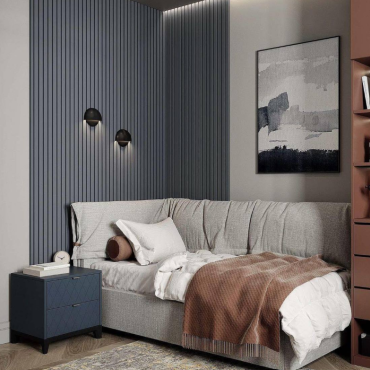
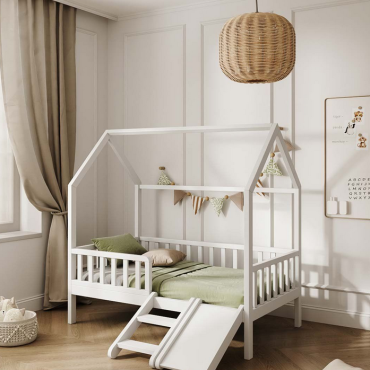
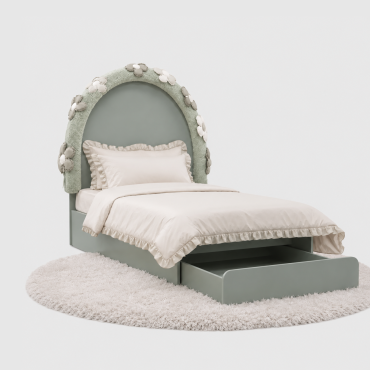

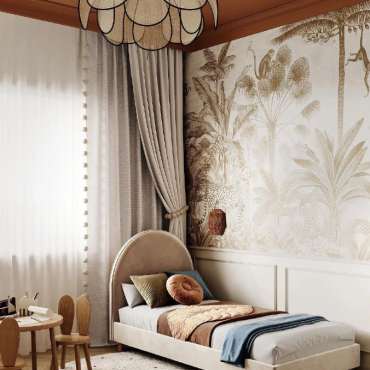
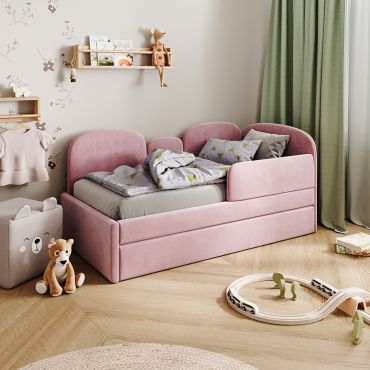
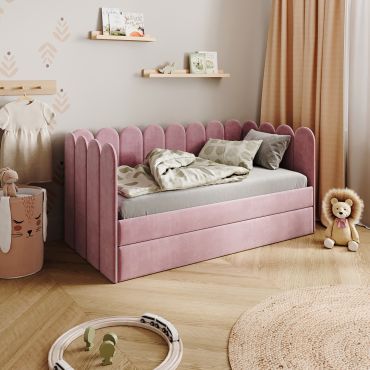

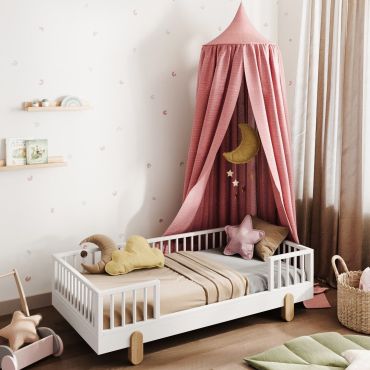
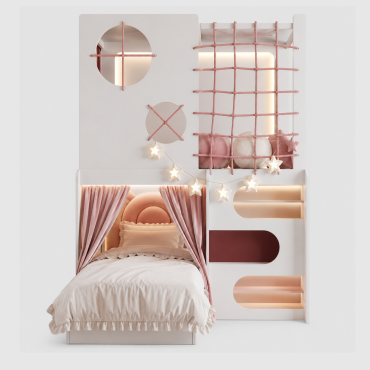
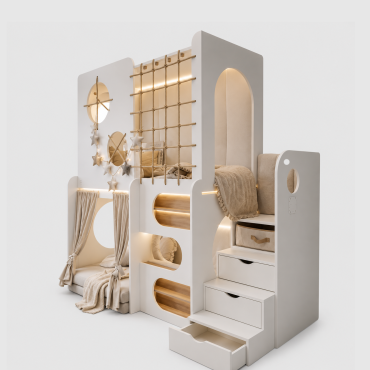
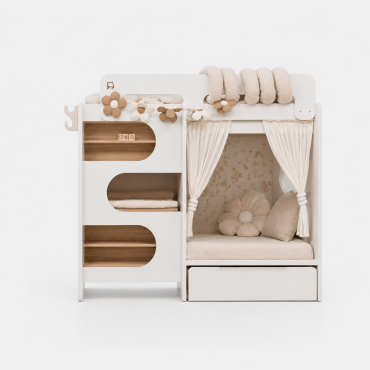
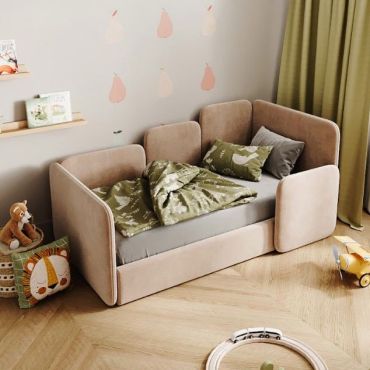
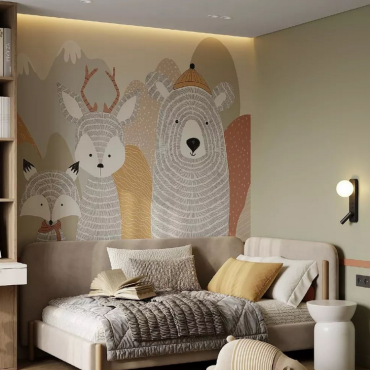

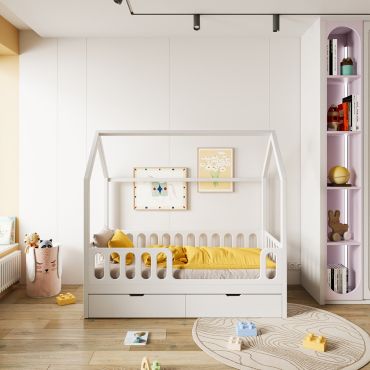

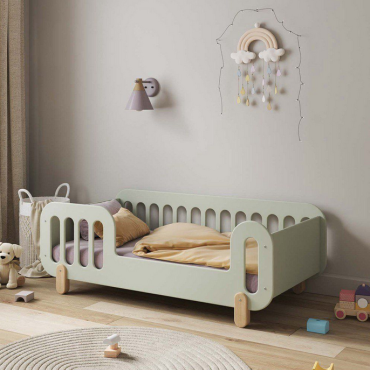

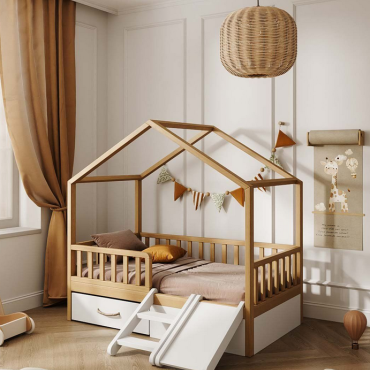
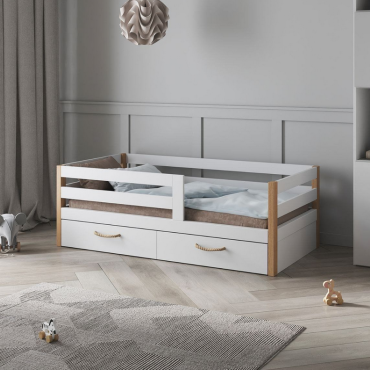

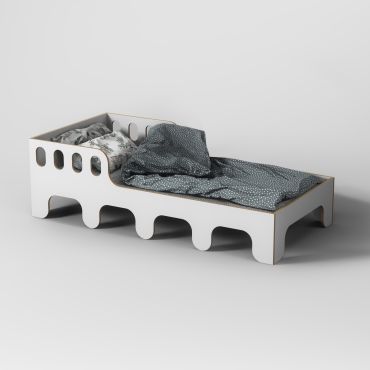
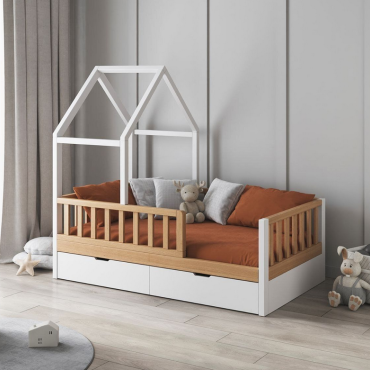
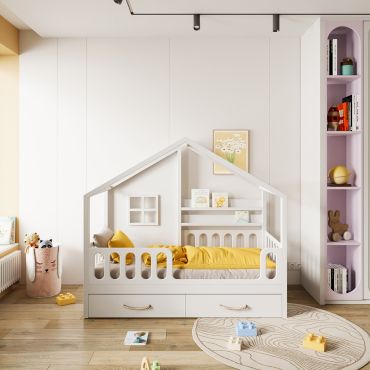
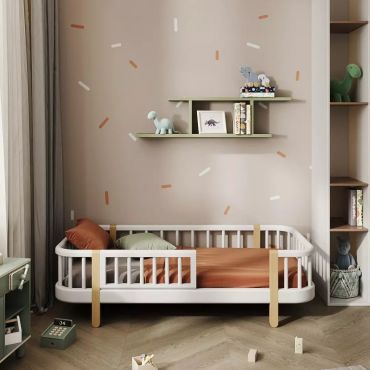
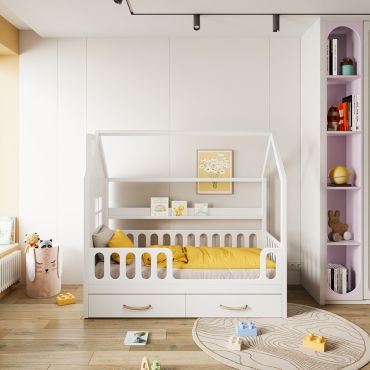
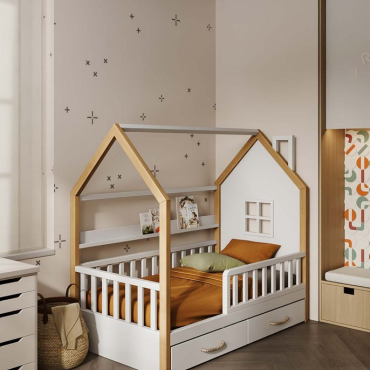
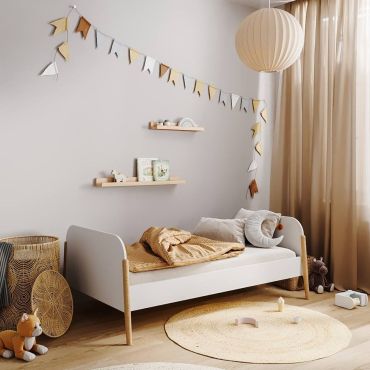
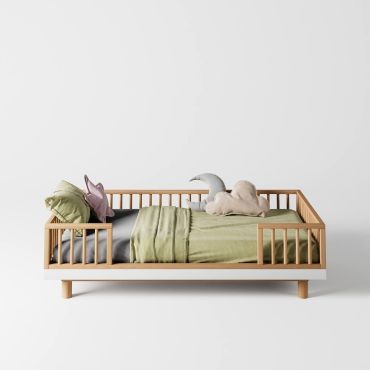
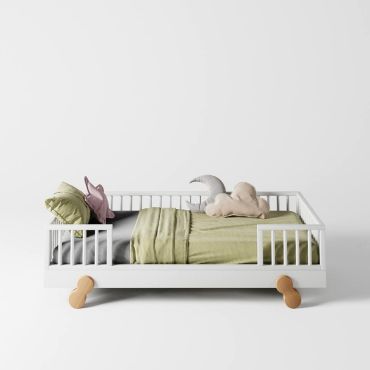
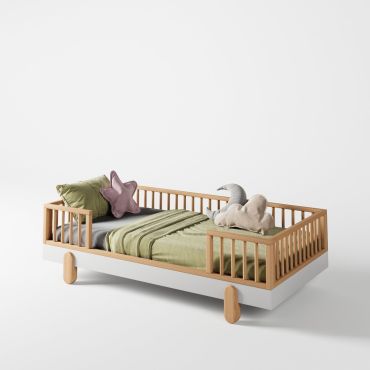
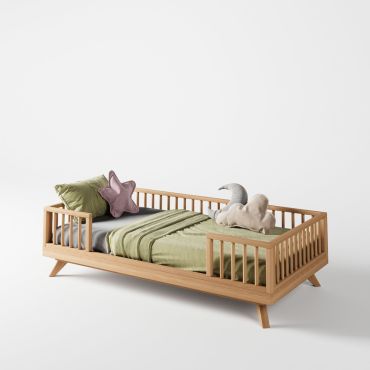
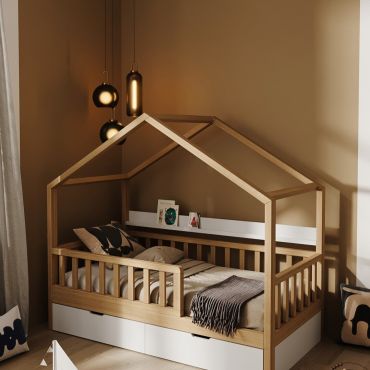
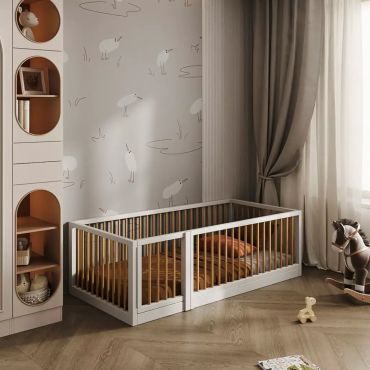
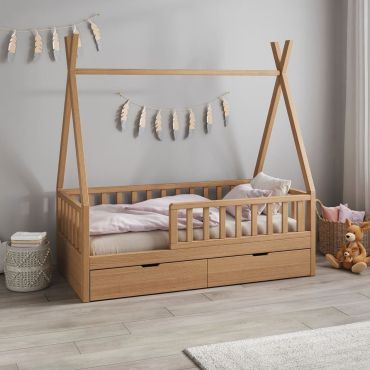
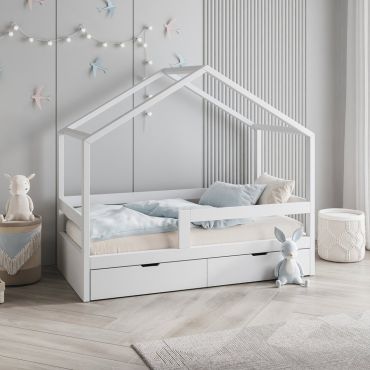
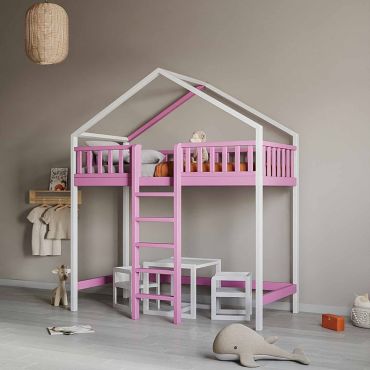
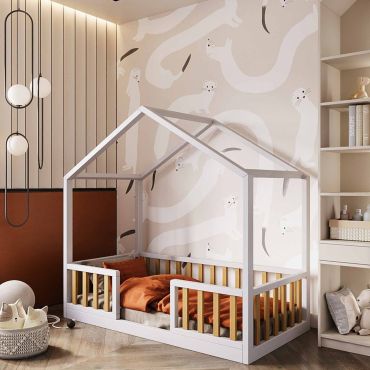
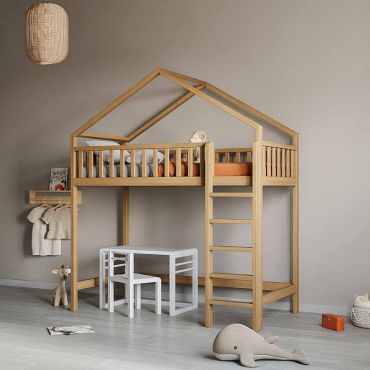
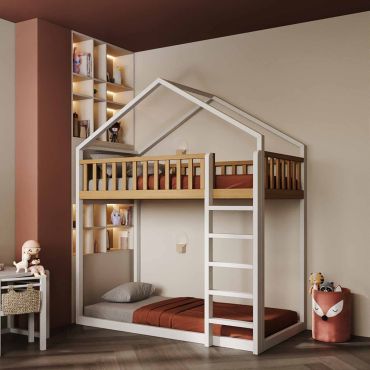
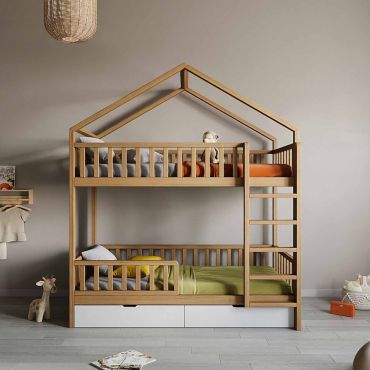
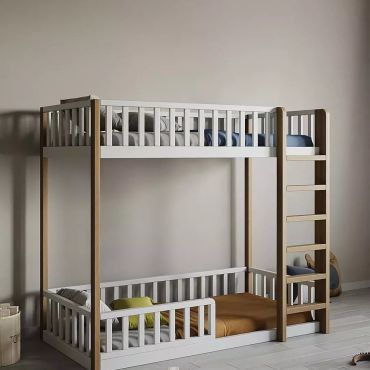
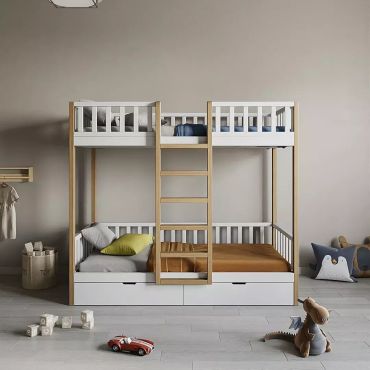
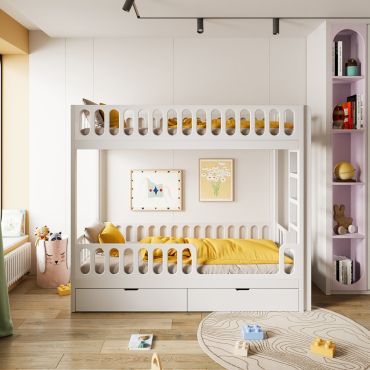
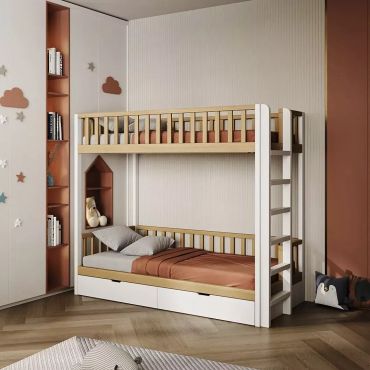
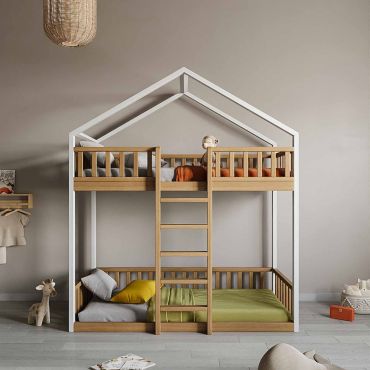
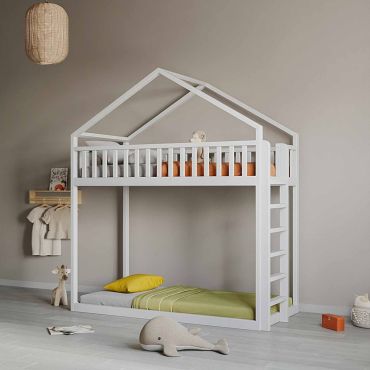
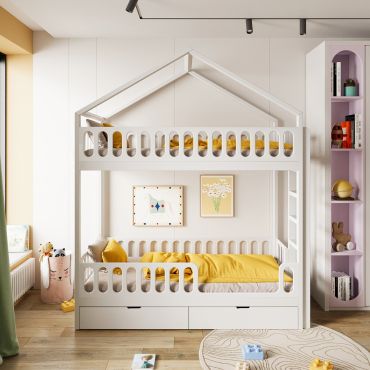
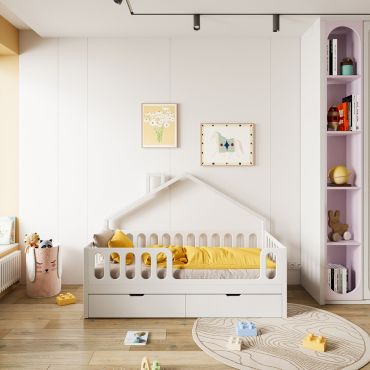
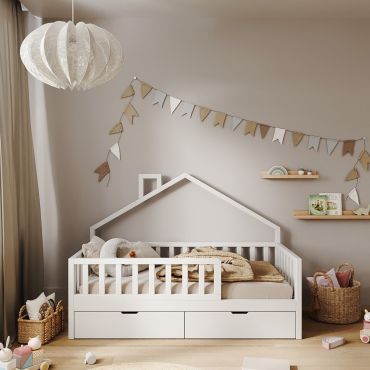
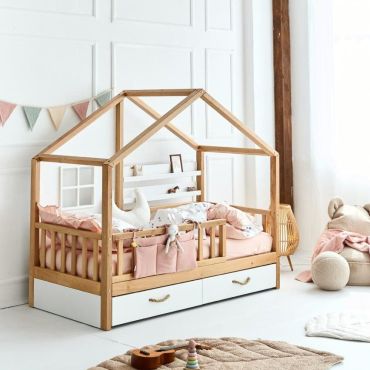
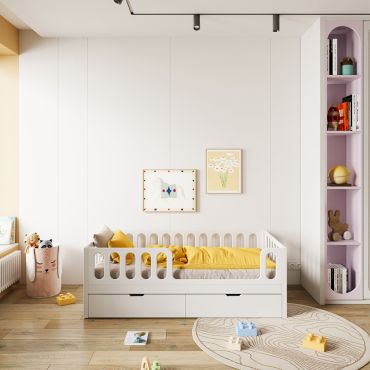
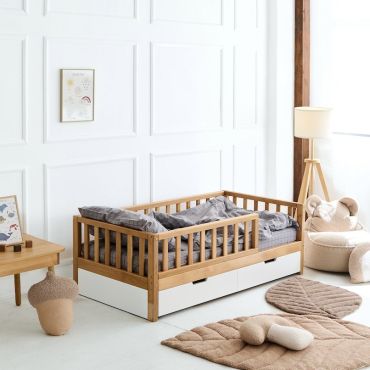
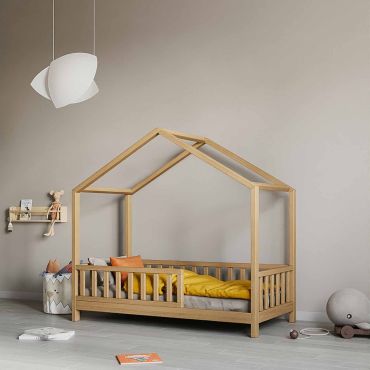
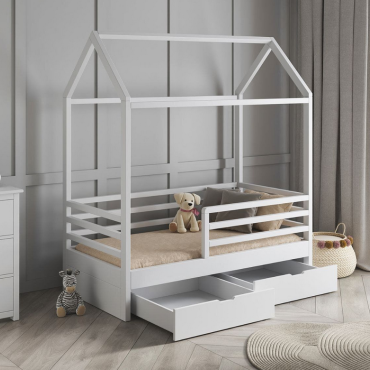
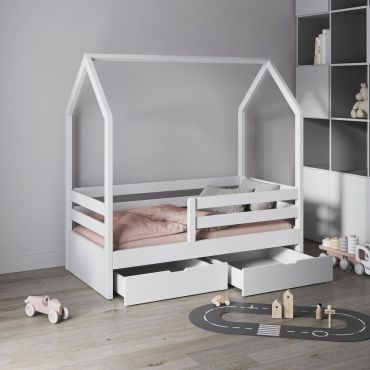

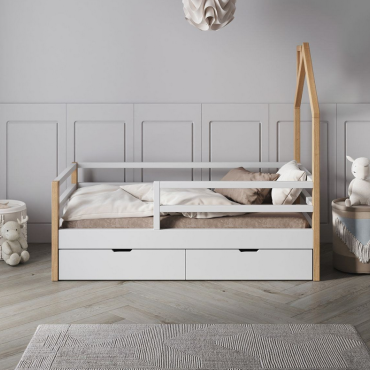
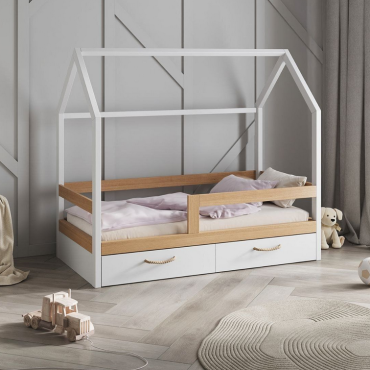
Kids beds for a room that can grow with the child
Kids beds should not be chosen by mattress size alone. This is furniture that works every day in the most active room of the home: it holds morning movement, evening reading, blankets, toys, and a child's need for a personal corner. A good bed has to be comfortable, stable, visually calm, and thoughtful enough to stay relevant beyond one short phase.
MAIIMO brings together children's beds by Ukrainian brands and workshops that pay attention to design, materials, and proportion. Here, you can choose a model for a first independent room, a school-age child, a teenager, or a compact space where sleep, storage, and order need to work together. That is why children's beds should be compared not only by appearance, but also by how they will function in the room every day.
A child's room changes quickly. Today it needs space for stories and soft toys; tomorrow it needs a study zone, shelves for books, and a more grown-up rhythm. That is why beds for kids are better treated as the foundation of the interior for several years, not as a temporary purchase. A well-chosen model does not crowd the room, leaves space for movement, and works easily with other furniture.
Which kids beds work in a modern child's room
Modern kids beds have become calmer in shape. The focus is not random brightness, but clean lines, natural materials, tactile surfaces, practical storage, and a design the child will not outgrow too quickly. This kind of bed does not fight with wall color, textiles, or toys. It gathers the room together, makes it easier to read visually, and leaves room for change.
For smaller apartments, people often look for a model that combines a sleeping place with additional drawers. In larger rooms, the frame shape, material, headboard height, and the possibility of creating a quiet reading area may matter more. In any case, modern kids beds should be assessed not only from photos, but also by overall dimensions, height from the floor, base type, recommended mattress, and daily use.
Wooden kids beds
Wooden kids beds work well in different interiors because they bring warmth and avoid the feeling of accidental furniture. Wood fits minimalist, Scandinavian, contemporary, natural, and more imaginative children's rooms. Such models can look light and graphic or softer and more homely, depending on the silhouette, color, thickness of the details, and finish.
When you consider kids beds made of wood, look at edge finishing, construction stability, the mattress base, and the surface coating. In a child's room, surfaces should feel pleasant to touch, without sharp details, and the frame should not squeak or loosen under active use. A good wooden model has to handle not only sleep, but also the daily life around it.
Models with drawers and lift-up storage
Kids beds with drawers are especially useful where there is not enough room for a separate wardrobe or where seasonal things, bedding, blankets, building sets, and large toys need a quick place to go. Under-bed storage helps use the area below the mattress neatly rather than chaotically. These models make order easier because things have a clear place without constant adult control.
Kids beds with lift-up storage offer even more hidden volume, but they need a more careful check. They are better for older children and teenagers, when access to the storage niche is not part of daily play. Before ordering, check how the mechanism opens, whether it is convenient in the actual room plan, how much space it needs nearby, and whether a desk, bedside table, or radiator will interfere.
Beds for kids of different ages
Beds for kids are best chosen by age, height, temperament, and sleep habits. For younger children, clear height, safe corners, a feeling of comfort, and easy independent access matter most. For school-age children, size, mattress comfort, storage, and a connection with the study area become more important. For teenagers, the bed almost works like an adult model: it should be restrained, roomy enough, and not overly childish.
If a child is growing quickly, beds for kids should not be bought too tightly to current height. A moderate reserve in length and width makes sleep calmer and the purchase more practical. At the same time, an oversized bed in a small room can take space away from play, study, and storage, so the balance between comfort and dimensions matters.
How to choose a kids bed by age
A kids bed is easier to choose by age when age is not treated as the only rule. Two children of the same age can have different heights, sleep habits, and levels of independence. One child sleeps calmly; another constantly changes position. One needs a low bed; another needs more width. Before choosing, it helps to look honestly at how the child uses the room every day.
It also matters whether this is the first more grown-up kids bed after a small crib, an update for a school-age child, or a full room redesign. For the first transition, the scenario should feel gentle: the child should not feel afraid or uncomfortable. For older children, the bed often becomes part of their personal style, so it can make sense to involve the child in choosing color, shape, or textiles.
Kids beds from 3 years old
Kids beds from 3 years old are usually chosen when a child moves toward more independent sleep. Low height, a protected feeling, a stable frame, and a simple form matter here. If the child moves actively while sleeping, look for models that allow an additional protective element or have a thoughtful edge geometry.
At this age, children like independence, but the room still needs to support them. Kids beds from 3 years old should not be too high, visually heavy, or complicated to use. It helps when there is space nearby for a night light, a favorite book, a soft toy, and a small rug beside the bed. Then the sleeping place becomes part of a clear evening ritual.
Kids beds from 5 years old
Kids beds from 5 years old can be more universal in shape and size. The child uses the room more actively, has personal preferences, may read before sleep, keep things nearby, and invite friends. At this age, it is worth thinking a few years ahead: whether the length will be enough, whether the design will become too young, and whether the bed will work with a learning area.
For the five-to-seven age range, models with moderate reserve, simple lines, and easy textile changes work well. Kids beds from 5 years old are best chosen so that in two years only the blanket, pillows, or decor need to change, not the whole frame. A neutral base often proves more future-proof than a very themed solution.
Beds for school-age children and teenagers
Kids beds for teenagers should be close to adult models in comfort while still respecting the room's dimensions. A teenager's room often combines sleep, study, storage, rest, and social time. The bed can work not only as a sleeping place, but also as a daytime sofa if it has pillows, a blanket, and the right light.
For a school-age child, the bed should not compete with the desk. If the room is small, choose visually lighter frames or storage models that replace some extra furniture. If the room is larger, a wider sleeping place, a more expressive headboard, or a composition with a bedside table, shelf, and local light can work. In this way, kids beds for teenagers remain relevant during school years and in a more mature interior.
How to choose the right kids bed size
Kids bed sizes vary widely, so it is better not to rely only on the age mentioned in a product name. You need to know the sleeping area, external frame dimensions, base height, headboard height, and the space left for passage. This is especially important in rooms with niches, balcony doors, radiators, a large wardrobe, or a complicated layout.
Start by measuring the room. Mark the future bed outline on the floor with painter's tape or sheets of paper. This makes it easier to see whether drawers can open, whether the desk remains accessible, whether making the bed is comfortable, and whether the child can move freely around it. A model may look compact in photos, but real rooms are decided by centimeters, so kids bed sizes should be checked before ordering.
Sleeping area and room to grow
The sleeping area should let the child lie freely without feet or arms pressing into the edge. A simple rule is to add a sensible reserve to the child's current height, so the bed lasts more than one year. For younger children, the reserve can be moderate so the bed does not feel too large. For school-age children and teenagers, kids bed sizes are better chosen in a more universal range.
Width matters too. If a child sleeps restlessly, reads in bed, or likes to keep several pillows nearby, a narrow model will become uncomfortable quickly. In a small room, however, every extra centimeter can take space away from a desk or storage. That is why beds for kids should be chosen by appropriate proportion, not by the largest possible size.
Frame dimensions and room passages
The external dimensions of the frame may be larger than the sleeping area because of the headboard, side panels, decorative elements, or drawers. That is why the product description should be checked for the full item size, not only the mattress size. If a desk will stand nearby, make sure the child will not have to squeeze between furniture. In such layouts, kids beds are best compared with the actual room plan.
The passage near the bed affects the feeling of the whole room. When furniture stands too tightly, even a beautiful interior starts to feel accidental. It is better to leave easier movement than add another item that complicates daily use. That is why beds for a kids room should be chosen together with passage space, desk placement, storage, and play area.
What to check before ordering
Before you buy a kids bed, go through a few practical points. Does the mattress size fit? Is the base strong enough? Can the child sit down and get up comfortably? Will drawers interfere with other furniture? Does the color work with the existing wardrobe, desk, chest of drawers, or floor? These simple questions often decide whether the purchase feels successful after delivery.
Think about future changes as well. A study desk, sports corner, larger wardrobe, new rug, or book shelf may appear in the room later. If you plan to buy a kids bed for several years, a calm design and considered size will help it handle those changes. If the model depends only on one narrow theme, the room may need a full update sooner.
Base, slats, and mattress compatibility
Sleep comfort depends not only on the mattress, but also on the base. Slats or another support system should distribute weight evenly and match the mattress recommendations. If the base is too sparse, unstable, or unsuitable, even a good mattress will work worse. That is why a kids bed should be assessed as a full construction, not only as a beautiful frame.
Before ordering, check whether the base is included, which mattress size is needed, and what mattress height is appropriate for the specific model. If a kids bed has a headboard, drawers, or extra elements, mattress height can affect both appearance and safe use.
Materials, finishes, and care
Materials in a child's room should be practical as well as beautiful. Wood, plywood, MDF, fabric, metal details, or combined solutions can work if they are well made and suit the room. If natural texture is important, wooden kids beds and kids beds made of wood often feel calmer and stay visually relevant longer.
Color should be chosen with the whole interior in mind. White, milk tones, natural wood, graphite, olive, warm gray, and muted shades are easier to combine with textiles and decor. Modern kids beds work best as a calm base, while brighter accents are easier to add through bedding, pillows, posters, or lighting.
Storage near the bed
A bed rarely works alone. Nearby, a child may need a book, water, a night light, glasses, a charger, or small favorite things. If space is limited, shelves for a kids room, a compact shelving unit, or kids beds with drawers can keep part of the room organized.
A well-organized bedside area reduces visual noise. When small things are not on the floor or under the pillow, the room feels calmer and evening rituals become easier. For younger children, wooden toys or a low book shelf may be useful nearby, and beds for kids become part of a clear daily order.
How a bed changes the feeling of a kids room
A bed is usually the largest item in a child's room, so it affects whether the space feels open, light, and collected. When we choose beds for a kids room, we look not only at the sleeping area, but also at how the frame holds the scale of the whole interior. A low frame makes the room feel more open, a stronger headboard adds completion, and a bed on legs often feels lighter than a closed block to the floor.
Before choosing, look at the room as one composition. Where is the main passage? Where does daylight fall? What is visible from the door? Will the bed become an obstacle between the entrance and the window? Beds for a kids room should leave not only a nice view, but also an easy route for the child to reach the desk, wardrobe, shelves, and play area.
Kids bed collections by design direction
Once the basic parameters for kids beds are clear, you can move to design-led selections. For softer interiors, there is a separate page for beds for girls; for more graphic or thematic rooms, see beds for boys. If the room needs the atmosphere of a small house, explore kids house beds. For low, independent layouts, kids Montessori beds may fit better.
For children who love movement, stories, and characterful objects, it is worth looking at car beds for kids. If the priority is an added feeling of protection during sleep, there is a selection of kids beds with rails. For interiors that need more softness and tactility, explore soft kids beds. This keeps the main category clear and helps you move quickly toward the right room mood.
How to combine the bed with other kids furniture
Kids beds set the scale of the room, but the interior feels complete when all furniture supports one scenario. If you are updating the whole room, start with kids furniture. It is easier there to see how the bed can work with a desk, chest of drawers, shelves, or wardrobe. For a school-age room, the study zone matters from the beginning, so consider kids writing desks near the bed.
For younger children, beds for kids often work together with a small table, a drawing area, or a soft reading corner. In this scenario, kids tables and chairs and kids poufs add function without making the room feel like an adult office.
Storage should be planned before buying, not after. If the bed has no large drawers, chests of drawers for a kids room or shelves for a kids room can help with clothing, books, toys, decor, and small things. If you choose kids beds with drawers, you can keep less bulky storage nearby and leave more free floor area.
Practical check before buying
When a model already looks right, do a short practical check. Measure the place where the kids bed will stand and add space for movement, drawer opening, cleaning, window access, and nearby furniture. If a rug will sit beside the bed, check whether it interferes with lower storage. If the bed has a high headboard, see how it works with the window sill, shelf, or wall lamp.
It helps to imagine one ordinary evening. The child comes into the room, puts things away, takes a book, turns on the light, lies down, reaches for water or a favorite toy. If everything has a place in that scenario, beds for a kids room are probably chosen well. If too many questions appear even in that simple picture, reconsider the size, model, or neighboring furniture.
Check the mattress and bed height
The mattress should match the bed size without gaps and should not be too high for the construction. If the mattress raises the sleeping area too much, a younger child may find it uncomfortable to sit down and get up. That is why kids bed sizes should be checked together with the mattress, not separately.
Bedding and covers matter too. Some frames look best with tucked-in bedding; others need room for fuller textiles. If the child makes the bed independently, a complicated setup can become annoying quickly. In a child's room, practicality often matters more than a perfect picture, so modern kids beds should be easy to use every day.
Think about delivery, assembly, and future rearranging
Before ordering, check whether bed parts will pass through doors, stairs, or an elevator, especially if the model has large components. In a finished room, it helps to understand how assembly will work and whether extra space needs to be cleared. If you plan to buy a kids bed for a complicated layout, it is better to check these points before delivery.
A child's room may change several times: first more play space, then more study space, later more storage and rest. If a kids bed can be moved logically to another part of the room or combined with new furniture, it will serve longer. Universal design, clear dimensions, and solid construction matter as much as the first impression.
How to choose between several models
When several options look good, compare kids beds through daily scenarios. Which bed will be easier to make? Which one is easier to clean around? Where can the child sit, read, and put things away more comfortably? These questions quickly filter out beautiful but less practical options.
Another useful check is to imagine the kids bed without decor, only as a frame in the real room. If the shape still feels right and the proportions do not feel accidental, that is a good sign. The child can choose between two or three beds for kids, textile colors, or small details near the sleeping area.
Why buy kids beds at MAIIMO
MAIIMO works with Ukrainian manufacturers who pay attention to form, materials, and daily use. The category includes designer kids beds that do not feel random: proportions, colors, functions, compatibility with other furniture, and the feeling of a modern home are considered. This matters in a child's room because the space should be comfortable not only in photos, but also in the morning, in the evening, on weekdays, and through fast changes.
On the page, you can compare models, move to the right selections, check sizes, and choose a solution for a specific age and layout. If several options feel close, start with three questions: how much space the room has, how long the bed should serve, and which functions are truly needed. Then designer kids beds become not just a beautiful purchase, but part of a room that can handle real childhood.
FAQ about kids beds
What kids bed size should I choose?
Kids bed size depends on the child's age, height, and room area. For younger children, the sleeping place should not feel too large, but it should have room to grow. Before ordering, check both the mattress size and the external frame dimensions so kids beds do not block passage, a desk, or storage.
Which kids beds are suitable from 3 years old?
Kids beds from 3 years old should be low, stable, easy to use independently, and comfortable for the transition from a smaller crib. A calm silhouette, pleasant materials, and a clear evening setup with a book, night light, and favorite toy can make the change easier.
Which kids beds are suitable from 5 years old?
Kids beds from 5 years old can be a little roomier and more universal in design. At this age, the child grows quickly, uses the room more actively, and has personal preferences. Choose a bed with sensible reserve, but not with an overly adult scale, so the room still has space for play, study, and storage.
How do I choose a kids bed for a school-age child?
A kids bed for a school-age child should have a comfortable size, a reliable mattress base, practical height, and a good relationship with the study area. If the room is small, kids beds with drawers can help keep some things under the sleeping place and reduce bulky storage.
Should I choose a kids bed with extra length?
Yes, a kids bed with moderate extra length is more practical if you want it to last for several years. The child should not outgrow it too quickly. The reserve should still be sensible: an oversized bed can take space away from movement, a desk, or storage.
What is better: a kids bed with drawers or without?
A kids bed with drawers is useful when the room lacks space for a wardrobe or chest of drawers. Bedding, blankets, seasonal things, or toys can be stored below. If storage is already well planned, a lighter frame without lower drawers may work better.
What should I check in kids bed materials?
Kids bed materials should be strong, pleasant to touch, and easy to care for. Wood, quality board materials, thoughtful upholstery, or mixed constructions can all work. If natural texture matters, wooden kids beds should be checked for edge finishing, coating, and frame stability.
How do I match a bed to a kids room style?
Beds for a kids room are best chosen with existing furniture, wall color, floor, textiles, and lighting in mind. If the room should change with the child, choose a calmer frame and adjust the mood through bedding, pillows, a rug, posters, and decor.
When should a child move from a crib to a kids bed?
Moving from a crib to a kids bed makes sense when the child feels cramped, tries to climb out independently, or is ready for a more grown-up sleeping place. The new kids bed should feel clear, comfortable, and safe in daily use.
Where can I buy kids beds by Ukrainian designers?
At MAIIMO, you can buy kids beds by Ukrainian brands and manufacturers that work with modern design, quality materials, and thoughtful functions. The catalog makes it easy to compare models by age, room size, and interior style.