The Right Height for a Kids' Table and Chair by the Child's Height
The right kids table and chair height for your child's height
The very table a child draws at for hours can quietly harm their posture. The difference comes down to a few centimetres of height you can't spot by eye.
And the key here isn't age — it's height. Let's work out the right kids table height and chair height for a specific stature, how to check the seating without a tape measure, what table suits what age, and whether to get an adjustable one that grows with the child.
The main rule: by height, not by age
Children of the same age differ in height by 10–15 cm, so "a table for a 3-year-old" is a very rough guide. The body sets the right height. The classic test is 90-90-90: when the child sits, the feet rest flat on the floor and the knees and hips are bent at roughly a right angle. The tabletop should sit a little above the bent elbow — by 5–7 cm — so the shoulders stay relaxed rather than raised.
There's also a home test with no tape measure: sit the child down, place their elbows on the table — the tip of the middle finger of the outstretched hand should reach the outer corner of the eye. Reaches easily — the table is too tall; doesn't reach — too small.
Table: height → seat and table height
The guide is the European school-furniture standard. Measure the child's height and read the row:
| Child's height | Seat height | Table height | Approx. age |
|---|---|---|---|
| 80–95 cm | 21 cm | 40 cm | up to 3 years |
| 93–116 cm | 26 cm | 46 cm | 3–4 years |
| 108–121 cm | 31 cm | 53 cm | 4–6 years |
| 119–142 cm | 35 cm | 59 cm | 6–8 years |
| 133–159 cm | 38 cm | 64 cm | 8–11 years |
| 146–176 cm | 43 cm | 71 cm | 11–14 years |
| 159–188 cm | 46 cm | 76 cm | 14+ years |
If the height falls between two rows, take the smaller size. A slightly snug fit is easier for a child to compensate for than sitting at a table that's too tall.
What table suits what age
The first low table appears as soon as the child sits and walks confidently — roughly from 1–1.5 years, for play at first. Closer to 1.5–2 years, creativity is added: drawing, modelling, first crafts. A full study spot — a writing desk — becomes needed around 5–6 years, for school. All the in-between options are gathered among the kids tables and chairs.
Adjustable or fixed
A fixed table is simple and pretty, but "right" for only a year or two — then the child outgrows it. An adjustable table and chair change height with the child and last 5–10 years instead of several replacements. It's the case where the pricier purchase works out cheaper per year.
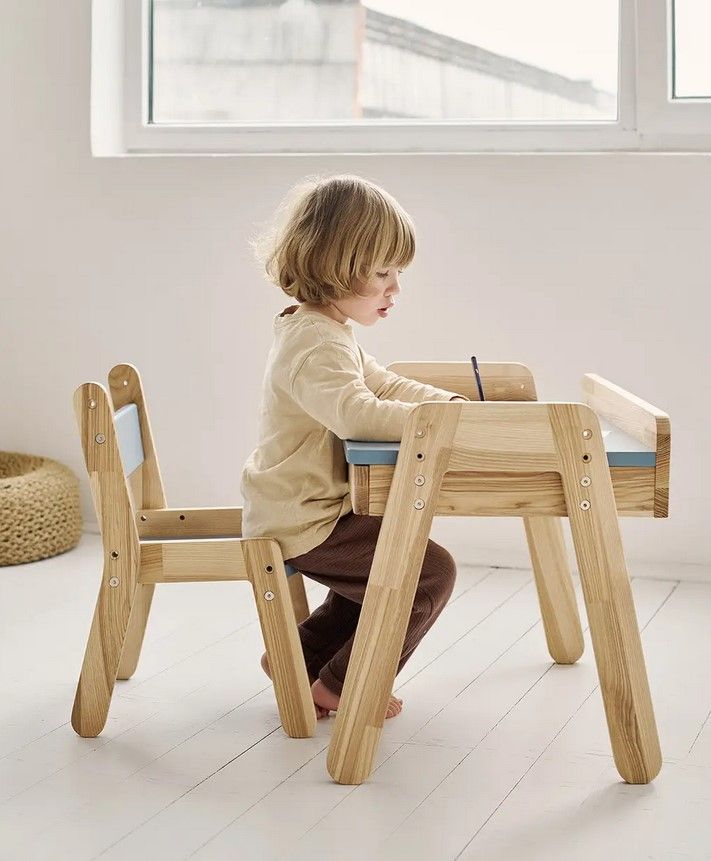
A play table and a study table are different things
A play table is deliberately lower and wider: children sit around it with free access from all sides — for drawing, building blocks, group play. A study desk is taller, clearly oriented to face the top, with room for supplies. Sitting a schoolchild at a low play table every day is a typical reason for posture complaints at 6–7.
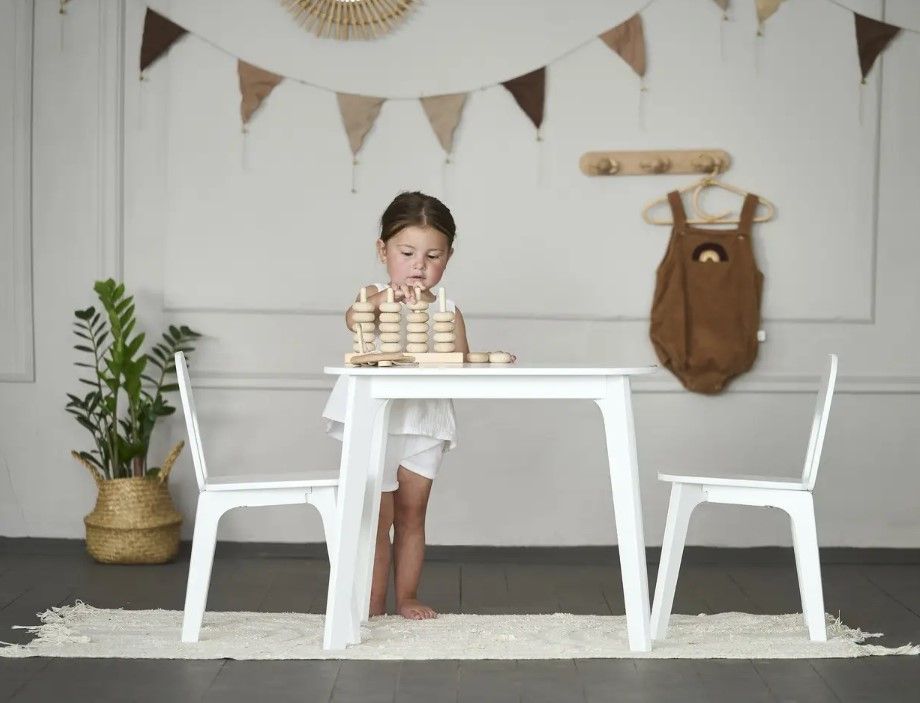
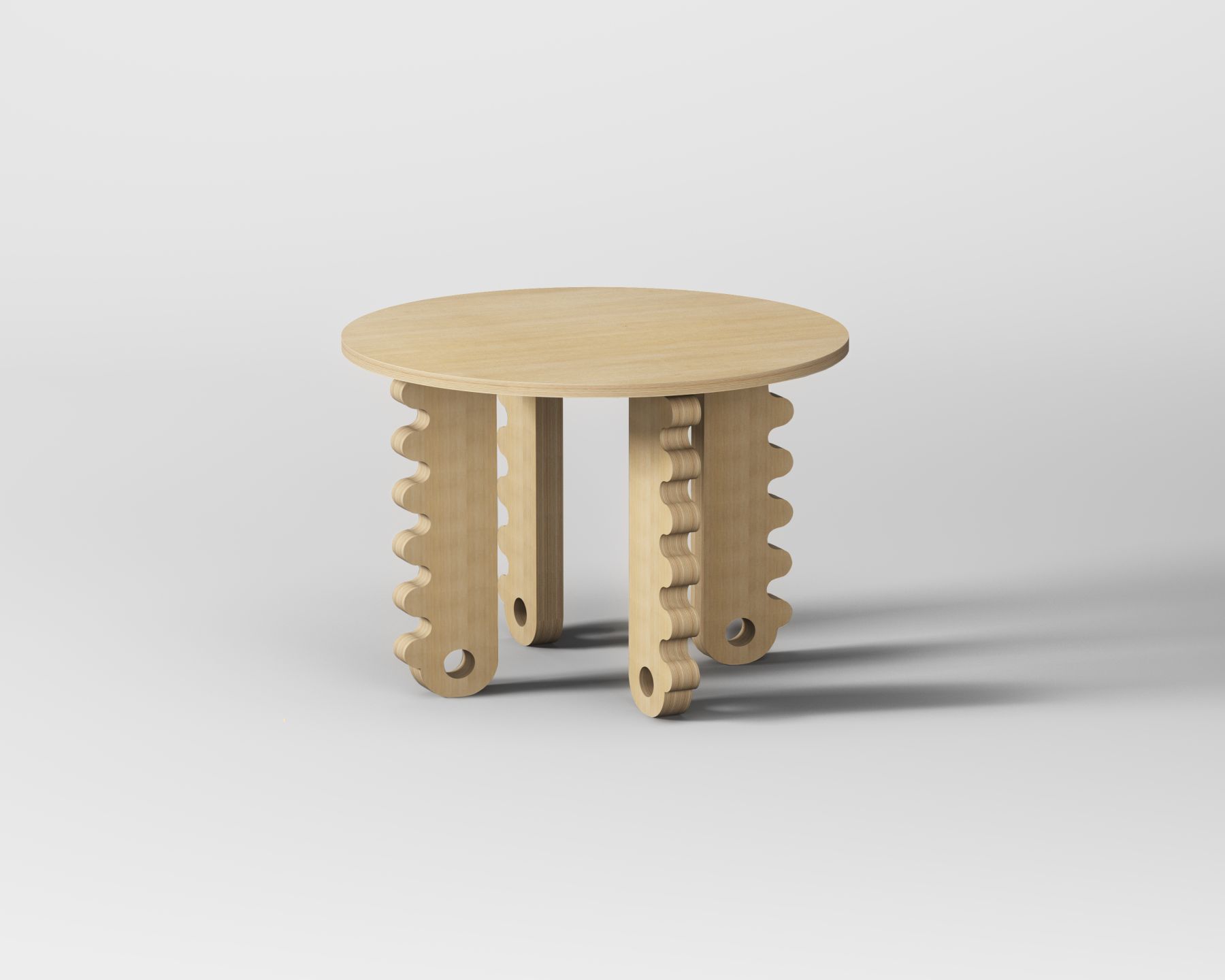
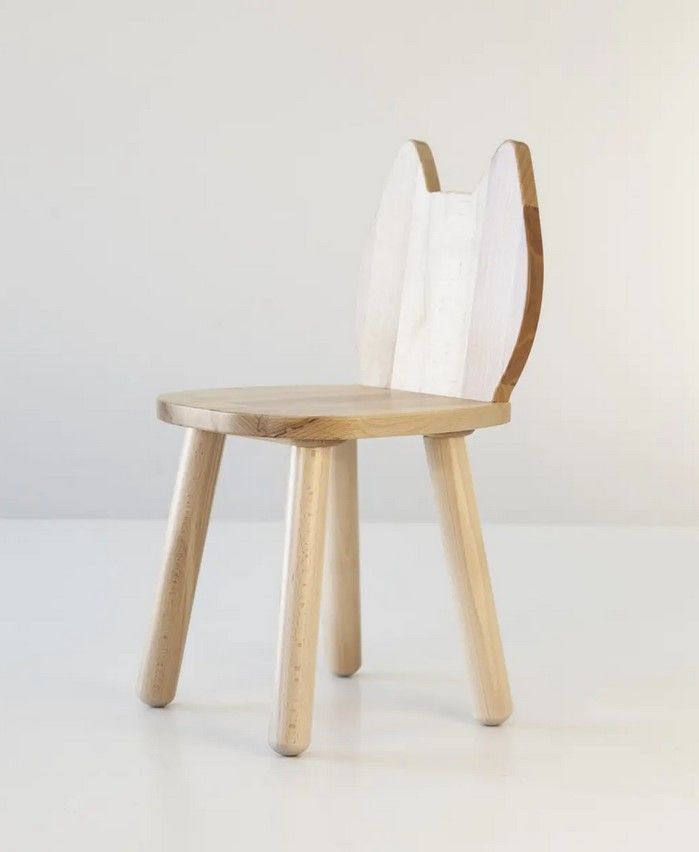
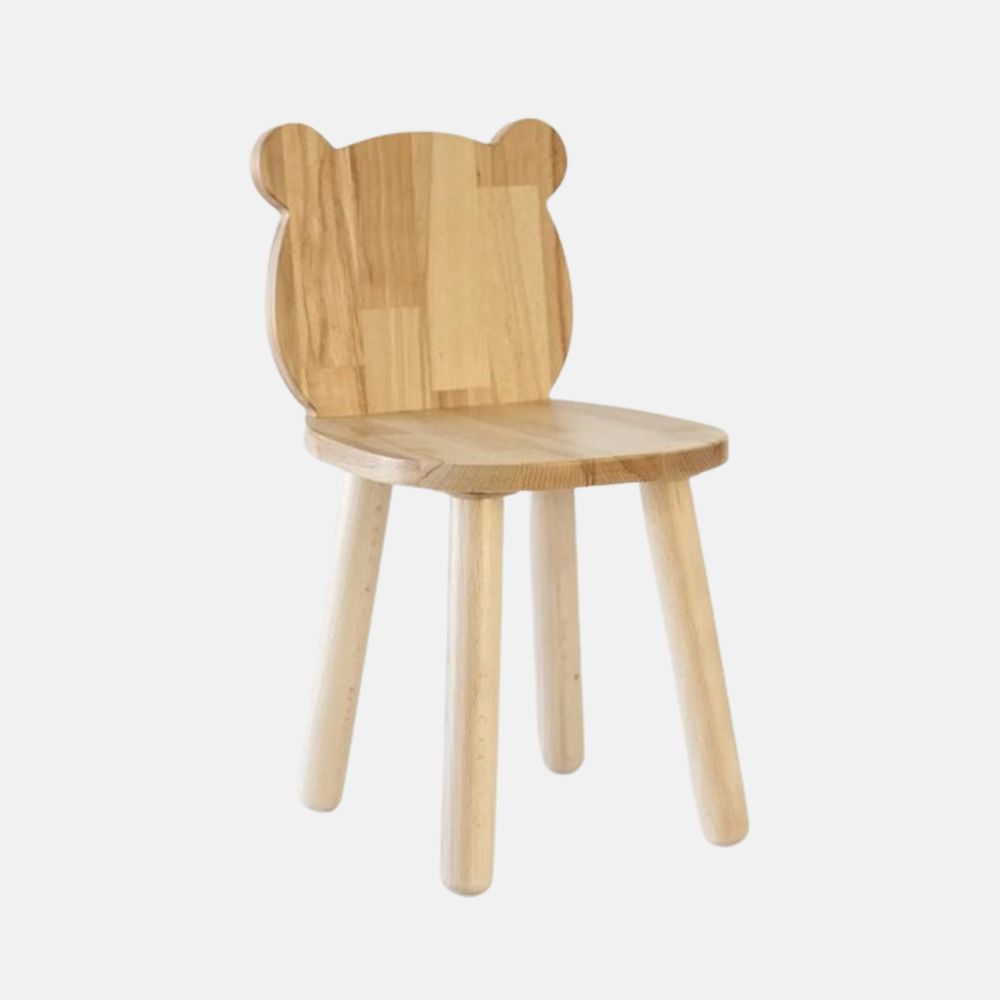
A chair can be bought separately too — the main thing is that it's also by height. Low children's chairs with character make sitting down something the child wants, not something imposed:
The "room to grow" mistake
Buying a table three sizes too big so it "lasts a long time" is the same mistake as one that's too small. At a table that's too tall, the child either hunches, raising their shoulders to elbow level, or slides to the edge of the chair to reach the floor with their feet. Both load the back for years. "Room to grow" doesn't save money — it just puts off the posture problem. Better a smaller exact size today, or an adjustable one that grows.
Frequently asked questions
What table height for a 2-year-old?
Look at height, not age. For a height of about 80–95 cm that's a seat around 21 cm and a top of 40 cm; for 93–116 cm — 26 and 46 cm. Check by seating: feet on the floor, knees at a right angle.
From what age is a kids table and chair needed?
The first low table — as soon as the child sits and walks confidently, roughly from 1–1.5 years for play. A craft table is active from 1.5–2 years, a full writing desk from around 5–6 for school.
How do you check the chair height for a child?
By the 90-90-90 rule: feet flat on the floor, knees and hips at a right angle. The top sits a little above the bent elbow (by 5–7 cm). Quick test: elbows on the table, the middle finger of the outstretched hand reaches the outer corner of the eye.
Adjustable table or a regular one?
An adjustable one costs more but "grows" with the child for 5–10 years and needs no yearly replacement — cheaper per year. A fixed one is simpler but right for only a year or two.
What to choose if the child's height is between two sizes?
Take the smaller one. A slightly snug fit is easier for the child to compensate for than sitting at a too-tall table and reaching up with the shoulders.


