Ліжко-будиночок для дитини: з якого віку, навіщо і як обрати
A house bed for your child: from what age, why and how to choose one
By day it's a fortress, a den and a secret headquarters where grown-ups aren't allowed. By night it's simply a bed. One piece of furniture that a child loves not because it's comfortable to sleep on, but because it's somewhere to live.
That's the secret behind the popularity of the house bed: it brings together sleep and play, and fits neatly into the Montessori way of thinking. Let's look at why a child needs one, what age it suits, why it's safe and how to choose the right shape.
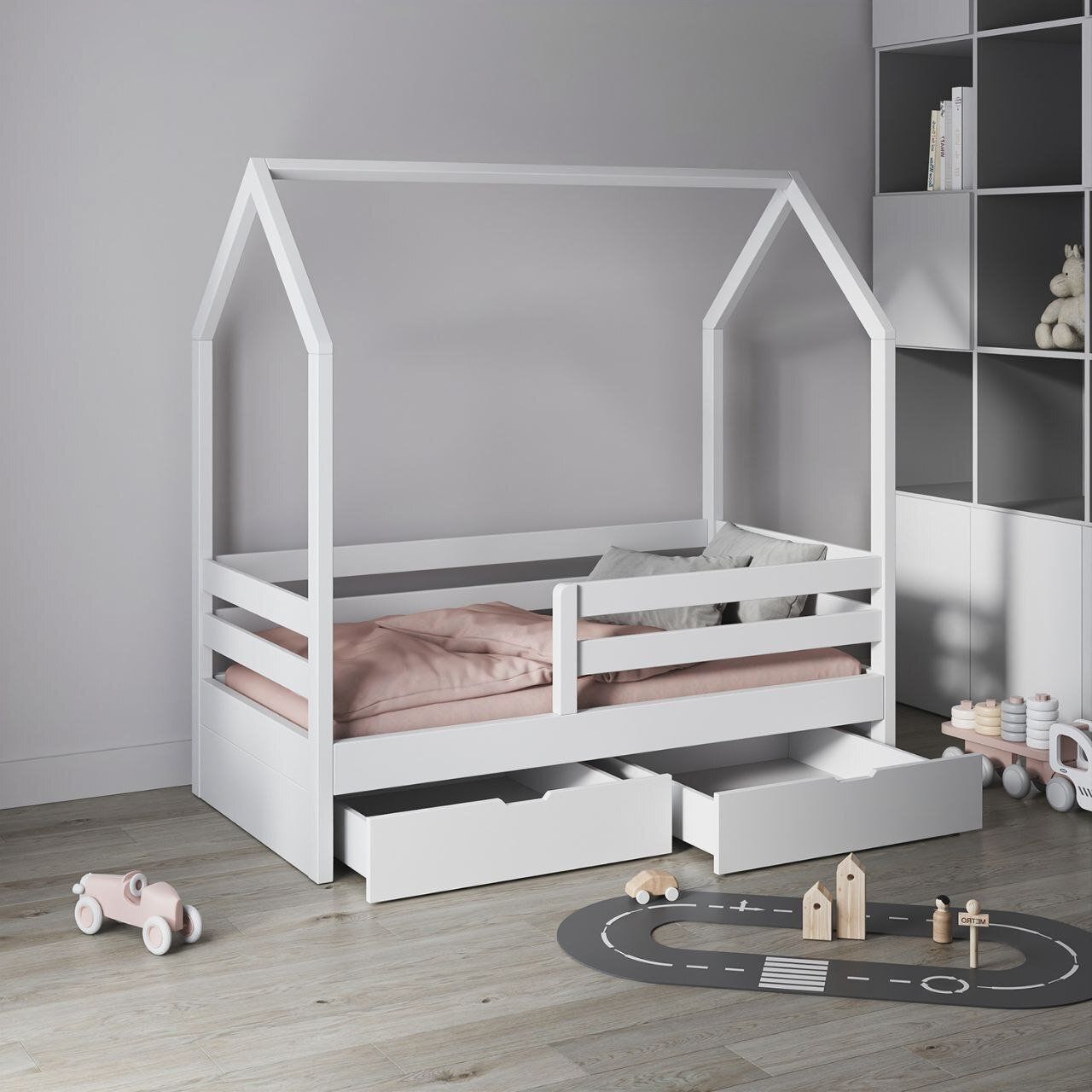
Why a child needs a house bed
The main difference from an ordinary bed is that the house-shaped frame turns the sleeping place into "their own space". That's no small thing: a corner of their own, one that belongs to the child alone, helps them settle more calmly and go to bed more willingly. And by day that same frame becomes a play den without taking up a single extra metre of floor.
The second reason is the low profile. Most house beds sit close to the floor, in the spirit of Montessori beds: the child lies down and gets up on their own, when they're ready, without an adult's help. It's the very freedom of movement and independence the approach was designed for.
From what age and until when
A house bed usually appears at the point of moving on from a cot — roughly from 1.5 to 3 years, once a child has outgrown the classic crib. It serves for a long time: the format works well until around 6 or 7 years, after which a child moves on to an ordinary teenager's bed. For the littlest ones there are models with a guard rail — an in-between option while a child isn't yet ready to sleep without a barrier; you'll find more of these among the beds with guard rails.
The key thing about safety is the height, not the shape. Protection comes first and foremost from the low profile of the frame: even if a child rolls out, there's barely anywhere to fall. If a model has a fabric roof or canopy, check the fastenings: no loose cords or loops within the child's reach, and the fabric should "breathe". And, as with any children's bed, the room around it should be made safe: covered sockets, secured furniture, sharp corners cleared away.
House bed shapes: from the classic to the vigvam
A house bed isn't a single shape but a whole family. The classic pitched "roof" gives the recognisable silhouette of a cosy home. A vigvam with its crossed poles resembles a tent and easily holds a string of lights or some textiles. And a "half-house bed" is a softer, graphic roof outline without a solid covering, for when you want a hint of a home without a bulky structure.
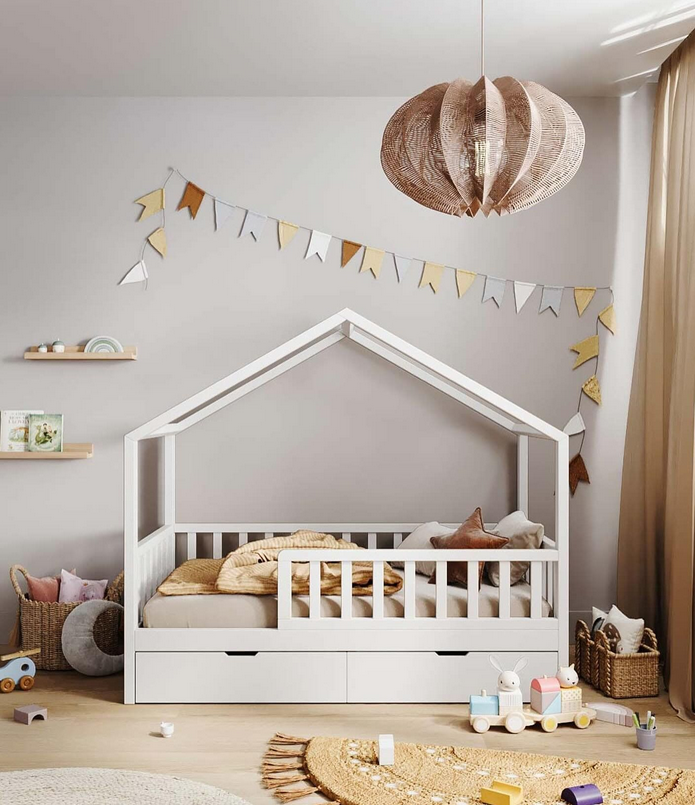
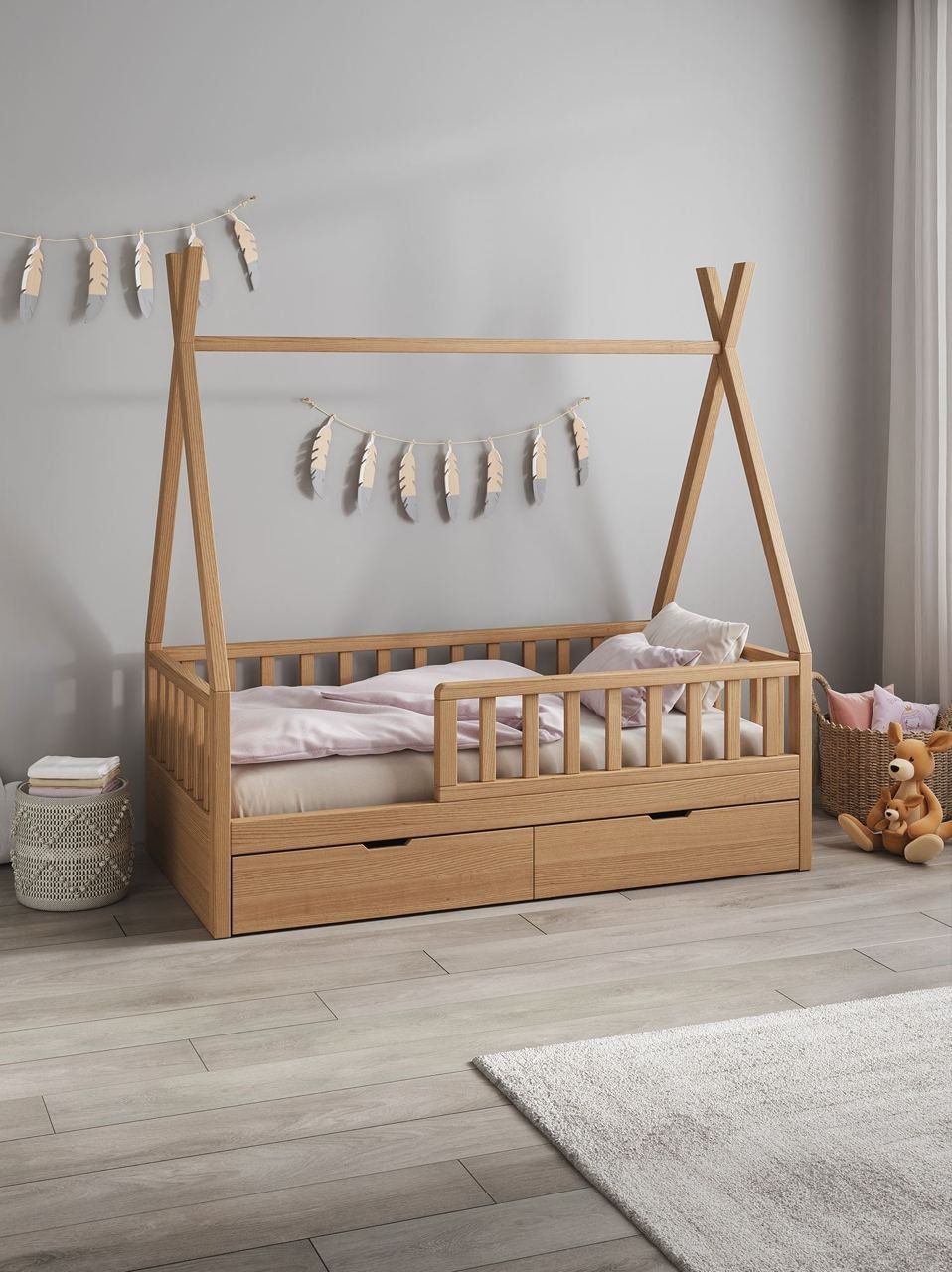
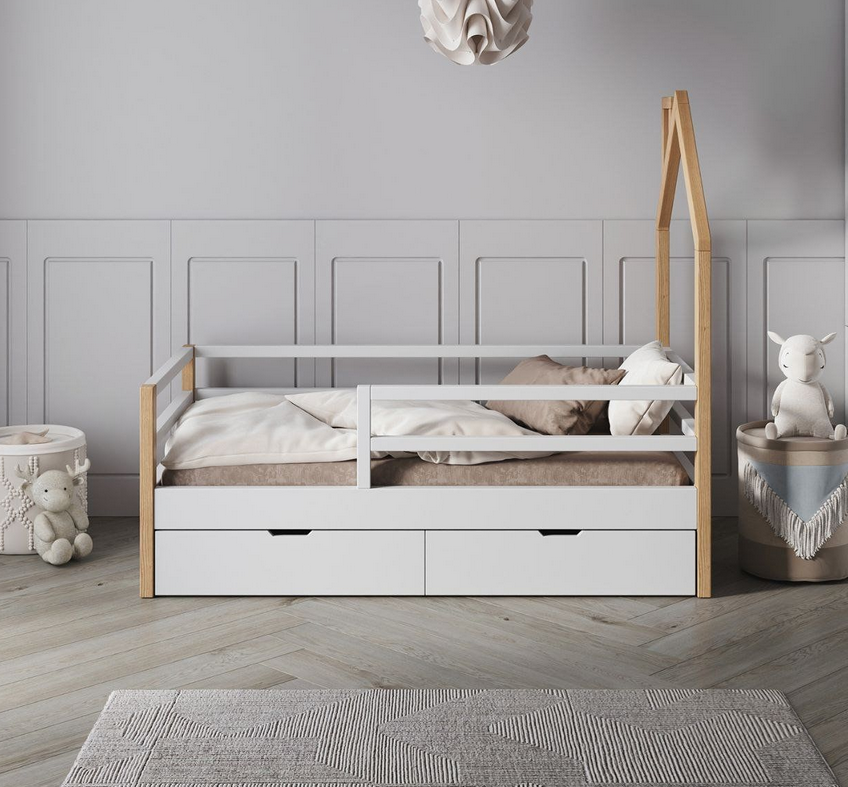
When space is tight: a house bed on the upper level
If the nursery is compact, the house bed can be "lifted" upwards. In the form of a bunk bed or loft bed, the sleeping place moves to the upper level, freeing up a whole zone below — for a desk, play or storage. You get the same cosy home, only more economical on space: the bed takes up as much floor as an ordinary one but offers twice as many functions. For one child it's more of a loft bed (sleeping up top, a work zone below); for two, it's the classic second tier. One rule stays cast-iron: the upper level is used from 6 years.
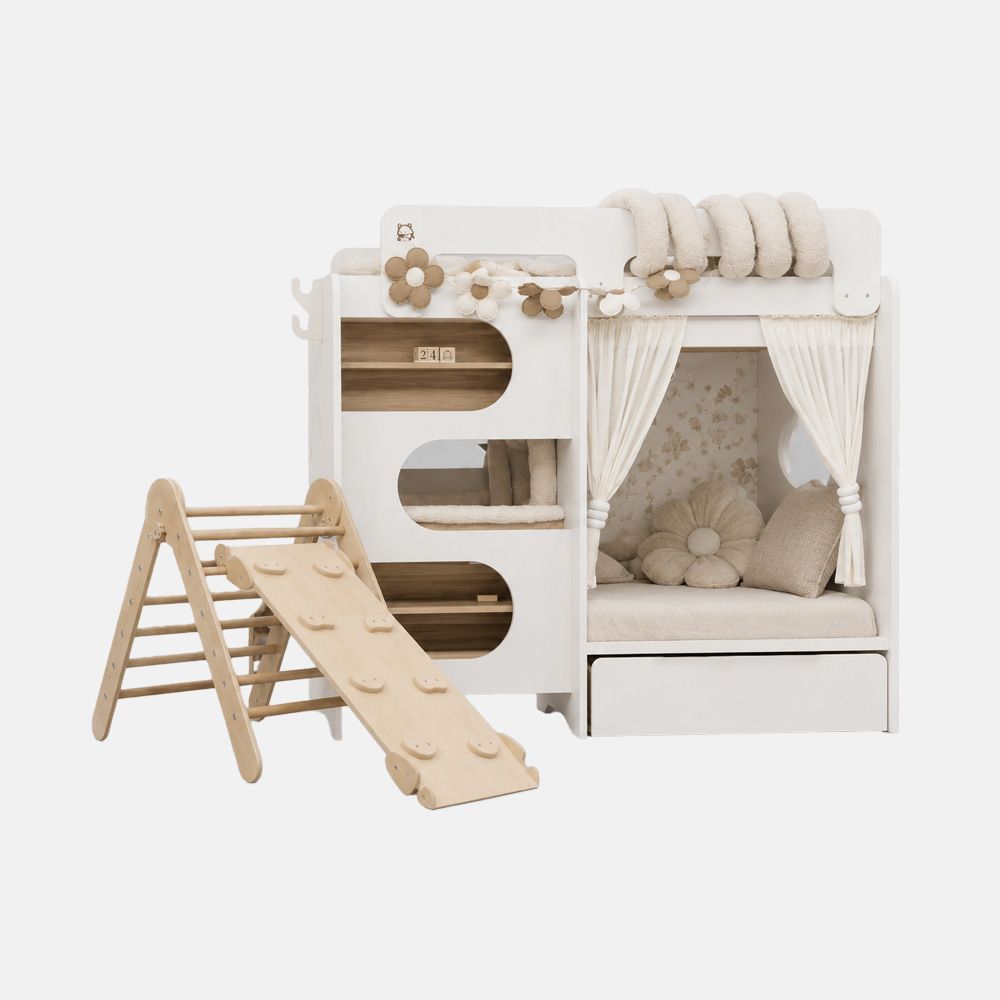
The full selection of shapes and sizes is in the house beds category. When choosing, look not only at the silhouette but also at the size of the sleeping place (so it lasts a few years) and at whether a guard rail is needed right now.
Frequently asked questions
From what age is a house bed suitable for a child?
Roughly from 1.5 to 3 years, at the stage of moving on from a cot. For younger ones there are models with a guard rail; the main criterion is the child's readiness to sleep in a "grown-up" bed, rather than an exact age.
Until what age does a house bed serve?
Usually until 6 or 7 years — depending on the size of the sleeping place. After that a child moves on to an ordinary teenager's bed. So it's worth choosing a model with a long enough mattress from the outset.
Is a fabric roof or canopy safe?
Yes, provided it's securely fastened and free of loose cords or loops within the child's reach, and the fabric is light and "breathes". The main safety, though, comes not from the roof but from the low profile of the frame.
Why have a house bed at all, and how is it better than an ordinary one?
It gives a child a sense of their own space (calmer settling), combines sleep and play in one piece of furniture and, thanks to its low profile, supports Montessori-style independence.


