Montessori Bed and Furniture: What It Is, the Philosophy and From What Age
- A Montessori bed and furniture: what it is, the philosophy and what age it's for
- The method in brief
- What makes furniture "Montessori"
- The floor bed: the heart of a Montessori room
- Shelves the child takes from themselves
- The small things that teach independence
- The upsides and honest caveats
- Frequently asked questions
A Montessori bed and furniture: what it is, the philosophy and what age it's for
Picture a room where a two-year-old reaches a book off the shelf on their own, climbs into bed on their own and reaches for a sweater on a hook on their own. Nothing here is too big or too high — the space is designed around the child, not around an adult who lifts, hands over and puts away every time.
This is what a Montessori environment is — and it rests largely on the furniture. Let's keep it simple: what the approach is really about, what actually makes Montessori furniture Montessori, why a floor-level Montessori bed is used and from what age — with honest caveats where they're needed.
The method in brief
The method was created by the Italian doctor and educator Maria Montessori more than a century ago. Her core idea fits into one phrase: "help me to do it myself." The adult doesn't do things for the child — they arrange the space so the child can manage on their own.
Hence the key notion of a "prepared environment": a room deliberately organised around the child's height and abilities, so they can move freely, choose an activity and act without constant help. The freedom here isn't chaotic — it's within a considered order. And it's the furniture that makes that freedom possible.
What makes furniture "Montessori"
Not a brand or a label, but a few simple principles. Montessori furniture is:
- child scale — everything at the child's level, not the adult's;
- accessibility — the child takes, uses and returns things themselves, no "lift me up";
- low height — so they can climb in and out on their own and safely;
- natural materials — mostly wood, pleasant to touch and honest;
- stability and safety — furniture that doesn't tip when leaned on;
- simplicity — no visual or functional excess, so nothing distracts.
The whole Montessori set lives by these principles: a floor bed, low open shelves, a table and chair by height, a wardrobe with a low rail, a floor-level mirror and a "helper tower" by the counter. Each piece removes a barrier between the child and their independence.
The floor bed: the heart of a Montessori room
A floor bed is a mattress in a low frame almost level with the floor, without high sides. The point is simple: the child lies down when tired and gets up when awake — instead of waiting to be lifted out of the "cage" of a cot. That's freedom of movement in action. Such low beds grow with the child for longer than a classic cot.
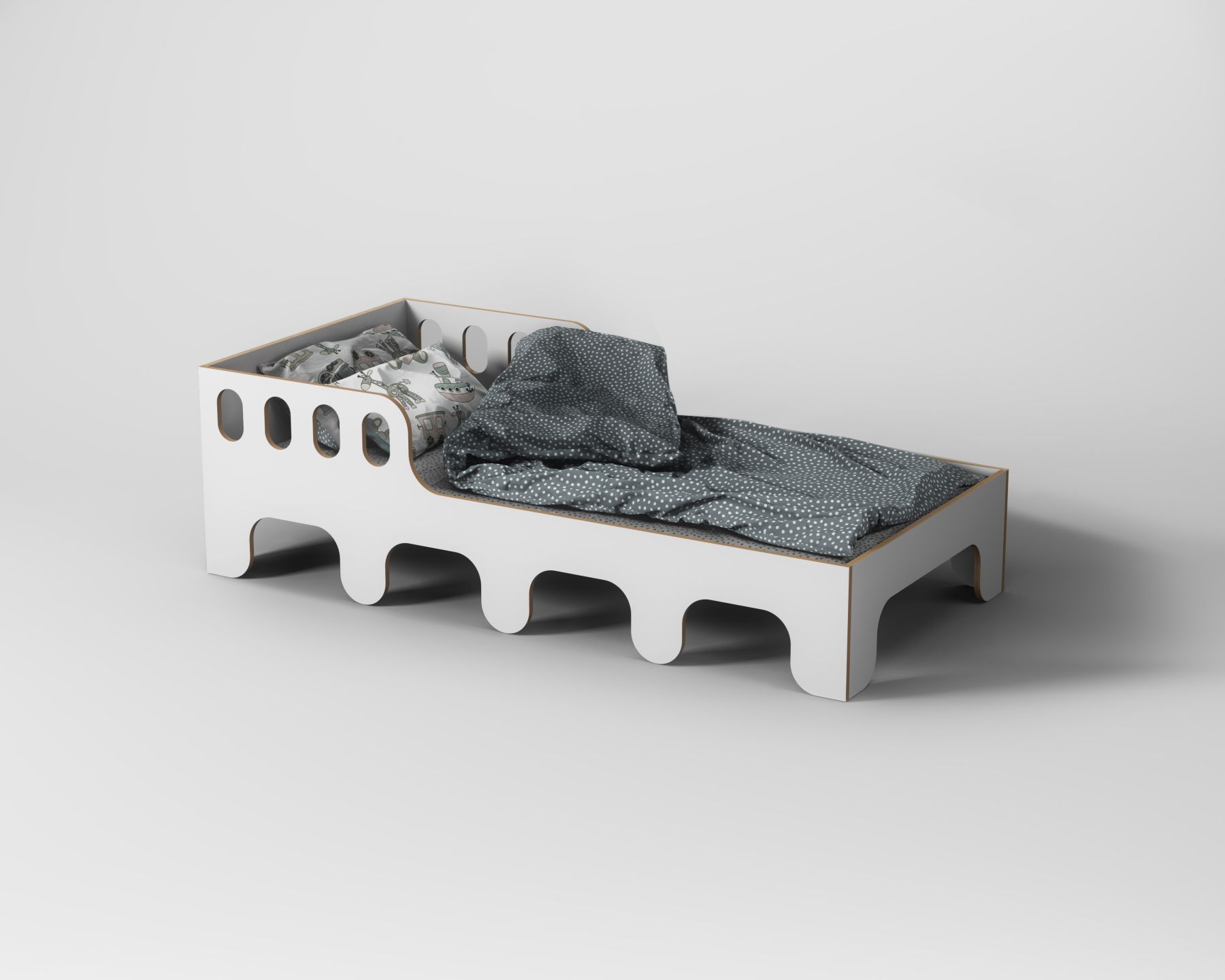
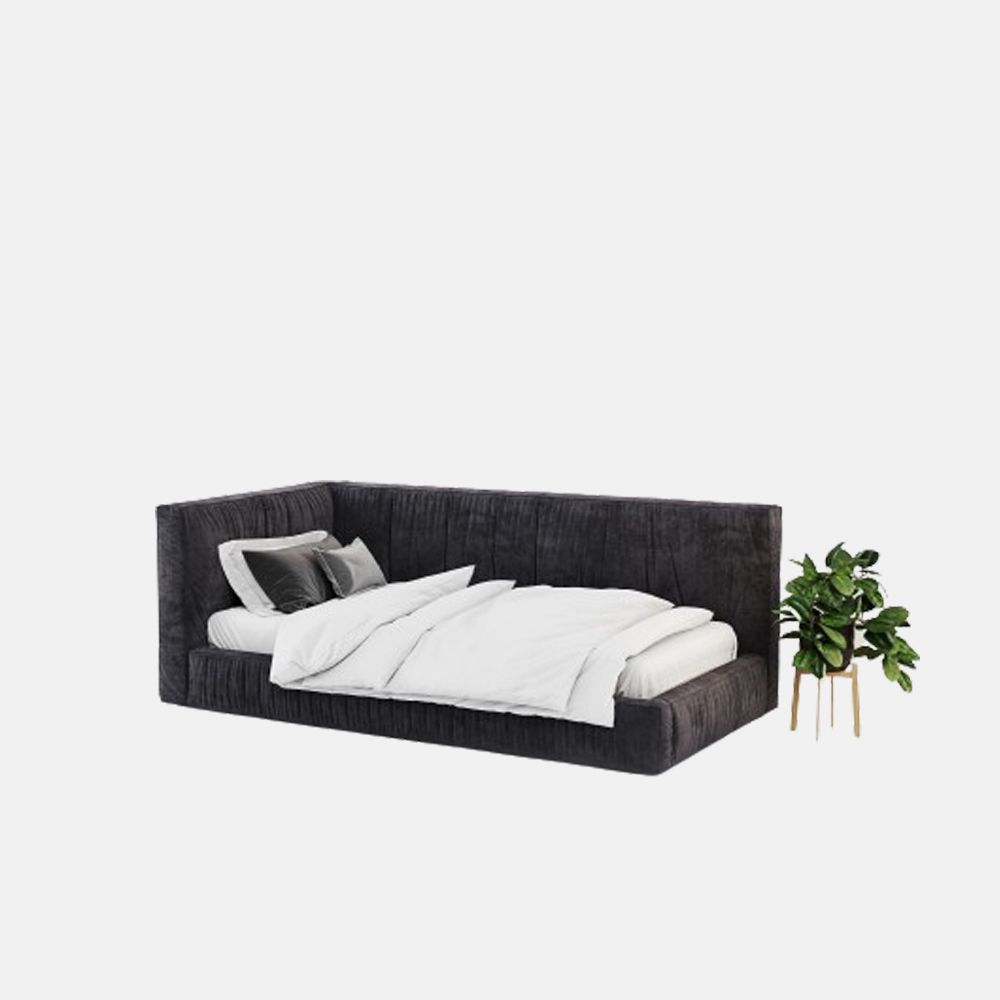
What age — that's where sources differ: some introduce a floor bed once the child sits and crawls confidently, others closer to 1.5–3 years by readiness. There's no hard number; the guide is the individual child's motor development, not the calendar.
Honestly about safety. For babies under one, a mattress on the floor is not among the officially recommended sleep surfaces (paediatric guidance advises a certified cot/bassinet for the first 12 months). So for the youngest a floor bed is a parents' judgement call, better as a daytime/play space, while a newborn's night sleep stays in a cot.
The key thing about a floor bed isn't the bed but the prepared room around it: a thin firm mattress, a gap of about 30 cm from the wall on the open side (so the child doesn't get stuck), covered sockets, secured furniture, sharp corners and small objects cleared away. A bed without this isn't "Montessori" — it's a risk.
As the child grows, the idea doesn't disappear — it simply rises a level: the Montessori beds category also has models with a play area below, like Air House — with sleep lifted up and the space beneath becoming a place to play.
Shelves the child takes from themselves
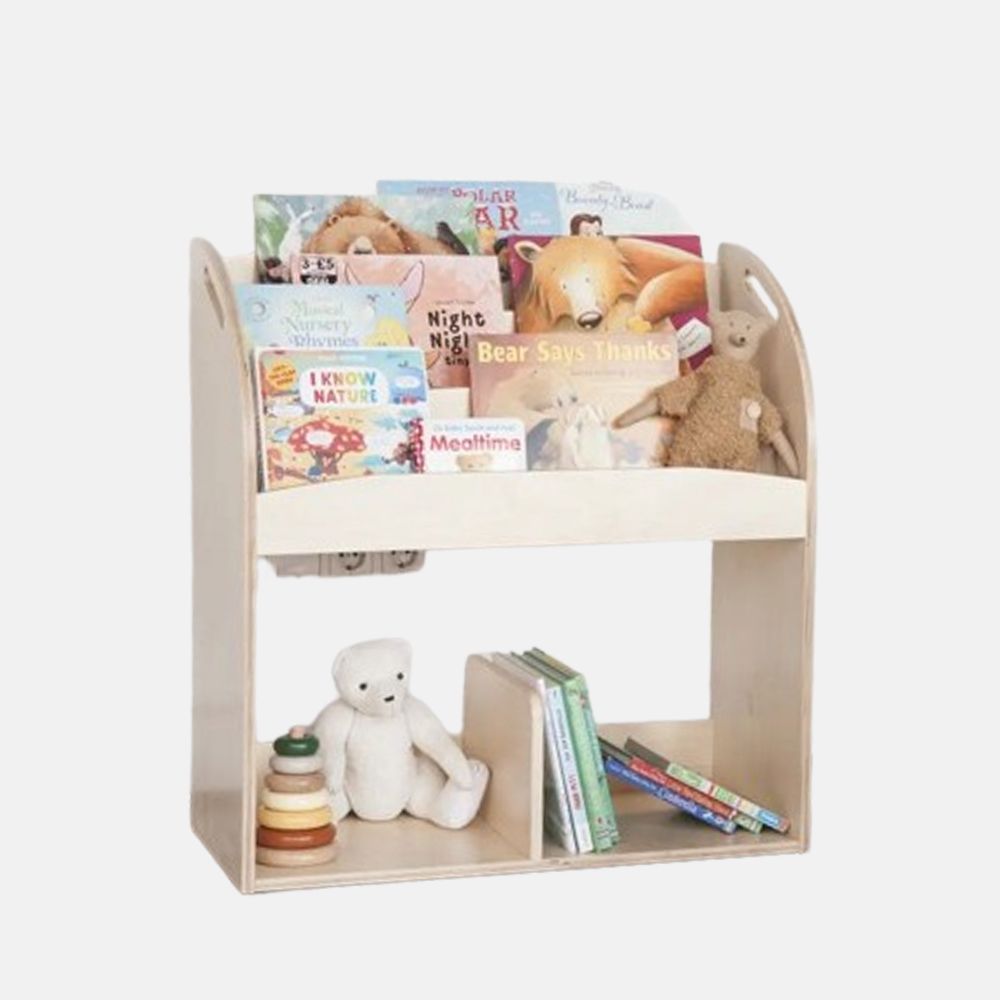
The second pillar of a Montessori room is low open shelves for the nursery. The height is roughly 60–80 cm, so the child sees the contents and reaches a toy or book themselves. The open format without doors is deliberate: everything is in view, the child makes the choice.
And the main secret people often forget: there should be little on the shelf. The guide is 6–8 activities at a time, the rest hidden and rotated periodically. Fewer things in view means deeper, more focused play, not scattered attention amid clutter. Books are placed cover-out — so the toddler chooses by the picture, not the spine.
The small things that teach independence
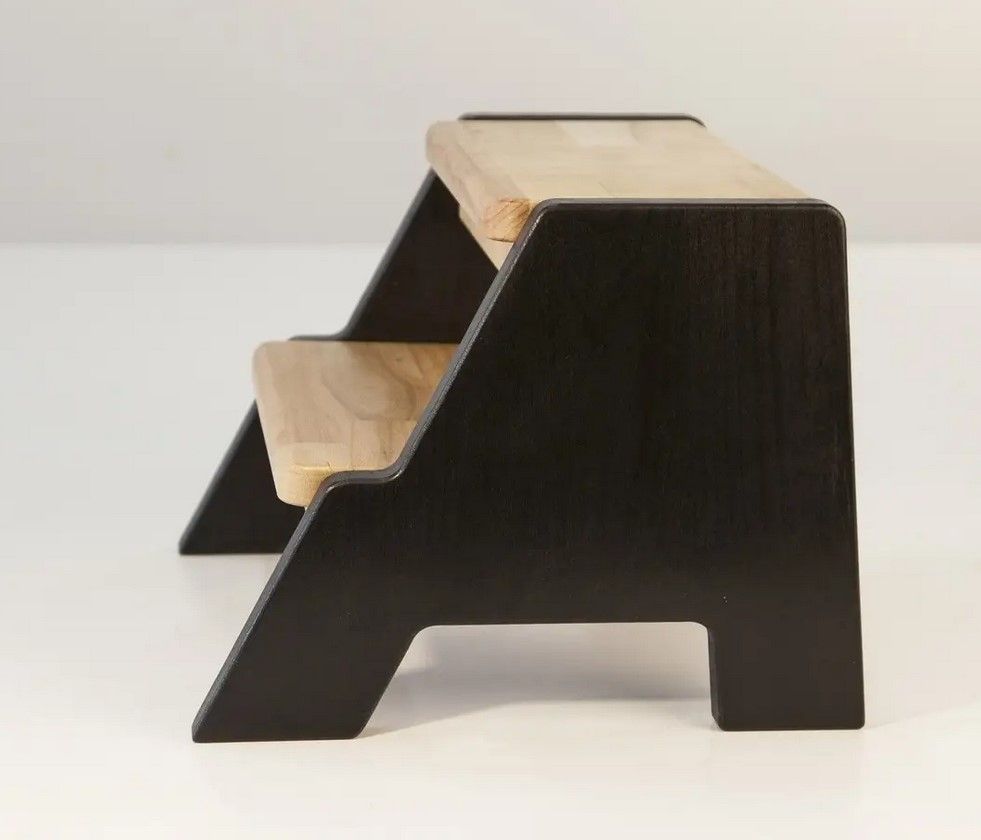
Montessori isn't one item but a system of little "I can do it myself". A floor-level mirror lets a baby watch their own movements. A table and chair by height let them sit steadily and work unaided. And a "helper tower" — a stand with steps — safely lifts the child to counter height so they wash their hands or knead dough beside the adult, rather than watching from below.
The upsides and honest caveats
What the approach gives: independence and confidence, calmer bedtimes (the child walks to their own bed), motor development, less "fighting" over daily routines. It really works — under conditions.
Caveats worth knowing in advance: a Montessori room needs careful safety setup (more work for parents at the start); for the first 1–2 weeks the child may get up and wander instead of sleeping while adjusting; and the "few toys" system only holds with regular rotation. And for babies under one — remember the paediatric sleep guidance (see above). Montessori doesn't suit every family — and that's fine.
Frequently asked questions
What is a Montessori bed and why does a child need one?
It's a low (often floor-level) bed without high sides that the child gets in and out of themselves. The goal is independence and freedom of movement: the child regulates their own sleep rather than depending on an adult.
From what age is a Montessori floor bed?
Sources give a range — from the point the child sits/crawls confidently to 1.5–3 years. The guide is the child's readiness and motor development, not an exact age. For babies under one, night sleep is better kept in a certified cot.
Won't the child fall out of a Montessori bed?
The bed sits almost level with the floor, so the fall height is minimal, and a rug goes beside it. Safety comes not from a side rail but from the low height and a childproofed room around it.
What is the essence of Montessori furniture?
Child scale, accessibility without an adult's help, low height, natural materials and simplicity. Every piece — from bed to shelf — removes a barrier between the child and their "I can do it myself".
How many toys should be on the shelf?
Around 6–8 activities at a time, the rest hidden and rotated. Fewer things within reach means deeper, calmer play.


