Kids Bunk Beds
For two being comfprtable together
Kids bunk beds give a child's room more air: more floor space for play, study, movement and everyday rituals. At MAIIMO, bunk beds for kids are selected for shared rooms, compact spaces and interiors where size matters, but safety, calm and a beautiful children's scene matter just as much.
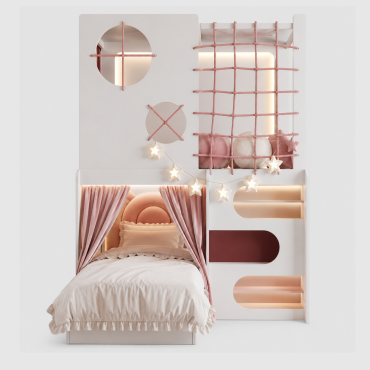
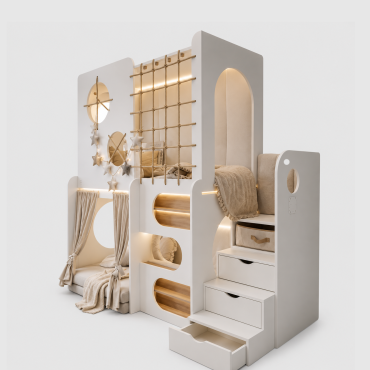
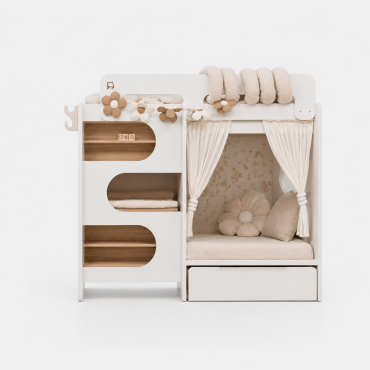
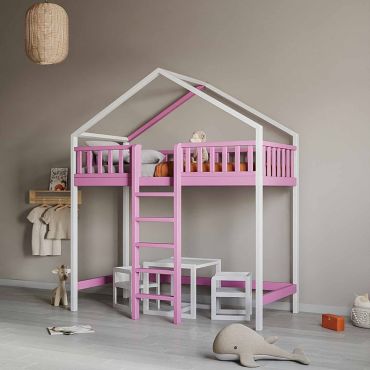
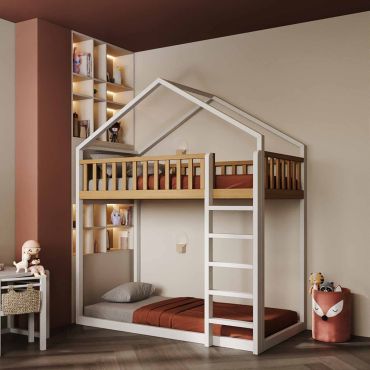
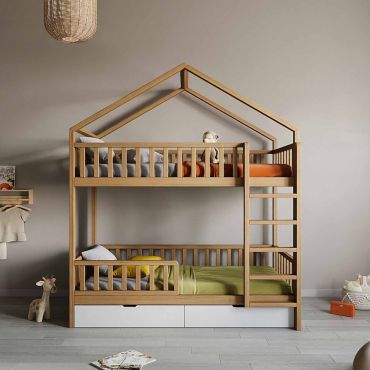
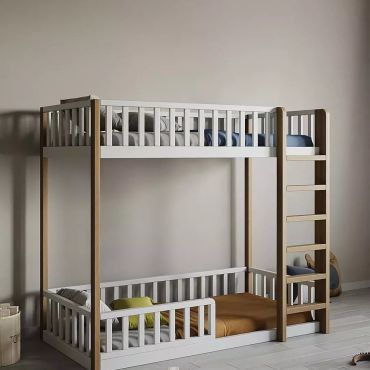
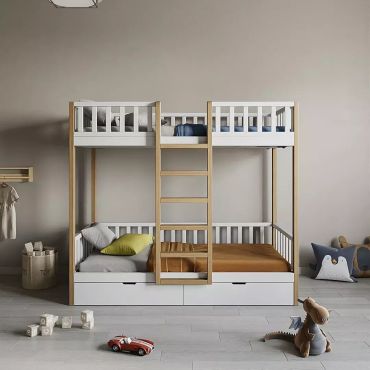
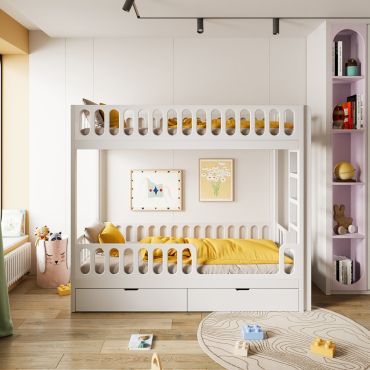
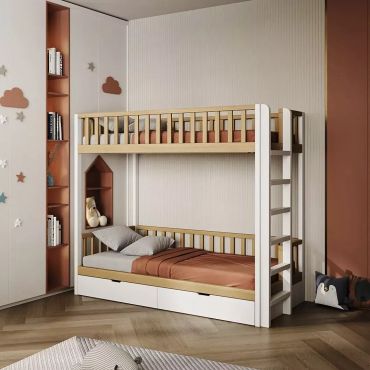
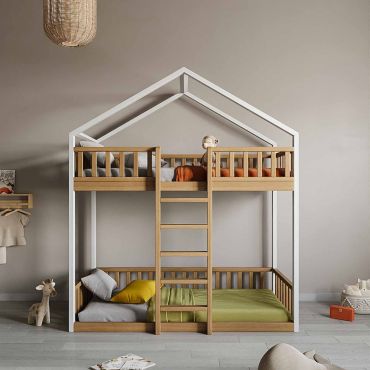
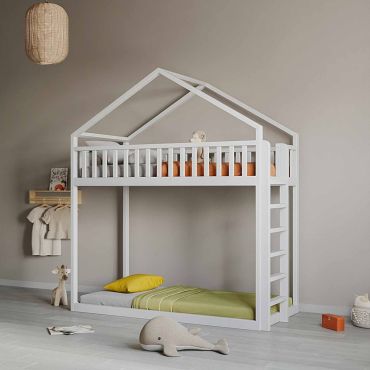
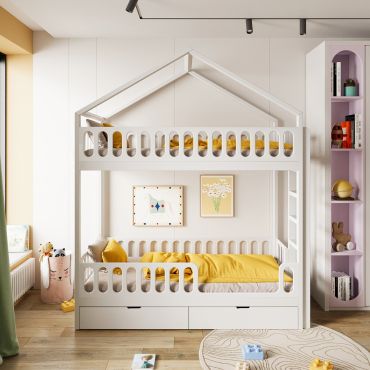
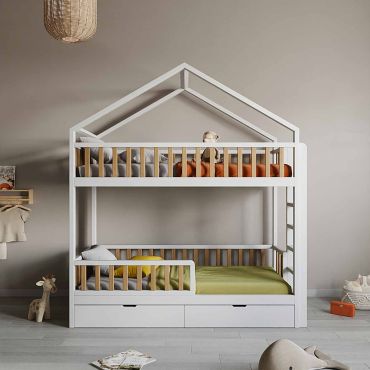
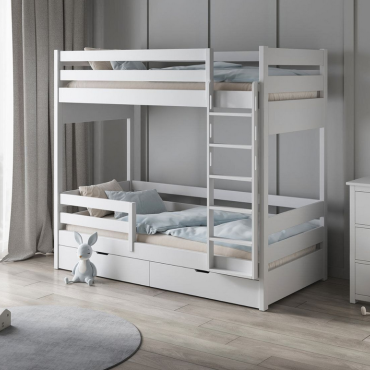
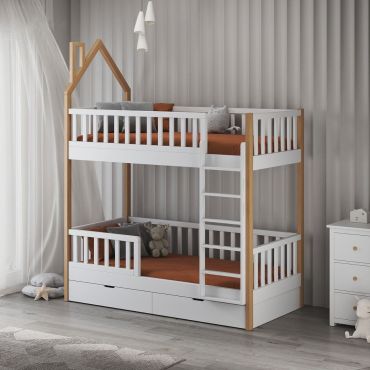
Kids bunk beds: how to choose a bed for two children
Kids bunk beds are no longer just a practical answer to a small room. Today they can become an architectural part of the child's space: they add vertical rhythm, open the floor, give each child a feeling of their own territory and help the whole room feel calmer.
Bunk beds for kids work especially well when two children share one room, or when parents want to keep more space for play, shelves, a desk, a wardrobe or a soft reading corner. The bed does not simply stand in the room; it changes how the room lives.
What kids bunk beds are and who they suit
Kids bunk beds have two sleeping levels: one below and one above. Most families choose them for two children, but the format can also suit one child if the room needs a guest bed, a place for sleepovers or a future second sleeping spot.
A kids bunk bed does not suit every room automatically. Ceiling height, the distance above the top bunk, the width of the walkways and the child's daily route through the room all matter. A good bed should save space without turning the room into an obstacle course.
Children's bunk beds are at their best when they sit inside a complete room plan. There should still be space for storage, light, clothes and little personal things. If you are planning the room from zero, it is useful to compare this format with the wider kids beds selection: single beds, Montessori beds, house beds and other options.
Bunk beds for kids in a small room
Bunk beds for kids are often chosen to save floor area, but their real value is not only measured in centimeters. When two sleeping places are arranged vertically, the floor becomes freer: for a rug, toys, movement, morning rituals or simply the feeling that the room can breathe.
Compact bunk beds should be planned together with storage. If there is an open shelf, a dresser or toy shelves nearby, it becomes easier for a child to keep order, and parents do not have to invent a new place for books, board games and everyday small things.
Compact bunk beds should not feel reduced or temporary. A good model keeps the balance: enough sleeping length, a comfortable ladder, clear guardrails, a stable frame and visual lightness. In a small room, the bed should feel like a clean vertical line, not a dark block.
Kids bunk bed safety: guardrails, ladder and height
A kids bunk bed should always be evaluated through safety. The upper level needs reliable guardrails, a stable structure, a clear ladder and enough height so the child can sit above without feeling pressed against the ceiling.
A bunk bed for kids is best chosen through the child's real movement: how they climb, where they place a foot, what they hold, whether the ladder blocks drawers or the wardrobe. Safety begins with a movement that will repeat every day.
Kids bunk beds with guardrails need special attention if the upper level is meant for a younger child. If protective sides are your main concern, compare them with kids beds with guardrails, then return to the bunk format with clearer priorities.
The top bunk and the child's age
Bunk beds for children with an upper sleeping level are better for a child who already climbs confidently, uses the ladder calmly and understands the rules of sleeping above. Younger children often feel safer on the lower level, while the top bunk can belong to the older child.
Children's bunk beds should work not only today, but also in a few years. Look at the length reserve, the height between levels and whether the lower bunk will still be comfortable when the children grow. A good design should not become physically or emotionally too small too soon.
Ladder, steps and guardrails
A kids bunk bed may have a vertical ladder, an angled ladder or steps with extra storage. A vertical ladder saves more space, an angled one is usually easier to use every day, and steps can add another function: storage for toys, bedding or seasonal items.
Bunk beds for kids should be checked with hands as much as with eyes: whether the structure wobbles, whether the steps are slippery, whether the guardrails are high enough, whether there are sharp corners where the child moves actively. A child's room lives quickly, so the bed must be ready for more than sleep.
Materials: wooden kids bunk bed, plywood and MDF
Kids bunk beds are often made from wood, plywood, MDF or mixed materials. In a child's room, beauty and color are not enough; the structure, surface finish, safe coatings and tactile feeling matter just as much.
A wooden kids bunk bed brings warmth and ages beautifully in an interior. Pale wood adds air, deeper wood creates a more graphic accent, and a painted surface can support the color of walls, textiles or a wardrobe.
Children's bunk beds made from plywood can look lighter and more contemporary than heavy solid constructions. Plywood holds geometry well, allows softer rounded forms and expressive silhouettes, which is important in a child's room: less visual weight, more space for play.
A kids bunk bed made from MDF or combined materials should be checked through edging, finish and joints. In a child's room, surfaces constantly meet hands, textiles, books and toys, so the material must be beautiful in photos and durable in real life.
Bunk beds for children in different room scenarios
Bunk beds for children change the room depending on who lives there. For a brother and sister, privacy matters; for two children of the same age, balance matters; for teenagers, personal territory matters; for a small room, order between sleep, study and play matters.
Kids bunk beds should not be placed as a random large object. Think through reading light, clothing storage, access to the window and whether the upper level blocks natural light. These small details decide whether the room will feel easy every day.
For a brother and sister
A kids bunk bed for a brother and sister should give each child a personal place. This can be supported with different bedding colors, individual shelves, separate lamps or a small wall area near each sleeping level.
Bunk beds for kids in a shared room often look best with a neutral base: natural wood, warm white, soft gray, muted green or quiet sand tones. Such a palette does not lock the room into a strict “boy” or “girl” theme and lets the children grow.
For two boys or two girls
Bunk beds for children in a room for two boys can be more graphic: clean lines, natural wood, contrasting details, strong steps, room for books and building sets. For a wider room scenario, you can also view beds for boys.
Children's bunk beds for two girls do not need to be pink or overly decorative. A calm shape, light wood, delicate textiles and space for books, a lamp and favorite little objects often work better; for a softer format, compare them with beds for girls.
For a teenager's room
Kids bunk beds for teenagers should feel less childish in their image. Calm geometry, balanced colors, good height between levels, the possibility of adding a study zone and enough space for personal items become especially important.
A kids bunk bed in a teenager's room can preserve privacy without rebuilding the space. The upper and lower levels may feel like two small separate rooms when each has light, a shelf, textiles and a clear place for personal belongings.
How a kids bunk bed differs from a loft bed
A kids bunk bed has two sleeping places, while a loft bed usually keeps one sleeping area above and uses the space below for a desk, play niche, wardrobe or storage. A bunk bed solves sleep for two children; a loft bed solves extra function for one child.
Bunk beds for kids are the stronger choice when both children need equal sleeping comfort. A loft bed can be wonderful in a room for one child, but it does not replace a true second sleeping level when the family needs two full beds.
Kids bunk beds may still include extra functions: drawers, steps with storage, open shelves or a lower niche that feels like a small sofa corner during the day. The key is to keep the structure readable and not overload it with every possible option.
Montessori, house beds and soft beds: what to compare
Kids bunk beds are only one possible answer for a child's room. If the child is very young or independence on a low level is the priority, Montessori kids beds may be more natural than an upper bunk.
Bunk beds for kids differ from house-shaped beds in function and mood. A house bed creates an intimate, playful sleeping zone; if this is closer to the room idea, view kids house beds as a separate design direction.
Children's bunk beds also differ from soft upholstered beds. If tactile comfort, padded forms and a warmer feeling near the sleeping place are central, compare the bunk format with soft kids beds before making the final room plan.
Storage around kids bunk beds
Kids bunk beds free the floor, but they do not automatically solve storage. Around the bed, it is important to plan where books, pajamas, toys, seasonal textiles and each child's personal things will live.
Bunk beds for kids with drawers can be very useful in small rooms. Still, drawers should open easily, not block the walkway and be used for things children actually need. Hidden storage is helpful only when it stays accessible.
A kids bunk bed looks more complete when it is supported by furniture from the same logic: a study desk, a correctly sized chair, a shelf for books and calm lighting. If you are planning a full room, view kids tables and chairs so the study area does not feel accidental.
What to check before buying
Kids bunk beds should be chosen after measuring the room, not only from photos. Measure the wall length, ceiling height, distance to the window, outlets, doors and wardrobe. The bed may be beautiful on its own, but in the room it must not block daily routes.
A kids bunk bed should be checked on three levels: structure, comfort and care. The structure should be stable, comfort should be real for both children, and care should be simple for parents. If beauty makes the bed hard to use every day, it will quickly become tiring.
Bunk beds for kids with drawers or storage steps are especially useful in compact rooms. But those extra features should not take away a comfortable walkway. Fewer sections with easy access are often better than many compartments that are difficult to open.
Children's bunk beds should match the children's character. Some children love a clear “top and bottom” division; others want to change places. If territory is sensitive, give both levels equally attractive details: light, shelf, color and textile.
Sizes and planning: how to avoid mistakes
Kids bunk beds need accurate planning before purchase. Measure not only length and width, but also ceiling height, radiator placement, windowsill height, outlets, doors and wardrobe openings. In a child's room, the space around the object matters as much as the object itself.
A kids bunk bed should not stand too close to a window if the upper level reaches the windowsill or higher. It is also better to avoid a layout where the ladder opens directly into the doorway, a sharp wardrobe corner or the main walking route.
Bunk beds for children look and work better when they have a calm background. In a small room, leave one clean wall or light textile near the bed instead of too much decor. The vertical structure is already active enough, so the surrounding space should help it breathe.
Bunk beds for kids are often placed in a corner, and this can be a smart decision. Just check whether you can still make both beds, open drawers, change bedding and reach the lower sleeping place comfortably. Good planning is visible in the small daily actions.
Typical mistakes when choosing bunk beds for kids
Bunk beds for kids should not be chosen only by the smallest footprint. A model that is too tight quickly feels temporary: the child cannot sit comfortably, parents cannot help easily, and the room loses the lightness the bunk bed was meant to create.
A kids bunk bed should not be too adult or too decorative. In the first case, the room becomes cold; in the second, the child may outgrow the theme fast. Calm forms with one expressive detail usually live longer.
Children's bunk beds are sometimes bought “for growth”, while the child's current age is forgotten. If a younger child is not ready for the upper level, decide clearly who sleeps where and do not turn climbing up into a daily negotiation.
Kids bunk beds should not be overloaded with functions when the room is already complex. Drawers, steps, shelves, niches and panels are useful only if they do not make the bed heavy. A clean silhouette with a strong frame can look better and live longer.
Care and durability in a child's room
Kids bunk beds have to handle a more active life than many adult pieces of furniture. Children touch the frame, sit on the steps, catch blankets on the rails, place books on the edge and often use the bed as a small second floor of the room.
Children's bunk beds with natural or painted surfaces should be wiped with a soft damp cloth and kept away from aggressive cleaning products. Steps, guardrails and hand-contact areas deserve the most attention.
Bunk beds for kids should be checked from time to time for stability: whether fittings have loosened, whether a squeak appeared, whether steps and guardrails still feel firm. This simple habit helps the structure serve longer.
A kids bunk bed stays relevant longer when it is not tied to a narrow theme. A calm color, good material, balanced form and the possibility to change the room mood through textiles make the bed flexible: childlike today, almost teenage tomorrow, still in the right place.
Why buy kids bunk beds at MAIIMO
Kids bunk beds at MAIIMO are selected for interiors where a child's room is not treated as a temporary corner. It is a place where a child sleeps, grows, reads, argues, makes peace, gathers things and slowly builds a sense of home.
A kids bunk bed in the MAIIMO selection can be viewed not only as a practical purchase, but as part of a designed room. We pay attention to silhouette, materials, proportions, safe details and how the model feels near other furniture.
Bunk beds for kids from Ukrainian makers answer the need for a contemporary child's room without extra visual noise. Natural textures, clean geometry, quiet colors and thoughtful details live longer than seasonal decor or overly themed solutions.
Kids bunk beds are worth buying at MAIIMO if you want to compare not only price, but the feeling of an object in the room. Shape, maker, materials, neighboring furniture and calm consultation all matter when the goal is a room that feels alive, not crowded.
FAQ: kids bunk beds
Which kids bunk beds are best for two children?
Kids bunk beds for two children are best chosen by age, ceiling height, the children's character and the room scenario. A stable frame, reliable guardrails, a comfortable ladder and enough space between levels are the strongest starting points.
What age is a kids bunk bed suitable for?
A kids bunk bed is suitable when the child climbs confidently and understands the rules of safe sleep on the upper level. Younger children usually feel better on the lower bunk, while the upper level can belong to the older child.
Are bunk beds for kids safe for a younger child?
Bunk beds for kids can be safe for a younger child if the younger child sleeps on the lower level and the upper level has high guardrails and a stable ladder. For very young children, simple access to the sleeping place is essential.
How tall should a kids bunk bed be?
A kids bunk bed should leave comfortable space between the upper level and the ceiling, so the child can sit without feeling squeezed. The lower level height also matters because adults need to help, make the bed and reach things comfortably.
What is better: a kids bunk bed or a loft bed?
A kids bunk bed is better when you need two full sleeping places. A loft bed is better for one child when the area below the sleeping level should become a desk, play niche or storage zone.
Should you choose bunk beds with storage drawers?
Bunk beds with storage drawers are useful in small rooms where every centimeter should work. The main thing is to check that the drawers open easily, do not block the walkway and are truly needed for everyday items.
Which materials are best for kids bunk beds?
Kids bunk beds can be made from wood, plywood, MDF or combined materials; the best choice depends on the room style and daily load. Strength, safe coating, smooth edges and easy-care surfaces are more important than a pretty photo alone.
Are bunk beds for children suitable for different ages?
Bunk beds for children of different ages can work well if the levels are assigned thoughtfully: the older child often sleeps above, the younger one below. Separate light, shelves and personal storage also help each child feel their own place.
How do you place kids bunk beds in a small room?
Kids bunk beds in a small room usually work best along the longest wall or in a zone where they do not block the window or door. Keep a free walkway, nearby storage and a calm spot where the child can sit or change clothes.
Where can you buy kids bunk beds in Ukraine?
Kids bunk beds in Ukraine can be bought at MAIIMO, where modern models by Ukrainian makers and design brands are collected in one place. The category makes it easier to compare shape, materials, guardrails, steps, colors and room solutions for two children.