Kids house beds
Make dreams come true
Kids house beds create more than a place to sleep. They give a child a small personal space: cozy, safe, a little imaginative, and deeply functional.
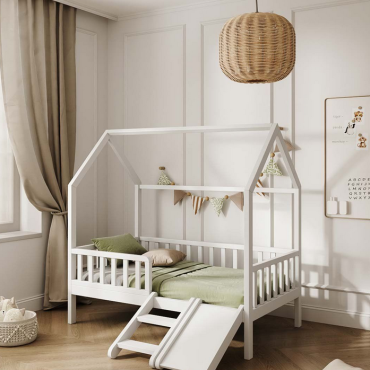
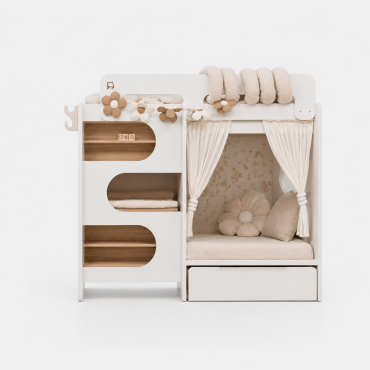
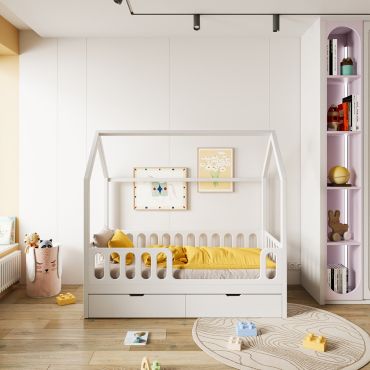
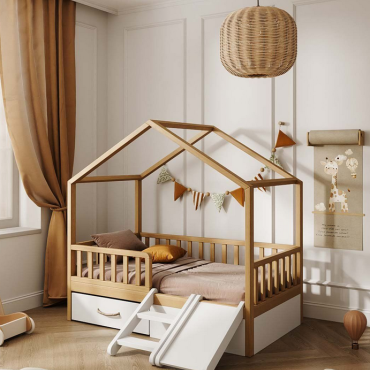
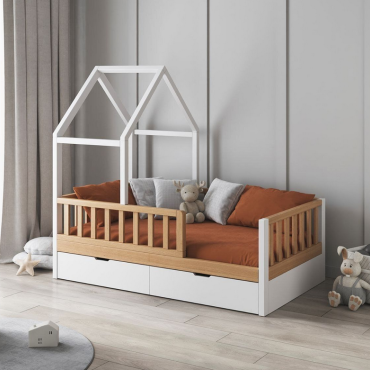
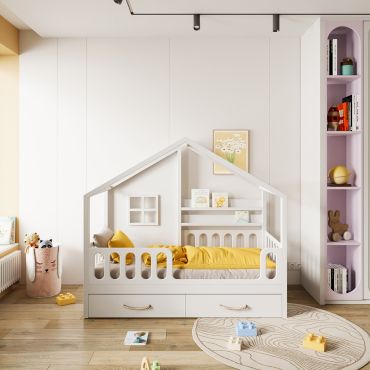
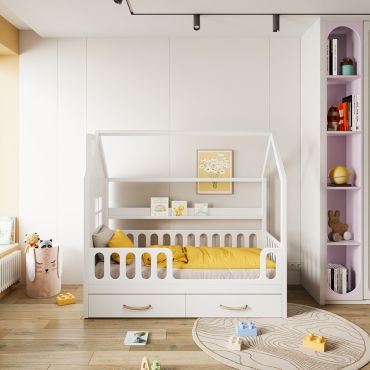
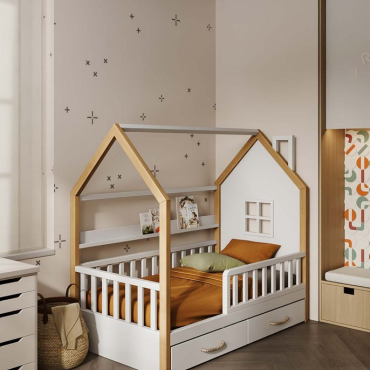
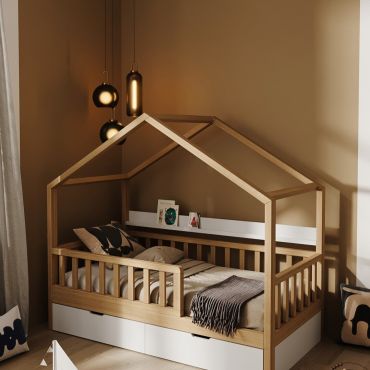
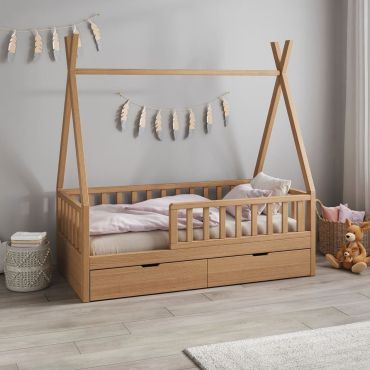
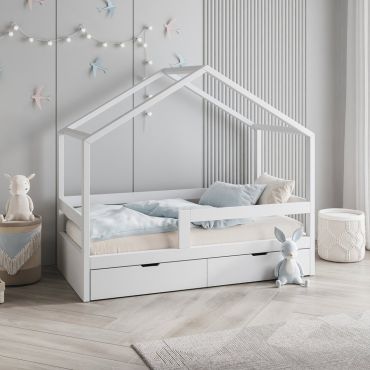
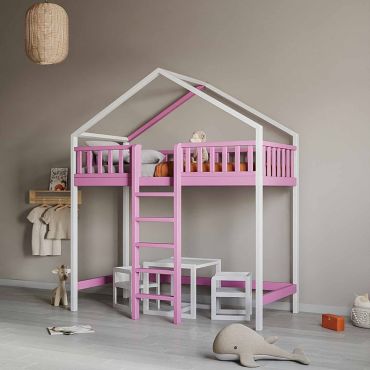
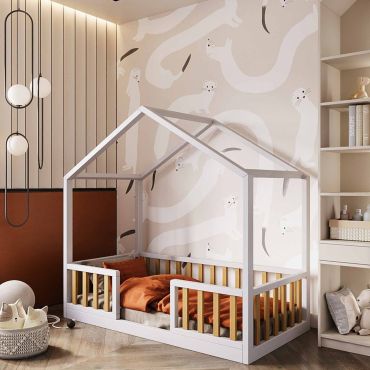
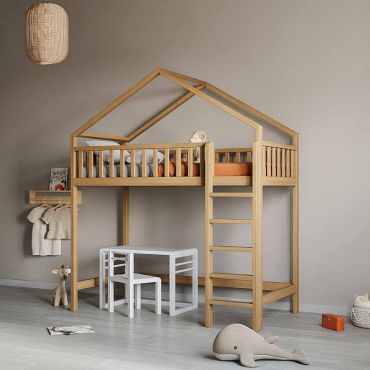
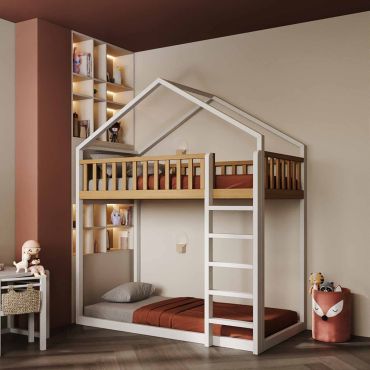
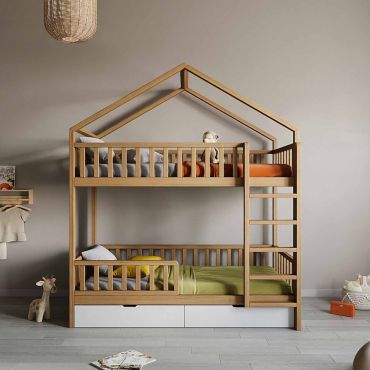
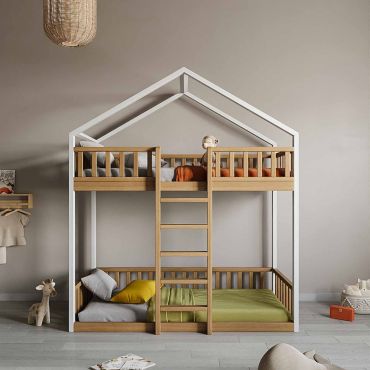
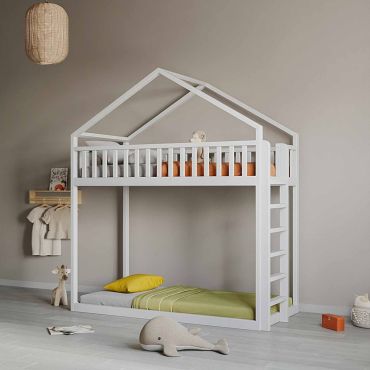
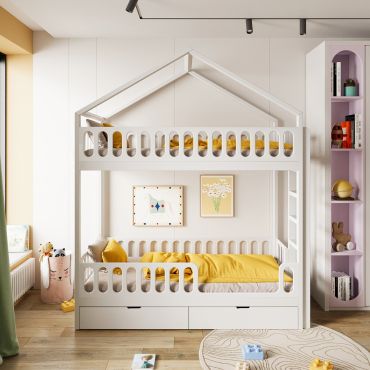
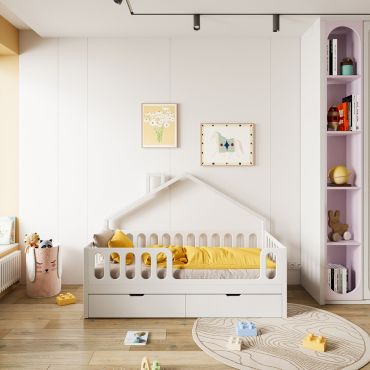
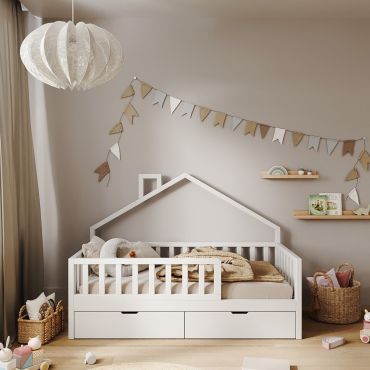
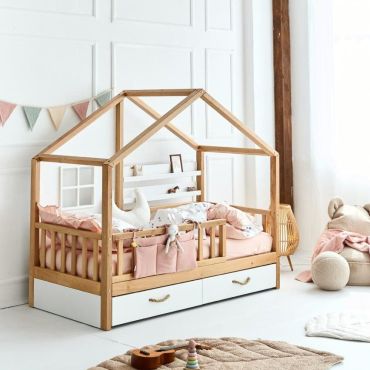
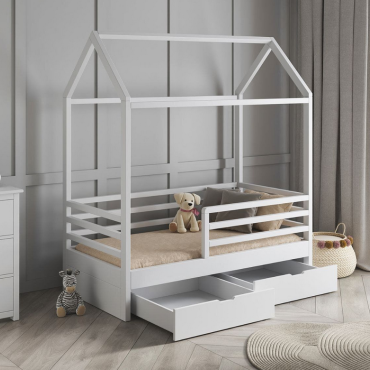
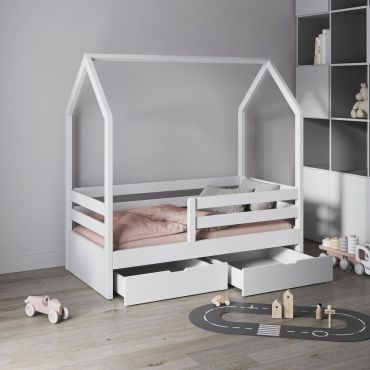
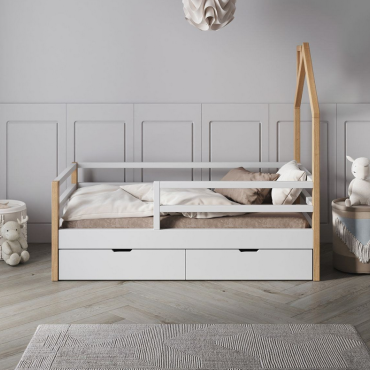
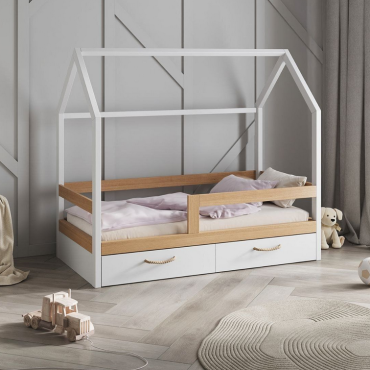
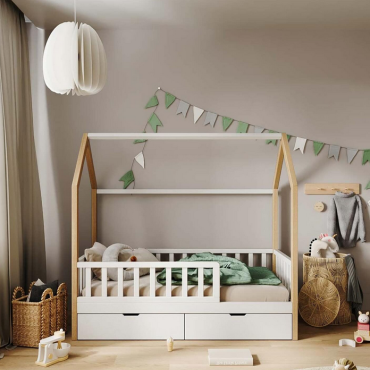
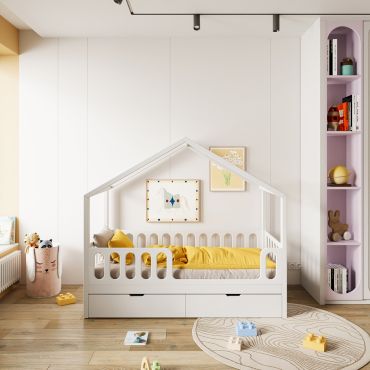
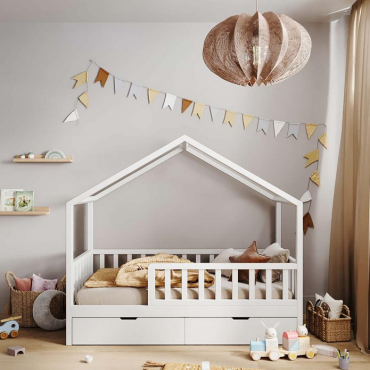
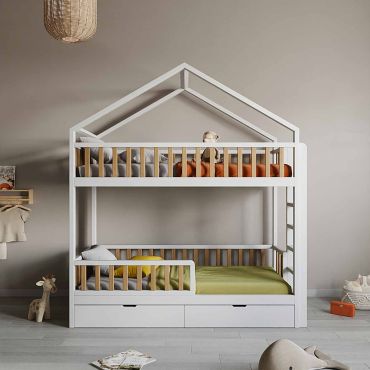
Kids house beds for sleep, play, and a room that feels personal
Kids house beds work differently from a regular children's bed. They do not simply stand in the room. They gather a daily scenario around themselves: sleep, reading, play, morning rituals, and the first feeling that a child has a small world of their own.
The house-shaped frame gives a child a sense of boundary. Not a rigid one. A soft one. Here is the bed. Here is the roof line. Here is the place to hide with a book, keep a favorite toy close, and create a bedtime ritual that feels familiar. For parents, this is also practical: the child often accepts their own bed more easily, and the room receives a clear visual center.
At MAIIMO, we look at this bed as an interior object, not just a children's item. It has to be strong, stable, pleasant to touch, safe in daily use, and beautiful. A kids room does not have to look accidental. It can be warm, modern, alive, and made of good things that do not lose their meaning after one season.
In this guide, we will explain who a kids house bed suits, how it differs from other children's bed formats, how to choose size, material, rails, drawers, and style, and what to check so the bed stays comfortable and visually relevant as the child grows.
What is a kids house bed and who is it for?
A kids house bed is a bed with a frame shaped like a small house: vertical posts, an upper frame, sometimes a roof-like outline, protective rails, or subtle decorative details. Its main idea is simple: the sleeping place becomes small architecture inside the room.
This format works especially well for children who need a clear personal corner: a place to fall asleep, read, hug a toy, hide under light textile, and feel that the room has a part that belongs to them.
House beds are often chosen when a child moves from a baby cot to a more independent sleeping format. For younger children, rails, low access, rounded edges, and stable construction matter most. For older children, the length of the sleeping place and calmer design become more important. A good house bed can stay relevant when posters, textiles, lighting, and the mood of the room change.
How a house bed differs from a regular children's bed
A house bed differs not only by shape. A regular children's bed gives a horizontal place to sleep. A house bed adds verticality, a silhouette, and a sense of space around the child. It becomes furniture, but also a little stage.
The first difference is emotional. A child may accept a bed more easily when it also feels like a place for play. It creates a space the child wants to return to, especially when independent sleep is still new.
The second difference is compositional and functional. A house-shaped outline gives the room character and makes textiles, rugs, shelves, lamps, and reading corners easier to build around it. At the same time, rails, drawers, low access, and easy mattress care still have to support real daily life.
Main types of kids house beds
Before buying, decide which format you really need: a low Montessori-style model, a classic wooden frame, a bed with rails, a bed with drawers, or a high construction. Start not with a picture, but with the child's life: sleep habits, night wake-ups, need for storage, room height, and the place where the bed will stand.
Low Montessori house bed
A Montessori house bed usually has a low sleeping level, so the child can lie down, get up, take a book, or reach a toy without constant help from an adult. It is not only about aesthetics. It is about independence, accessibility, and a calmer rhythm in the room.
A low format is convenient for younger children who are just moving into their own bed. Parents usually worry less about falling, and the child adapts faster. Still, check mattress ventilation, slats, and whether the construction is designed to sit close to the floor.
The Montessori approach does not make the room empty or severe. The space can be warm and full of life; it simply needs to be organized at the child's level. A house bed becomes the calm point in that system.
Wooden house bed with rails
A wooden house bed with rails is one of the clearest and most durable options for a kids room. Wood brings warmth, natural texture, structural stability, and the quiet look that does not tire the eye after a month.
Rails are not necessary for every child, but for younger children they often become the key detail. They help define the sleeping place, reduce the risk of rolling out, and still should leave an entrance that is easy to use every day.
In wooden models, check edge treatment, sanding, finish, smell, and frame stability. A child's bed must withstand real childhood, not just a studio photograph.
House bed with drawers for storage
A house bed with drawers works well when the room is small and there are many things to store. Drawers under the sleeping place can hold bedding, blankets, seasonal textiles, pajamas, or toys that need to disappear quickly in the evening.
But drawers must be genuinely convenient. Check whether they open easily, catch on the rug, or need too much space in front of the bed. In a narrow room, a lighter silhouette, pale wood, and simple geometry usually work better.
High or bunk-style house bed
A high house bed or a bunk-style construction can be an effective solution for a room shared by two children or for a space where the floor needs to stay more open. But this is the most demanding type: it requires careful attention to height, ladder, rails, ceiling, lighting, and the child's age.
Before buying, measure the room vertically. A child should sit comfortably without hitting the ceiling. The ladder must be stable and comfortable for daily use, and upper rails are essential.
If the child is still small or often gets up at night, postpone a high format. A children's bed should support sleep, not turn every evening into a small obstacle course.
How to choose a kids house bed: size, age, and safety
When choosing a kids house bed, it is easy to fall for the silhouette. A roof outline, soft textile, wood, small pillows, and everything looks like a Pinterest scene. But the first question should be practical: does this model suit this child and this room?
We recommend checking four things first: sleeping size, construction height, safe edges and rails, materials, and the mattress base. If these are right, the style can follow.
Sleeping size: 70x140, 80x160, 90x190, and other formats
The sleeping size determines how long the bed will remain comfortable. Formats around 70x140 or 80x160 are often chosen for younger children, especially when the room is small and the child does not yet need a full adult length. Sizes around 90x190 usually work longer and can remain relevant for several years.
Do not choose size by age alone. Look at the child's height, growth pace, room width, door position, wardrobe, and desk. A house bed has a frame around the mattress, so its external dimensions may be larger than the sleeping size itself.
Before ordering, check the exact parameters of the model: sleeping place, full length, width, frame height, rail height, and recommended mattress height. These details look small on a product page. In a real room, they decide whether the bed is actually convenient.
Rails, height, and safe edges
A house bed with rails is worth considering for younger children, active sleepers, or children who are just learning to sleep separately. A rail creates a boundary, but it should not turn the bed into a closed box. The child needs an easy entrance and a sense of freedom.
Height matters just as much. A low bed is easier to use daily, but it still needs proper construction so the mattress can breathe. A higher model looks more classic, yet requires more attention to falling risk, especially if the child moves a lot during sleep.
Edges should be rounded or well finished. Run your hand along the frame if you can. A children's bed is constantly involved in movement: the child sits down, jumps, touches the frame with toys, leans against it. Safe tactility matters as much as a beautiful color.
Materials: wood, plywood, coating, and paint
Material defines both the look and the lifespan. Natural wood brings a warm tone, living texture, and stable construction. High-quality plywood can be light, strong, and clean in shape. The name of the material is not enough; execution, finish, and assembly matter just as much.
For a kids room, choose calm materials without a sharp smell, with an even surface, no rough joints, and no sharp chips. Light wood, white, or milky finishes visually soften the house shape. If the room already has a lot of color, make the bed a calm base rather than another loud accent.
Mattress and slats: what to check before buying
The mattress for a house bed must match the sleeping size and the recommended height. If the mattress is too high, the rails may lose their function. If it is too low or too soft, the child will not sleep comfortably, and the beautiful frame will not fix that.
The mattress base should be stable. Slats help ventilation and distribute support. A solid base can also be fine if the manufacturer designed it correctly, but it is worth checking before purchase.
Do not buy the mattress and the bed separately by guesswork. It is better to check the manufacturer's recommendations or ask for guidance before ordering. In a kids room, sleep comfort matters more than any decorative effect.
House bed in kids room design
A house bed easily becomes the main object in a kids room. Its silhouette is visible immediately, so the whole composition should work around it: textile, light, storage, a work area, or a play corner.
The best kids room is not the one where every detail is “childish.” It is the one that leaves space for growth. The bed can feel warm and imaginative, but shelves, a chest of drawers, desk, and lamp should be chosen so the room does not become a decoration for one age only.
Scandinavian style and a calm palette
In a Scandinavian interior, a house bed looks especially natural: light wood, white or milky frame, simple lines, and a lot of air. Here, decoration is not the point. Proportions are. Minimum details. Maximum calm.
Natural fabrics, quiet bedding, slim shelves, a soft rug, and several warm light sources work well in this style. If you want color, add it through a blanket, pillows, or posters, not through an overly bright bed frame.
Next to the bed, a small chest of drawers for a kids room can be useful for bedding, pajamas, and seasonal things. The room stays visually clear, and everything needed remains close.
Montessori approach and child independence
The Montessori approach in a kids room is not about a trend label. It is about accessible things, clear movement, and respect for the child's independence. A low children house bed can fit this scenario well if the child can use it easily.
It is important that the area around the bed does not become chaotic. A few books on an accessible shelf, a basket for toys, a soft rug, and a small place for morning clothes already help the child feel the rhythm of the room. Independence starts with simple, repeated actions.
If you are creating a kids room from scratch, look beyond the bed. MAIIMO offers kids furniture that helps build the room as a complete space: sleeping area, storage, work zone, and soft accents.
How not to overload a small room
In a small room, a house bed can look very cozy or too heavy. Everything depends on dimensions, color, and the number of details. If the room is narrow, choose a lighter frame, pale tone, simple geometry, and no unnecessary decorative beams.
Do not place everything around it at once: a large wardrobe, high shelving, heavy desk, massive rug, and many open shelves. A house bed already has volume. Give it space to breathe.
For small things, shelves for a kids room or a low chest of drawers may work better than oversized furniture. If you need a learning area, place kids tables and chairs nearby, but keep the work zone from interrupting the calm evening atmosphere around the bed.
Interior styles where a house bed feels right
A children's bed shaped like a house does not force the whole room to become a fairy tale. It looks strongest where there is balance: a little play, a little quiet, enough air.
In minimalism, choose a simple frame, plain textile, and two or three accents. In a modern room, add color through a rug or bedding. In japandi, low pale wood, natural linen, and a calm palette work beautifully.
Mid-century modern can appear through warm wood, rounded shapes, compact storage, and muted colors. Eclectic rooms can be braver, with posters or an unusual lamp, but the base still needs to feel collected. For a soft contemporary interior, a neutral frame and kids poufs nearby create a gentle reading or dressing corner.
Common mistakes when choosing a house bed
The first mistake is choosing only by photo. A beautiful image does not show whether drawers open easily, whether the mattress is simple to make, or whether the frame blocks half of the room. Photos inspire; parameters decide.
The second mistake is choosing a model that is too “fairy-tale.” A bright roof may look sweet today, but a calmer base will live longer. Let textile, lighting, and decor carry the playful mood.
The third mistake is forgetting about care. The more complex the frame, the more surfaces collect dust. In a kids room, furniture should be beautiful, but not demand museum-level maintenance.
The fourth mistake is ignoring the next stage. Children grow quickly and change habits. Choose a model with size reserve, a calm base, and details that can change as the room grows up.
Care and everyday use
A bed in a kids room lives more actively than an adult bed. Children sit on it, read on it, jump, hide toys, and turn it into part of daily play. Care should be simple.
A wooden frame can usually be wiped with a soft dry or slightly damp cloth. Avoid aggressive chemicals, especially on children's furniture. If the finish is matte, check the manufacturer's recommendations.
Every few months, check the fasteners. The frame should stay stable, without wobbling or creaking. Air the mattress, keep the space under the bed clear unless it is designed for storage, and use textile that can be changed easily. Textile updates the mood; the bed remains the base.
Light, textile, and nearby objects: how to complete the bed area
A house bed looks best when the area around it has a calm evening scenario: soft light, a few books, a blanket, a favorite toy, and a place for water or a night lamp. These details make the sleeping place feel alive.
Lighting should be warm and not harsh. A wall lamp or small table lamp helps the child move from play to sleep more gently than one bright ceiling light.
Textile changes the mood without renovation. For a younger child, choose calm natural fabrics and soft pillows. For an older child, add a deeper color or textured rug. Nearby, a narrow shelf, toy basket, soft pouf, or the NUMO kids furniture collection can help the room feel complete without making it too matched.
Custom solutions: when they are really needed
A custom house bed makes sense when standard sizes do not fit the room, or when several functions need to meet in one piece: sleeping place, storage, low access, rail height, color, or exact alignment with an existing interior.
This is useful in narrow rooms, attic spaces, niches, rooms for two children, or places where every centimeter matters. Still, custom design should not mean excess. The best solutions are often restrained: the right size, a clean silhouette, good wood, a convenient drawer, a safe rail.
Before ordering, ask whether the child will use the bed for several years, whether the shape will stay relevant, whether the mattress size is easy to find, and whether the construction can handle active daily life.
What to check before ordering
Before choosing the final model, make a small home audit. Measure the place where the bed will stand, mark the length and width on the floor, open wardrobe doors, pull out nearby drawers, and walk the route from door to window. The bed must fit movement, not only a floor plan.
Then check height. A house bed may look light in a photo, but the upper frame adds vertical volume. If the ceiling is low, or if there is a shelf, air conditioner, sloped roof, or lamp above the bed, take this into account before buying.
Check the mattress separately. Its height should work with the rails, and its size should match the sleeping place exactly. A mattress that is too large will deform. One that is too small will leave gaps. One that is too high can make the rail almost decorative.
Also check the bed's position relative to windows, heating, sockets, and morning light. It should not stand where the child is exposed to drafts, overheating, or uncomfortable brightness. If the child's age allows it, ask them to “try on” the future place too. They may notice where it feels easiest to climb in, sit with a book, or keep a favorite toy.
Finally, think ahead. A child grows faster than a quality bed changes. Choose a model that can handle new textile, another wall color, the first desk, more books, and fewer toys.
How to choose a house bed that will not feel outdated in a year
A kids room changes faster than any other room in the home. Today, the child wants a fairy tale. Tomorrow, more independence. That is why a house bed should be chosen as a base object, not a one-season decoration.
The safest path is a restrained shape, good proportions, quality material, and a neutral frame. The imaginative mood can come from textile, night light, posters, blankets, and favorite toys. When the child grows, these things are easy to change.
Look at details that are not tied to age: comfortable height, strong base, simple access to the mattress, easy cleaning around the bed, and enough length. At three, the bed can be a little house for stories. At eight, it can become a calm wooden base for a more grown-up room.
Why buy kids house beds at MAIIMO
To buy kids house beds at MAIIMO is to choose not just a beautiful image, but an object that must work in a real kids room. We look at this furniture through three things: safety, design, and long life in the interior.
MAIIMO brings together Ukrainian designer furniture, lighting, and decor with character. In a children's category, this matters especially: objects should not be only sweet. They should be stable, comfortable, clear for parents, and pleasant for the child.
If you are furnishing the whole kids room, choose the bed together with storage, a writing or creative area, lighting, and soft accents. At MAIIMO, you can explore kids beds, beds for girls, and beds for boys as part of a complete room scenario.
Our advice is simple: do not buy a house bed only because it looks sweet. Buy it when it fits the child's age, the room size, your rhythm of life, and the kind of home you want to create.
10 FAQ — kids house beds
What is a kids house bed?
A kids house bed is a bed with a house-shaped frame that combines a sleeping place, a play scenario, and the feeling of personal space. It can be low, classic, with rails, with drawers, or Montessori-inspired.
It is not chosen only for decoration. A good house bed helps a child move more calmly toward independent sleep and makes the room feel more collected.
How is a house bed different from a regular children's bed?
A house bed has a vertical frame that creates the feeling of a small house around the sleeping place. A regular children's bed mainly gives a place to sleep, while a house bed adds emotional comfort and becomes the visual center of the room.
At the same time, functionality depends on the model. Rails, height, material, mattress base, and drawers should be as well considered as the shape.
What age is a house bed suitable for?
A house bed can be suitable from the moment a child moves out of a baby cot, but the exact age depends on height, rails, and the child's sleep behavior. For younger children, low models with safe edges are usually better.
If the child often gets up at night or moves a lot while sleeping, look at low access, rails, and frame stability. For older children, sleeping length and calmer design become more important.
What size house bed should I choose?
The size of a house bed depends on the child's age, height, and room area. Younger children often use 70x140 or 80x160 formats, while older children may need 90x190 or similar adult-length sizes.
Before buying, check not only the mattress size but also the full external frame dimensions. A house bed can add width, length, and height that matter in real room planning.
Does a kids house bed need rails?
A house bed with rails is often useful for younger children or for those just getting used to a separate sleeping place. Rails help define the bed boundary and reduce the risk of rolling out.
It is best when rails leave a comfortable entrance and do not make it hard to make the bed. For older children, rails can be lower, partial, or removable if the construction allows it.
Can a house bed have drawers?
Yes, a house bed with drawers is a practical option for a small kids room. Drawers can store bedding, blankets, toys, or seasonal things if they open easily.
Before buying, check whether there is enough space in front of the bed to open the drawers. If a desk, chest, or thick rug stands nearby, large drawers may be less convenient than they seem.
Is a house bed good for a small kids room?
A house bed can work in a small room if it has a light silhouette, correct dimensions, and no excessive decorative details. A pale frame, simple lines, and thoughtful storage help preserve air in the room.
In a small room, measure not only the sleeping place, but also the full height and width of the frame. The house shape should feel cozy, not take over the entire visual space.
Which is better: a house bed or a Montessori bed?
A house bed and a Montessori bed do not always compete. A low Montessori house bed can combine both ideas: the house-shaped frame and easy independent access for the child.
If the main goal is independence, look at height and accessibility. If you want a stronger visual center in the room, the house shape will add more character.
Will a child get bored of a house bed after a few years?
A house bed will not feel outdated quickly if you choose a calm base model without overly babyish details. The best options are simple wooden frames, restrained colors, comfortable sizes, and textile that can be changed easily.
To let a kids house bed grow with the child, avoid an overly bright form, complicated decor, and a size without reserve. Let blankets, pillows, lighting, and toys create the imaginative mood, while the bed remains a quality base.
Where can I buy a kids house bed in Ukraine?
You can buy a kids house bed in Ukraine at MAIIMO, where you can explore designer kids furniture, current model parameters, and ideas for a complete kids room. Before ordering, check size, material, rails, mattress base, and drawers.
If you are not sure which format fits your room, we can help compare models and choose a bed for the child's age, room size, and interior style.