Soft kids beds
Soft kids beds create a calm, warm and tactile place for sleep, reading and everyday rest. At MAIIMO, a kids bed with soft headboard can become a quiet center of the room: upholstered, well proportioned and easy to pair with other children's furniture.
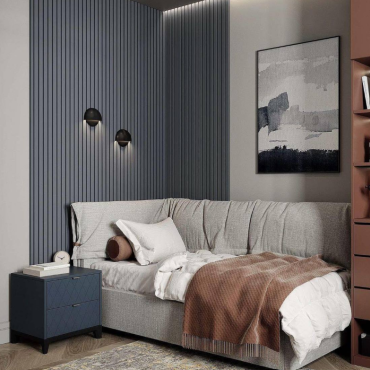
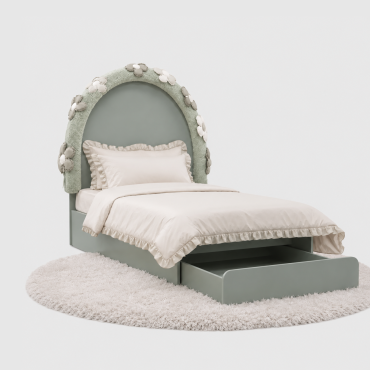

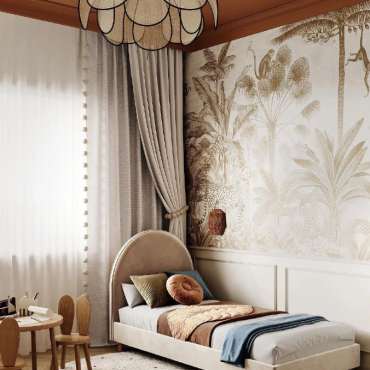
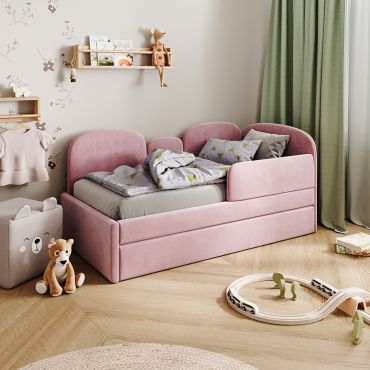
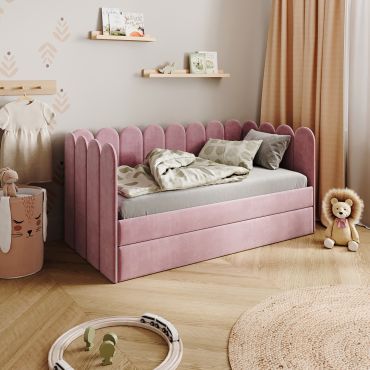

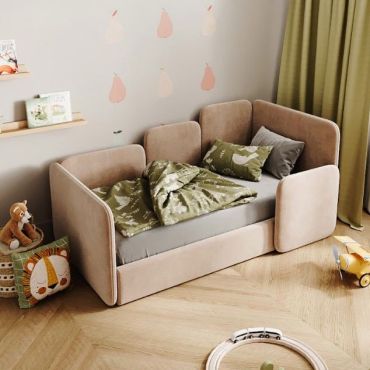
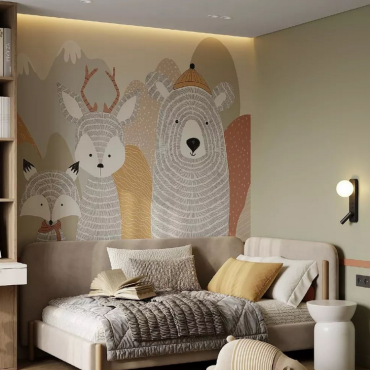


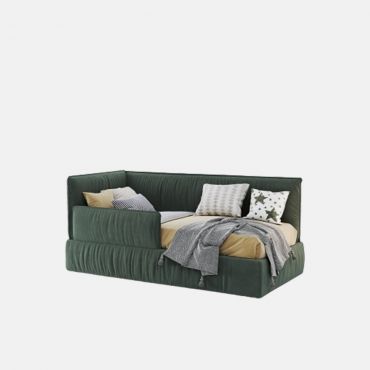
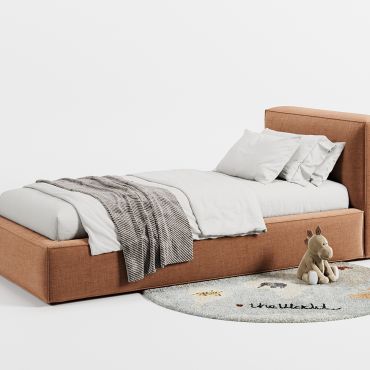
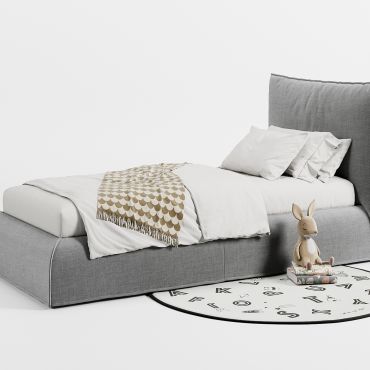
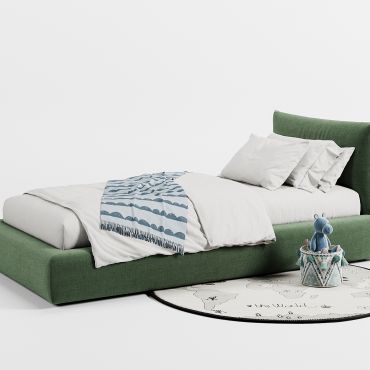
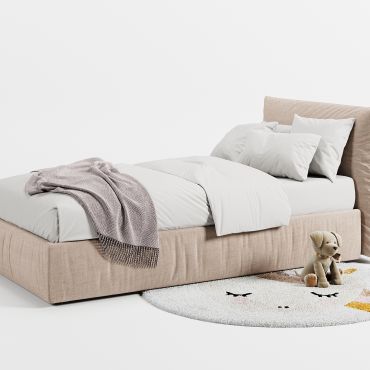
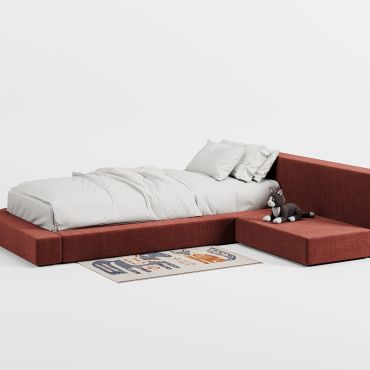
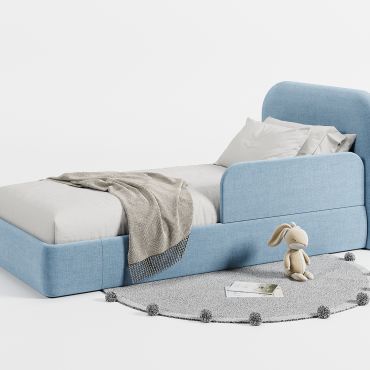
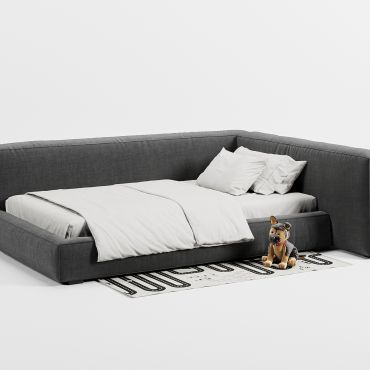
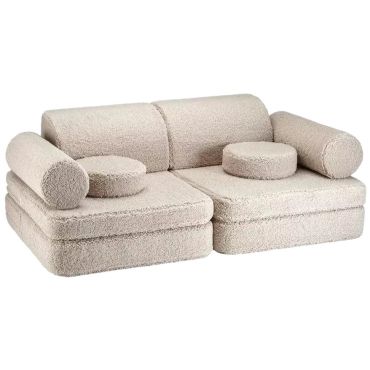
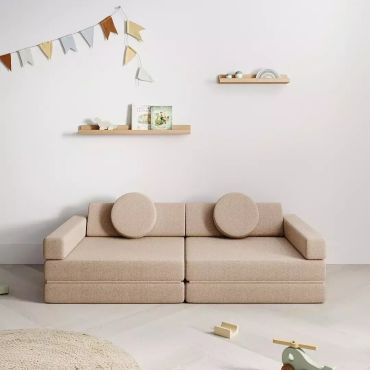
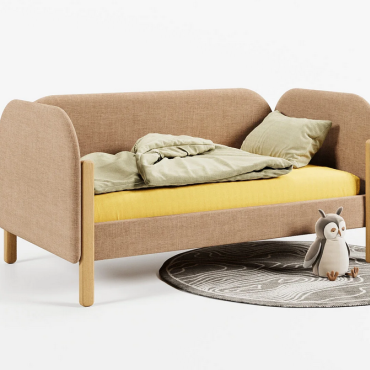
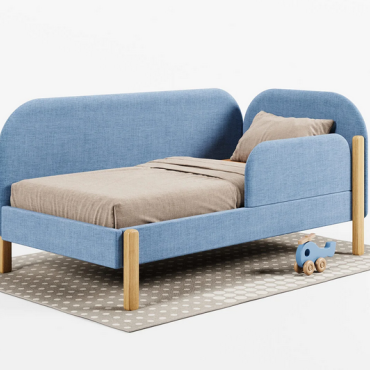
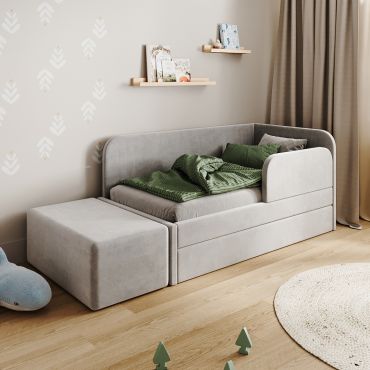
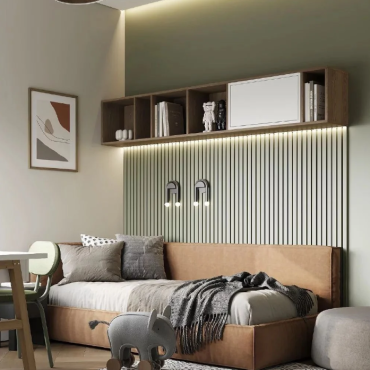
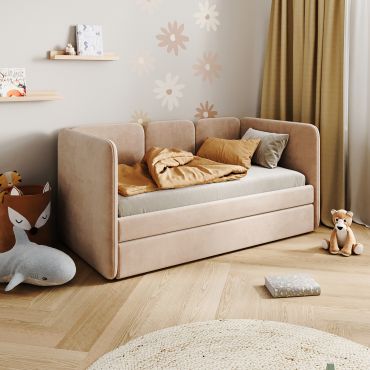
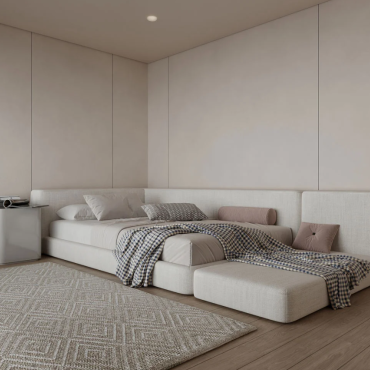
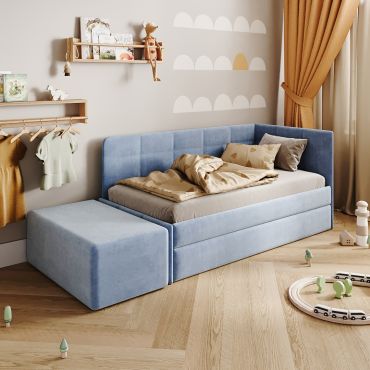
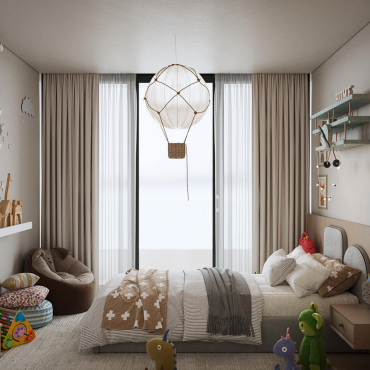
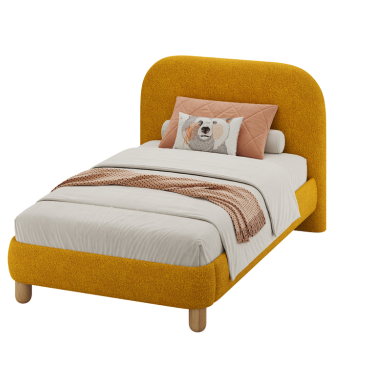
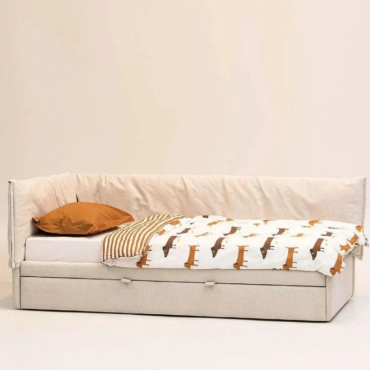
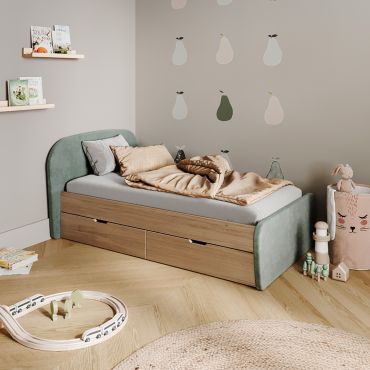
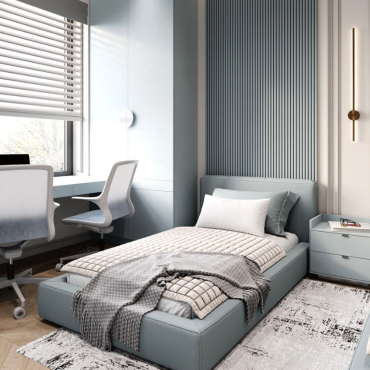
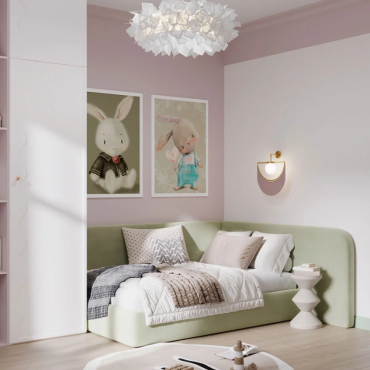
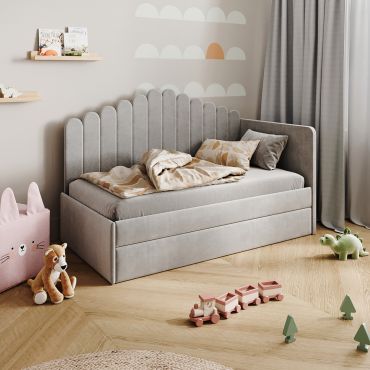
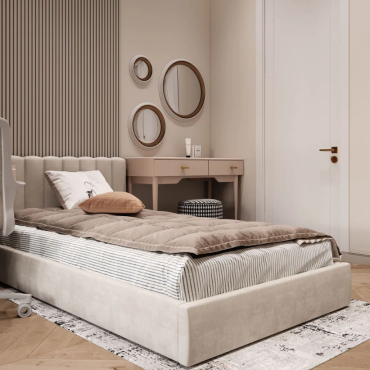
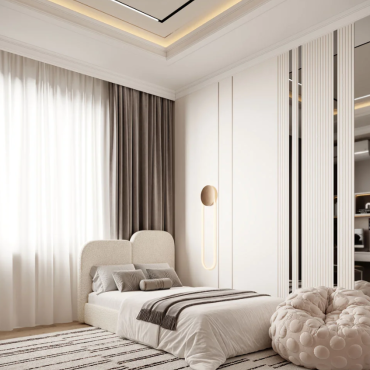
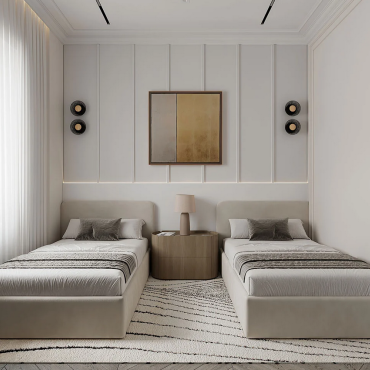
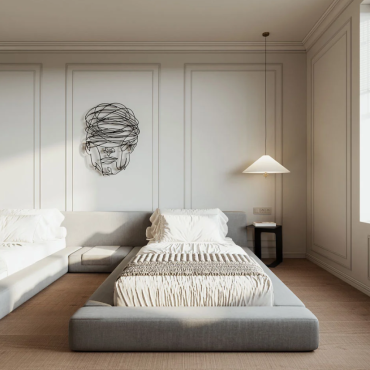
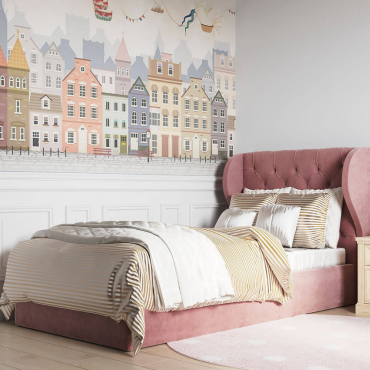


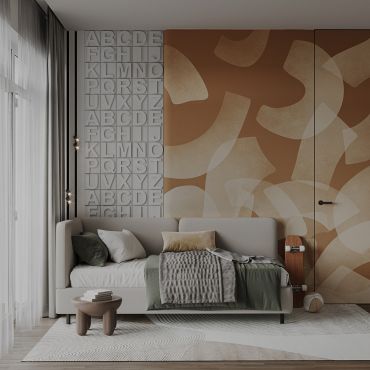


Soft kids beds for a calm and well-planned children's room
Soft kids beds are chosen when a sleeping place needs to feel practical and genuinely comforting. In a child's room, the bed often becomes a small personal territory: a place to fall asleep, read, talk quietly, hold a favorite pillow and slowly learn what private space feels like.
Unlike more neutral wooden or metal models, a soft children's bed works through touch: fabric, gentle lines, a padded back, neat side details. It makes the room warmer visually and physically, especially when the interior is built in quiet colors without too much decoration.
If you are still shaping the sleep zone, start with kids beds as the broader choice, then look at soft kids beds when comfort near the back, a sense of protection and a warmer mood matter most. The bed does not have to be the loudest object in the room to set the tone.
Soft kids beds suit modern children's rooms where design and everyday comfort need to meet. They can work for toddlers, school-age children and teenagers when the size, height, upholstery and proportions are chosen with real use in mind.
For parents, a soft children's bed is often the middle ground between practical furniture and a room that feels kind. The child gets a place that feels personal, while the room can still grow beyond one short-lived decorative theme.
What soft kids beds are and who they suit
Soft kids beds include upholstered or softly padded elements: usually the headboard, back panel, side parts or the full outer frame. These details separate them from classic kids beds and make the room feel more settled.
A kids bed with soft headboard is especially useful for children who like to sit in bed with a book, tablet, board game or bedtime conversation. The headboard does not replace the right mattress or pillow, but it makes evening routines more comfortable.
For a younger child, a soft children's bed can make the move from a toddler bed to a more independent sleeping place feel gentler. Soft details do not remove the need to check height, rails and stability, but they help the room avoid feeling suddenly too grown-up.
For older children, upholstered kids beds are useful because they are not locked into a very childish theme. Toys may dominate the room today, but books, a desk and posters may arrive soon; a calm upholstered bed usually adapts more easily.
Kids bed with soft headboard: when it makes the most sense
A kids bed with soft headboard is worth considering when the bed stands along a wall, near a cooler surface or in a room where the child spends time in bed beyond sleep. The padded back makes the sleep zone feel more finished.
If the room has no separate reading chair, a children's bed with soft headboard can partly take that role. A child can sit with a book, arrange pillows and avoid leaning against a hard wall.
A soft children's bed can also balance the geometry of wardrobes, shelves and desks. Textile upholstery softens straight lines and helps the room feel less rigid, even when the rest of the furniture is very simple.
For an active child, a soft children's bed should still be treated as a place for sleep, not as play equipment. Frame stability, fittings, bed height and everyday use matter more than the soft look in a photo.
Soft headboard for reading, rest and bedtime rituals
A soft headboard for a kids bed is most noticeable in the evening, when the day slows down. A child can sit with a book, talk to parents, choose tomorrow's clothes or simply have a few quiet minutes before sleep.
In this routine, a kids bed with soft headboard is not just a decorative detail. It gives the area around the head a warmer feel and helps the bed become a place the child wants to return to.
Soft sides and rounded forms
Soft kids beds may have more than a padded headboard. Some designs include upholstered side panels or rounded forms, which can be helpful when the bed is close to a walkway or sits in an active room.
If the main concern is edge protection during sleep, compare a soft children's bed with kids beds with rails. Soft upholstery gives comfort and tactility; rails answer a different need during the move toward independent sleep.
How to choose a soft children's bed by age
A soft children's bed should be chosen not only by color or shape, but by the child's age and habits. For a toddler, height, access and rails matter most; for a school-age child, size, headboard comfort and a calmer design become more important.
Soft beds for small children should feel clear and easy to use. The child needs to climb in and out without effort, while parents need to make the bed and help with bedtime without awkward movements.
If you like the idea of a low independent sleeping place, a soft children's bed can be compared with Montessori kids beds. Montessori designs focus on access and freedom of movement; soft beds focus on tactile comfort and a warmer room mood.
Soft children's bed for a toddler
A soft children's bed for a toddler should have a calm shape, thoughtful height and no fussy details that make daily care harder. At this age, the child touches the sides, sits, stands, turns and tests the bed constantly.
Soft beds for small children work best without too much decoration. Fabric, color and silhouette should support rest rather than turning the sleeping place into an overactive object before bedtime.
Soft children's bed for a school-age child
A soft children's bed for a school-age child has to live with homework, reading, friends, changing decor and a growing sense of independence. Calm forms, quiet colors and a generous size usually work better than an overly themed piece.
When the room follows the child's interests, upholstered kids beds can still stay flexible. For a more playful route, you can also look at kids car beds, while a soft bed keeps the interior quieter.
Size, mattress and everyday convenience
Soft kids beds should leave room for growth, but not take over the whole room. A child needs enough space to sleep, and the room still needs clear paths, storage, play space and, often, a study zone.
When people ask about a kids bed with soft mattress, it helps to separate upholstery from mattress support. The fabric and padded frame make the bed feel softer; the mattress should be chosen separately by size, support and the maker's recommendations.
A well-chosen soft children's bed should not complicate daily life. The child sits down easily, parents can change bedding without a fight, and the area around the bed stays reachable.
If a kids bed with soft headboard has drawers or another storage function, check it in the real room. Drawers need space to open, the headboard should not fight the window sill, and there should be room for light and movement.
Upholstery, fabric and care
A soft children's bed lives in an active environment: toys, books, pencils, home clothes and morning routines all happen nearby. Upholstery is not only a beautiful surface; it is a material the family will touch every day.
Upholstered kids beds for children's rooms should use fabrics that feel pleasant and do not look overly delicate. Before buying, check the texture, composition, care notes and how the upholstery suits real family habits.
A soft bed for kids room in a light tone can make the room feel airy; a deeper shade adds intimacy; calm grey, milk, olive or powder tones usually survive decor changes more easily.
If the child draws, eats snacks or plays actively in the room, soft kids beds need an honest care check. Sometimes a simpler fabric is a better decision than a spectacular texture that asks for too much caution.
Which fabrics make sense for a kids bed with soft headboard
A kids bed with soft headboard may have smooth, textured, dense or more voluminous upholstery. For a child's room, the fabric should feel pleasant, avoid catching clothes and not look too formal.
A textured soft children's bed works well in minimal rooms with little decor. The fabric brings visual warmth, so the room does not feel empty even with plain walls and simple furniture.
How to care for a soft children's bed
A soft children's bed keeps its neat look longer when care is regular, not only after visible stains. Removing dust from the fabric, airing the room and following the maker's care notes is usually enough for routine maintenance.
For a kids bed with soft headboard, the headboard area matters most. A child touches it with hands, hair, pillows and blankets, so a little regular cleaning is better than rare heavy cleaning.
Safety: rails, height, corners and stability
Soft kids beds often look safer because of the upholstery, but the full construction matters. Height, frame stability, corner shape, fittings and placement in the room are just as important as padded surfaces.
For a younger child, a soft children's bed should be considered together with rails. A padded back adds comfort, but a rail may be the more important element during the move to independent sleep.
Upholstered kids beds with a lower position are easier for children who climb in and out by themselves. Older children may use a higher bed if it is still comfortable and does not feel bulky.
How to combine soft kids beds with children's furniture
Soft kids beds work best when the whole room is considered, not only the bed. Nearby there may be a dresser, shelves, desk, lighting, textiles and toy storage, and each piece should support the same rhythm.
For storage near the sleep zone, upholstered kids beds pair well with a dresser for a children's room. It keeps bedding and small items out of sight, while the bed remains the calm center.
If the child reads before sleep, a kids bed with soft headboard can be paired with a small shelf. In shelves for a children's room, you can choose a place for books, small decor or bedtime things.
For a school-age child, a soft bed for kids room works better with a separate study zone. With kids tables and chairs, it is easier to keep rest and concentration from blending into one messy area.
In style, soft kids beds can be neutral or expressive. For a gentler interior, look at beds for girls; for a more graphic direction, look at beds for boys, but always choose for the real child, not a label.
If you want a more story-like room, compare a soft children's bed with kids house beds. A house bed gives a playful structure; a soft bed usually stays calmer and ages more quietly.
Why buy soft kids beds at MAIIMO
To buy soft kids bed at MAIIMO means choosing a considered part of the room, not just a pretty object. We look at proportions, upholstery, comfort, style and how the bed will live beside other children's furniture.
In the MAIIMO catalog, soft kids beds can be considered through real scenarios: a first independent bed, a school-age room, a calm interior, a room with active decor or a sleep zone that needs to feel warmer.
A kids bed with soft headboard is easier to choose when you see it together with other pieces for the room. This helps avoid mistakes with scale, color and the overall mood of the interior.
For MAIIMO, upholstered kids beds are not just about pleasant fabric. They are about a children's room where sleep, study, play, storage and growing up can live together without visual noise.
How a soft bed changes the feel of a child's room
Soft kids beds strongly affect how a child experiences the room in the evening. When the frame, back and fabric feel calm, the sleep zone does not fight with toys, books or the study area. This matters most in rooms where several functions share a small footprint.
A soft children's bed can make the interior feel complete without adding extra decoration. Parents do not need many cushions, canopies or bright details to make the sleeping place look considered. A good shape and pleasant upholstery often do more than a complicated theme.
Upholstered kids beds work well in rooms where the family wants less visual noise. Bedding can change, lighting can change, shelves can move, and the bed still keeps the room grounded instead of locking it into one short season.
Planning the space around a soft children's bed
A soft children's bed should be checked together with walkways, window position, heating, storage and play space. Even a beautiful bed becomes frustrating if drawers cannot open, the child keeps bumping into corners or the floor around the bed always collects things.
A kids bed with soft headboard is especially useful when the back stands against a wall and helps define the resting zone. Before choosing, check headboard height, distance from the window sill and whether the bed blocks sockets, switches or access to storage.
A soft bed for kids room in a compact space should feel light. A calm silhouette, a headboard that is not too massive and a fabric that does not visually weigh down the room will keep even an upholstered model from looking bulky.
Color and texture: how to keep the bed from feeling dated
Soft kids beds are often chosen because of color, but color is also what can tire fastest. It is usually safer to choose a shade that can live with changing bedding, rugs, toys and wall decor. Milk, grey, olive, powder and warm neutral tones tend to last longer.
A children's bed with soft headboard can be quiet in color and expressive in texture. Boucle, woven fabric, velvet and denser upholstery all feel different, so the fabric should be judged by touch as well as by image. In a child's room, that difference matters.
A soft children's bed in a stronger color can still work if the rest of the room is restrained. But if open storage, toys, books and drawings already bring plenty of energy, a calmer upholstery usually helps the space feel more ordered.
Storage near a soft kids bed
Upholstered kids beds look best when the area around them is not filled with random piles. Before choosing the bed, think about where the blanket, spare bedding, bedtime books, soft toys and little personal objects will actually go.
A soft children's bed with drawers or a nearby low dresser can help the room stay calmer. Clothing and textiles can live in a dedicated children's dresser, while the bed area keeps only what the child needs in the evening.
A kids bed with soft headboard should not become the place where everything is dropped. A small book shelf, a basket for toys and an easy bedside light usually keep the sleeping zone cleaner and easier for the child to understand.
When a soft bed is better than a house bed, car bed or Montessori bed
Soft kids beds are the better choice when the room needs a calm base rather than a strong story. A house bed creates playful architecture, a car bed gives a themed accent, a Montessori bed supports independence, and a soft bed focuses on touch and comfort.
A soft children's bed often stays relevant longer when a child's interests change quickly. Cars, space, sport or music can come and go; a calm upholstered bed accepts these shifts through bedding, posters and small pieces nearby.
A kids bed with soft headboard is especially good for children who value bedtime rituals: reading, talking, sitting quietly. If the child dreams about a very expressive shape, it is worth comparing a soft model with the more thematic child-bed categories.
What to check in the product page before buying
It is easier to buy soft kids bed when the product page clearly shows dimensions, sleeping height, frame material, upholstery type and mattress recommendations. If any of this is missing, it is better to clarify before ordering.
A kids bed with soft mattress in a description does not always mean the mattress is included. Sometimes the softness refers only to the upholstered frame, so check the set, mattress size and allowed mattress height separately.
Soft kids beds should also be checked against future bedding. The sheet should be easy to tuck in, the blanket should not catch on unnecessary details, and cleaning access around or under the bed should remain comfortable.
Why choose soft kids beds at MAIIMO
Soft kids beds at MAIIMO can be viewed as part of a complete children's room, not as a single isolated object. We look at proportions, fabric, mood and how the bed can work with storage, desk, lighting and decor.
A soft children's bed deserves careful selection because the child uses it every day. At MAIIMO, models can be compared by shape, size, upholstery and room scenario, not only by the first impression from a photo.
A kids bed with soft headboard becomes a good purchase when it fits both the room and the child. If needed, the MAIIMO team can help compare size, fabric, age and nearby furniture so the final choice feels calm and long-lasting.
How to check proportions in the real room
Soft kids beds can look lighter in photos than they feel in the actual room. Before choosing, mark the footprint on the floor with tape or paper. It quickly shows whether walkways remain clear, storage opens freely and the headboard is not taking too much space.
A soft children's bed with a high headboard can look beautiful against an empty wall, but it may feel too strong under a window or beside a large wardrobe. In a small room, visual height matters almost as much as width and length.
A kids bed with soft headboard still needs space for a light, book, water and the small things that appear near bedtime. If there is no shelf or bedside table, the child will still create a surface somewhere, so it is better to plan it.
Common mistakes when choosing an upholstered kids bed
Upholstered kids beds should not be chosen by a beautiful photo alone. Think about how the child moves, how often the room is used for play, whether there are pets and how easy the fabric will be to clean after several active years.
A soft children's bed in a very pale fabric can be beautiful, but for some families it becomes a source of constant worry. If the child loves paint, modelling clay or snacks in the room, fabric practicality matters more than the perfect shade in a picture.
A kids bed with soft headboard should not distract from checking the mattress, base and frame. The padded part gives comfort and warmth, but sleep quality also depends on support, exact dimensions and the stability of the full construction.
FAQ about soft kids beds
How are soft kids beds different from regular kids beds?
Soft kids beds differ because they include upholstered elements: a headboard, back panel, sides or frame. Regular kids beds more often show open wood, metal or laminate surfaces.
A soft children's bed is not automatically better than every other option. It simply fits a different need: a warmer look, a comfortable back and a more tactile sleeping place.
Who is a kids bed with soft headboard best for?
A kids bed with soft headboard suits children who like to sit in bed, read, talk before sleep or lean against the back. It works for younger children and school-age children when size and height are right.
A children's bed with soft headboard also helps when the sleep zone needs to feel warmer without adding many decorative objects.
At what age can you choose a soft children's bed?
A soft children's bed can be considered when the child is ready for a separate sleeping place of the right size. Age matters less than sleep habits, safe access and the possible need for rails.
Soft beds for small children should have a low position, calm form and clear construction. Older children can have more choice in headboard style, fabric and size.
Do soft kids beds need rails?
Rails are not always required for a soft children's bed, but they may matter if the child is small, moves a lot in sleep or is just moving into an independent bed.
Soft kids beds should be compared with railed models when edge protection is the main concern. If comfort at the back is more important, a padded headboard may be enough.
What mattress should you choose for a soft children's bed?
For a soft children's bed, choose the mattress by exact bed size, the child's age and the manufacturer's recommendations. Soft upholstery does not mean the mattress should be overly soft.
A kids bed with soft mattress needs a separate check of what is included. If the mattress is bought separately, it should fit the base well and avoid unwanted gaps.
Are soft kids beds practical to care for?
Soft kids beds can be practical when the upholstery fits the family's real routine. For a child's room, fabric type, care instructions and color matter.
Care for upholstered kids beds usually means regular dust removal, careful cleaning of small marks and following the maker's advice for the specific fabric.
Which fabric is best for a kids bed with soft headboard?
For a kids bed with soft headboard, choose fabric that feels pleasant, is dense enough for daily contact and does not look overly formal in a child's room.
The texture of a soft children's bed should fit the interior. A quiet room can take a more expressive fabric; a room with many textiles usually needs calmer upholstery.
Can a soft children's bed work in a small room?
A soft children's bed can work in a small room if the proportions are right. Check width, headboard height, upholstery thickness and the paths around the bed.
In a compact room, soft kids beds should avoid overly massive forms. Light fabric, a simple silhouette and careful placement help keep the space open.
How do you combine a soft children's bed with other furniture?
A soft children's bed combines best with furniture that supports its scale and mood. If the headboard is expressive, storage pieces can be simpler.
To keep upholstered kids beds from looking random, repeat one or two related shades or materials in the room. The fabric can connect with a rug, curtains, cushions or a small chair.
Where can you buy soft kids beds in Ukraine?
Soft kids beds in Ukraine can be bought at MAIIMO, with models chosen by room size, child's age, fabric preference and interior style.
If you need to buy soft kids bed, define the size, use scenario, need for rails and upholstery preference in advance. The decision becomes much clearer.