My First Big-Kid Bed: How to Get Your Child to Sleep in Their Own Bed Without Tears
My First Big-Kid Bed: How to Get Your Child to Sleep in Their Own Bed Without Tears
For adults it's just a new place to sleep. For a child it's the first territory of their own, with its own rules, and a night when Mom is no longer an arm's length away. Tears in the first evenings aren't fussiness — they're a normal response to a big change.
Parents ask us the same question again and again: how to get your child to sleep in their own bed without weeks of negotiating? In practice, strict discipline works less well than a story. When the bed matches what a child plays and dreams about, the first night in it feels like a birthday.
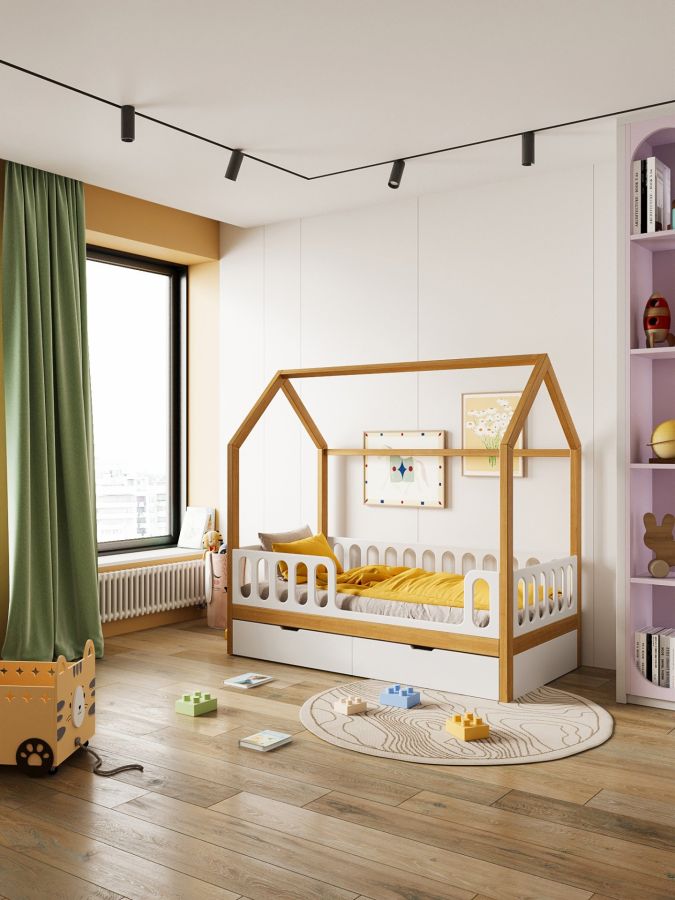
When your child is ready to move
There's no exact age. After two, children usually accept a bed of their own more easily, but the child's signals matter more than the calendar: climbing over the crib rails, asking for a bed "like the big kids", simply outgrowing the space. The American Academy of Pediatrics (AAP) names climbing out of the crib as the main sign it's time for a big-kid bed.
A calm moment matters more than age. Try not to combine the transition to a big-kid bed with weaning, starting daycare, moving house or the first weeks after a new sibling arrives. With too many changes at once, the new bed can feel like one more loss.
A bed that becomes part of your child's story
Children rarely get excited about "the right bed with slats". They get excited about a hideout, a palace or a ship. Before choosing a model, ask: who do you imagine you are? Where do you feel coziest? The answer suggests the scenario.
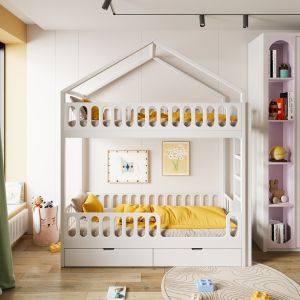
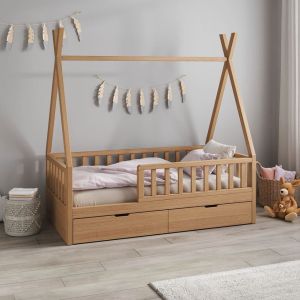
"I have my own little house." Small children love blanket forts and tents under the table. A kids' house bed gives the same sense of shelter, every night. The open roof is easy to dress with fairy lights, so your child can "furnish" their home together with you. For little explorers there's a low teepee design: children climb in and out on their own, which builds confidence at night.
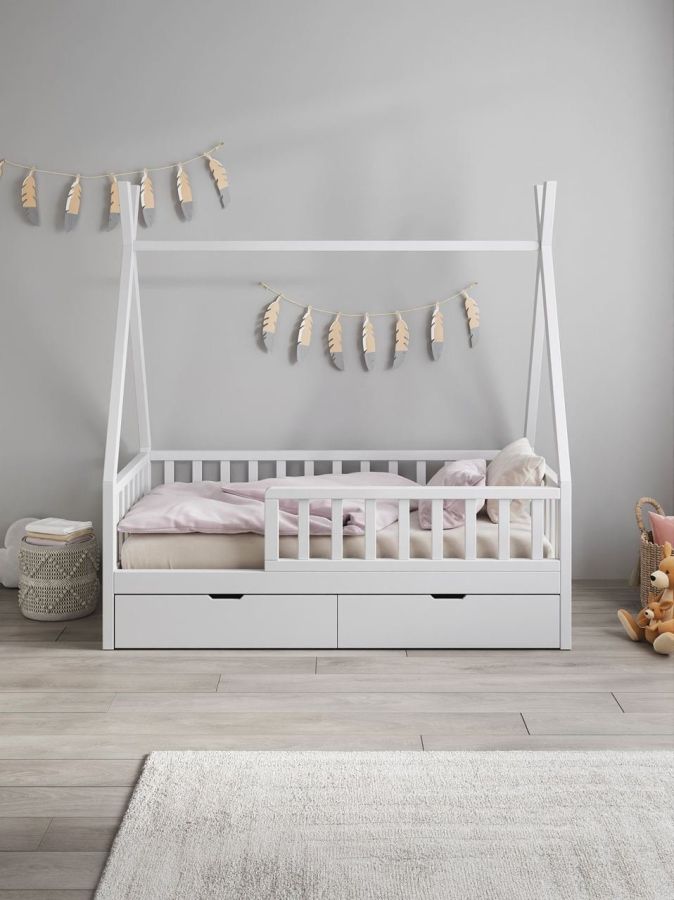
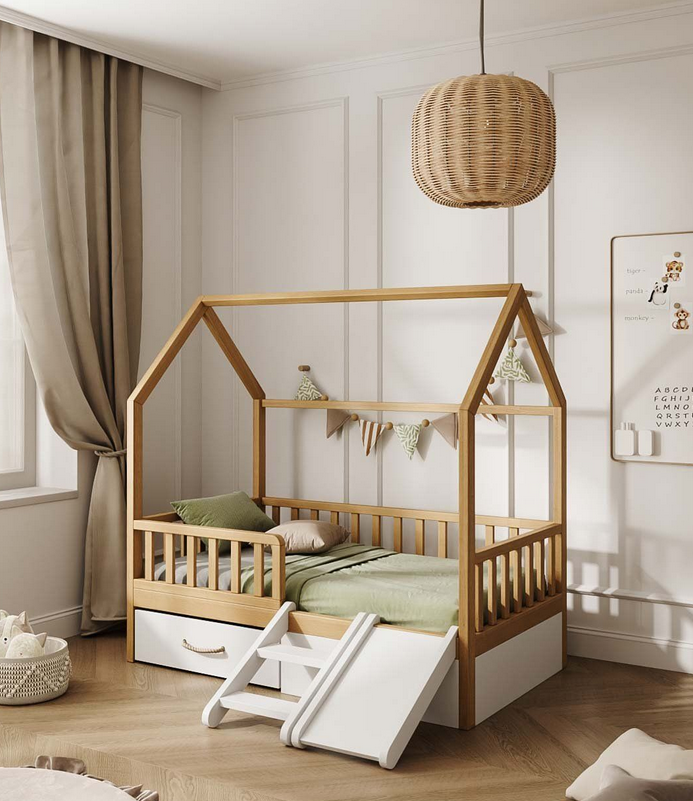
For restless kids who still want to move in the evening, a house bed with a slide works well: play and sleep share one spot, and bed no longer means "the fun is over".
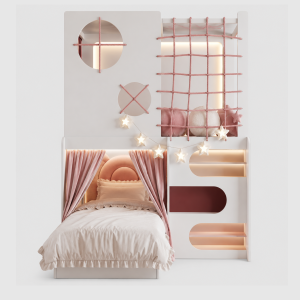
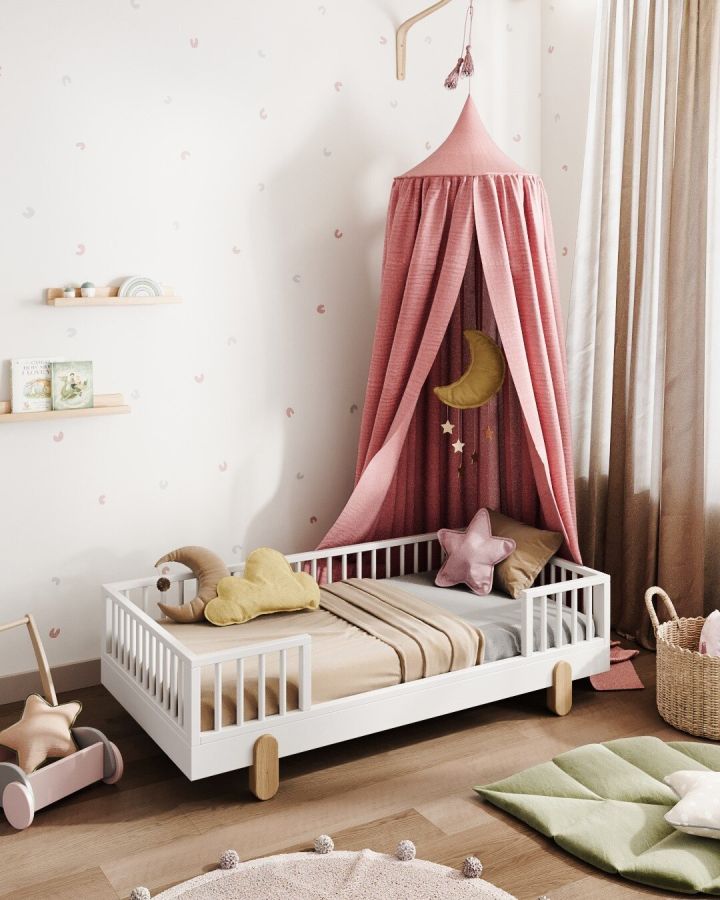
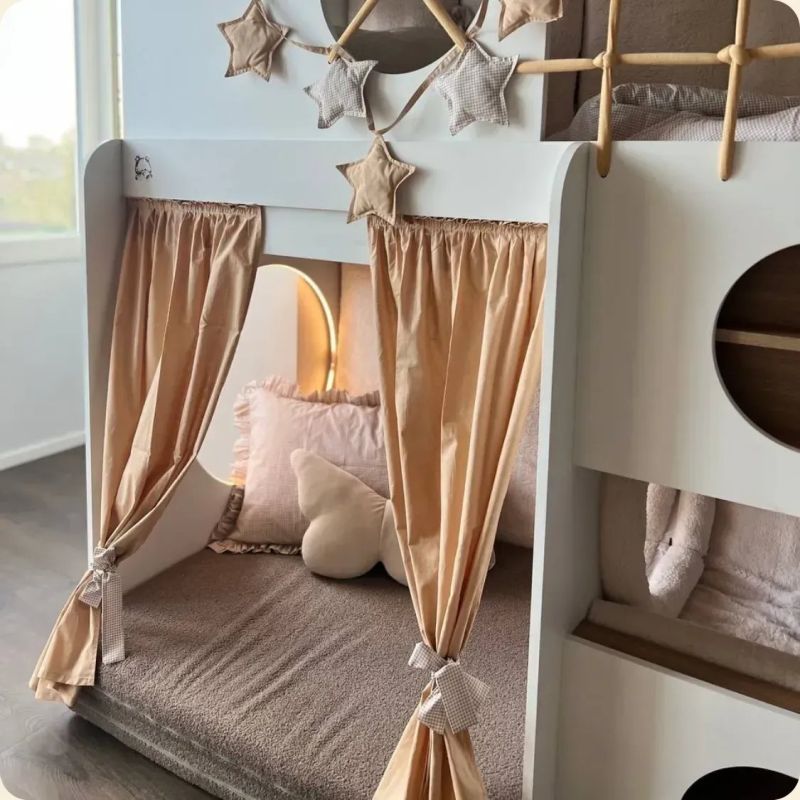
"A bed fit for a real princess." For a child who lives in fairy tales, it's all about the details you create together: a canopy, soft star-shaped pillows, a garland. A classic bed with low rails makes a great base. Today it's a palace under a pink canopy; in a few years it's a calm bed for a schoolgirl, since you can choose a size to grow into.
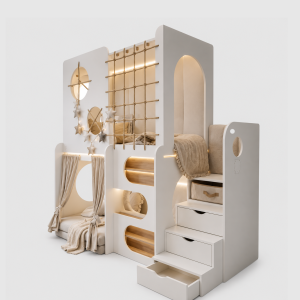
"Now I share a room with my brother or sister." If your child is moving in with an older sibling, the shared room should feel like an adventure rather than a squeeze. A kids' bunk bed with a play area turns it into a small fortress: arched openings, curtains hiding a cozy nook below, a soft rope along the guardrail. In some models the lower bed pulls out and stands on its own when the kids want separate space.
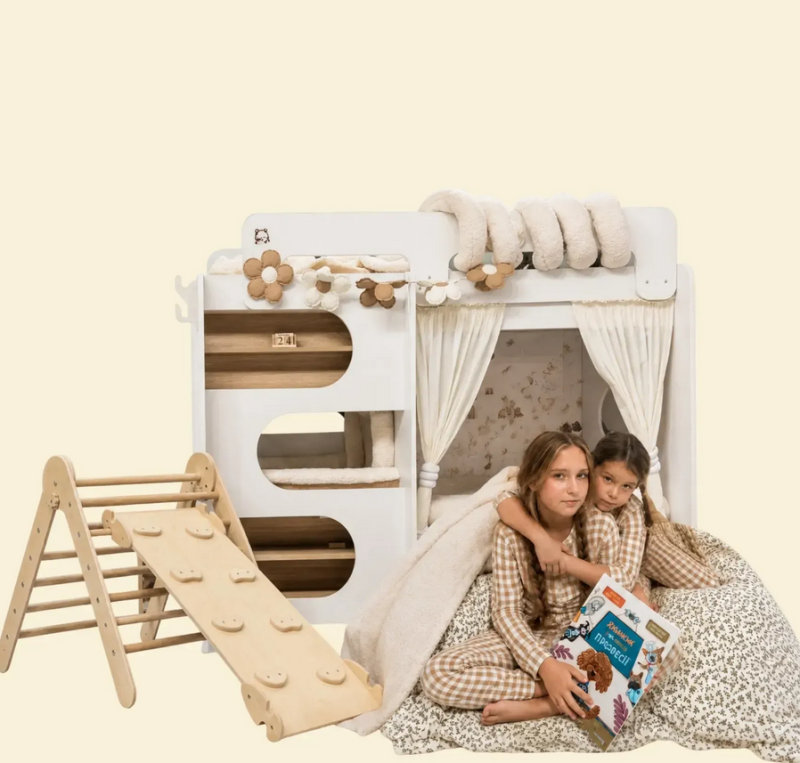
For climbers there are designs with a rope net above the top bunk, round "portholes" and soft lighting: by day the lower level is a hideout, by night a second bed. When choosing a bunk bed, always check the manufacturer's age guidance for the top bunk.
How to turn the move into a celebration
- Tell the story in advance. A week or two ahead, talk about the new bed as an event: "Soon you'll have your own little house." Picture books about characters who sleep in their own beds help too.
- Let your child choose. A bed from two or three options you're already happy with, the bedding, a night light. Children defend their own choices instead of resisting them.
- Throw a "housewarming". Make the bed together, invite favorite toys to the first sleepover, read a bedtime story right in it.
- Pick a "sleep buddy". A toy that goes to bed with your child every night and gradually replaces what needs an adult: rocking or holding hands.
- Start with naps. If your child is anxious, put the bed next to yours first and move it to the kids' room later.
- Keep the routine the same. The AAP recommends keeping the same bedtime routine you had before the move: bath, pajamas, story, goodnight — in the same order.
- Calmly return them to bed. As the AAP notes, twenty "curtain calls" in one evening is not unusual, and any extra attention, even cross attention, feels like a reward. A short, calm, slightly boring return with no long conversations works best.
- Celebrate small wins. In the morning, praise even an imperfect night; toddlers love sticker charts.
Keeping the new bed safe
For the first months choose a low bed or a model with safety rails. The AAP reminds parents to anchor dressers and shelves to the wall: a child who now gets up freely at night may try to climb them. Leave a soft night light on, and place garlands and canopies where they can't be reached from the pillow.
Frequently asked questions
What if my child won't sleep alone and comes to our bed every night?
Calmly walk them back every time, without punishment and without letting them move into your bed. Check that their own bed feels comfortable: a night light, a favorite toy, and a position that isn't unsettling, such as right under a window or facing the door.
Should an older child move to a new bed before the baby arrives?
Ideally a few months before the birth, or once the family has settled into its new rhythm. What matters is that your child doesn't feel they were "moved out to make room for the baby" — the new bed should feel like a promotion, not a replacement.
How long does it take to get used to a bed of their own?
For most families, anywhere from a few days to a few weeks. It depends on your child's temperament and on how consistently the routine and rules are kept.
A child remembers their first bed of their own for a long time. Let it be a house, a palace or a ship — what matters is that it's truly theirs. Find more ideas for that story among the kids' beds at MAIIMO, most of which can be made to order in the size and color you need.