Kids' Furniture by Age: What You Need from Toddler to Schoolchild
- Kids room furniture by age: what you need from toddler to schooler
- In brief: age → what you need
- 1–3 years: the floor, safety and first independence
- 3–6 years: a play bed, a first desk and independence
- 6–10 years: a workspace and a bunk bed
- 10+ years: comfort, a soft bed and an adult workspace
- Frequently asked questions
Kids room furniture by age: what you need from toddler to schooler
Over ten years a child lives several completely different lives in one room: first crawling the floor, then building forts, then sitting down to homework. And furniture that's perfect for the first stage becomes redundant by the second.
So the most expensive strategy is buying "to grow into". The smarter one is choosing kids room furniture by age, where each piece either fits the stage or knows how to move into the next. Below — what to place at every step from zero to teenager, and what to watch for so you're not redoing it every year.
In brief: age → what you need
| Age | Key furniture | What to watch |
|---|---|---|
| 1–3 years (toddler) | Playpen / low bed, changing dresser, soft nursing chair, open floor, low shelf | Safety and free movement; move to a bed by height (~90 cm), not by date |
| 3–6 years (preschooler) | Bed with a guard rail (wooden — Zabava, Larvik), first table-and-chair by height, Montessori shelves, low dresser, wardrobe with a low rail, pouffe | Wood is easier to clean in the spill years; rail, dresser and shelves at the child's level |
| 6–10 years (schooler) | Writing desk and chair by height, bunk bed with a play area below, more storage | Top bunk from age 6 (rail ≥13 cm); desk by height, not by school grade |
| 10+ years (teenager) | Upholstered bed, adult workspace, taller storage systems, lounge zone | Upholstery suits a lower-mess age; the cover should be washable |
1–3 years: the floor, safety and first independence
In the early years the main furniture in a kids room is… open floor. Paediatricians warn against too much time in "containers" (bouncers, swings, walkers): it's on the floor that a baby practises rolling, crawling and first steps. So the sleep and storage zones stay along the perimeter, and the centre is left empty.
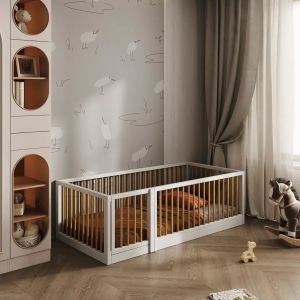
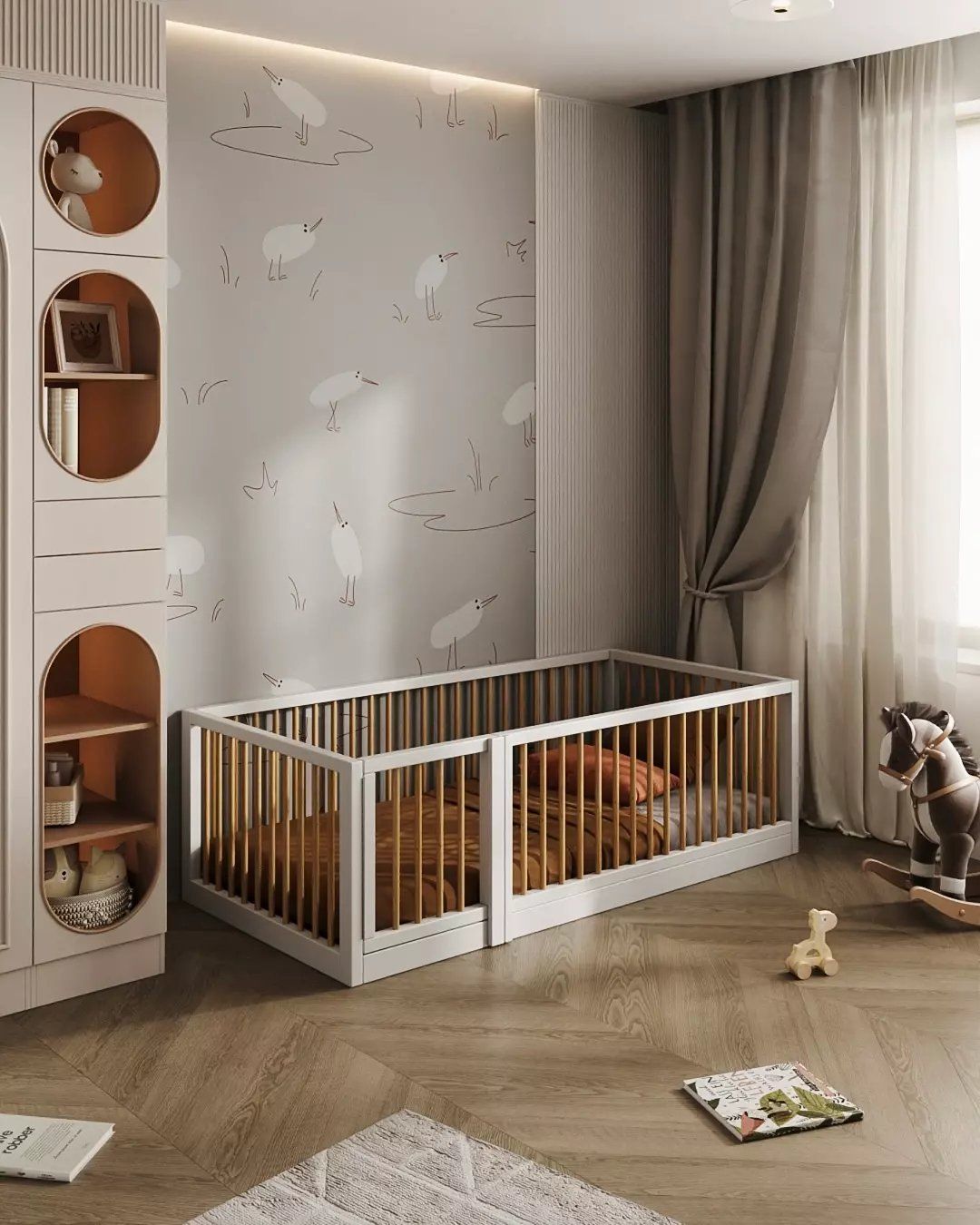
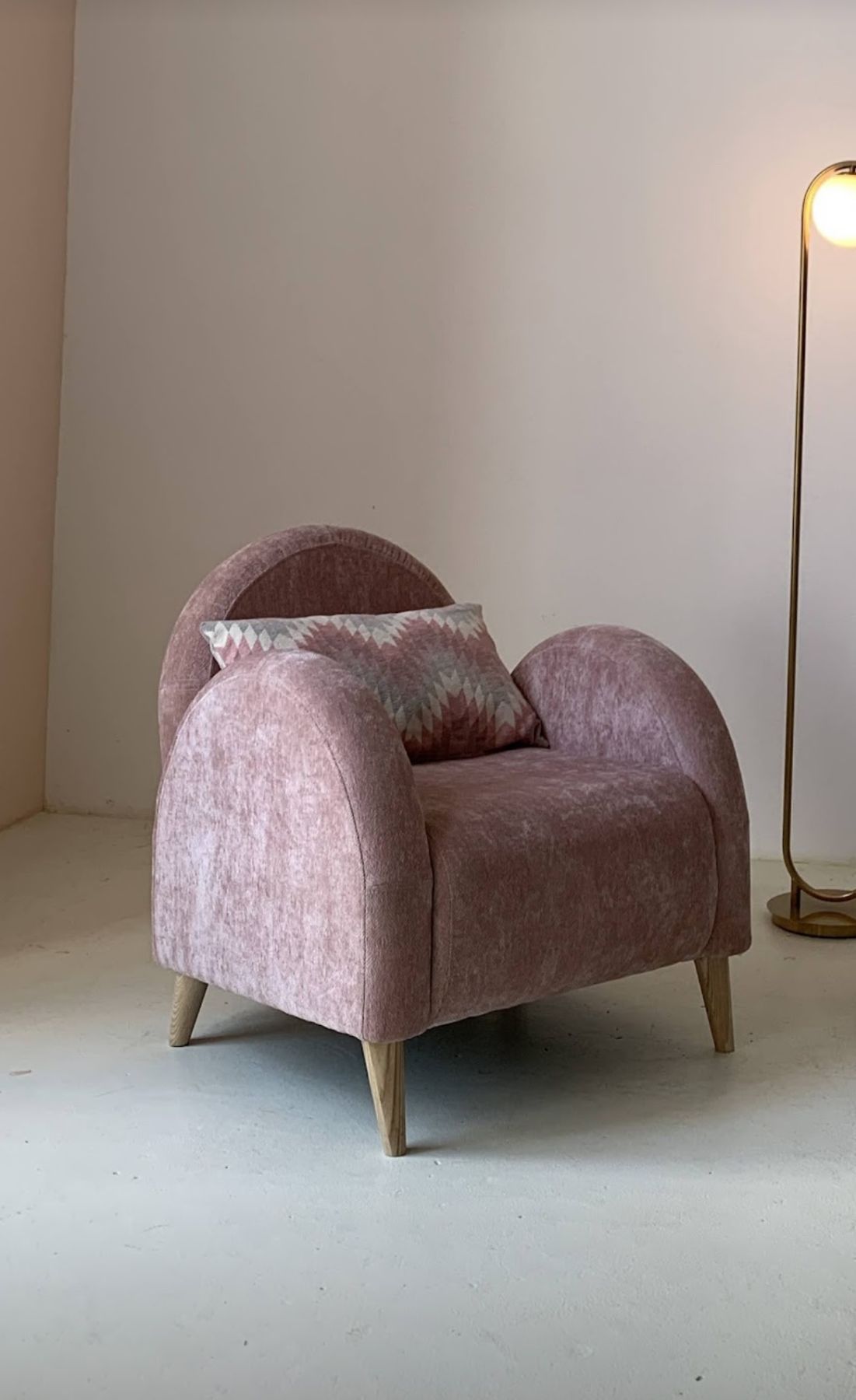
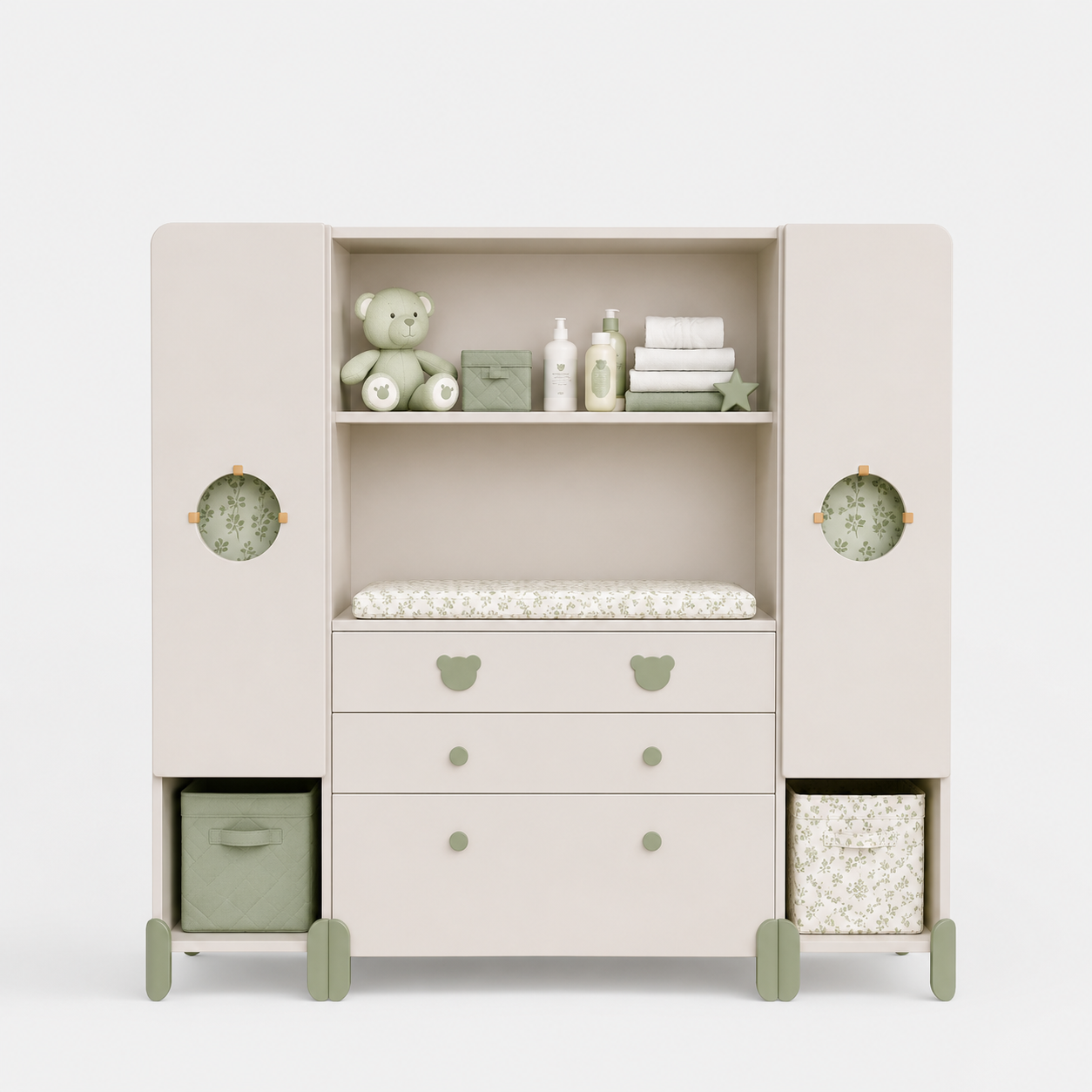
The bed at this stage often starts with a playpen bed: a protected perimeter for sleep and safe play while the child isn't ready for open space. Beside it — a changing dresser that first holds the changing surface and everything within reach, then simply stores clothes. And a soft chair in the corner, handy for feeding and reading a bedtime story — it easily stays a "reading" chair years later.
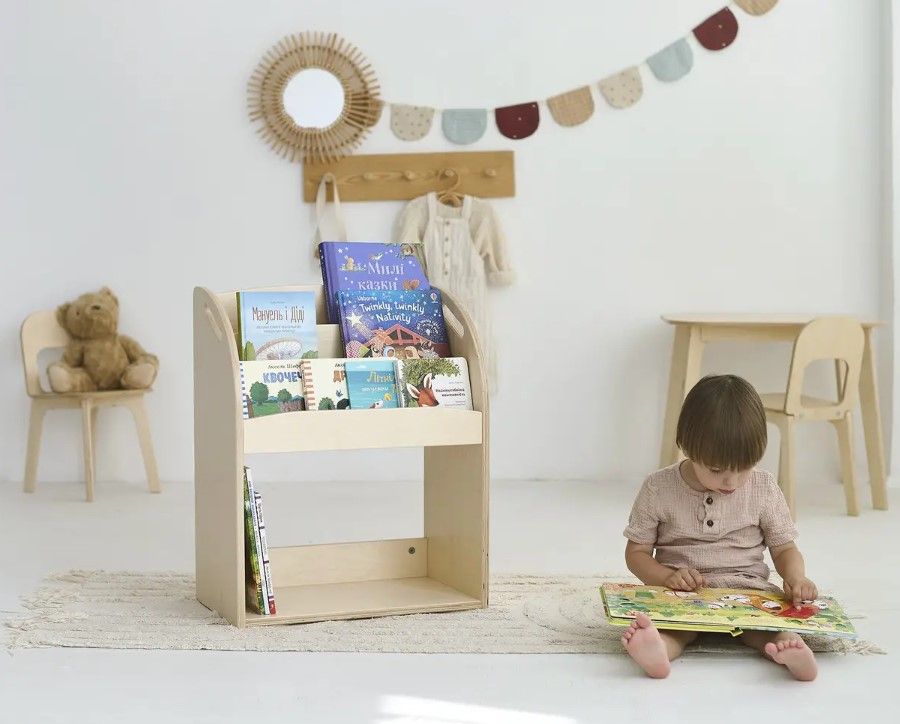
The first Montessori shelf sits low, at the child's eye level, with two to four toys or books on open display — so the toddler takes and returns them alone. No more is needed: at this age fewer things in view means more focused play.
3–6 years: a play bed, a first desk and independence
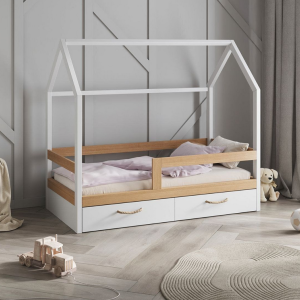
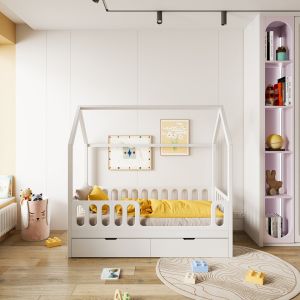
Somewhere between one and a half and three years comes the move from the cot. The cue isn't a calendar date but the body: when height reaches about 90 cm or the child's chest clears the cot rail when standing. This is where a bed with a low guard rail appears — a first solo sleep without falls.
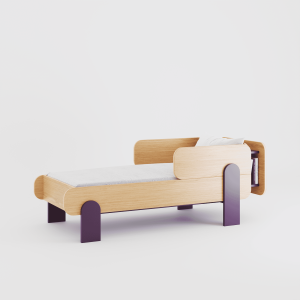
For this age we recommend a wooden bed, not upholstered — like Zabava or Larvik. The reason is practical: wood doesn't absorb liquids or dirt, a damp cloth is enough — and age three is the age of spills, paints and "night adventures". Fabric beds are lovely, but their time comes later. The rail, by the way, comes off not "by calendar" but when the child reliably doesn't fall out in sleep — for most that's closer to five.
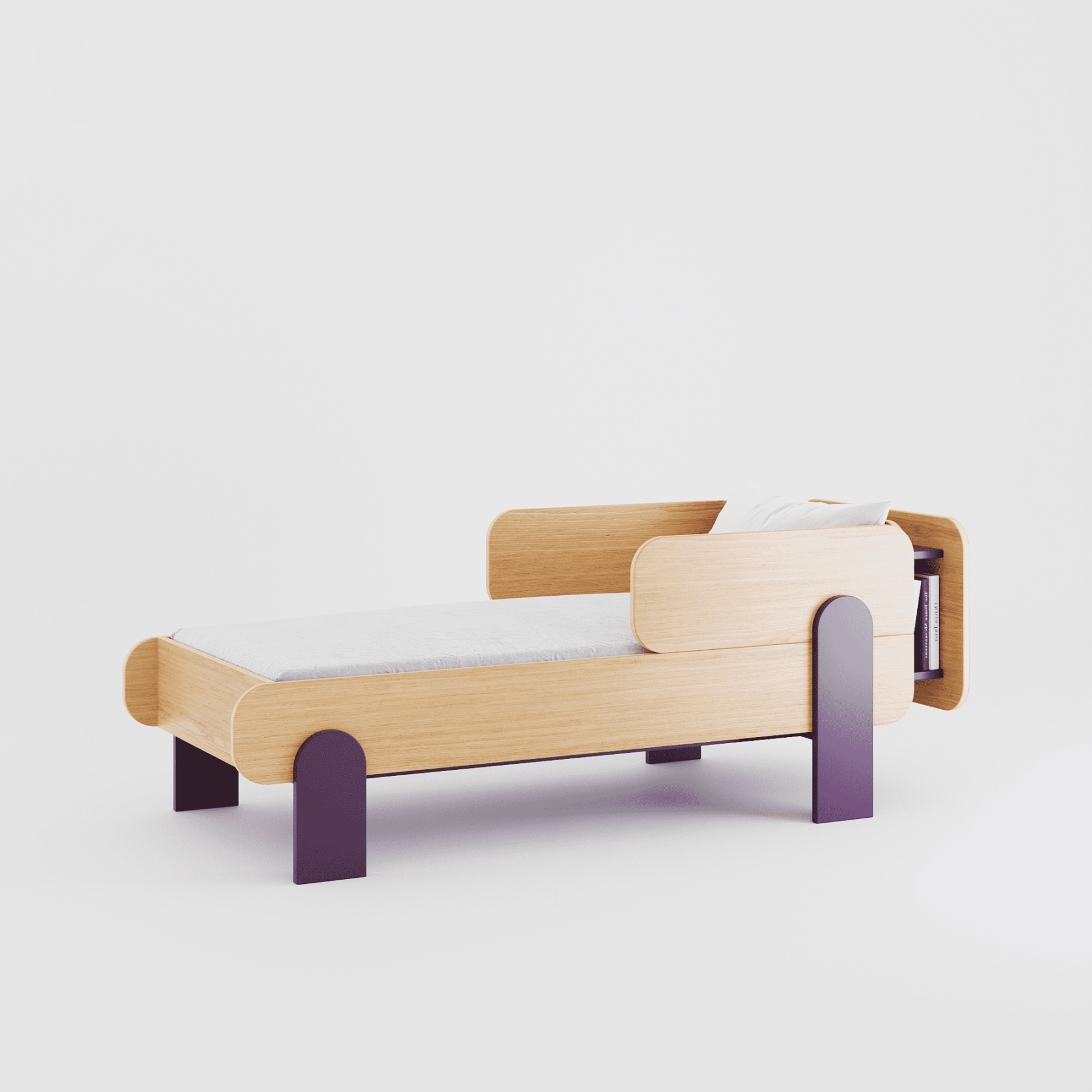
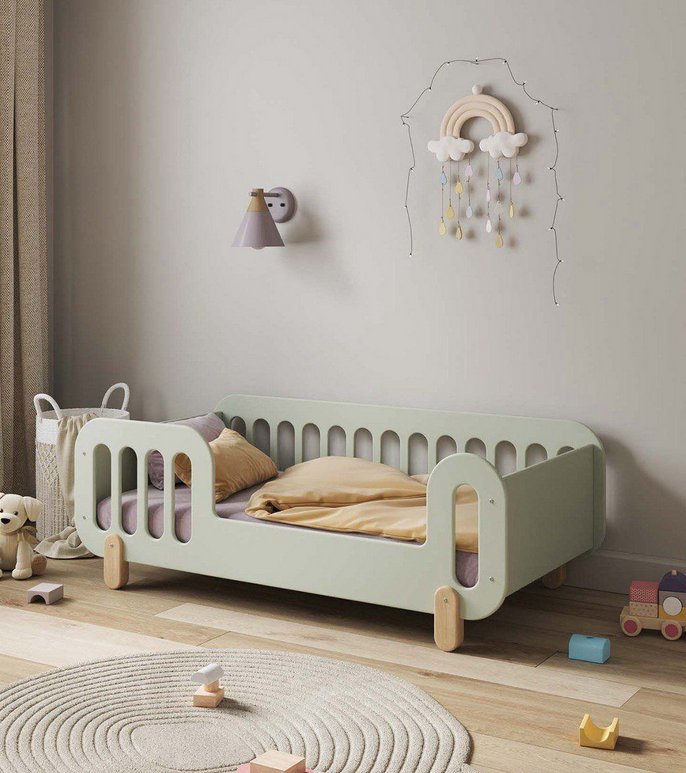
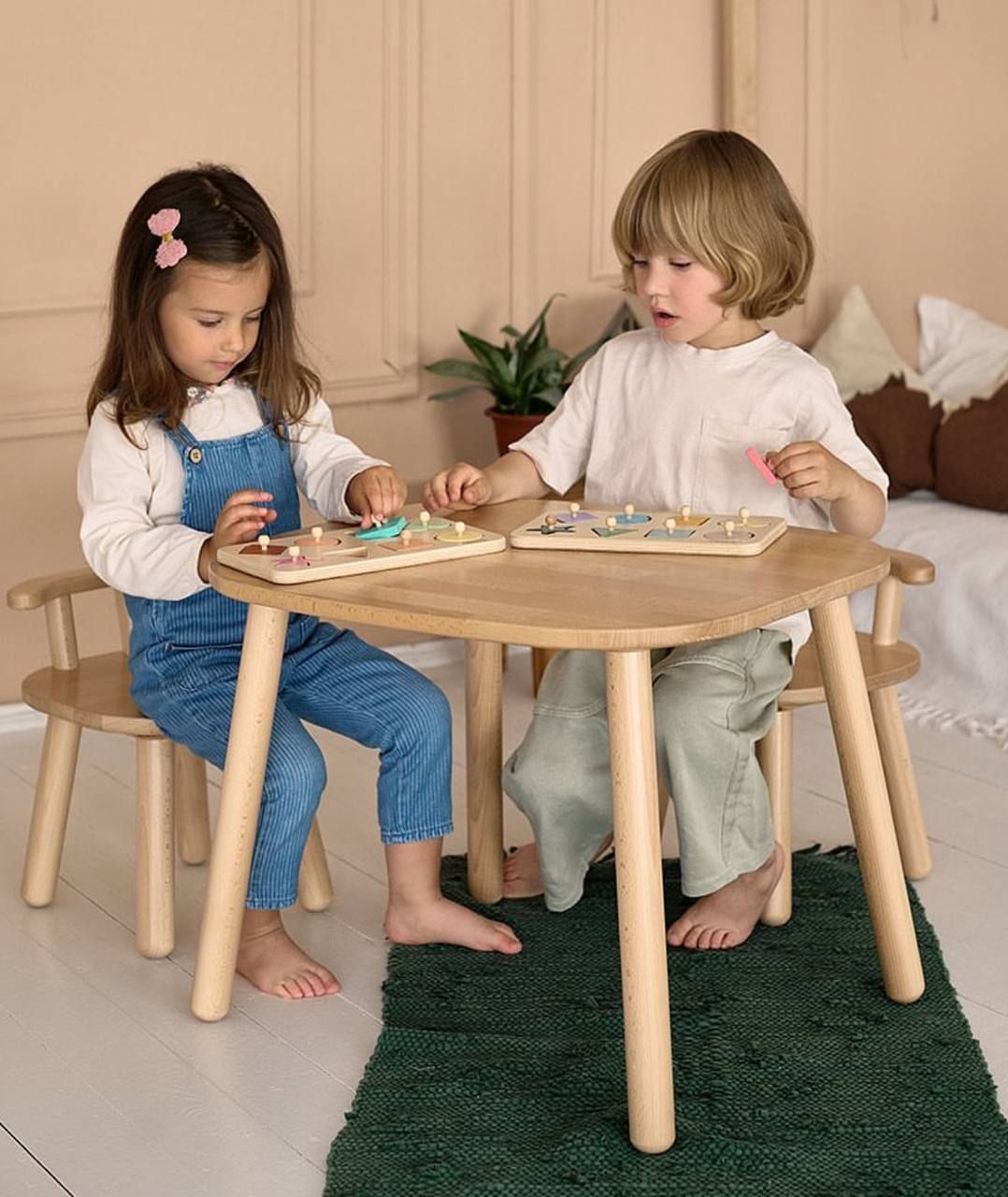
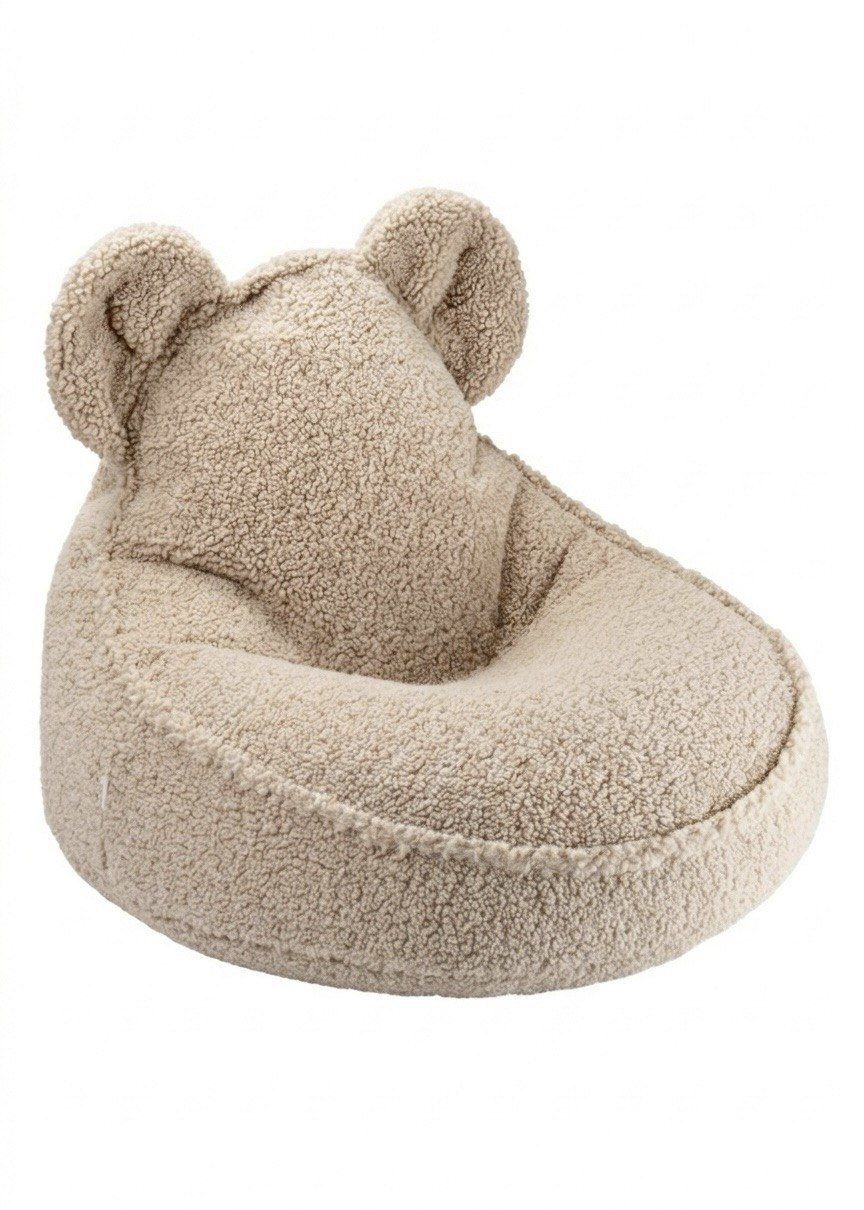
A first work-and-play spot appears too. A low table-and-chair set works equally well for drawing and first building blocks — as long as it's by height, not "to grow into". The wardrobe goes in with a low rail (at the child's shoulder level) so they hang and take clothes themselves; the rail rises each year with them.
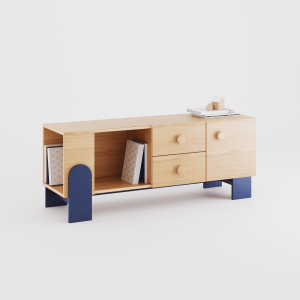
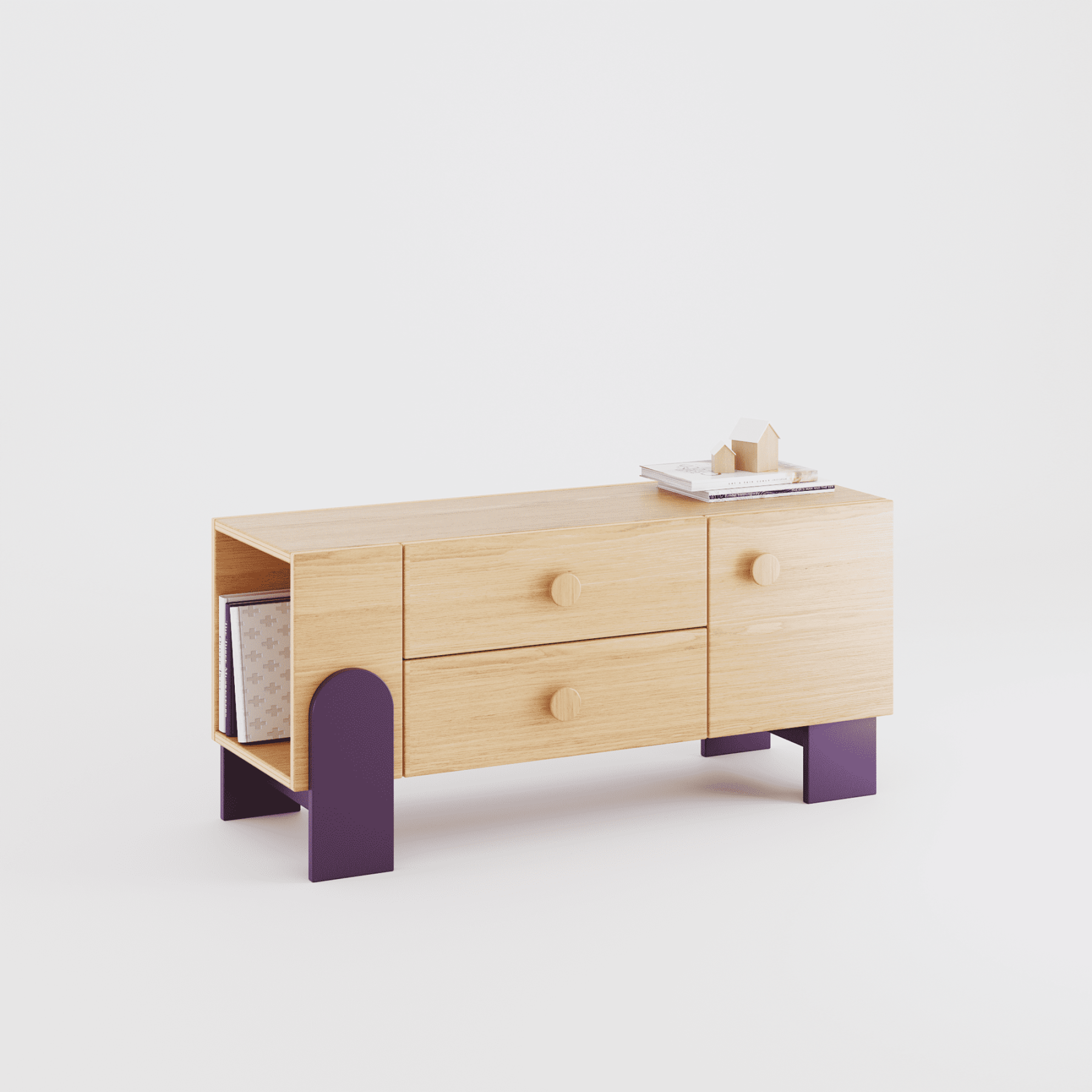
The dresser works for independence too: low models with shallow drawers a child opens alone, unaided. The Zabava dresser line comes in several heights — from S to XL — so it grows with the room: low at first, then taller and roomier by school age.
6–10 years: a workspace and a bunk bed
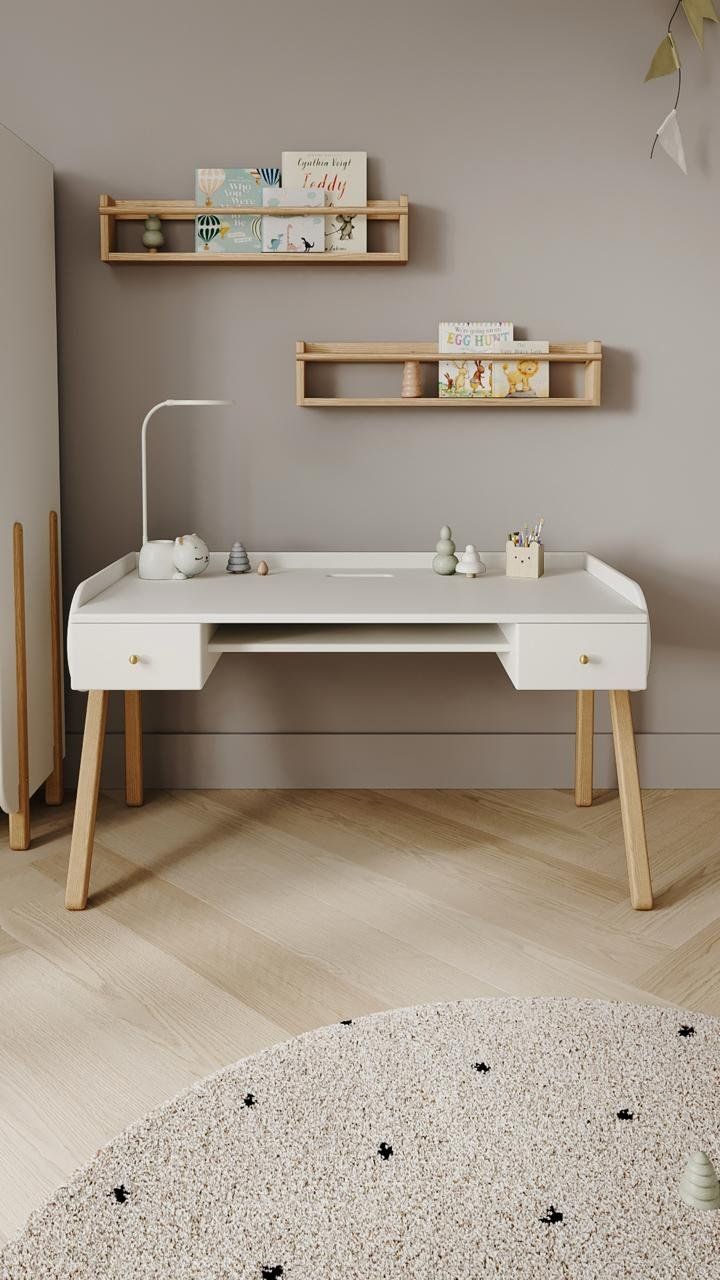
School shifts the room's balance: play recedes, the need to sit and focus arrives. Now you need a proper writing desk — again by height, not by grade. European school-furniture standards tie height to centimetres: at 108–121 cm the desk sits around 53 cm, the seat 31 cm; taller height, taller furniture. A chair from one size class under a desk from another ruins posture over years.
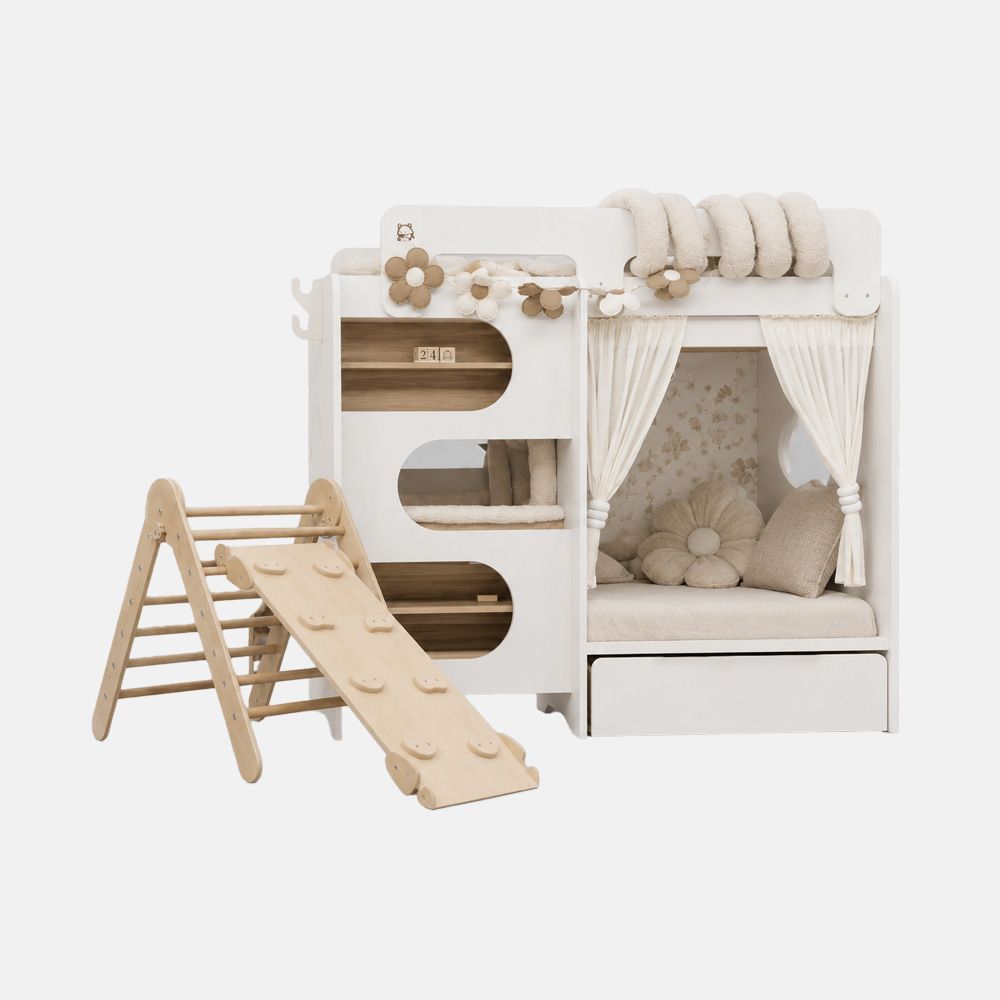
This is exactly when a bunk bed becomes appropriate. By safety standards the top tier is for age six and up (regardless of height), with a rail at least 13 cm above the mattress and a sturdy ladder. The most valuable part of such a bed is the bottom: with sleep lifted up, a ready zone for play or study opens beneath it. Through the school years it's easily reworked from a "den" into a corner with shelves and a desk.
10+ years: comfort, a soft bed and an adult workspace
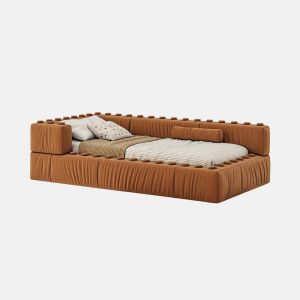
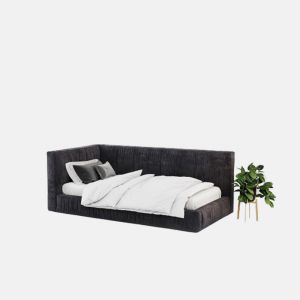
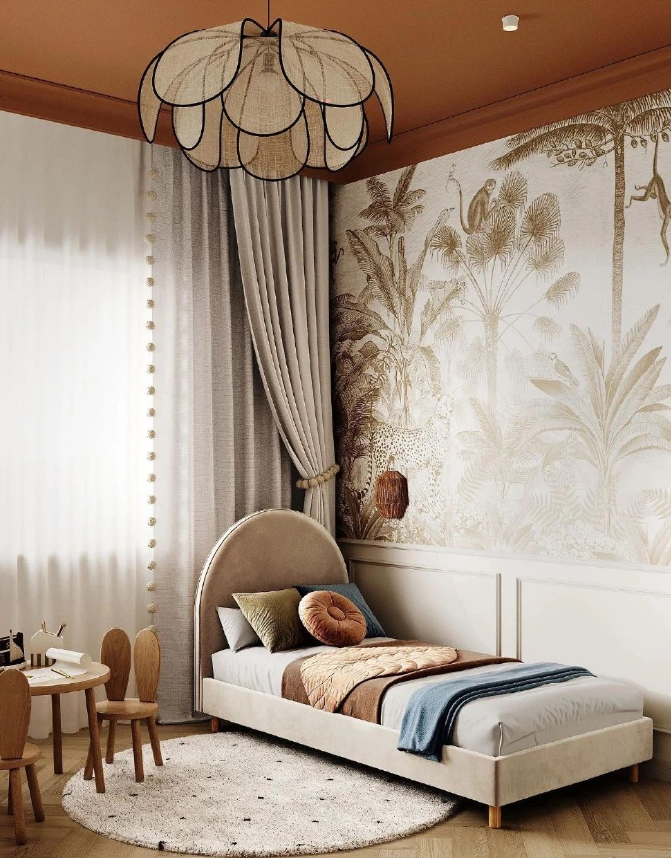
By the teen years the room grows up. The risk of spills and paints is behind — and the time comes for a more grown-up, upholstered bed that used to be impractical: now comfort and aesthetics come first. One caveat for upholstery: choose it with a removable, washable cover — otherwise the comfort is eaten by the upkeep.
Guard rails disappear, the by-height table gives way to an almost adult workspace, and storage grows upward — low Montessori shelves yield to taller systems, or the space stays "childish". And if the floor area allows, a modular sofa works well in a teenager's room — a place for friends, games and films.
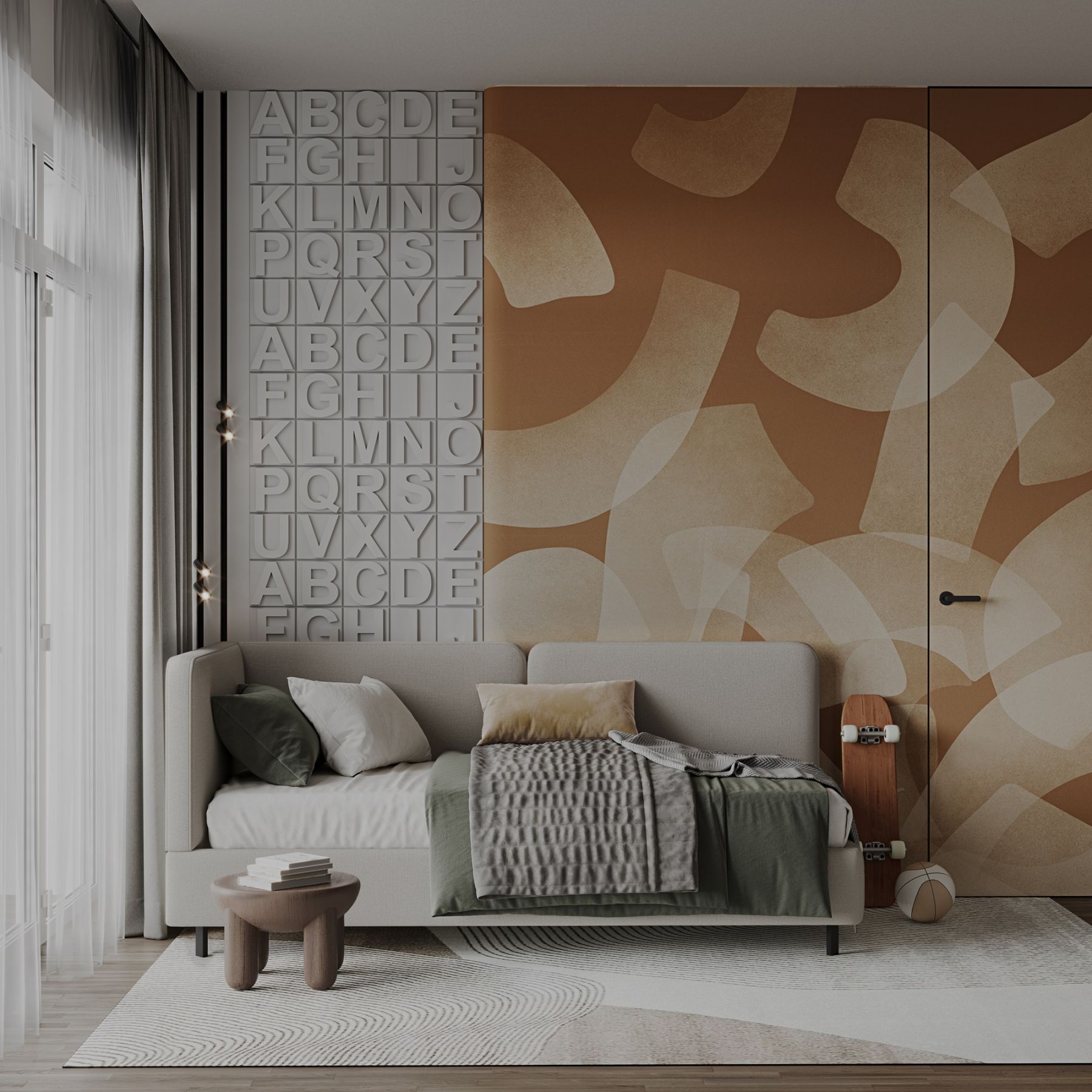
A convenient move for all the years — choosing furniture from one line that grows together: bed, dresser and wardrobe, then a writing desk in a single design. That way the room changes in stages, instead of turning into a fresh renovation each time.
Frequently asked questions
When do you move from a cot to a bed with a guard rail?
Roughly at 1.5–3 years, but you look at height, not the date: about 90 cm, or the chest above the cot rail when standing. If you have the choice, it's better to delay the move closer to three — fewer night "escapes".
When do you remove the guard rails?
There's no fixed age. The rail comes off when the child climbs in and out confidently and reliably doesn't fall out in sleep — for most that's around five or later. The cue is individual, not the calendar.
At what age is a bunk bed okay?
The top tier is used from age six by safety standards — regardless of how tall the child is. For younger ones, a version with a play area below instead of a second sleeping berth is the fit.