A Bed with a Rail: From What Age, How to Choose and When to Remove It
- A bed with a guard rail: what age it's for, how to choose and when to remove it
- What age a rail is for — and who doesn't need one yet
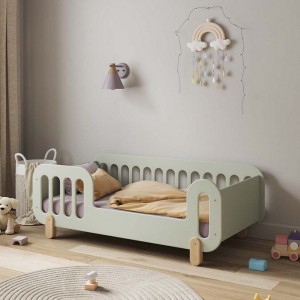
- Wooden beds with a rail: sturdy for the youngest
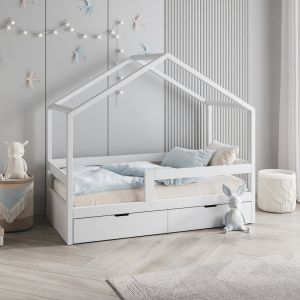
- A house-frame bed with a rail: protection and play at once
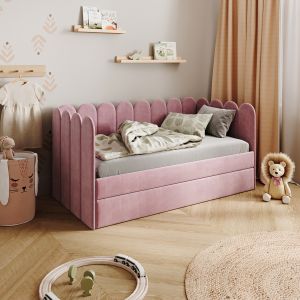
- An upholstered bed with a removable rail: one bed for all the years
- When to remove the rail
- Frequently asked questions
A bed with a guard rail: what age it's for, how to choose and when to remove it
A child's first night in a "grown-up" bed is a small revolution for the whole family. And the main question here isn't about design — it's about the edge: what will hold the child the first time they fall asleep without the walls of a cot.
A guard rail is exactly the detail the calm of those first months rests on. But a kids bed with a guard rail comes in very different forms: wooden for the youngest, a play house-frame with a protective side, or an upholstered bed where the rail comes off as the child grows. Let's sort out what age it's for, what a safe rail looks like, and when to take it away.
What age a rail is for — and who doesn't need one yet
The move from a cot to a bed with a rail usually falls between one and a half and three years. But the cue isn't a date — it's the child's body: once their height reaches about 90 cm, or their chest clears the cot rail when standing, the classic cot is already too small. If you have the choice, it's better not to rush the move, keeping it closer to three — that means fewer night "escapes".
An important point people often forget: the rail is a feature of a "grown-up" bed, not an early replacement for a cot. Attachable rails aren't recommended for babies under one or toddlers under two — precisely because of the risk of entrapment between the rail and the mattress. So the rail appears when the child has already outgrown the cot, not "ahead of time".
Wooden beds with a rail: sturdy for the youngest
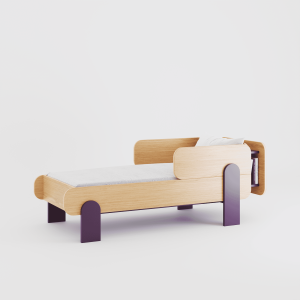
For a first solo bed we recommend wood with a solid, built-in rail. Two reasons. First, stability: a wooden side doesn't wobble or fold — it's simply there. Second, care: in the age of spills and paints a damp cloth is enough for wood, while fabric has to be scrubbed. The rail on such models is usually about 30 cm high — enough to hold a toddler who turns in their sleep.
What to watch for safety: the rail should rise at least about 16 cm above the mattress and sit snugly against it, with no gap a hand or leg could slip into. At the head and foot, by contrast, leave an opening — roughly 25 cm or more — so the child gets out freely rather than getting stuck in a half-open gap. It's this gap, not the rail's height, that's the most common cause of injuries, so it's the first thing to check.
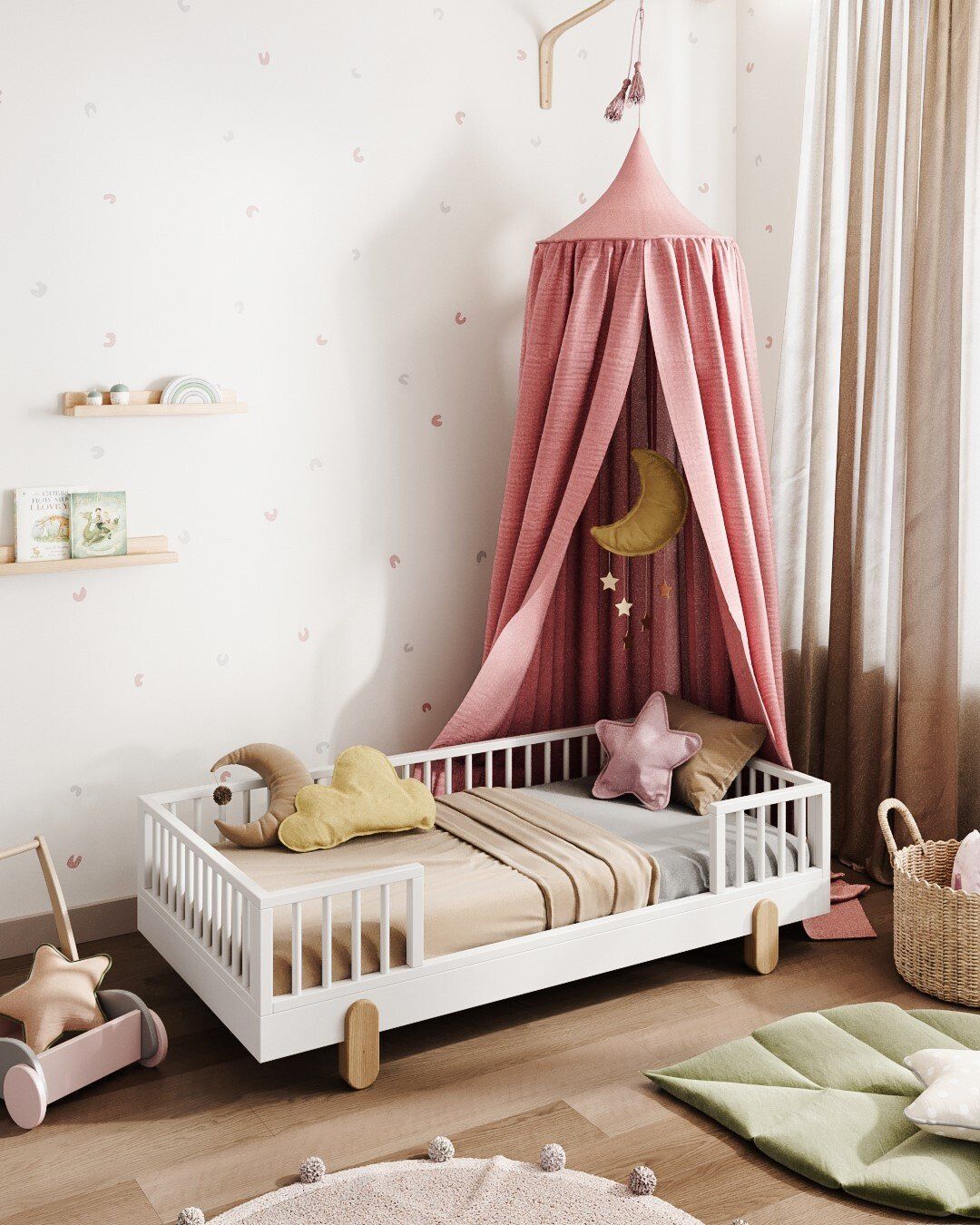
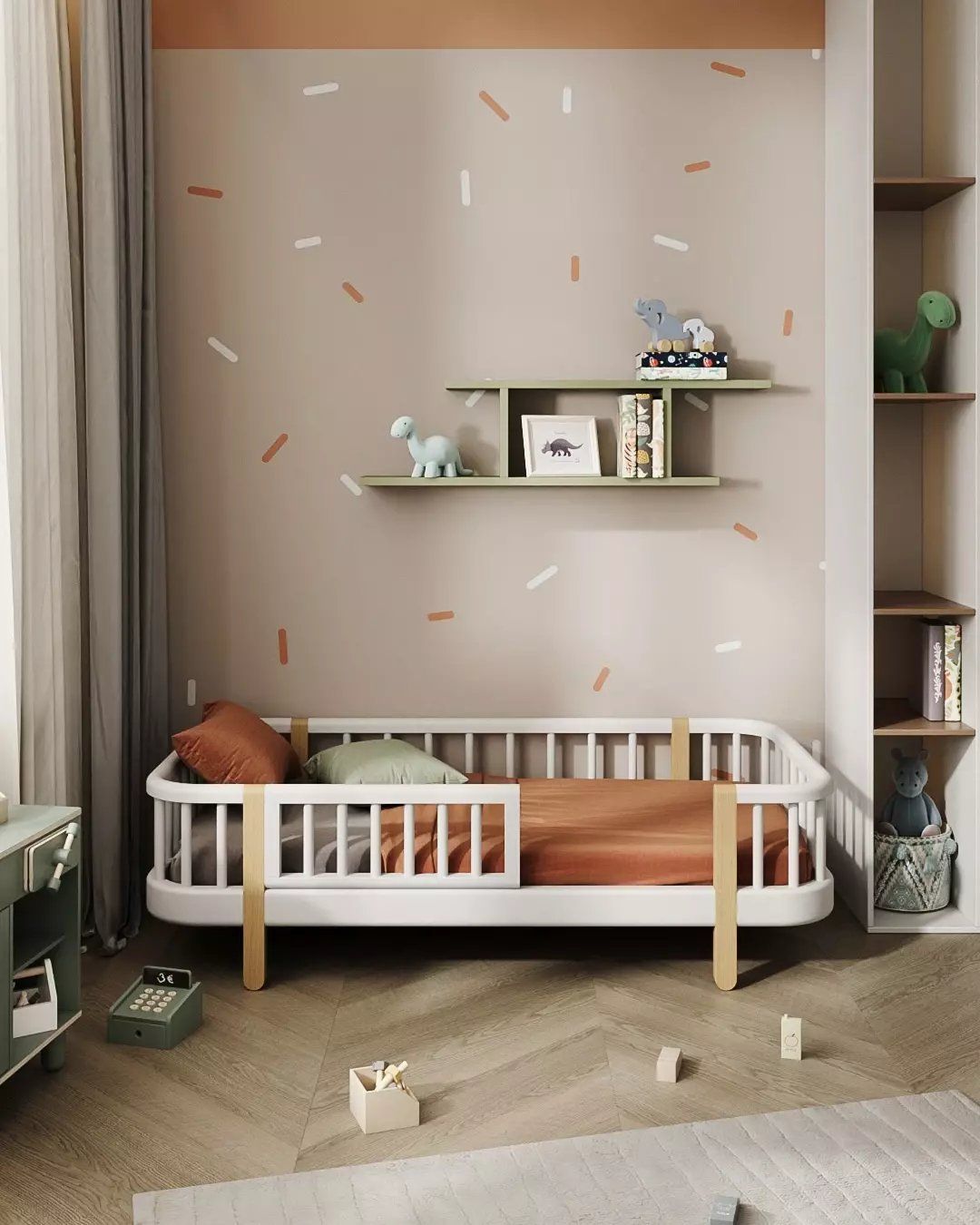
If you want flexibility, there are models where the rail is a separate option: it stays as long as it's needed and comes off without a trace when the child grows up, as with the Nordika bed. The full range of wooden options is in the children's beds with a rail category.
A house-frame bed with a rail: protection and play at once
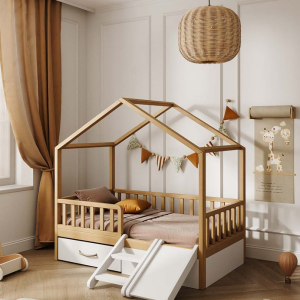
A house-frame works for safety twice over. First, the frame itself sits low to the floor — even if the child rolls off, the fall is minimal. Second, in many models the side wall of the "house" is the rail, often in a removable configuration. And by day it's no longer a bed but a den: the same piece covers both sleep and play. The format lives well from the cot transition to about six or seven.
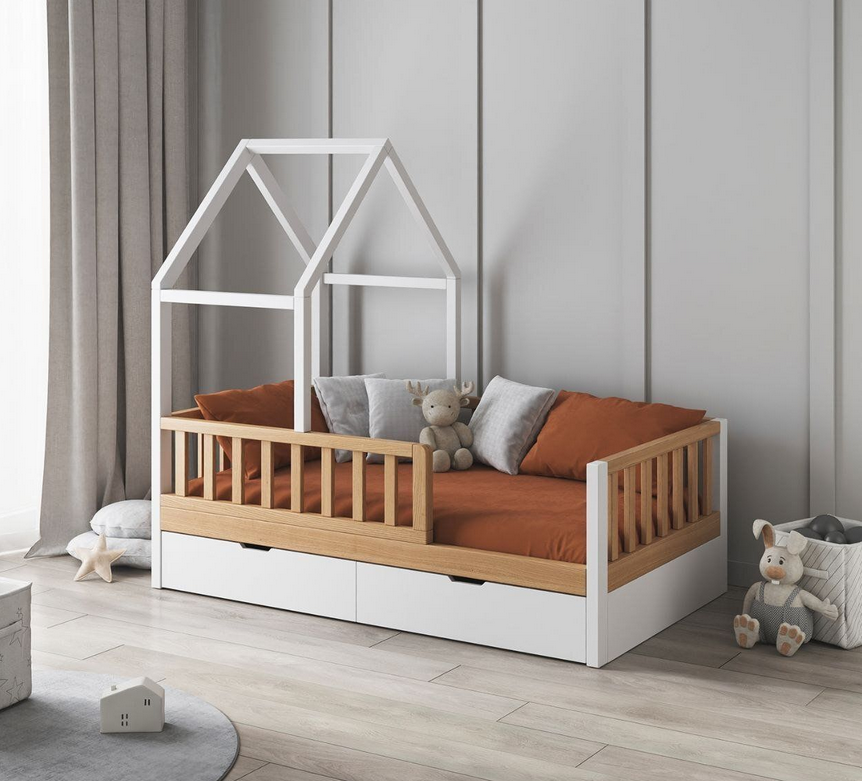
The play function can be enhanced with a model that has a slide or a "window", like Hatynka Play; more options are among the house-frame beds.
An upholstered bed with a removable rail: one bed for all the years
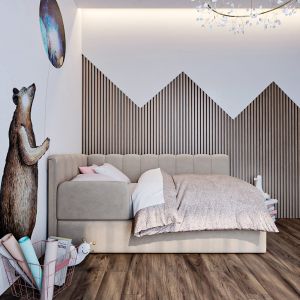
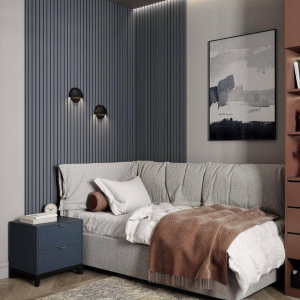
The most flexible scenario is an upholstered bed with a removable rail. The logic is simple and neat: at first it stands on both sides, then stays on just one (the wall side comes off first, so it's easy to reach the child), and later disappears entirely — the bed simply grows up with the child, no furniture swap. A soft headboard is more appropriate here for the older age, when the risk of mess is lower.
Here's the same bed in two states — with a rail for the younger age and without it once the child has grown:
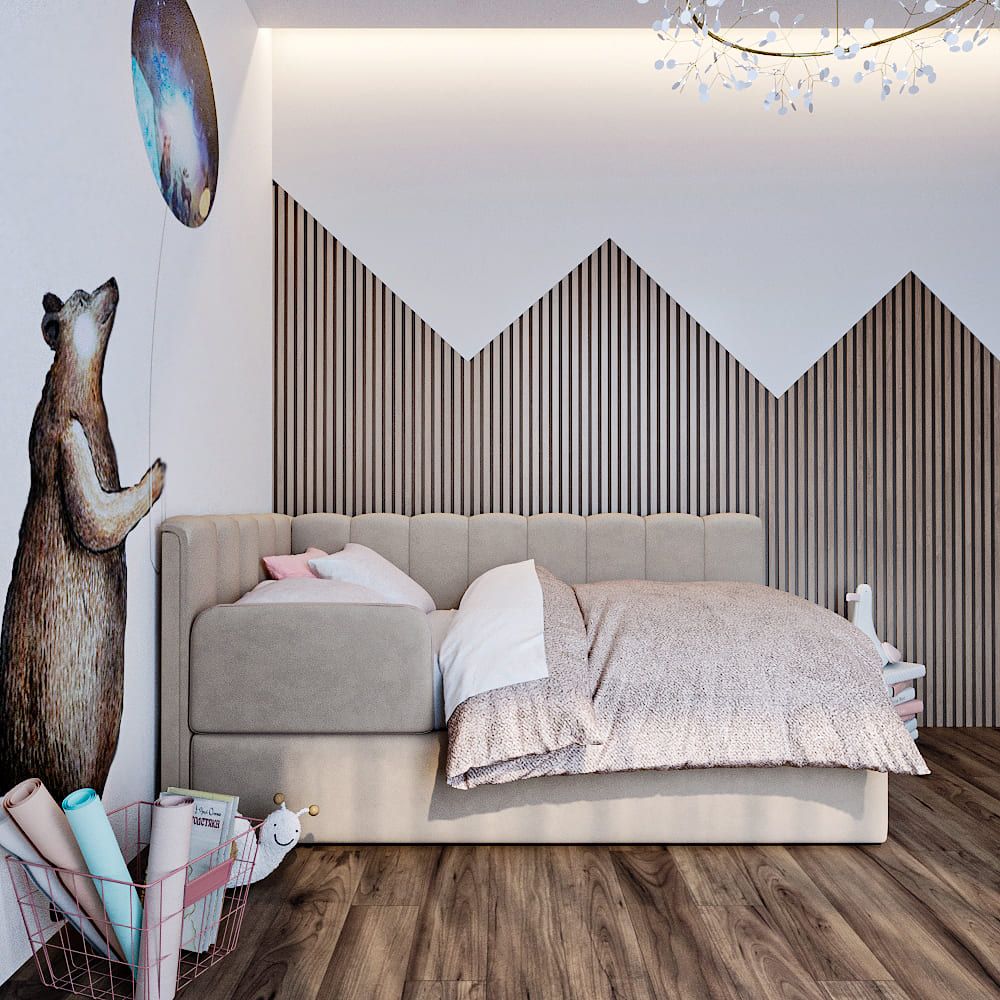
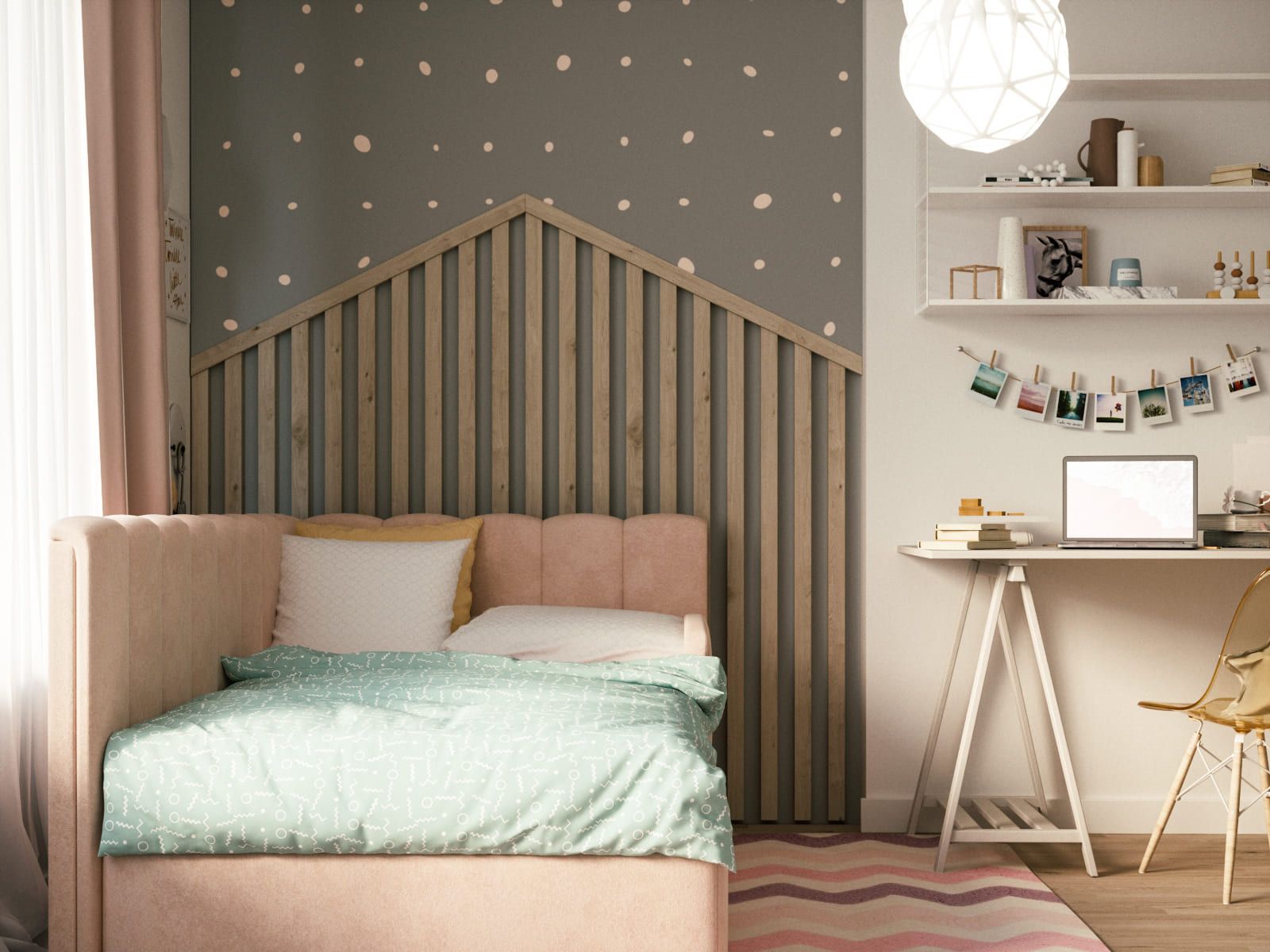
The approach scales easily: more upholstered models where the rail is a removable option are gathered among the soft children's beds.
When to remove the rail
There's no fixed age — the guide is around five, when the child climbs in and out confidently and reliably doesn't fall out in sleep. But the moment of removal is as delicate as the moment of fitting, so it's better to do it gradually: first only for the daytime nap, then leave the rail on one side rather than both, and put a rug on the floor beside it for the transition. If the child isn't ready for an open edge at all, a sensible alternative is a low Montessori-style bed, where safety comes not from a rail but from minimal height and a soft floor around it.
Frequently asked questions
Does a kids bed need a rail, and from what age?
Yes, at the cot-transition stage — roughly from 1.5–3 years, when height reaches ~90 cm or the child's chest is above the cot rail when standing. The rail holds a toddler who still rolls and shifts in sleep.
Removable or fixed rail — which is better?
A fixed (usually wooden) rail is the sturdiest and most reliable, good for the youngest. A removable one is handier "to grow into": it's taken off in stages, and the bed keeps serving without it. For upholstered beds a removable rail is the standard.
How high should the rail be?
The guide is at least about 16 cm above the mattress, sitting snugly against it (no gap). At the head and foot, by contrast, leave an opening of ~25 cm or more so the child doesn't get stuck. These figures are approximate and vary by maker.
When do you remove the guard rail?
Usually around five, individually — when the child reliably doesn't fall out. It's better done gradually: the daytime nap without it, then the rail on one side, and only then fully.
Can you go without a rail at all?
Yes, if the bed is very low. In the Montessori approach the rail is replaced by a minimal mattress height and a soft floor around it — the child lies down and gets up safely on their own.