Double Bed Sizes: 140, 160, 180 and the Overall Footprint
Double Bed Sizes: 140, 160, 180 — and Why the Overall Footprint Matters More Than It Seems
It seems simple: bigger is better. But double bed sizes aren't a single number — they're two different stories: how much sleeping room you get and how much the bed takes from the room. The confusion here is the most common cause of regret: you order a "160" and it sits against the wall so tightly that the nightstand no longer fits.
Let's set it all out: the standard sleeping-surface sizes, where "non-standard" two metres come from, why the mattress dictates the bed's footprint, and what to look at besides the width of the sleeping surface. Current models in different formats are in the double beds category.
Standard sleeping-surface sizes
Width is the main choice. Here's a starting point:
| Width | For whom |
|---|---|
| 140 cm | the minimum for a couple; good for a compact bedroom or one adult "with room to spare" |
| 160 cm | the comfortable standard for two — the golden mean |
| 180 cm | spacious; the choice for those who like freedom at night |
| 200 cm (2 metres) | maximum comfort, the "family" format — more on it below |
The standard length is 200 cm, and that's enough for most. But if someone in the family is over 190 cm tall, think about an extended version straight away — otherwise feet will "search" for the edge every night.
The mattress dictates the size — and people remember it too late
A bed is built around the mattress, not the other way round. Standard mattresses come in steps: 140×200, 160×200, 180×200, 200×200 — and the sleeping surface of most models is designed for exactly these. So the question of a "double bed with a mattress" isn't about a bundle for the sake of a discount, but about compatibility: at standard sizes you'll easily find a replacement, a topper and bedding.
The moment you go beyond standard — say you want a bed exactly two metres wide or 220 cm long — the mattress becomes bespoke too. And that means a longer wait, a higher price and a harder search next time. Not a reason to refuse, but a reason to decide consciously.
Footprint vs sleeping surface — the main trap
This is where the biggest mistake hides. The sleeping surface is the mattress. The bed's footprint is the whole structure together with the side rails, the headboard and the projections of the base. And the difference between them can be dramatic.
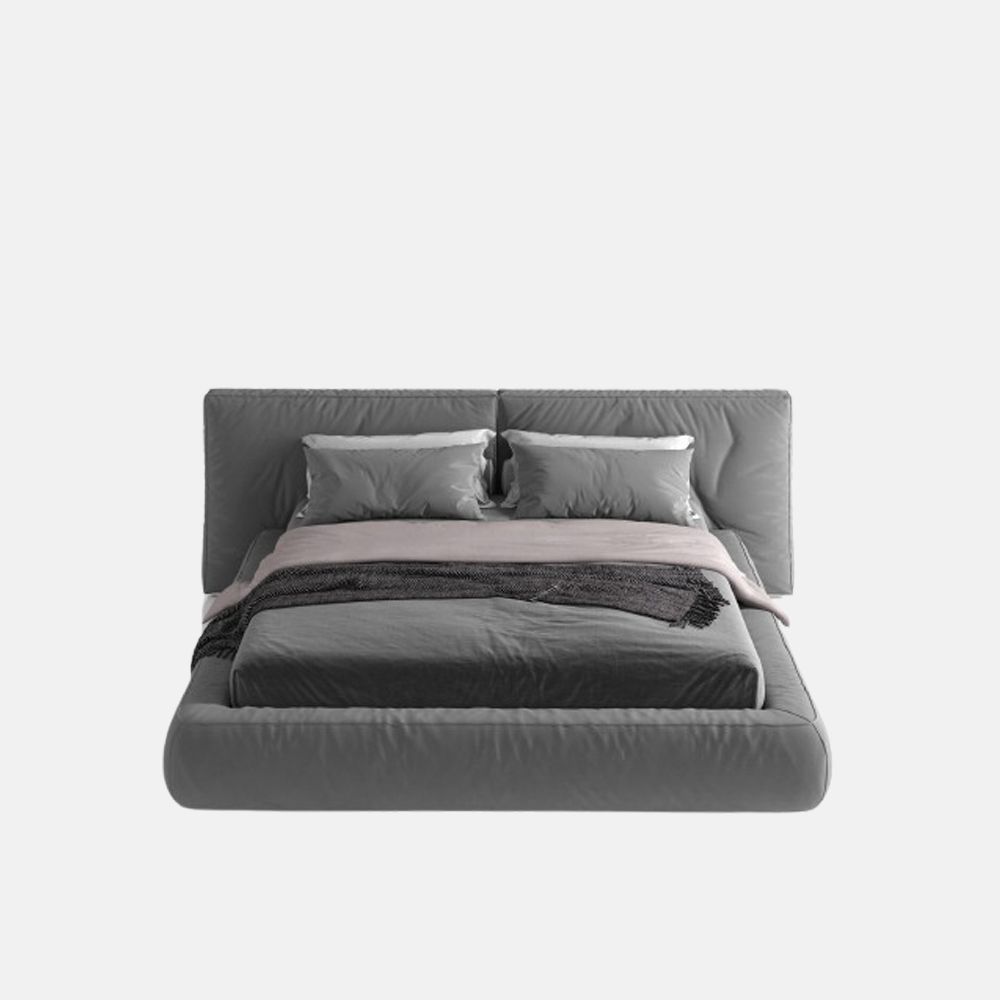
A soft bed with a bulky perimeter adds 15–25 cm on each side: a 160 cm sleeping surface easily becomes a 190–200 cm footprint on the floor. It looks luxurious, but it eats into the room noticeably.
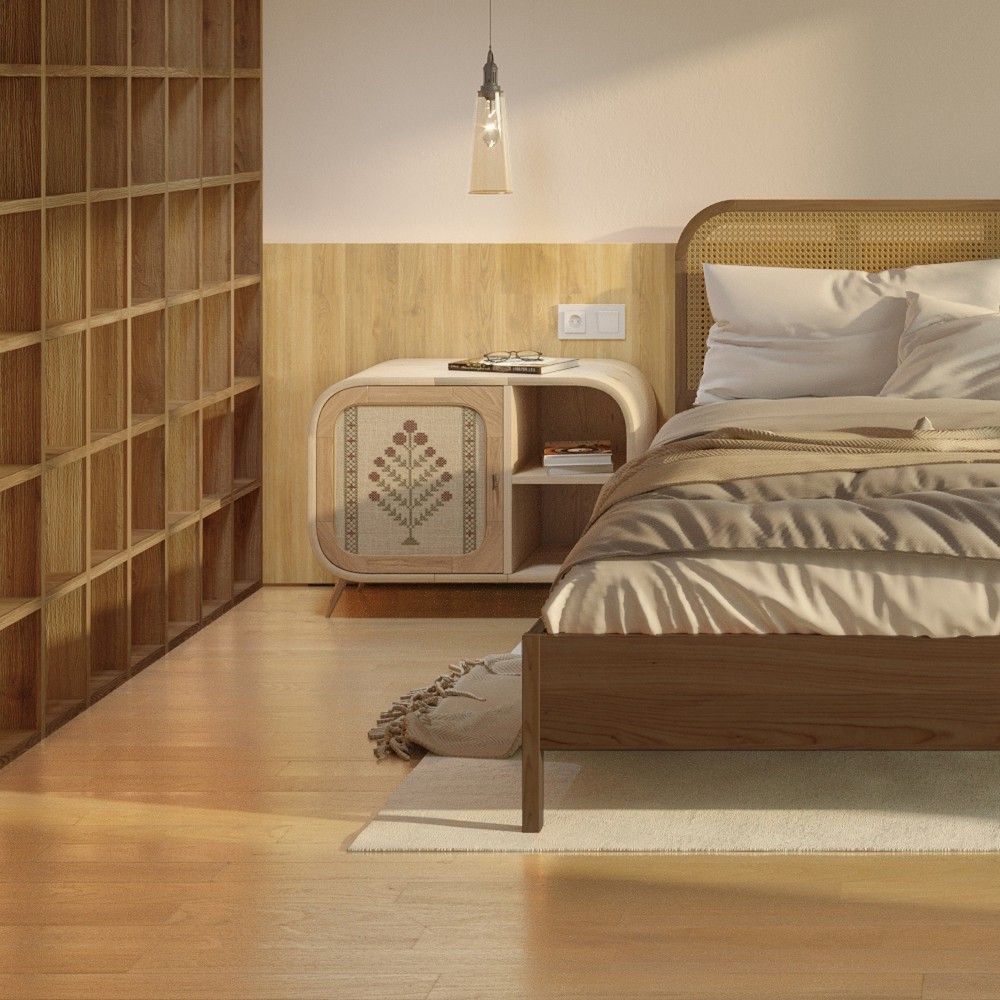
A slim wooden frame behaves the opposite way: the rail is only slightly wider than the mattress, so the footprint almost equals the sleeping surface. For a small bedroom that's often the deciding argument — at the same sleeping width, the bed takes less of the room.
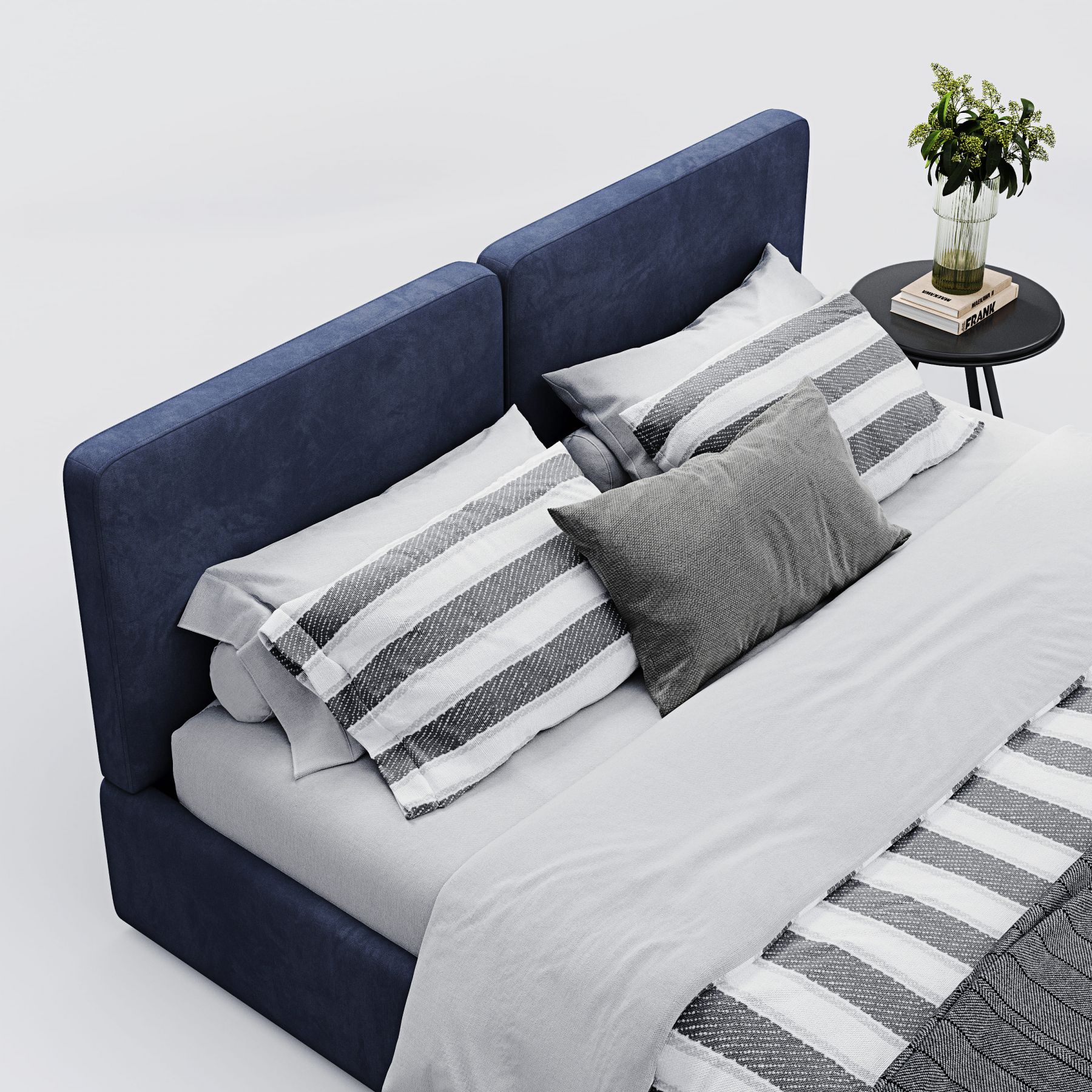
But not all soft beds take up extra room: there are models with slim side rails, where the upholstery gives comfort to the touch while the sides stay narrow. That option is the golden mean — the softness of the bulky models, but without the extra centimetres on the sides. A good choice for a small bedroom if you don't want a purely wooden frame.
The rule is simple: in the shop look at the width of the sleeping surface, and at home measure the outer dimensions. And don't forget the "air" around it — at least 60–70 cm at the sides and the foot, so you can make the bed and pass by without catching the corners.
Which width for whom — and why parents should choose 180
140 cm is a compromise: a little tight for a couple, but a saver in a small bedroom; if one person sleeps there, that width gives royal space (then it's worth looking at single beds as a more compact alternative). 160 cm is the universal standard for two.
But 180 cm we recommend especially to parents. When a child runs in at night — often more than one, and with a favourite toy — it's exactly those extra twenty centimetres that save one of the adults from sleeping on the edge. The same goes for families with a big dog that "accidentally" ends up at the foot. 180 is the width of calm sleep, when you share the bed with more than just one other.
Bespoke large sizes — when two metres is the norm
Two metres wide is no longer "too much" but a conscious choice for comfort: for tall people, for families who sleep together, or simply for those who love space. The 200×200 format is sometimes called "family" — there's room for everyone. Many of our models are also made to bespoke sizes, so a bed to fit your bedroom and your height is a question not of "is it possible" but of planning ahead: for a non-standard size, budget for a bespoke mattress and a little more waiting.
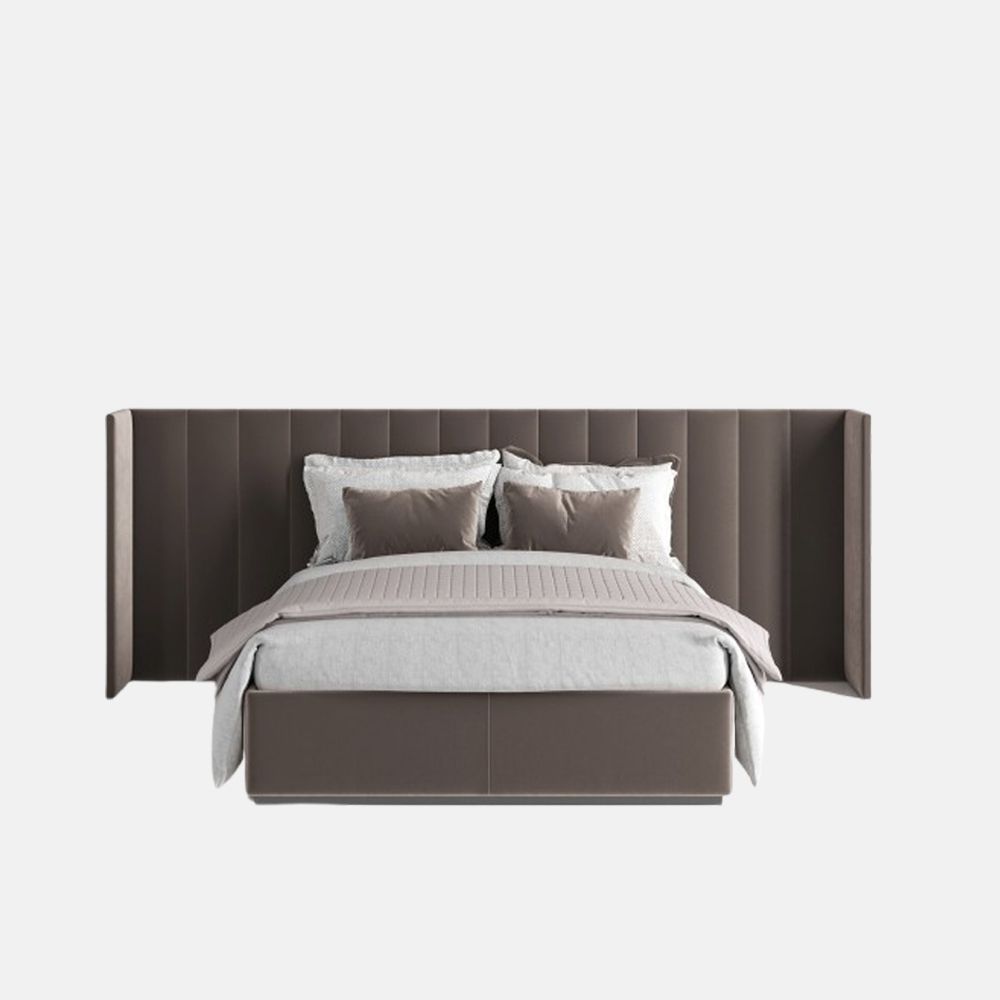
What else to look at before buying
A few practical pointers. Ask whether the base under the mattress is included — sometimes it's bought separately. Look at the height with the mattress in place: sitting down is comfortable at roughly 50–55 cm. If you're short of storage, choose a base with drawers or a bed with a lifting mechanism — the niche under the base replaces half a wardrobe. And check the logistics: whether the assembled bed fits through the doorway and comes apart for a move.
Frequently asked questions
What double bed sizes are there?
By sleeping-surface width — mainly 140, 160, 180 and 200 cm; the standard length is 200 cm. Width is chosen for the couple and the room, length for height.
Which is better — 160 or 180?
160 cm is the comfortable standard for two; 180 is worth taking if you like space or if children or pets join you at night.
Can I order a bed two metres wide?
Yes, many models are made to bespoke sizes. Bear in mind that a non-standard width or length will need a bespoke mattress.
Why is the bed's footprint bigger than the mattress?
Because the footprint includes the side rails, the headboard and the base. On soft models the perimeter adds 15–25 cm per side; on slim wooden frames, almost nothing. So at home measure the outer size, not just the sleeping surface.


