Bar Stools vs Counter Stools: the Difference and How to Get the Height Right
- Bar Stools vs Counter Stools: the Difference and How to Get the Height Right
- The difference between bar and counter stools is in the seat height
- How to measure and choose the right height
- With a back or without: what to choose
- Wood, metal or an upholstered seat — material by scenario
- Design: how to fit the stool into your kitchen
- Frequently asked questions
Bar Stools vs Counter Stools: the Difference and How to Get the Height Right
The most common buying mistake is ordering a stool by eye without measuring the counter. The result: you either sit too high, knees jammed against the top, or too low, as if at an ordinary table. So the real question isn't "which design" but the bar stool height for your specific counter. Let's break down the difference between bar and counter stools in simple numbers, then cover shape, back, material and design so the choice is a conscious one.
In short: bar versus counter is about seat height, not style. Below — how to calculate it, when to pick each, and what else to look at beyond height.
The difference between bar and counter stools is in the seat height
It all comes down to one thing: which countertop height the stool is built for. The rule of thumb is simple — seat height = counter height minus about 25–30 cm. That gap lets you tuck your knees under the top comfortably without feeling cramped.
| Type | Counter height | Seat height | Where |
|---|---|---|---|
| Counter (semi-bar) | ~90 cm | 60–65 cm | kitchen island, lower bar counter |
| Bar | ~110–120 cm | 75–80 cm | classic high bar counter, home bar |
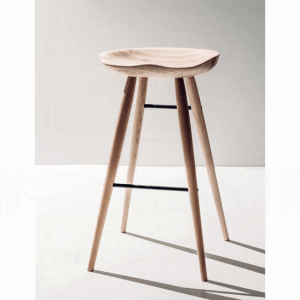
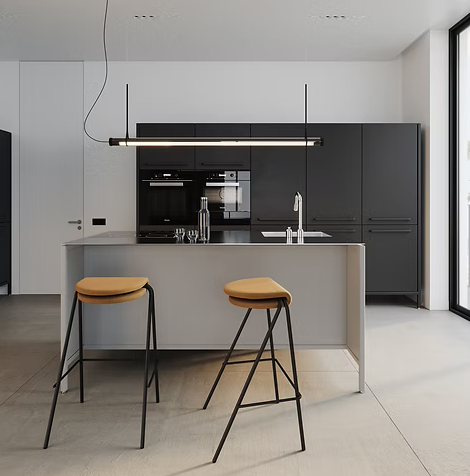
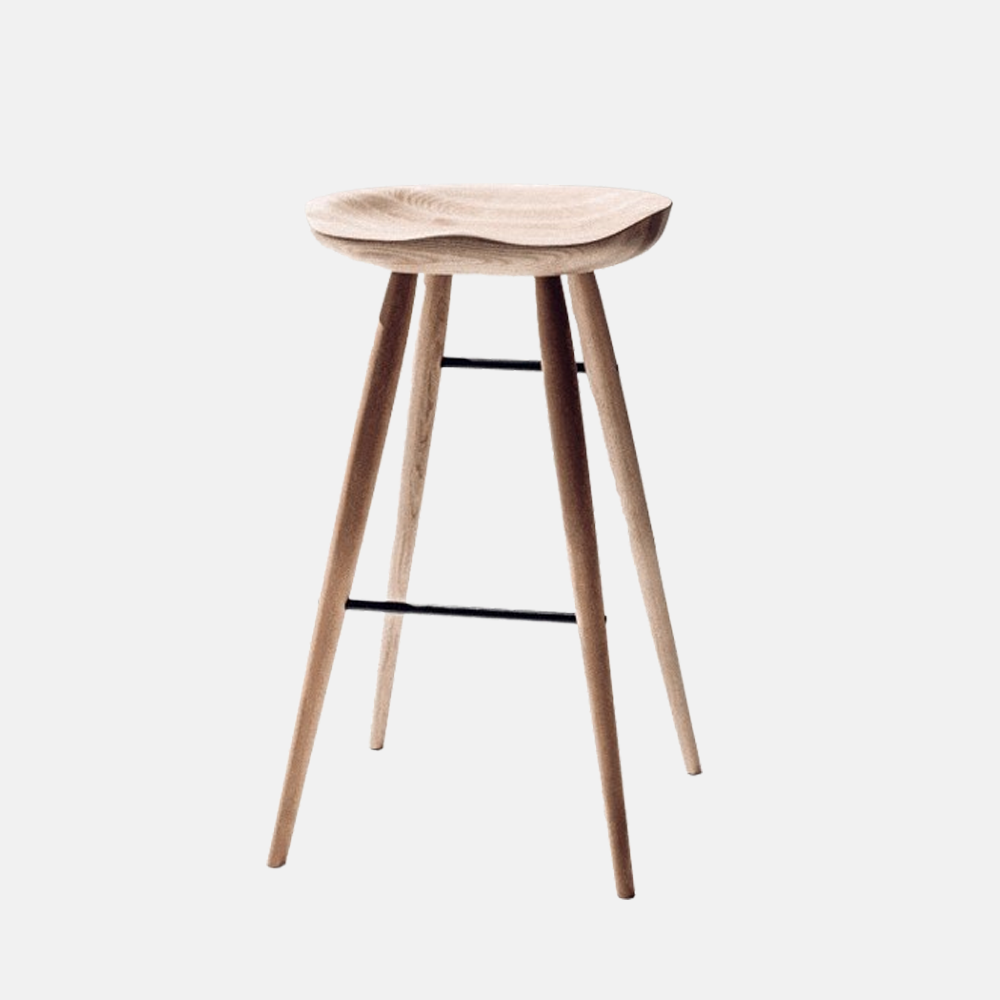
So if you have a classic high counter of 110–120 cm, you need bar stools with a 75–80 cm seat (like Taco below). And if it's a kitchen island or a lower counter around 90 cm, choose counter stools with a 60–65 cm seat. Mixing these two up is exactly what ruins the comfort.
How to measure and choose the right height
Do three things before buying. First, measure the height of your counter from floor to the top of the worktop (don't rely on a "standard" — kitchens vary). Second, subtract 25–30 cm: that's your target seat height. Third, check the spacing: allow roughly 60 cm of counter width per seat so people don't bump elbows.
One detail people often forget is the footrest. The taller the stool, the more you need support for your feet: without it your legs dangle and sitting gets tiring. On bar stools a footrest is essential; on counter stools it's still welcome. If your counter is a non-standard height, look at a model with adjustable height (gas lift) — it fine-tunes the seat, just check stability and the stated maximum height.
With a back or without: what to choose
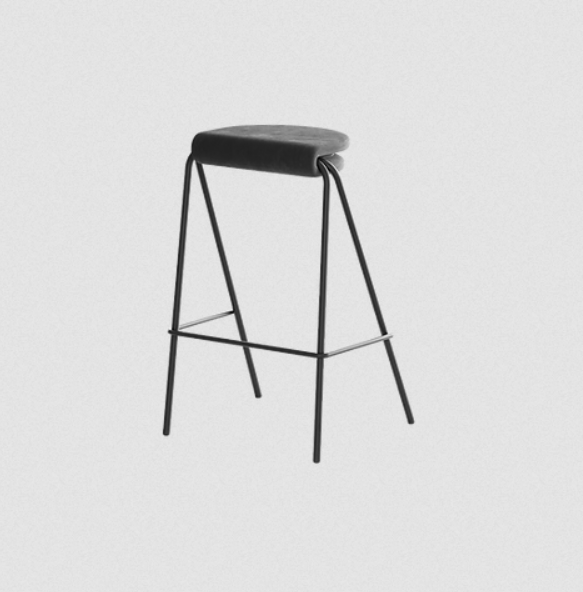
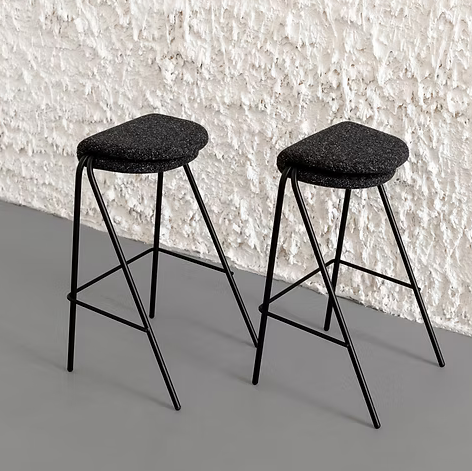
A backless model is compact: it tucks fully under the counter, visually "disappears" and keeps the space open. Ideal for small kitchens and when you want the stools to stay unobtrusive. Taco is exactly that — backless, so a pair slides under the counter and doesn't weigh the room down.
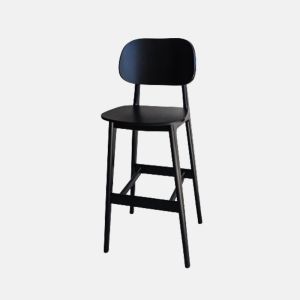
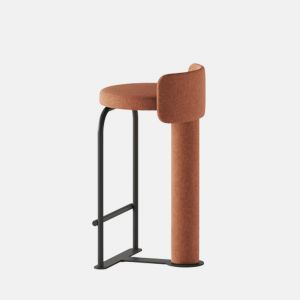
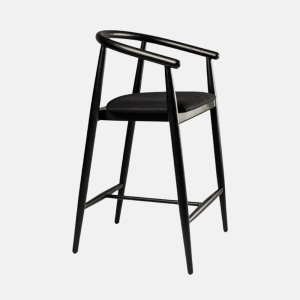
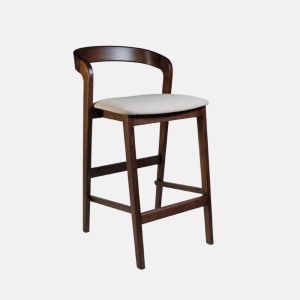
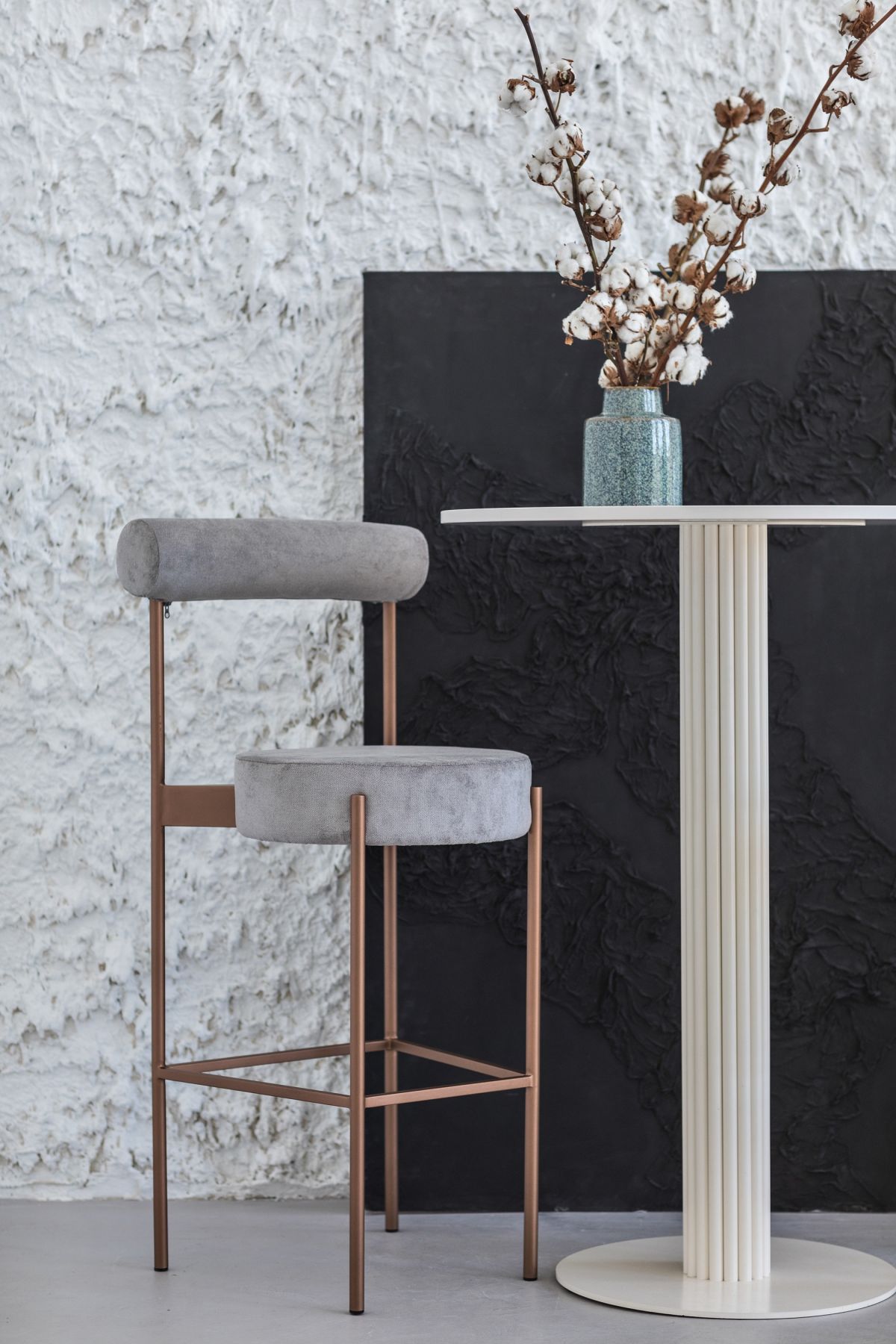
A model with a back is about comfort: your back gets support, so it's easy to sit for a long time, chatting or working. The trade-off — it's a bit taller and bulkier, and won't fully tuck under. For maximum cosiness, look at models with a bolster back, like TUBE Bar. Rule of thumb: small kitchen — backless; if people actually sit and talk at the counter — with a back.
Wood, metal or an upholstered seat — material by scenario
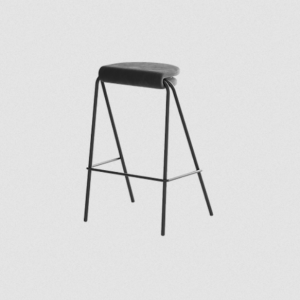
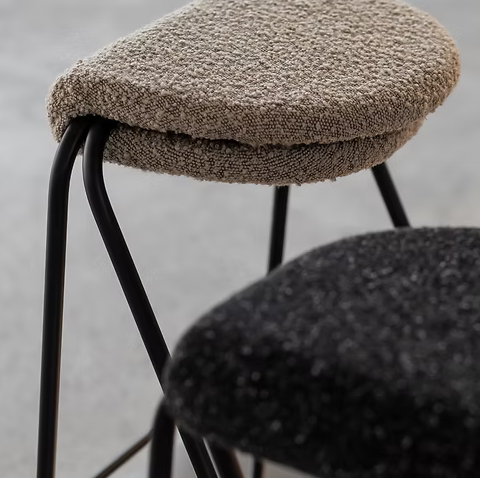
Material sets both the mood and the practicality. Wooden models are classic and warm: durable, tactile, they age well and suit both modern and cosy kitchens. A metal frame is easy to care for and gives that loft character often sought for a bar zone (like Taco's slim black frame). An upholstered seat is the most comfortable for long sits; for a kitchen pick a dense fabric like boucle that cleans easily, especially with children at home.
Design: how to fit the stool into your kitchen
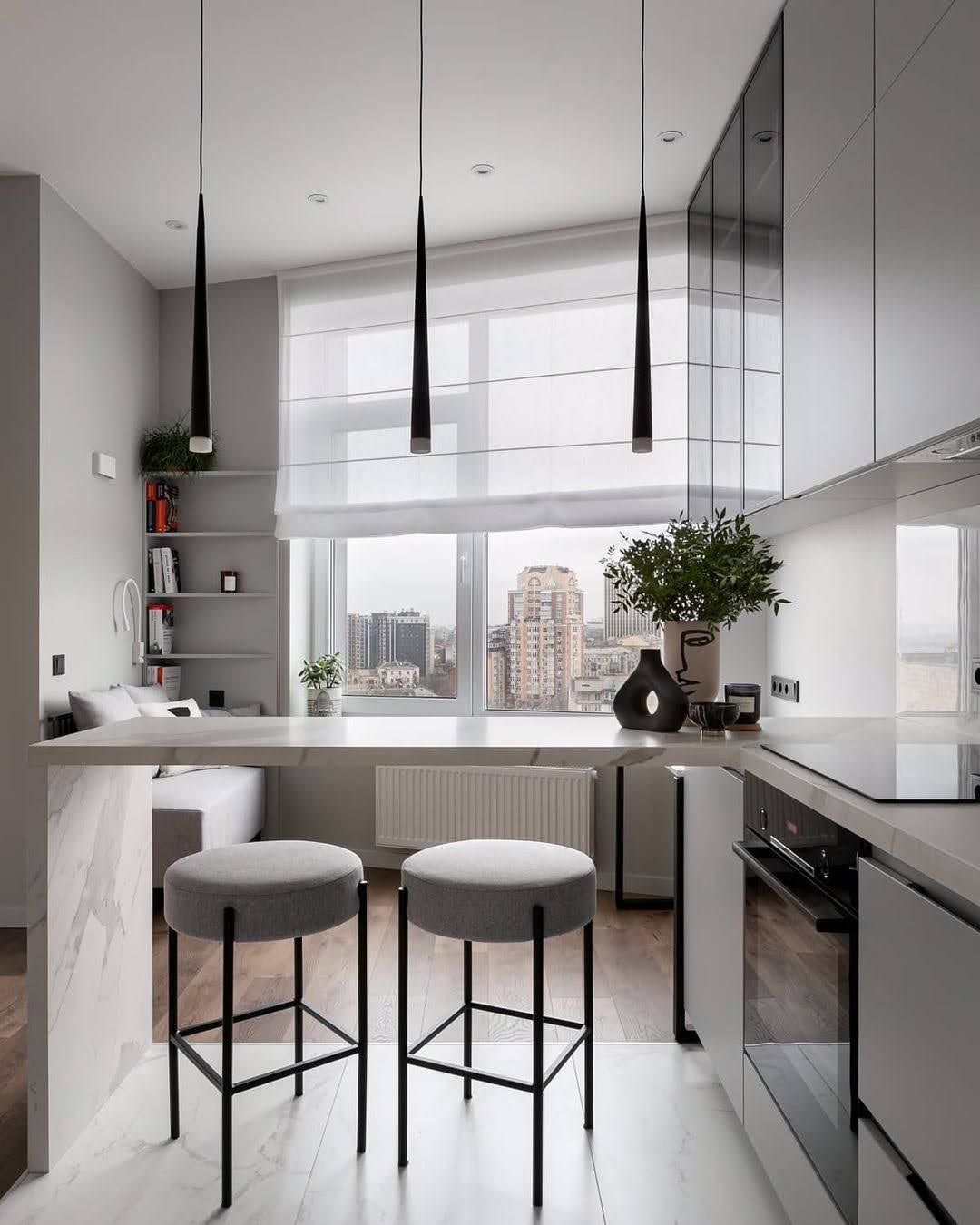
Once height and material are settled, character is what's left. A few pointers. Swivel models are handy in a busy kitchen — it's easier to sit down and get up without pulling the stool out. Pick up the colour from something in the room: hardware, the worktop or textiles — then the stools read as part of the plan, not random. And don't fear a little asymmetry: two or three matching stools at an island are calm and classic, while a mix of textures within one palette feels livelier and more "designed".

The key is to keep the order of decisions in mind: first the height for the counter, then the back for the scenario, then the material for upkeep, and only last — colour and shape. In that order it's hard to go wrong.
Frequently asked questions
What height should a bar stool be?
For a classic high counter of 110–120 cm — a 75–80 cm seat (bar). For a counter or island around 90 cm — a 60–65 cm seat (counter stool). General rule: seat height = counter height minus 25–30 cm.
How does a bar stool differ from a counter stool?
Only in seat height: the bar stool is taller (75–80 cm) for a high counter, the counter stool lower (60–65 cm) for an island or lower counter. Style, material and back can be the same on both.
Bar stool with a back or without — which is better?
Backless is more compact and tucks under the counter — good for small kitchens. With a back is more comfortable for long sitting. Choose by scenario: "perch briefly" or "sit and chat".
How many stools should I place at the counter?
Allow about 60 cm of width per seat so it's comfortable and no one bumps elbows. For a 180 cm counter, that's three stools.
What if my counter is a non-standard height?
Choose a model with adjustable height (gas lift) — it adapts to 100–110 cm. Check the maximum height and stability.