An Upholstered Headboard: Fabric, Shape and Care Without Regrets
An Upholstered Headboard: Fabric, Shape and Care Without Regrets
A headboard is what your back touches every evening and the first thing that catches the eye when you walk into the bedroom. That's why an upholstered headboard is chosen not only by colour: its shape decides whether it's comfortable to read in bed, and its fabric decides whether it will still look neat a year later — especially if there's a cat in the house.
Let's look at the three things that decide everything: different softness and shape, the fabric (and why it's the main question for pet owners), and care — where dark colours let you down most often. This applies to any format, from narrow to wide, so the advice works the same for different beds.
Different softness — it all depends on how you use the headboard
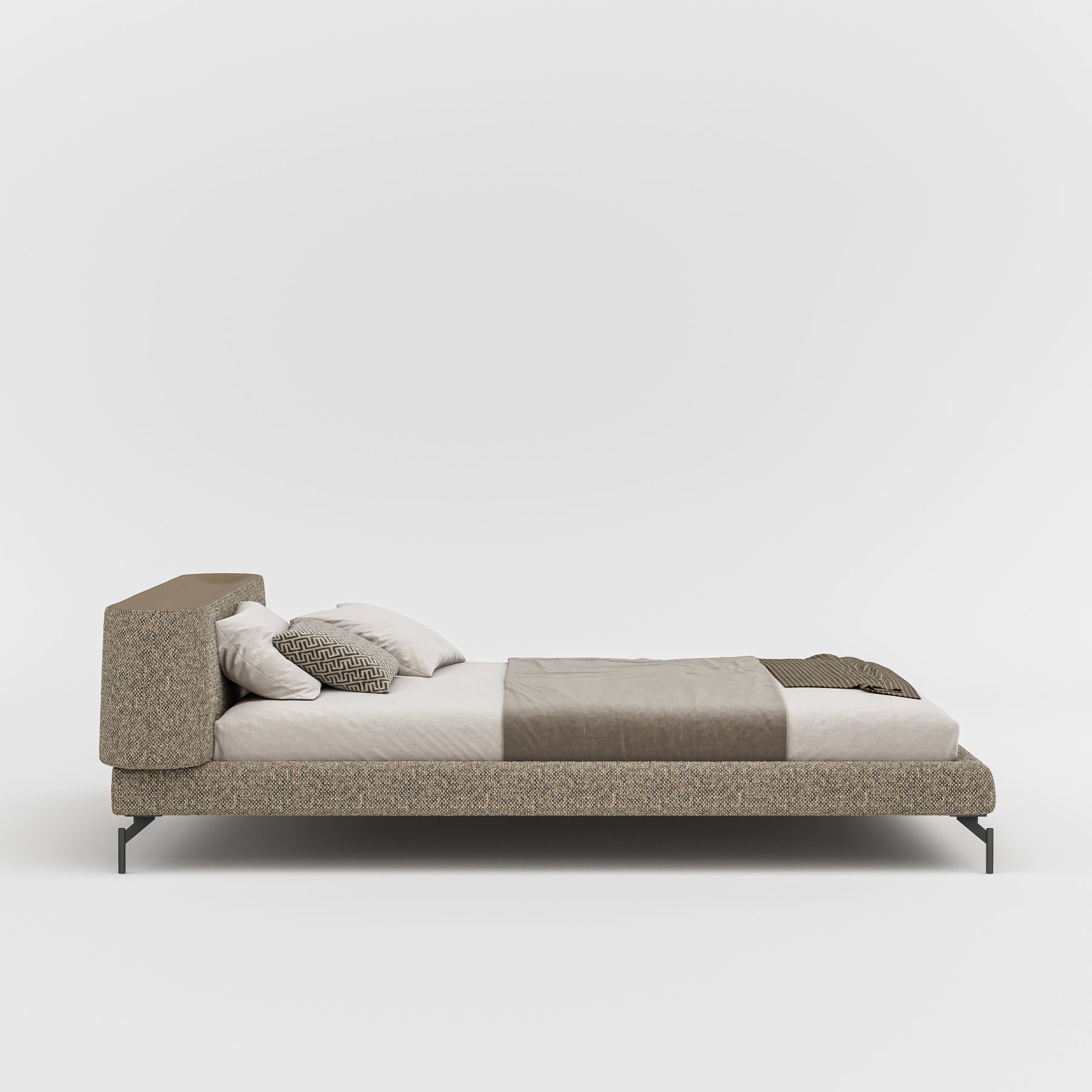
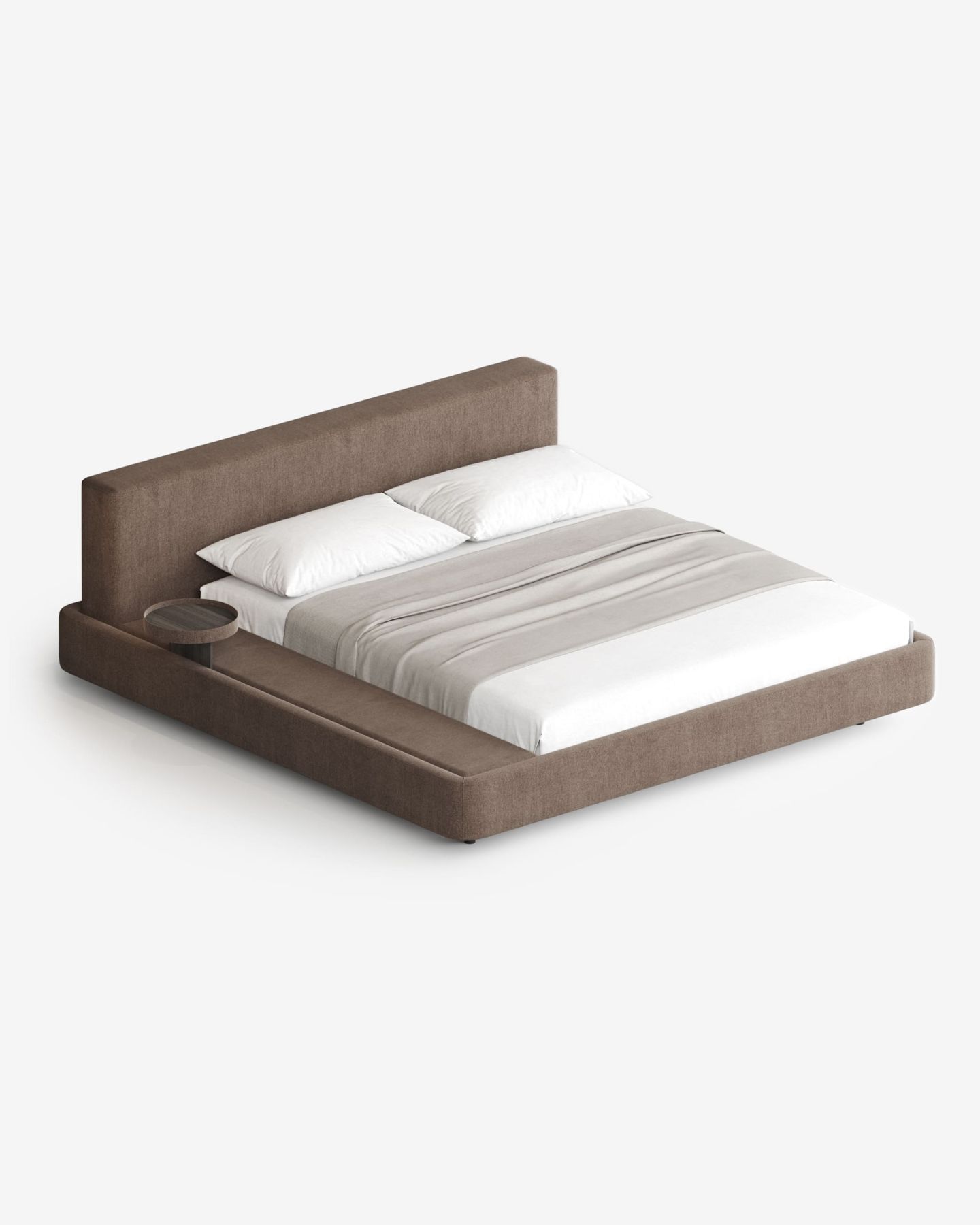
First, ask yourself honestly: do you read, sit with coffee in bed — or is the headboard mostly decor for you? The filling depends on that. A firm, flat headboard looks restrained and graphic and holds its line well, but you won't lean on it for long without a pillow — it's about aesthetics, not about "collapsing with a book".

But if the bed is also a place to read or work on a laptop, look for a thicker filling. A generous headboard with a soft bolster gives real support for your back: you can lean on it and sit even without a separate pillow. The difference is felt at once, the moment you sit down.
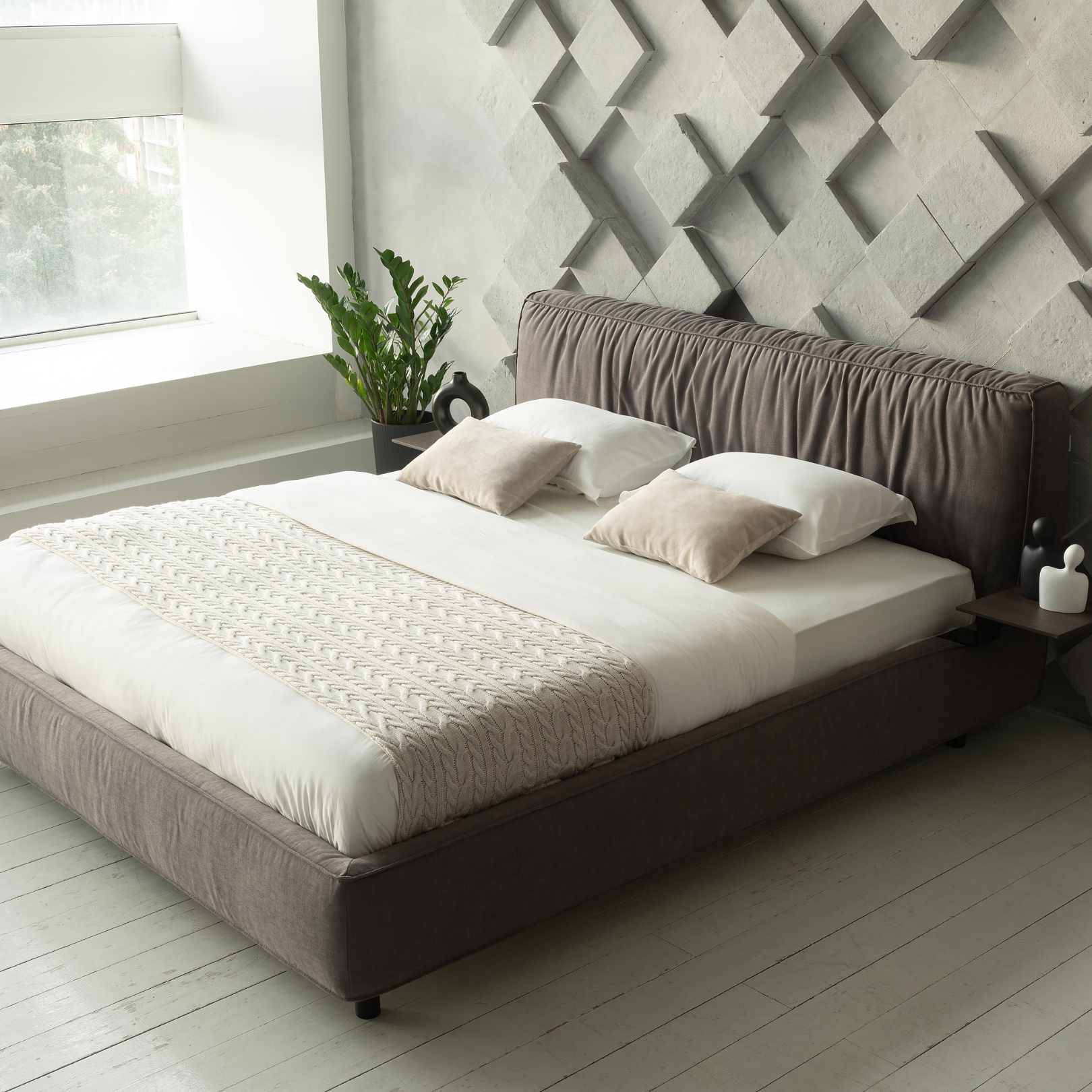
A story of its own is a gathered headboard. Soft draping adds depth and a tactile feel, makes the bed warmer and "more expensive" looking; the folds play with light and shadow. It's the choice when you want not just a flat panel but character.
Fabric: what to choose from
Fabric decides both the mood and the practicality. Chenille and tight weaves are dense, hard-wearing and hide small marks; velvet is deeper and warmer to the touch but "remembers" the direction of the pile more visibly; microfibre is smooth, undemanding and easy to clean. A practical detail is density to the touch: the tighter the weave, the less the fabric stretches and wears at the corners you touch daily. So before choosing, don't just look at the colour — run your hand over the sample. And if there are pets at home, the fabric becomes the main question — worth saying separately.
Trendy boucle
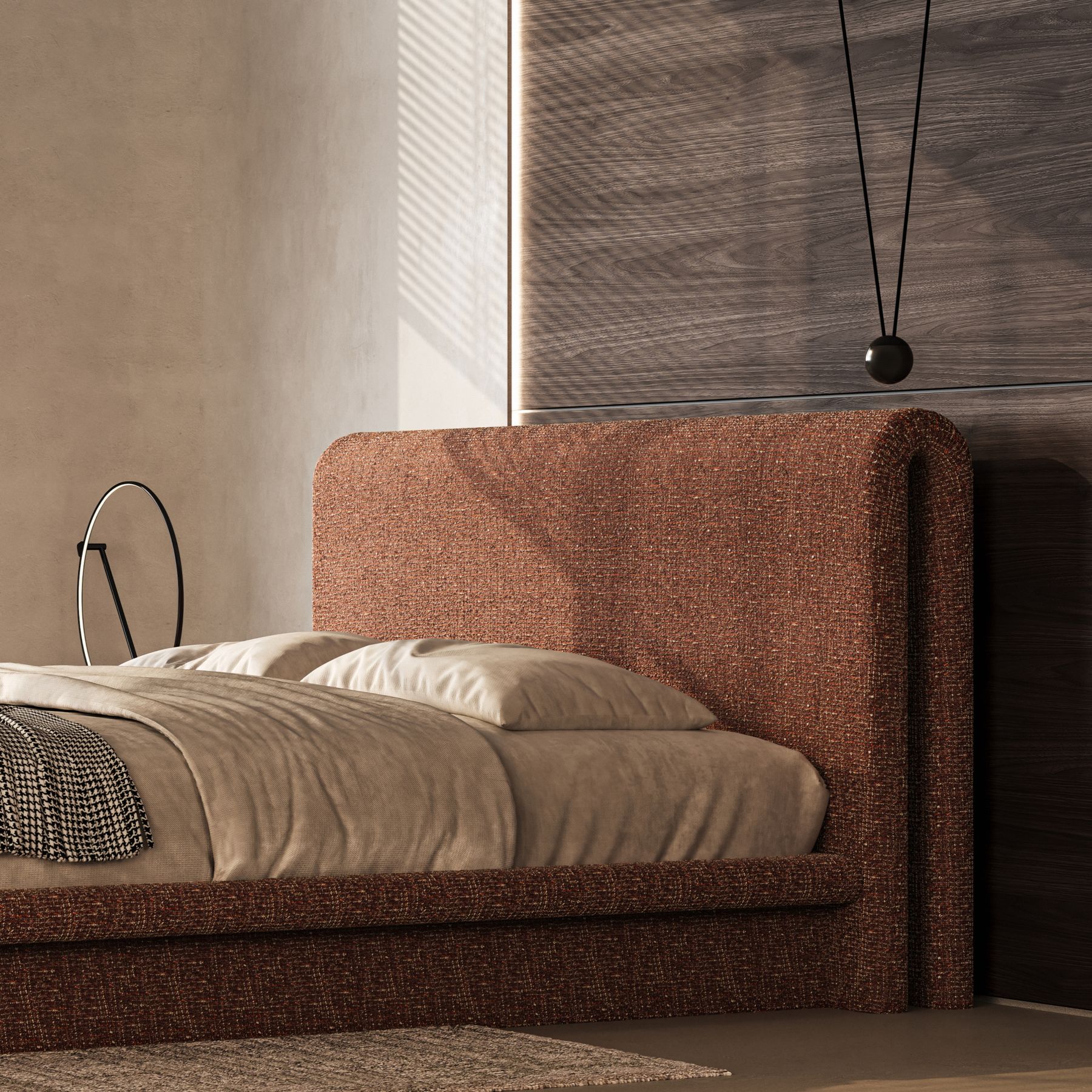
Boucle is the texture of the season: generous loops, a "cloud" softness, the kind of cosiness you want to touch. It looks wonderful on rounded shapes and adds calm to a room. But the very nature of boucle is in the loops, and they are its weak point where there's a cat: a claw easily hooks a loop, and the usual paw motion pulls or tears the thread. Active young cats can "comb through" such a headboard fairly quickly. If there are no cats — boucle is one of the warmest and most on-trend choices; if there are — look at denser, "performance" boucle with tighter loops and a reinforced backing, noticeably more claw-resistant.
Pet-friendly fabrics
If there's a cat or dog at home, choose the fabric not by trend but by "survivability". One general rule: smooth, dense fabrics without loops are the friendliest. For cats that's microfibre and micro-velvet (ultrasuede), and a dense short-pile velvet: the claw slides over the surface rather than catching, and hair lifts off easily with a lint roller. For dogs, faux leather is practical: moisture and stains simply wipe off and hair barely embeds; the one caveat is that sharp cat claws can leave puncture marks, so it's worse for cats than for dogs.
What to avoid when there are pets: loose weaves and any loops — boucle, tweed, looped chenille, linen. They're the easiest for a claw to catch, and they trap the most hair. Colour matters too: muted mid-tones and a subtle pattern hide fur and small snags better than solid black or very light shades.
What else saves the fabric next to a pet: removable covers (take off and refresh), a light throw over the "risk zone", a scratching post near the bed, claws trimmed in time and a weekly pass with the vacuum. Together this keeps the headboard looking neat for years, not months.
Care — why dark fabrics are harder
Here's the non-obvious part. Black and dark fabrics look striking, but they're the most demanding in care: dust, lint, pet hair and even single threads or pills show clearly on them, and everything light and small seems to cling. To keep a dark headboard tidy, you have to go over it more often with a brush and a lint roller.
Light fabrics and colours in a light palette are easier in this sense: fine dust and lint are almost invisible, so the everyday look "reads" as clean even between cleanings. And it's worth asking separately about removable covers — the ability to take off and refresh the fabric saves any colour and makes a dark one genuinely practical. The general care rule is simple for every colour: once a week go over it with a soft vacuum attachment, now and then with a lint roller, and deal with stains at once, before they soak in.
How to choose for yourself
Put three answers together: how you use the headboard (decor or support for reading), what your situation with pets is (a cat — look at smooth, dense fabrics) and how much time you're ready to spend on care (less — take light). An upholstered headboard is equally at home on a compact and on a wide bed, so start from the scenario, not the size. It's easy to look at options among single beds and double beds, while a wider choice of shapes and fabrics is in the general beds category.
Frequently asked questions
Which headboard should I choose for reading in bed?
One with a thick filling or a soft bolster — it supports your back, and it's comfortable to sit even without a separate pillow. A firm, flat headboard is less comfortable for long reading.
Which fabric is best if there's a cat at home?
Smooth, dense fabrics without loops: microfibre, micro-velvet, dense short-pile velvet — a claw slides over them rather than catching. Boucle with open loops is a poorer choice for cats.
Is a dark headboard hard to care for?
Harder than a light one: dust, lint and hair show on black and dark shades, so it's cleaned more often. Light and light-coloured fabrics are simpler day to day, and removable covers make care easier for any colour.


