The Old Carpathian Trick for a Warmer Room — No Extra Heat Required
A room can look finished and still feel cold. The walls hold onto the chill, the floor pulls warmth straight out of bare feet, and nudging the thermostat up another degree barely moves the needle — it just moves the bill. In conditions like these, the fix is not to “heat the air” harder, but to stop the heat that is already there from escaping. This is where natural wool works.
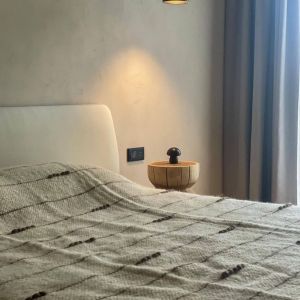
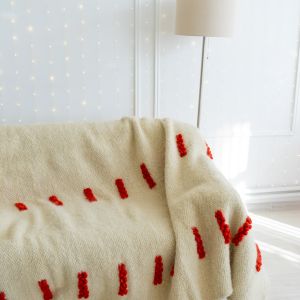
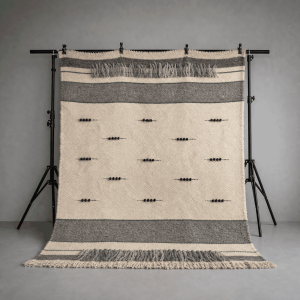
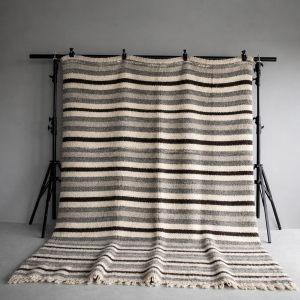
A wool lizhnyk is not just a decorative textile. It is a multifunctional heat insulator that can be used on walls, floors and in bed — a trick Carpathian households relied on long before central heating existed. Below are five proven ways to use it as effectively as possible.
THE PHYSICS OF HEAT: WHY WOOL REALLY WORKS
AIR CAPSULES AND NATURAL THERMOREGULATION
Wool does not generate heat. It retains it. Each wool fiber has a wavy structure. Microscopic air layers are formed between the fibers. Air itself is the main heat insulator.
Unlike synthetics, wool:
- does not “steam” the body;
- does not cool down when wet;
- stabilizes the temperature, not overheats.
An additional role is played by lanolin - a natural wax. It repels excess moisture, but allows the material to "breathe". Thanks to this, wool creates a stable microclimate in the room.

LIFE HACK 1. WALL INSULATION: BED INSTEAD OF REPAIR
WHY A COLD WALL IS MORE DANGEROUS THAN COLD AIR
Concrete and brick have high thermal conductivity. They quickly take heat from the air and the human body. If a bed or sofa is near an outer wall, you are constantly freezing, even under a blanket.
HOW TO CORRECTLY USE A BED ON A WALL
- Choose an outer or corner wall.
- The ideal area is the head of the bed or a place where you sit for a long time.
- Do not press the bedspread too tightly. Leave a 1–2 cm gap for air circulation.
- Fasten it to rails or hooks so that the weight does not pull the fabric down.

The result: you stop “heating the wall”, the feeling of cold radiation disappears. This is one of the easiest ways to insulate a concrete wall in an apartment from the inside without renovation.
LIFE HACK 2. FLOOR: COVER THE MAIN SOURCE OF COLD
WHY FEET GET FREEZING FIRST
Warm air rises. Cold accumulates below. Even at +18 °C in the room, the floor can be much colder.

HOW TO USE A FLOOR COVER
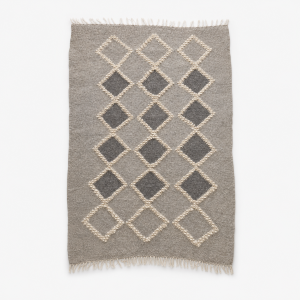
- Place it next to the bed so that you do not have to go barefoot in the cold.
- Use it under a desk or in a reading area.
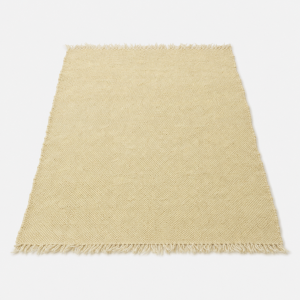
- Don’t fold it in half — even thickness works better.
The effect is felt immediately. The body relaxes, heat loss through the feet decreases. That’s why the query “wool floor mat reviews” consistently appears in winter.

LIFE HACK 3. SLEEPING IN THE COLD: MULTI-LAYERING INSTEAD OF A HEATER
A BLANKET ON TOP OF A BLANKET — THE EFFECT OF “HEAVY ARMOR”
A regular blanket has a heat retention limit. When the room is very cold, the heat simply escapes through it.
What to do:
- Cover yourself with the main blanket;
- Add a bed sheet on top.
A weight of 3–5 kg creates a deep pressure effect. It calms the nervous system, reduces anxiety and helps you fall asleep deeper — add a lizhnyk over your regular bed throw or bedspread for the same effect people pay for in weighted blankets.

LIFE HACK 4. BEDDING UNDER THE SHEET: THE EFFECT OF A THERMOS INSIDE
WHY DOES A MATTRESS STEAL HEAT
Mattresses accumulate cold. The body spends 20–30 minutes to warm up the sleeping place.
HOW TO FIX IT
- Place the bedspread directly on the mattress.
- Place a sheet on top.
Wool instantly reflects heat back to the body. Instead of climbing into a cold bed and waiting it out, you get a stable warm microclimate from the moment you lie down.

LIFE HACK 5. A PERSONAL “COCOON” FOR SITTING
WHEN YOU ARE NOT MOVING FOR A LONG TIME
The cold is felt more strongly when you are working, reading or waiting.
HOW TO WRAP UP CORRECTLY
- Wrap up not just on top, but with an “envelope”.
- Tuck the edges under you, blocking the air outlet.
One layer of a real wool blanket is equal to several synthetic blankets in terms of thermal insulation.

HOW TO CHOOSE AND CARE FOR A BLANKET
HOW TO DISTINGUISH NATURAL WOOL
- Wool warms up in your hands in a few seconds.
- It has a light natural smell.
- When smoldering, it smells like burnt hair, not plastic.

CARE WITHOUT WASHING
- Regular airing outdoors, even for an hour, keeps it fresh between washes.
- Cold air is a natural disinfectant — hang it out on a cold, dry day rather than relying on washing alone.
- A soft brush handles dust and surface dirt without water.
If the question is how to clean a wool blanket at home, the answer is simple: minimum water, maximum air. When it does need a real wash, use cool water and a mild detergent, never wring it, and dry it flat.

FAQ: POPULAR QUESTIONS ABOUT INSULATION AND WOOL
DOES A WOOL THROW ACTUALLY MAKE A ROOM WARMER?
Not on its own — it will not raise the room’s temperature, that is still down to your heat source. What it does is slow down how fast warmth escapes through a cold wall, floor, or mattress, so the room feels warmer and holds its heat longer between heating cycles.
DOES WOOL HELP WITH HUMIDITY?
Yes. Wool absorbs excess moisture and does not become cold, unlike synthetics.
WHAT IS WARMER - WOOL OR FLEECE?
Wool. Fleece does not regulate the microclimate and cools quickly in a humid environment.
CAN A BEDDING BEDROOM BE USED CONSTANTLY?
Yes. It is advisable to use it over a sheet or duvet cover to reduce wear and tear.
IS A HEAVY BEDDING DANGEROUS?
No. For most people, a weight of 3–5 kg is safe and even soothing.
IS WOOL SUITABLE FOR CHILDREN?
Yes, if there is no allergy. It stabilizes the temperature and does not overheat.
DOES A LIZHNYK FEEL SCRATCHY?
Traditional Carpathian wool is coarser than merino, and some people notice it directly against skin. A boucle-finish lizhnyk is noticeably softer, or use it over a sheet rather than bare skin.
CAN A BEDDING BE HANG IN AN OLD HOUSE?
Yes. The main thing is to leave air
A wool lizhnyk is not nostalgia or decoration. It is a practical tool for keeping warm that works on the floor, on the wall, in the bed, and around the body — without adding a cent to the heating bill. That is why wool has survived centuries in the Carpathians, and why it still earns its place in a modern home.