How to Choose a Bed: Size, Headboard and Frame
How to Choose a Bed: Size, Headboard and Frame, So You Won't Regret It
A bed is bought not for a season but for years — which is exactly why a mistake here costs the most: not in money, but in daily feeling. Too cramped, too fussy to care for, with a headboard your back doesn't want to lean on. So before you fall for a photo, it's worth breaking the choice down into three calm questions.
Let's work out how to choose a bed along three pillars: size, headboard and frame. It's the skeleton of the decision, after which the fabric colour and the wood species become a pleasant detail rather than a source of doubt.
Size — where it all begins
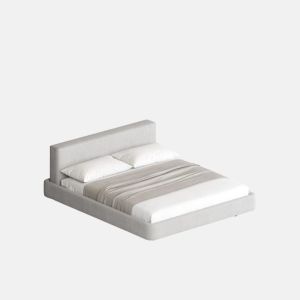
First, honestly count how much room you have and who will sleep there. A single bed (usually 90 cm wide) isn't only for one person: it saves the day in a child's room, a guest room or a small studio, where every centimetre counts. Look at these formats in the single beds category.
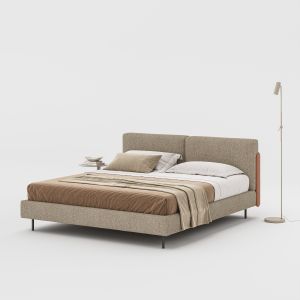
For a couple the benchmark is a double bed from 140 cm, while the comfortable standard today is 160 or 180 cm: there's room to turn over at night without waking the other. The key is to leave at least 60–70 cm of clearance at the sides and the foot so the room can breathe. It's easy to compare current sizes in the double beds category. The rule is simple: choose the sleeping surface for the people, and check the outer dimensions against the room. The most honest test is to mark out the rectangle of the future bed, frame included, on the floor with masking tape and live with it for a day or two: you'll see at once whether the wardrobe doors open freely and whether you bump into a corner every morning.
The headboard — what you touch every evening
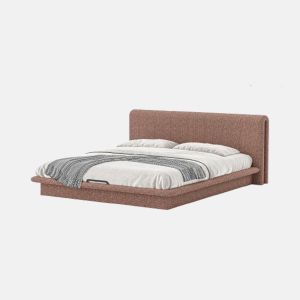
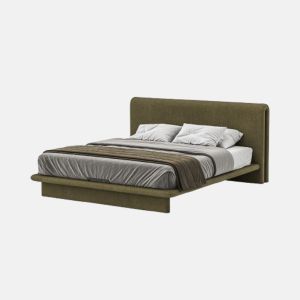
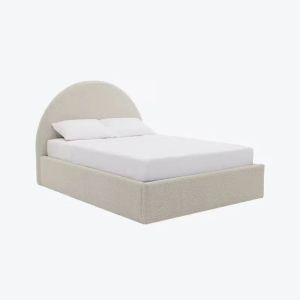
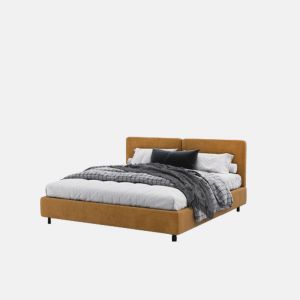
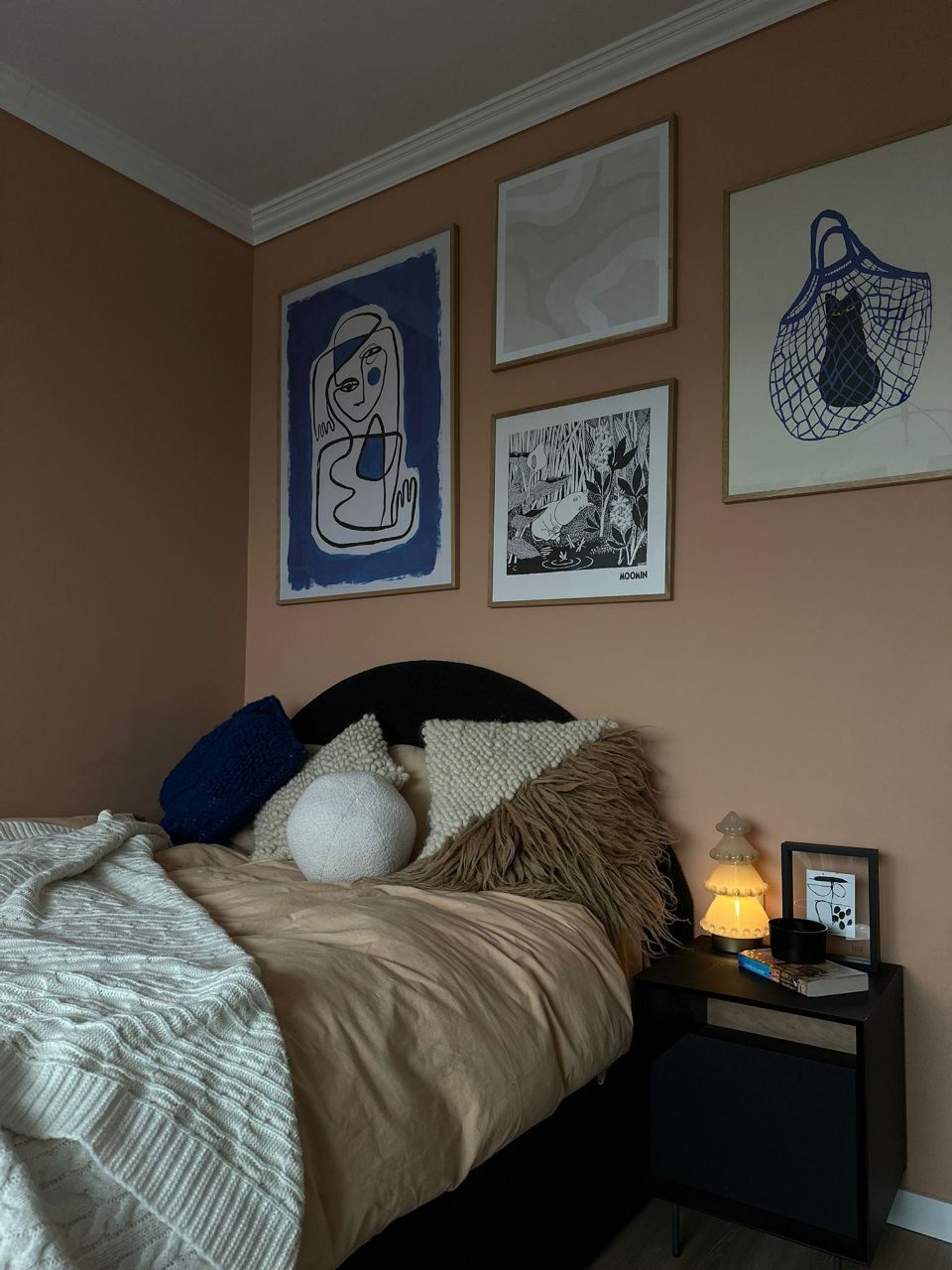
The headboard decides both the mood of the room and your comfort. An upholstered headboard supports your back while you read or drink your morning coffee in bed; it also softens a stark interior and adds warmth. The fabric here isn't only about colour: chenille and boucle are more practical and hide marks, while velvet is deeper and warmer to the touch.
A wooden or woven headboard plays the opposite card — on natural texture. A rattan panel lets light and air through, makes the bed look lighter and sets a warm, faintly southern mood at once. Solutions like this look calm and don't tire over the years. Watch the height, too: a tall headboard becomes a wall accent and is handy to lean against, while a low one is about minimalism and a sense of space in a small bedroom.
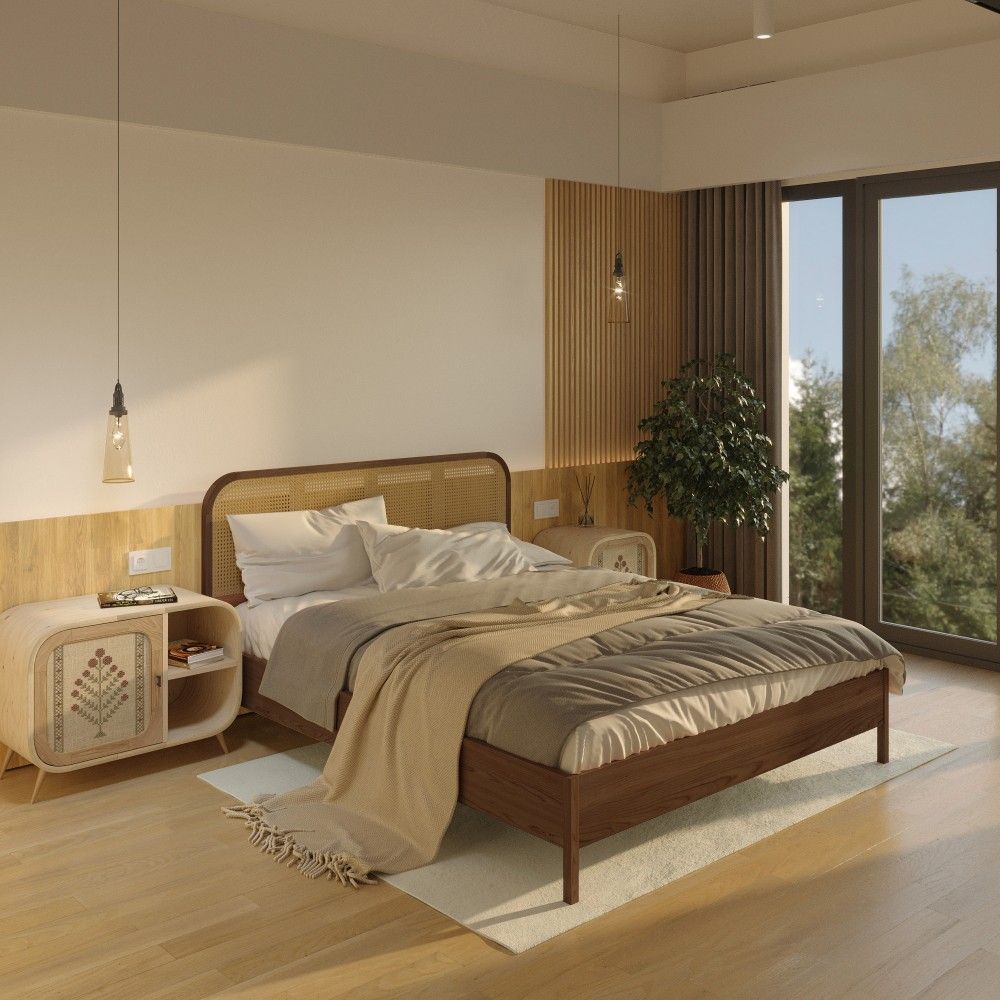
Frame and functions — hidden, but working every day
The frame determines durability and comfort. Solid wood is a "for decades" choice that can be refreshed and sanded; an upholstered frame is about cosiness and quiet (it doesn't creak or catch your knee on a corner) and about safety when children play nearby. The weak point of any bed is the join between the frame and the slats: that's what starts to creak over time, so it deserves a close look. And then comes the interesting part — the functions easy to overlook at the beauty stage.
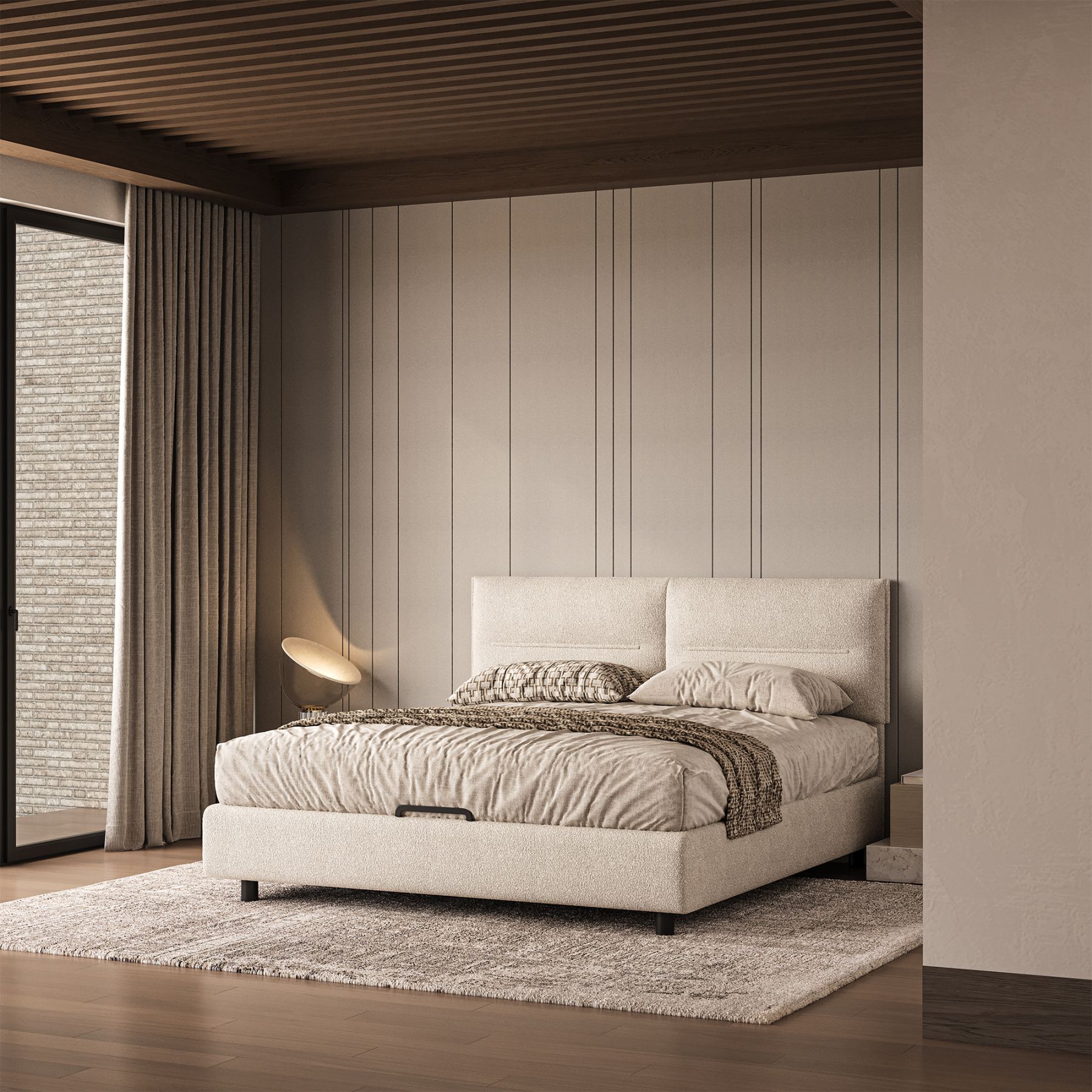
The first and most useful is a lifting mechanism: the base rises on a gas strut, revealing a large niche for bedding, seasonal things or pillows. For small flats it's effectively a second wardrobe hidden inside the bed. Such models are gathered in the beds with a lifting mechanism category.
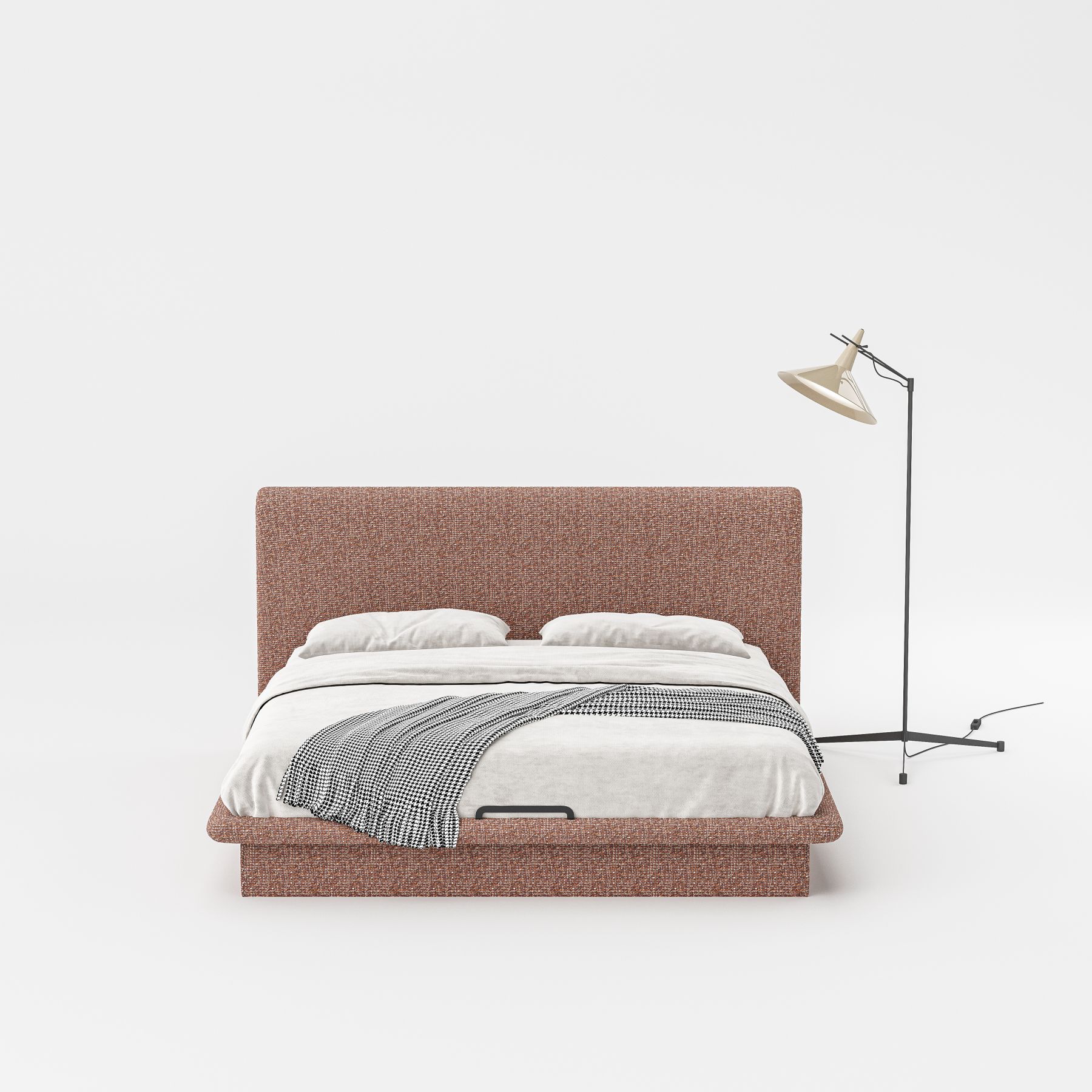
The second group of small things that change the evening ritual — built-in lighting and little shelves by the headboard. A soft side light replaces a bedside lamp and doesn't dazzle, while a shelf takes a book, glasses and a phone, freeing up the nightstand. A trifle — yet you use it every day.

What to look at before buying
A few pointers to finish. Check the height with the mattress in place — sitting down and getting up is comfortable at roughly 50–55 cm. Ask whether the base under the mattress is included, so you don't buy it separately. If you're taking a lifting mechanism, make sure the gas strut is good and holds the base up on its own, and that the niche inside is clean and finished, without sharp edges. Don't forget the "small" logistics: whether the assembled bed fits through the doorway and whether it comes apart for a move — people remember this too late, already at the threshold. And choose the fabric or wood for your way of life: for kids and pets, chenille is more practical; for lovers of the natural, wood and rattan. You'll find more models in different formats in the general beds category.
Frequently asked questions
What bed width is comfortable for a couple?
At least 140 cm, with 160 or 180 cm the comfortable standard. The wider the sleeping surface, the less you feel the other person move at night.
Which is better — an upholstered or a wooden headboard?
An upholstered one is comfier for reading in bed and adds cosiness; a wooden or rattan one is about natural texture and easy care. It's a question of scenario, not "better or worse".
Is a bed with a lifting mechanism worth it?
Yes, if you're short of storage: the niche under the base replaces half a wardrobe. The key is a quality gas strut that holds the base up on its own.