Light Above the Dining Table: Height, Size, Temperature
- Light over the dining table: height, size, temperature
- Height: the one-distance rule
- Size: let the tabletop's shape set the fixture's length
- One fixture or several — when to break the light into a group
- A linear fixture for a long table or island
- Wood above the dining table
- Colour temperature: why warm beats "daylight white"
- A short placement checklist
- FAQ
Light over the dining table: height, size, temperature
The dining table is the one place in a home where light faces the same scene every single day: plates, conversation, a hand reaching for bread. That's why light over the table forgives fewer mistakes than anywhere else — hung too low, it hits people on the head; too high, it has nothing left to light; and cold light turns dinner into a check-up under office lamps. Three things decide everything: height, size and colour temperature. We'll walk through each on real fixtures from the pendant light collection at MAIIMO — the same pieces that often double as the main light over a kitchen counter too.

Height: the one-distance rule
The universal benchmark is 65–75 cm from the tabletop to the bottom edge of the shade. Lower, and it blocks the person across from you; higher, and it leaves the table in its own shadow while lighting the upper room instead of the plates. If your ceiling runs above the standard 2.7 m, add roughly 5–7 cm of height for every extra 30 cm of ceiling — otherwise the fixture visually disappears into the room above it.
It helps when the fixture itself can be adjusted at install. The pendant above has a cord that runs anywhere from 25 to 120 cm, so the same fixture sits equally well over a low coffee-table height and a tall bar-counter height — you set it once, to match your actual tabletop.
Size: let the tabletop's shape set the fixture's length
The rule is simpler than it sounds: the lit portion should span roughly two-thirds of the tabletop's length, never more. Over a round or square table, one compact fixture centred above it is the classic move. Over an elongated rectangular table or a kitchen island, a pair of separate points spaced along the length works better — the whole surface stays lit, not just the middle.
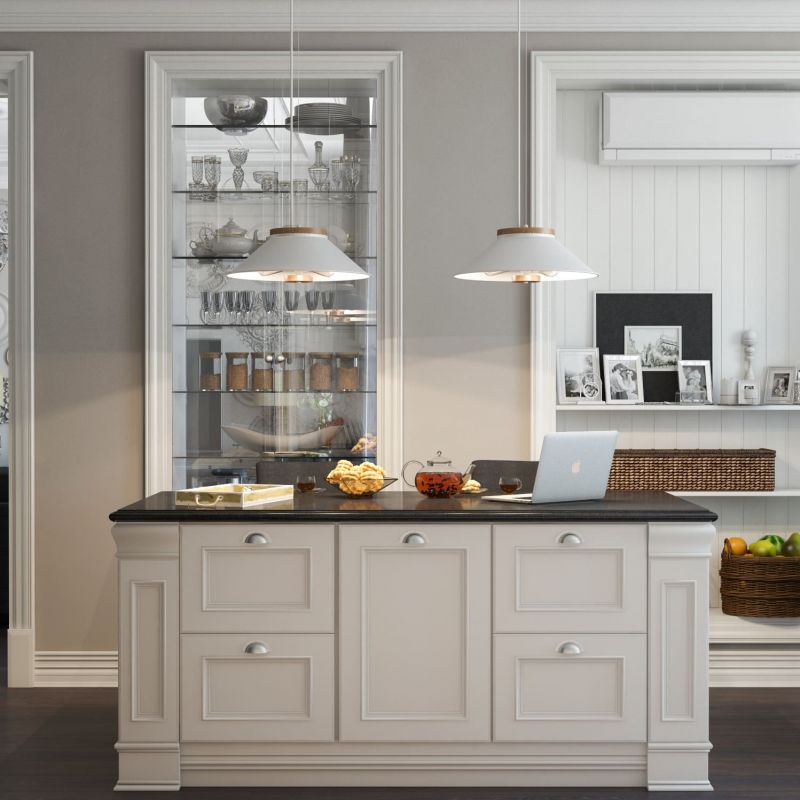
In the example above, an aluminium body with an ash-wood detail finished in Watco oil is repeated twice, and a metre-and-a-half island gets even light with no dark edges. Keep the same proportions in mind when choosing lighting for the kitchen: the counter there is usually the same size as a dining table, just a few steps from the stove.
One fixture or several — when to break the light into a group
A cluster of shades at staggered cord lengths is a choice for people who want composition, not just function. Three wood-and-metal shades hung at different heights above one table read as a piece of sculpture even switched off, and once lit they give a soft, diffused spread with no single bright point that's uncomfortable to look at mid-conversation.
A linear fixture for a long table or island
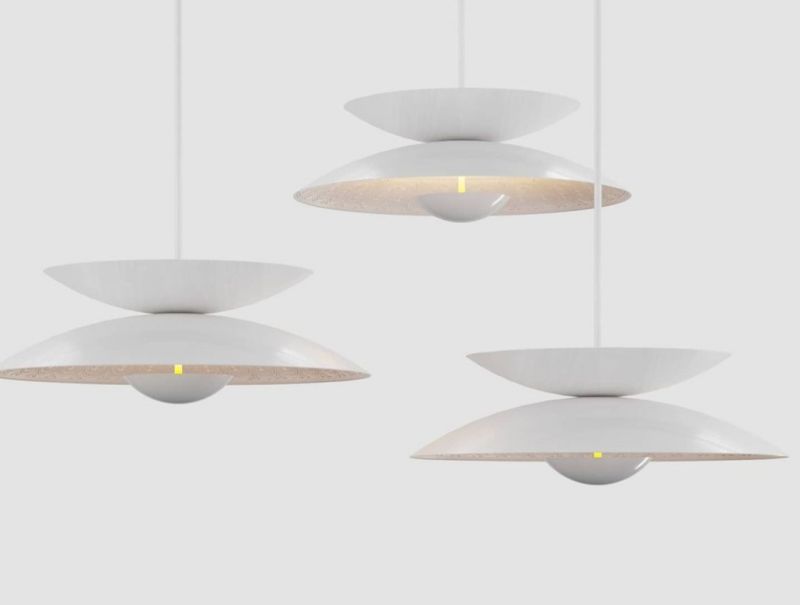
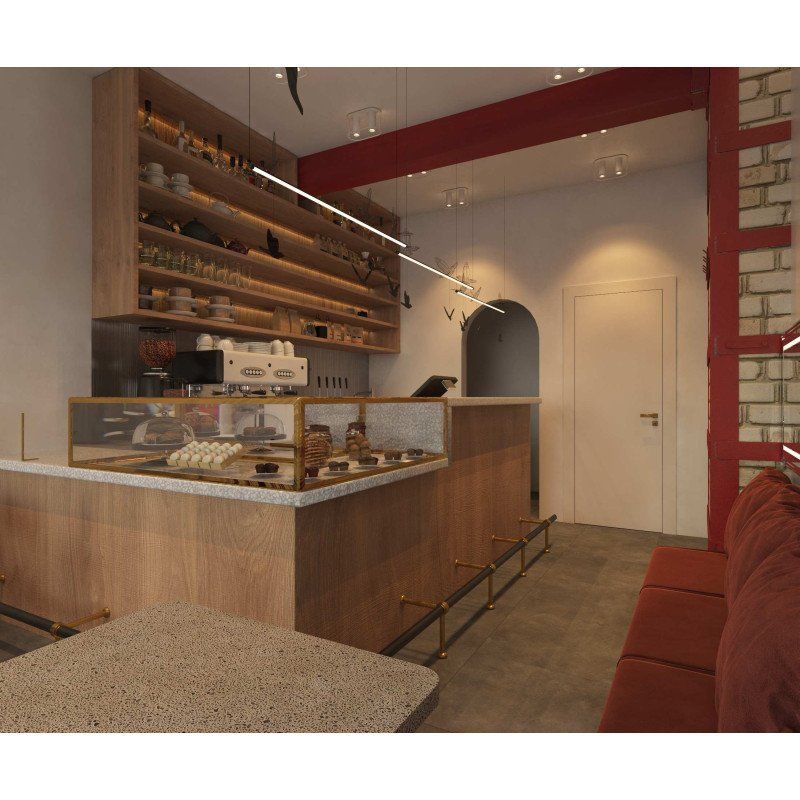
If your table runs past 2 metres, or your kitchen has an elongated island, a compact shade will lose the argument with the furniture's geometry. A linear fixture built from steel rods and textile solves this differently: light runs along the whole tabletop at once instead of pooling at a single point. These come in 120 or 150 cm lengths — you pick the length to match your table, not the other way round.
Wood above the dining table
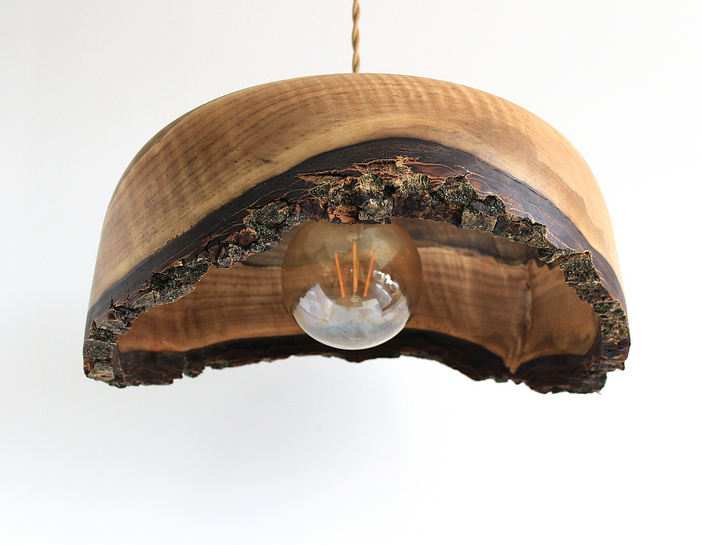
Solid wood over a table works two ways: as contrast against a cold stone or glass tabletop, and in harmony with a wooden one. In the fixture below, an 18 cm-tall, 36 cm-wide shade is carved from a single block: the grain stays visible even lit, and every lamp turns out slightly different from the next. It isn't about brightness — it's an object worth studying while you wait for your coffee. You'll find the same character of light among the other solid-wood pendants: each one cut from its own piece of timber, so no two are ever quite alike.
Colour temperature: why warm beats "daylight white"
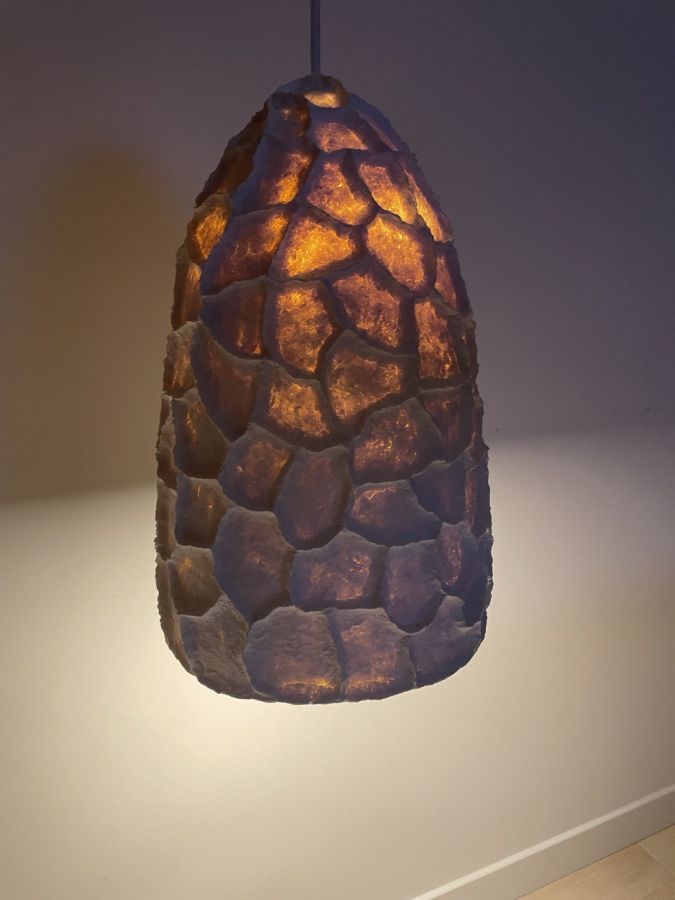
Cold light over a dining table is the most common mistake after wrong height. 5000–6500 K belongs in an operating room, not at dinner — it turns food grey and faces across the table tired. The benchmark for a dining setting is the warm end of the scale, 2700–3000 K; most fixtures in this line-up either ship at that temperature by default or let you choose it among the options. In the piece below, warm light passes through a dense cellulose shell unevenly, in patches — exactly the "living" warmth no straight LED diode reproduces on its own.
A short placement checklist
Measure your dining table before you choose a fixture — the lit portion's length is calculated from the tabletop, not the other way round. Keep 65–75 cm from the tabletop to the bottom of the shade, adding a few centimetres for every 30 cm of ceiling height above standard. For a long table or an island, go with a pair of points or a linear fixture rather than one shade centred in the middle. And always check the colour temperature in the specs — for a dining setting, rule out anything colder than 3000 K.
FAQ
How high should a light hang above a dining table? 65–75 cm from the tabletop to the bottom edge of the shade, for a standard 2.7 m ceiling. For taller ceilings, add 5–7 cm for every 30 cm of extra height.
How many fixtures does a long table need? If the tabletop runs past 2 metres, a single shade won't cover the length evenly. Choose a pair of separate points, a staggered cluster, or a linear fixture — it comes down to how symmetrical you want the composition to look.
What's the best light temperature for a dining table? Warm, 2700–3000 K. Colder light suits a kitchen work zone, but at the table it turns both food and faces grey.


