How to tell if a sectional is left- or right-facing
- How to tell if a sectional is left- or right-facing
- Why left-facing and right-facing sectionals get confusing
- How to identify the side in 30 seconds
- Let the route through the room choose the side
- How to measure a corner sofa before ordering
- Fixed, reversible or modular?
- What to send the salesperson before approval
- Quick answers
- Which viewpoint determines a left- or right-facing sectional?
- How do I choose the right orientation for my room?
- Can a left-facing sectional become right-facing?
- Is a product photo enough to confirm the side?
How to tell if a sectional is left- or right-facing
Left or right? Around a sectional sofa, two simple words can behave like a mirror. You are looking at the sofa from across the room, the salesperson is picturing someone seated on it, and the chaise has quietly switched sides between the two descriptions.
To tell if a sectional is left- or right-facing, lock down the viewing position, identify the extended section, and then verify everything against the manufacturer's drawing. That final check matters more than any universal rule.
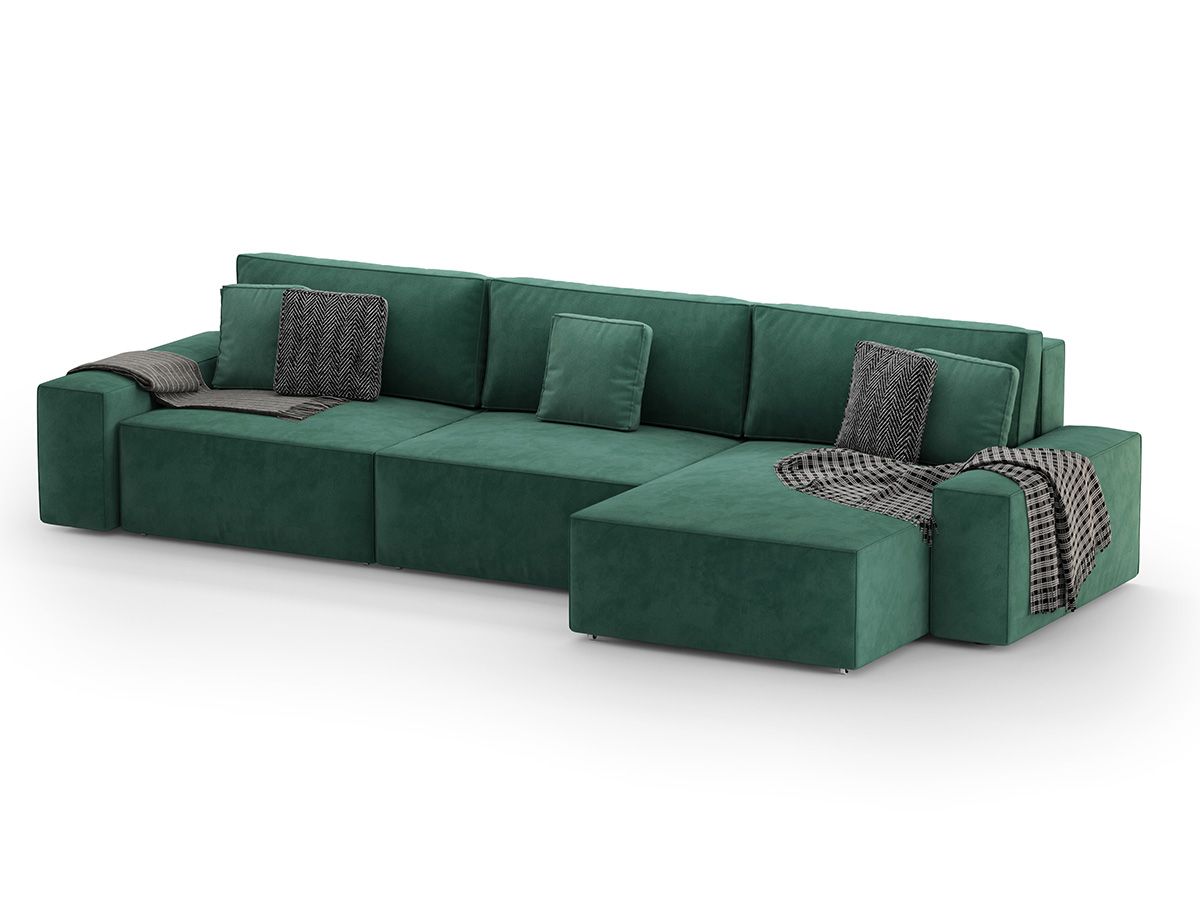
A straight-on view makes the extension easy to see. Its label still depends on the convention used by the maker.
Why left-facing and right-facing sectionals get confusing
There are two possible reference points. In one, you stand in front of the sofa and look at it. In the other, you sit on the sofa and look into the room. The same chaise is on opposite sides from those two positions.
Many retailers use left-facing and right-facing from the viewpoint of someone facing the furniture. Some manufacturers use the seated viewpoint instead. Both systems appear in furniture guides, so “I need the right-hand version” is not a safe instruction until everyone agrees on the viewpoint.
How to identify the side in 30 seconds
Start with the common front-facing convention. Stand in front of the sofa as if you were about to sit down. Find the extended part: the chaise, ottoman or return that creates the L shape. If it reaches to your left, it is left-facing under this convention. If it reaches to your right, it is right-facing.
Then open the technical drawing. Look for L/R, LH/RH, LAF/RAF or a written explanation. Ask the seller to confirm with a full sentence: “When standing in front of the sofa, the chaise will be on the right.” A sentence like that is far safer than a single letter on an order form.
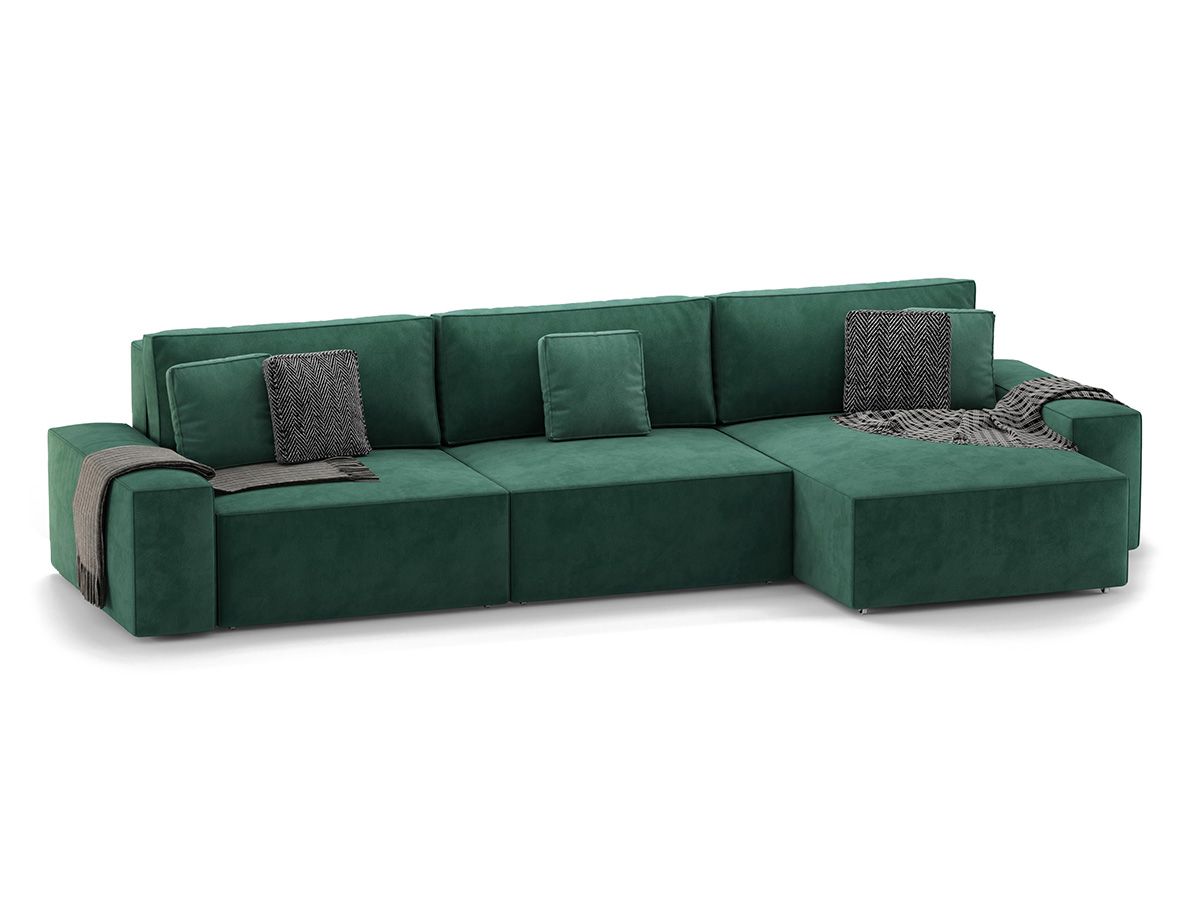
The photograph shows the shape; the drawing for your exact configuration confirms its orientation.
Let the route through the room choose the side
A left-facing sectional or a right-facing one only makes sense in relation to the room. The chaise should not greet you at the doorway, block a balcony door or turn the path to the window into an obstacle course. Check door swings, the coffee table and the route between the kitchen and seating area.
Mark the sofa's full outline on the floor with painter's tape. Include the complete depth of the chaise, not just the main run of seats. Then walk through the room as you normally would. If you keep clipping the taped corner, the plan is telling you something useful.
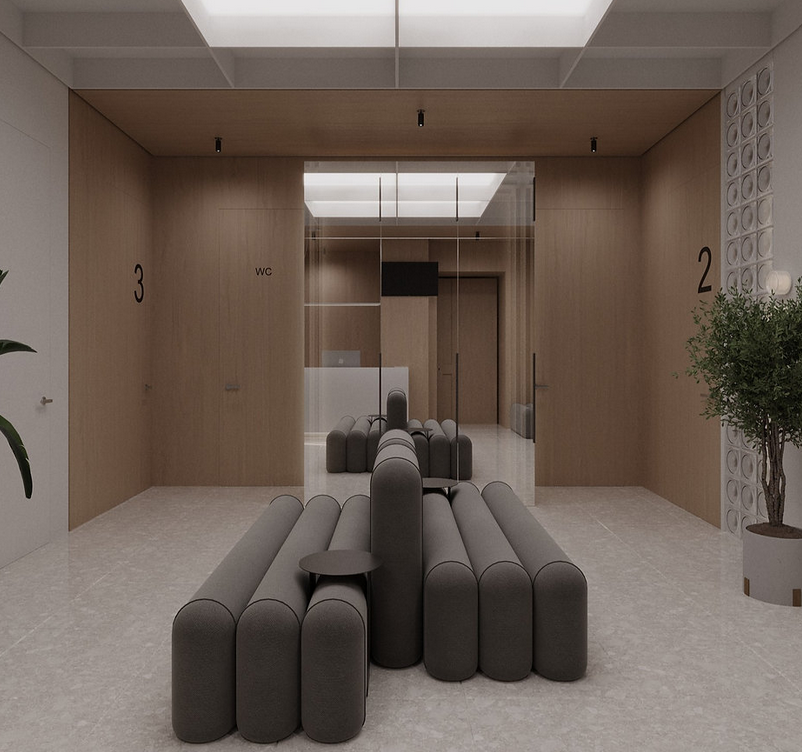
Deep sections work when the route around them remains obvious and comfortable.
How to measure a corner sofa before ordering
Record the full length along the wall and the full depth of the extended section. Add the height of the back, arms and legs when delivery involves a narrow doorway or a tight stair turn. If the sofa arrives in sections, ask for the dimensions of the largest individual piece.
For an awkward room, add radiators, outlets, window ledges, baseboards and open doors to the plan. A photograph of an empty corner is useful, but a measured drawing catches details that a wide-angle phone camera can hide.
Fixed, reversible or modular?
On a fixed sectional, the chaise belongs to one side. A reversible chaise may move, but only when the product specification says so. A modular sofa can offer more freedom, though you still need to check connectors, finished side panels and whether every module works in both positions.
If the layout may change, a reversible or modular design reduces the risk. If the room is already settled, compare sectional sofas in the required orientation by drawing and real dimensions. If an L shape interrupts circulation, look at other sofa formats instead.
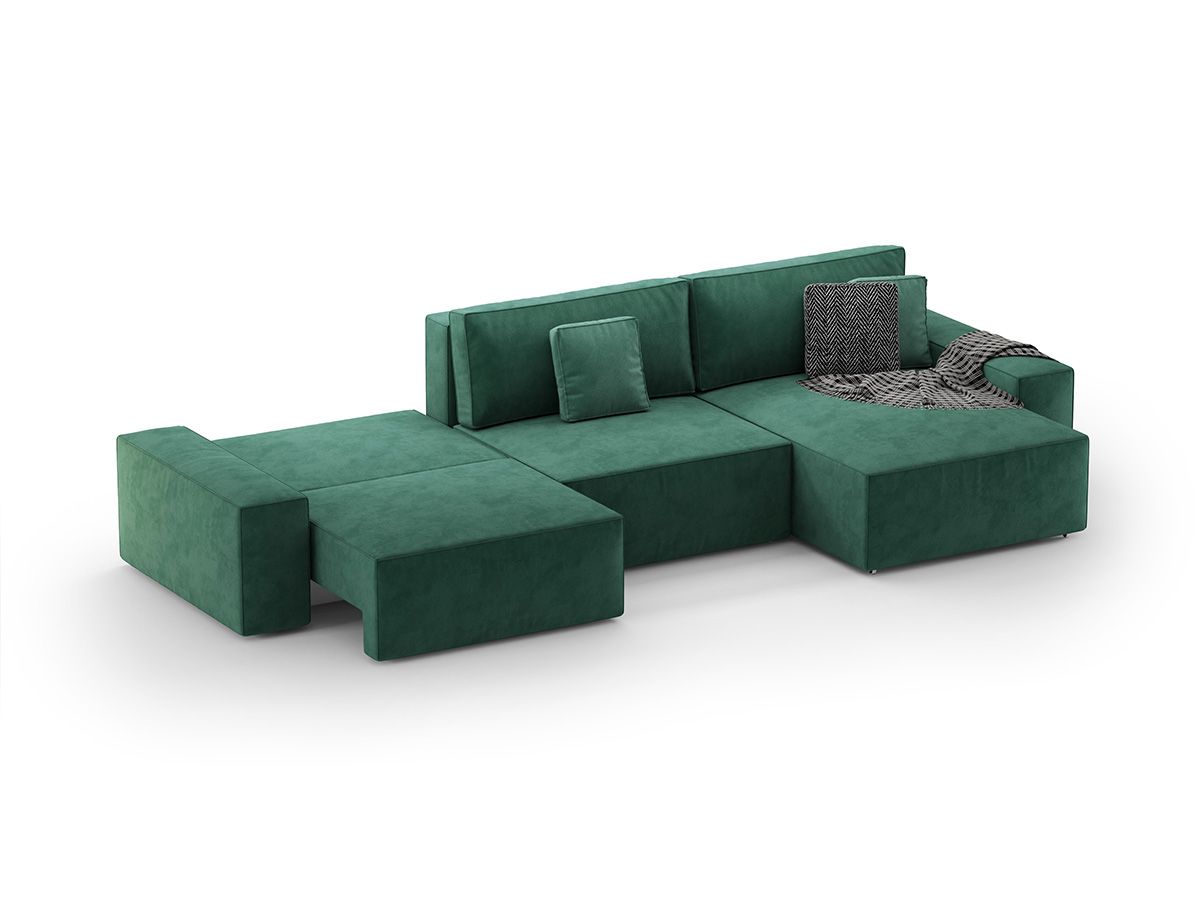
Moving parts change the clearance a sofa needs. Measure it in every position you expect to use.
What to send the salesperson before approval
Skip “right, like the photo.” Send a room plan with an arrow showing the viewing direction and a note marking the required chaise position. Include the model number, configuration and overall measurements, then ask for the approved drawing in return. For a sleeper sectional, request the open footprint too.
One final test: picture yourself entering the room, sitting down, stretching out and walking to the window. The correct orientation is the one that does not make the room apologize for its layout every day.
Quick answers
Which viewpoint determines a left- or right-facing sectional?
Many sellers label the side while you stand facing the sofa: chaise on your left means left-facing. Some makers use the seated viewpoint, which reverses it. Always confirm the convention on the drawing for that model.
How do I choose the right orientation for my room?
Tape the footprint on the floor and test doors, walkways, the balcony, radiators and the sightline to the television. Keep the extended section away from the room's main route.
Can a left-facing sectional become right-facing?
Only if it is specified as reversible or modular and the maker allows the modules to switch. A fixed L-shaped frame normally cannot change sides after manufacture.
Is a product photo enough to confirm the side?
No. An image may be mirrored, show another configuration or omit the seller's viewpoint. Confirm the model number, a labelled drawing and a written description of the chaise position.