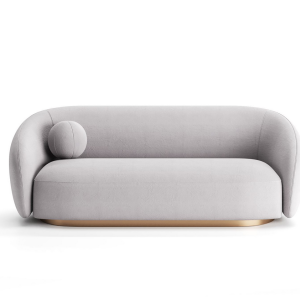
How to choose a sofa bed for everyday sleeping: 8 checks before ordering
- How to choose a sofa bed for everyday sleeping: 8 checks before ordering
- 1. Say how often the bed will really be used
- 2. Open and close it yourself, more than once
- 3. Measure the sleep surface, not the sofa frontage
- 4. Test every part of the surface
- 5. Choose by feel, not by an “orthopaedic” label
- 6. Test both versions of the room
- 7. Picture night one hundred, not night one
- 8. Measure delivery and ask about future service
- Your pre-consultation checklist
- Quick answers
- Is every sofa bed suitable for everyday sleeping?
- What matters more, the mechanism or the mattress surface?
- Do you need a topper for an everyday sofa bed?
How to choose a sofa bed for everyday sleeping: 8 checks before ordering
A sofa bed that opens every evening has two jobs, and good looks only cover one of them. It needs to convert without drama, leave a usable route through the room and still feel right in the morning.
If you are wondering how to choose a sofa bed for everyday sleeping, skip the universal mechanism rankings. Start with your actual bedtime routine. These eight checks expose the compromises before they arrive in your living room.

VIKHO in daytime mode. Check the closed footprint before moving on to the bed.
1. Say how often the bed will really be used
“A few weekends a year” and “every night for two people” are different briefs. Ask whether the frame, support and conversion mechanism of this exact model are intended for daily operation. “Sofa bed” confirms a function, not a duty cycle.
Confirm the stated load and warranty conditions too. When the product page is silent, ask the maker. Do not let a missing specification turn into a sales promise.
2. Open and close it yourself, more than once
A workable mechanism should not demand a violent pull, an awkward lift or the nightly removal of half the room. Run the complete sequence: move the cushions, open the bed, imagine making it, then close it again. Notice where the bedding, rug and coffee table have to go.
The mechanism name alone tells you very little about effort. Execution, moving weight and the shape of your room matter more.
3. Measure the sleep surface, not the sofa frontage
An everyday sleeper sofa needs enough usable length and width when open. Overall width, including arms, does not answer that question. For two sleepers, check whether both can turn comfortably and whether one person lands on a join.
Mark the open footprint with painter's tape. Walk the night-time route to the door, light switch and bathroom. A plan can look generous while the taped room feels completely different.
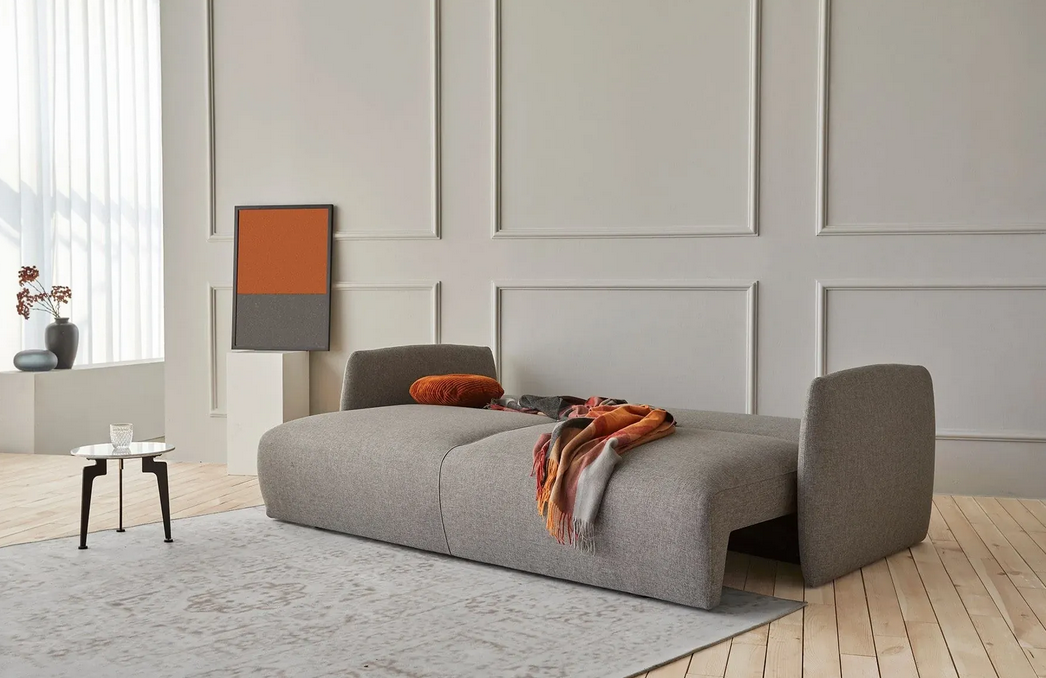
The open VIKHO footprint shows why bed depth and circulation have to be checked together.
4. Test every part of the surface
Sit and lie near the centre, edges and joins. Feel for height changes and places where the underlying support changes. A shallow seam may be invisible to one sleeper and impossible to ignore for another. This is personal, so your body gets a vote.
A topper can alter surface feel or soften a minor join. It cannot repair an unstable base or a pronounced step between sections.
5. Choose by feel, not by an “orthopaedic” label
The best sofa bed for sleeping depends on sleeping position, user weight and individual firmness preference. Ask for the verified layer composition and support type, then spend more than a minute testing it. A wonderfully soft seat at 7 p.m. is not automatic proof of comfort at 7 a.m.
If pain or a medical condition shapes your choice, furniture advice is not a substitute for clinical guidance. A responsible product description should not promise a therapeutic result.
6. Test both versions of the room
By day, you need seating and circulation. By night, you need the complete bed footprint, access to the door and working room for the mechanism. Draw both. VIKHO, for example, has a Eurobook mechanism confirmed on its product page, but only your layout can show whether that movement suits the room.
When browsing sofa beds considered for everyday use, confirm daily-sleep suitability model by model. The category narrows the search; the specification and test settle it.
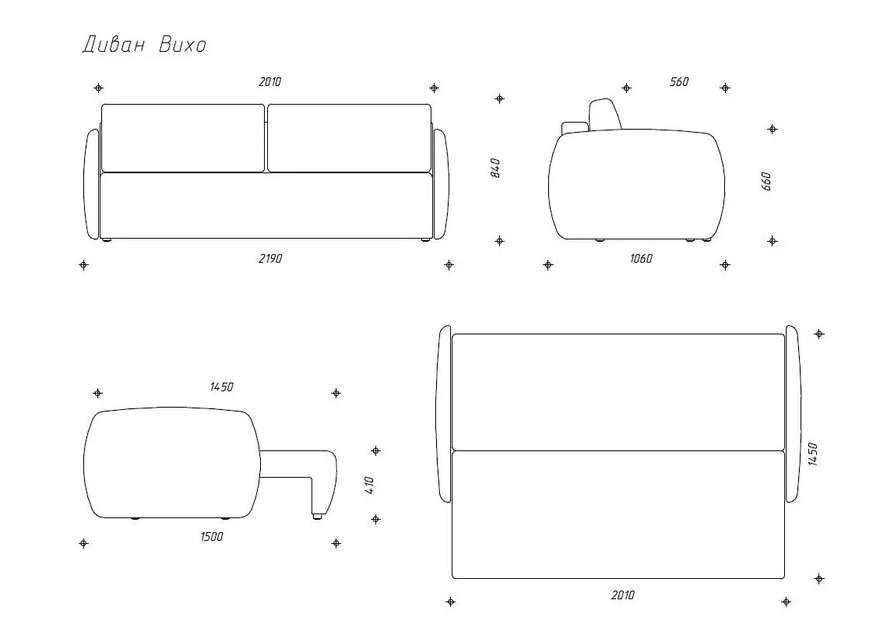
Two footprints, not one headline width, belong on the room plan.
7. Picture night one hundred, not night one
Where will loose cushions and bedding live every day? Can the upholstery be cleaned in a way that suits your household? Will a heavy coffee table need to migrate nightly? Confirm removable covers and cleaning methods in the documentation for the model and fabric.
In a home with children or pets, a verified care method, secure seams and a physical fabric sample are more useful than a grand fabric collection name.
8. Measure delivery and ask about future service
Record package dimensions, removable parts and the largest rigid section. Measure the entrance, lift, stair landing, corridor turns and room doorway. A sofa that fits the wall but not the final turn does not fit your home.
Ask who assembles it, how the mechanism is serviced and whether individual parts can be replaced. Daily use has a way of making the boring questions decisive.
Your pre-consultation checklist
- who will sleep on it and how often;
- required open sleep area;
- acceptable joins and preferred feel;
- closed and open room footprints;
- bedding and cushion storage;
- delivery route and package dimensions;
- maker confirmation of daily use;
- warranty, care and mechanism service.
If sleeping is not the main job, take one step back and browse the complete designer sofa selection. Your room may need an excellent sofa, not a piece forced to work a night shift.
Quick answers
Is every sofa bed suitable for everyday sleeping?
No. A conversion mechanism does not prove daily-sleep suitability. Confirm the frame, support, sleep surface and warranty conditions for the exact model.
What matters more, the mechanism or the mattress surface?
Both. The mechanism must be manageable every day, while the open surface must be large enough and acceptable in feel, support and joins.
Do you need a topper for an everyday sofa bed?
A topper may change firmness or soften minor joins, but it cannot fix an unstable base or a major level change. Check compatibility and storage before buying one.