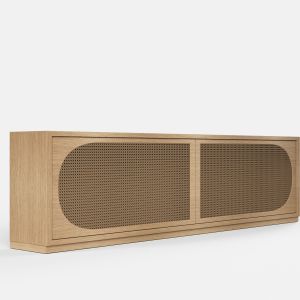
TV Stand or Chest of Drawers: The Difference and What to Choose for the Living Room
- TV Stand or Chest of Drawers: The Difference and What to Choose for a Living Room
- The main difference: open shelves versus closed storage
- A TV stand — when the screen and devices come first
- A chest under the TV — when storage matters
- What to choose for a living room
- What to look at when choosing
- The questions people ask most
TV Stand or Chest of Drawers: The Difference and What to Choose for a Living Room
Both stand under the television, both look like an elongated cabinet — which is exactly why people keep confusing them. But a TV stand or a chest of drawers is a choice between two different jobs. The short answer: a TV stand is built around the screen and the devices, with open shelves, while a chest is built around storage, where things hide behind doors and drawers.
We see it in practice: someone picks a "nice cabinet for the TV" and a month later realises they're short of either room for their things or open niches for a console. Let's go through the difference honestly — and what of it your living room actually needs.

The main difference: open shelves versus closed storage
The most important part is the proportions and what's inside. A TV stand is low and long, and it has more open shelves and niches: for a console, a games box, a soundbar or a receiver that need to breathe and "see" the remote. A chest is taller and usually deeper, and inside it closed drawers and doors dominate — it's built for storage and can hide what shouldn't be on show. That's the essence of the choice: a TV stand displays devices and decor, a chest hides things away.
Everything else follows from that difference — the height the screen sits at, how many cables are on show, even the feel of the room. The low horizontal line of a TV stand calms and widens a space, while a taller chest adds weight and "gathers" the zone around it. So the choice between them isn't about a pretty cabinet — it's about how you live with your devices and your things every day.
A TV stand — when the screen and devices come first
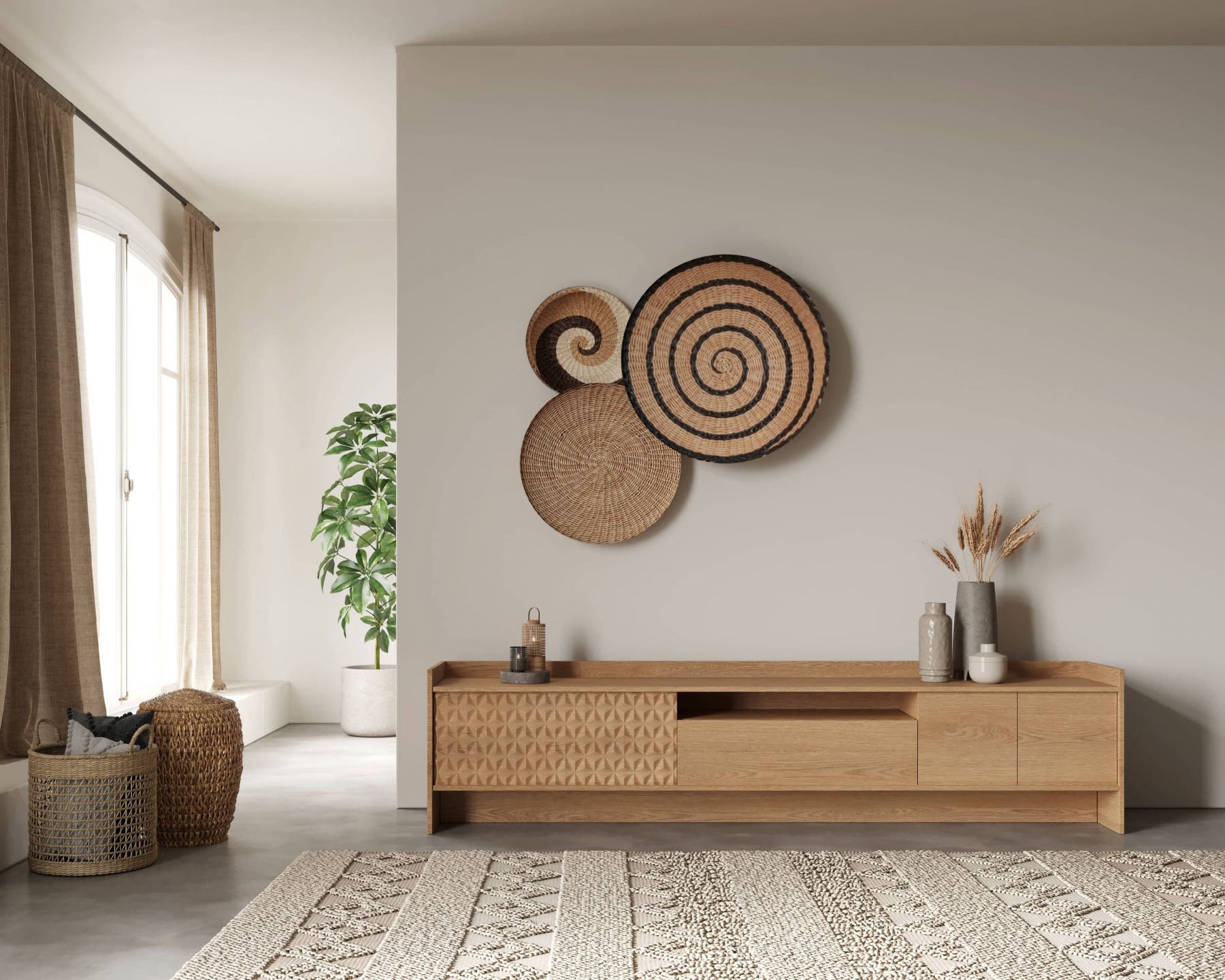
The main advantage of a TV stand is that it keeps the screen at the right height. A low body puts the centre of the television roughly at the eye level of someone on the sofa, so your neck doesn't tire. Open niches give devices ventilation and easy cable access, and a wide top takes the diagonal comfortably while leaving room for an accent piece or two.
It's the choice for those with lots of tech, who value minimalism and an open space where the TV wall is part of the composition. In an open-plan layout a low stand doesn't split the room visually — it extends it.
A chest under the TV — when storage matters
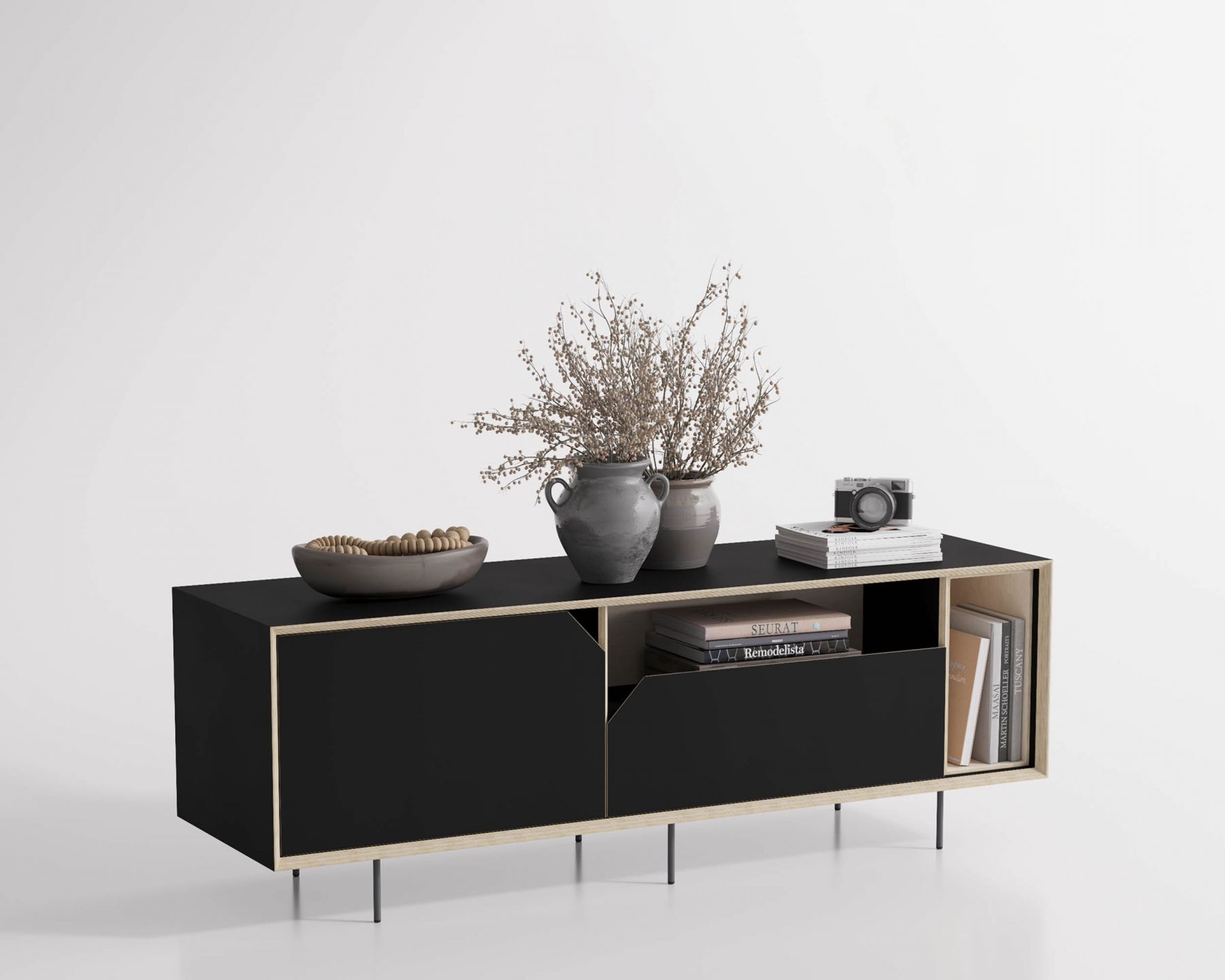
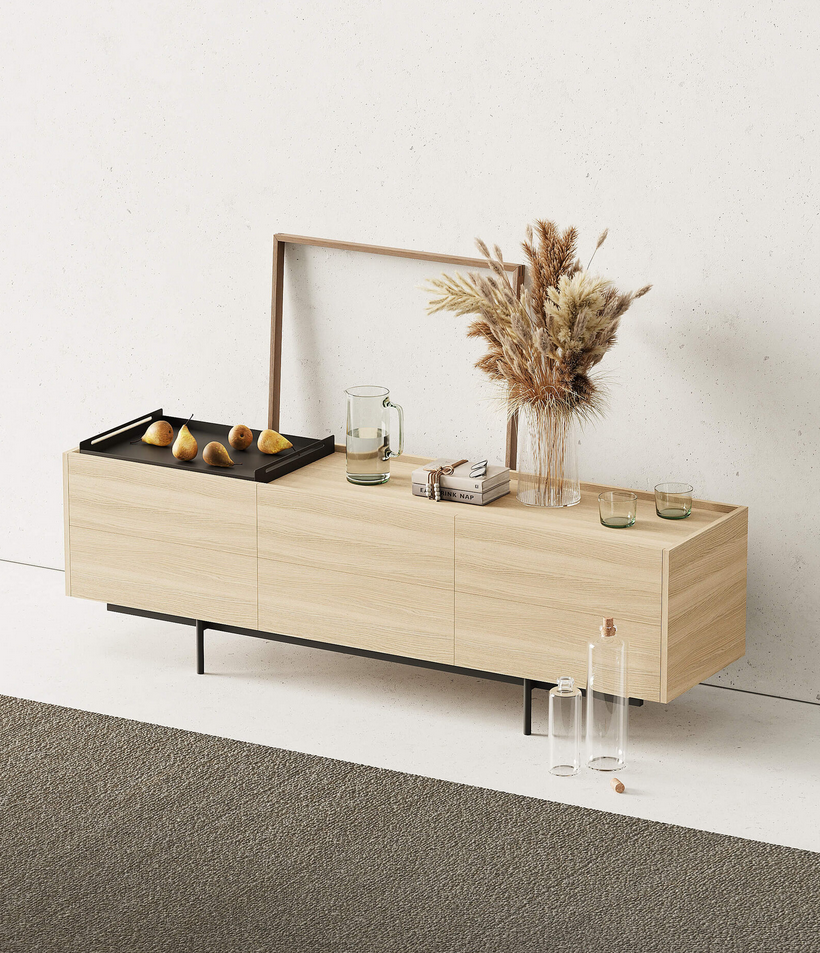
A chest of drawers solves the opposite problem — clearing as much as possible out of sight. Closed drawers and doors hide documents, textiles, children's odds and ends or crockery, and the greater height gives noticeably more storage volume on the same floor footprint. It's a lifesaver for a small flat, where one surface has to both hold the television and replace half a wardrobe.
The price for volume is height. On a chest the television sits higher, so it's worth checking that its centre doesn't tip your gaze upward from the sofa. If the balance works, a chest gives the cleanest look: no cables or devices on show, just a flat front.
A chest has one more advantage — versatility. When the television eventually moves onto the wall, the chest happily stays in the room as a storage piece in its own right, whereas a narrow TV stand is harder to repurpose elsewhere. So from a "years ahead" point of view a chest is often the more practical buy for a small flat.
What to choose for a living room
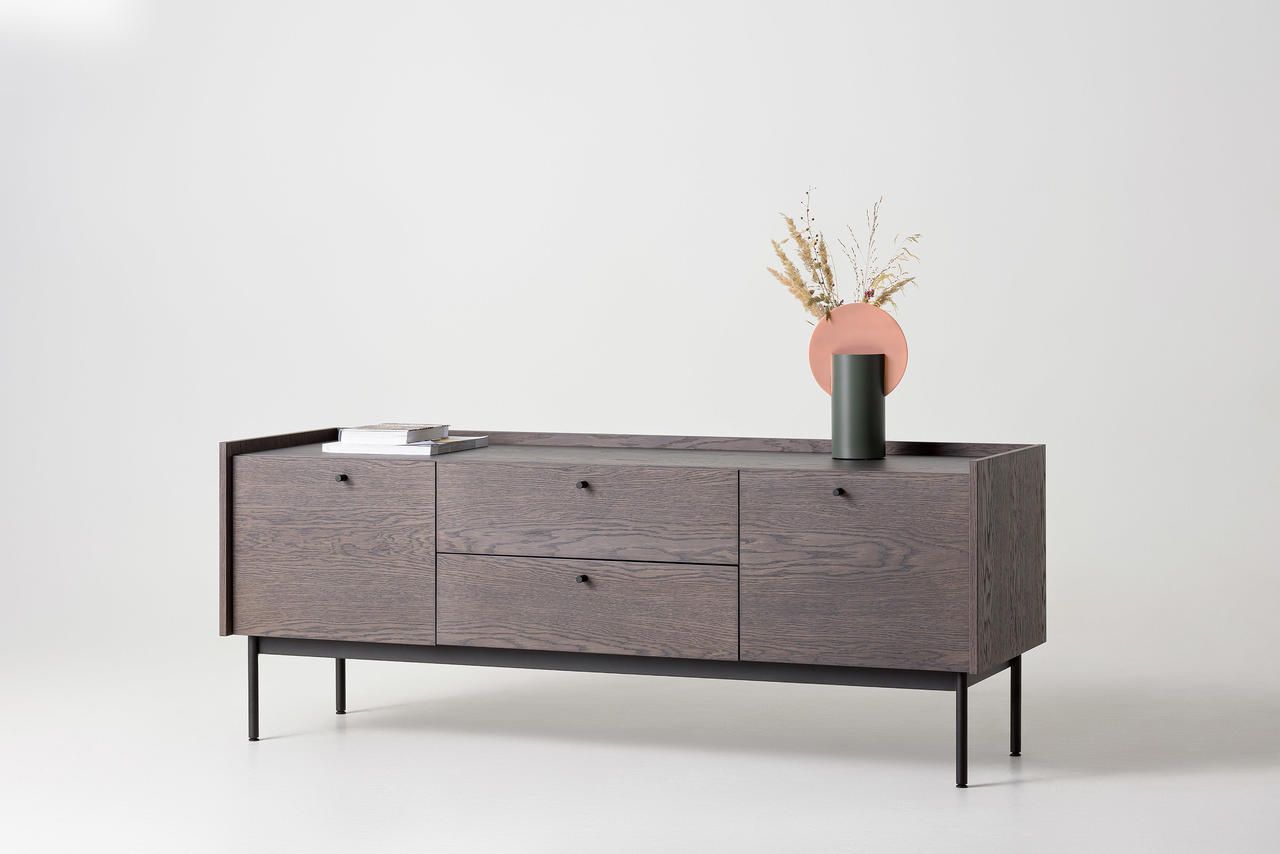
The decision comes down to one question: is it more important to show or to hide? If you have lots of tech, love minimalism and an open space — take a TV stand with niches. If you're short of room for your things and want to hide the everyday — look at chests of drawers with closed storage. There's also a hybrid: a low stand with some sections closed off by drawers — a compromise that covers both needs, and the one most often chosen for a typical living room.
What to look at when choosing
A few guides that work for both. Width — the top should be no narrower than the television, and ideally 20–30 cm wider on each side so the screen doesn't "overhang". Height — the centre of the television is comfortable roughly at the eye level of someone seated (lower than it seems). Ventilation — devices need open or perforated sections, or they overheat. And cable management — openings for wires at the back save a lot of nerves. A dedicated category of TV chests combines storage height with thought-through cable outlets.
The questions people ask most
How does a TV stand differ from a chest of drawers?
A stand is low and has more open shelves for devices; a chest is taller and has more closed drawers and doors for storing things.
What's better in a small living room — a stand or a chest?
If you're short of storage, a chest, because it offers more volume. If you have plenty of tech and somewhere to keep things, a low stand with niches.
What height should a television be at?
The centre of the screen is comfortable roughly at the eye level of someone on the sofa. That's why a low stand is the usual choice, and a chest is checked against that height.
Can you put a television on an ordinary chest?
Yes, if its width covers the diagonal, there's a cable outlet at the back and the height doesn't tip your gaze upward. Otherwise a dedicated stand is more comfortable.
Where do you hide the console and the cables?
In a stand — in an open niche with ventilation and a cable outlet; in a chest — in a section with a cable opening. The key is not to shut the devices in a sealed drawer.
Once you've worked out what matters more to you — devices on show or storage hidden away — the choice becomes simple. What's left is the pleasant part: the wood, the colour and the width for your wall, with the rest prompted by how your living room actually lives.