Round, Oval or Rectangular: How a Dining Table Shape Changes the Kitchen
- Round, Oval or Rectangular: How a Dining Table's Shape Changes the Kitchen
- Round tables — for conversation and tight kitchens
- Rectangular tables — the all-rounder for family and guests
- Oval tables — a compromise between two worlds
- Square tables — for four and symmetry
- How shape works with the room
- Common mistakes with table shape
- The questions people ask most
Round, Oval or Rectangular: How a Dining Table's Shape Changes the Kitchen
Shape is usually the last thing people choose — after size, material and colour. And that's a shame, because a dining table's shape decides how many people sit down without crowding, how you move past it, and even how warm the conversation over dinner feels. The same floor area lives differently with a round table and with a rectangular one.
We see it in practice: a couple of centimetres of shape change the feel of a kitchen more than a new wall colour. So let's go through the four main shapes — and which one suits your particular room.
Round tables — for conversation and tight kitchens
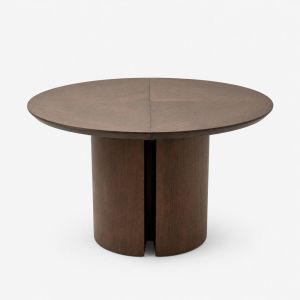
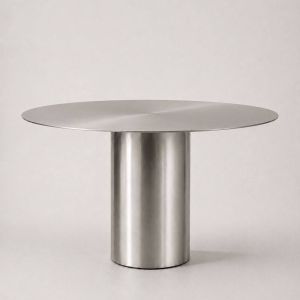
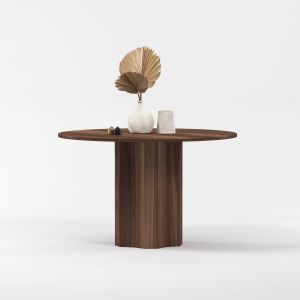
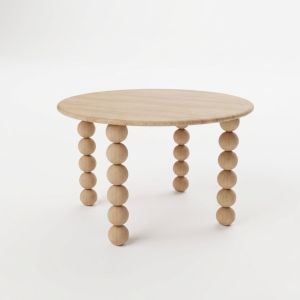
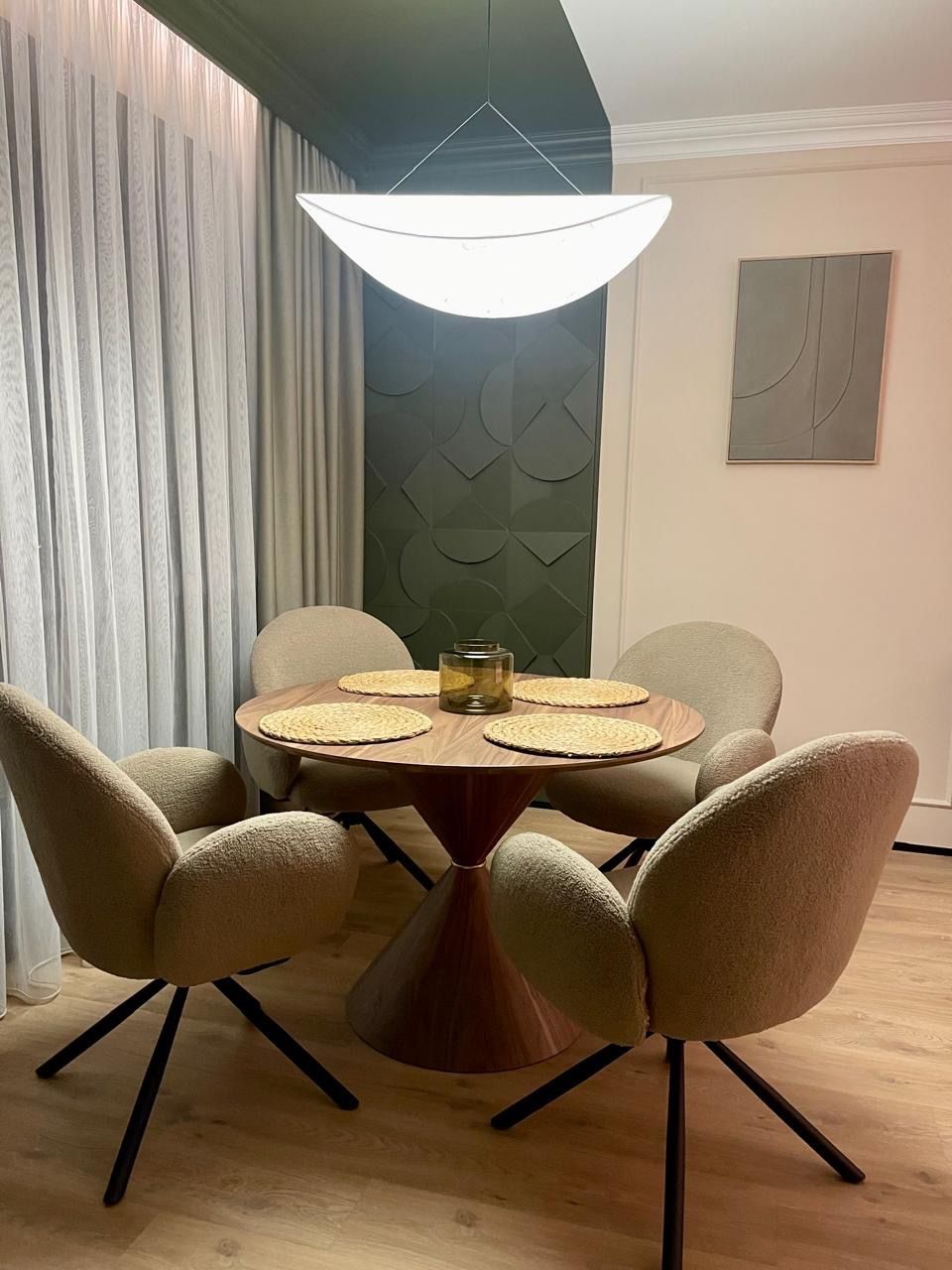
A round table has no corners and no "head" — everyone sits as equals and sees one another, so conversation around it is always livelier. It's at home in a small or a square room: with no sharp corners it's easier to squeeze past, and it visually takes less space than a rectangle of the same capacity. One condition — the base: a table on a central pedestal frees up legroom far better than four legs at the corners.
The weak point of a round table is that it scales badly. Past six people the centre gets too far to reach a shared dish, and a large diameter eats the room quickly. So the round shape is a choice for an everyday four rather than for big gatherings.
There's a nice upside for tight moments too: it's easy to squeeze one more guest in at a round table — the seats around the circle aren't fixed by corners. Where a rectangle can't take another person, a circle gives a little flexibility.
Rectangular tables — the all-rounder for family and guests
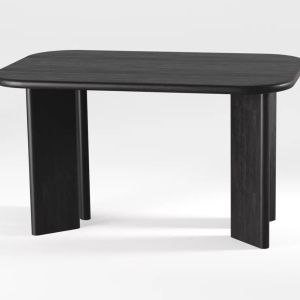
A rectangular table seats the most people on the same floor area, which is why it stays a classic. It naturally sits along a wall, a kitchen island or a sofa, extends easily with insert leaves for guests, and is equally at home on a weekday kitchen and in a festive dining room. People choose it when they need flexibility: four today, ten at the weekend.
The price of that capacity is space and a touch of formality. A rectangle needs a longer room with a passage, and the "heads" of the table create a quiet hierarchy. If the kitchen is narrow, a rectangular shape (or an oval) uses it most sensibly.
Oval tables — a compromise between two worlds
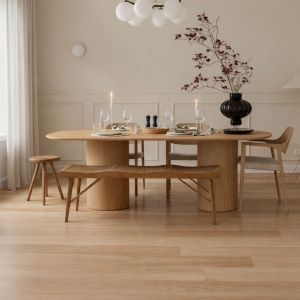
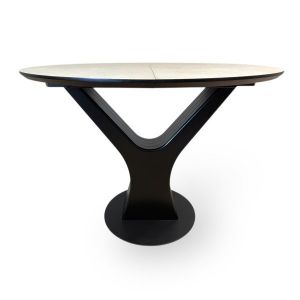
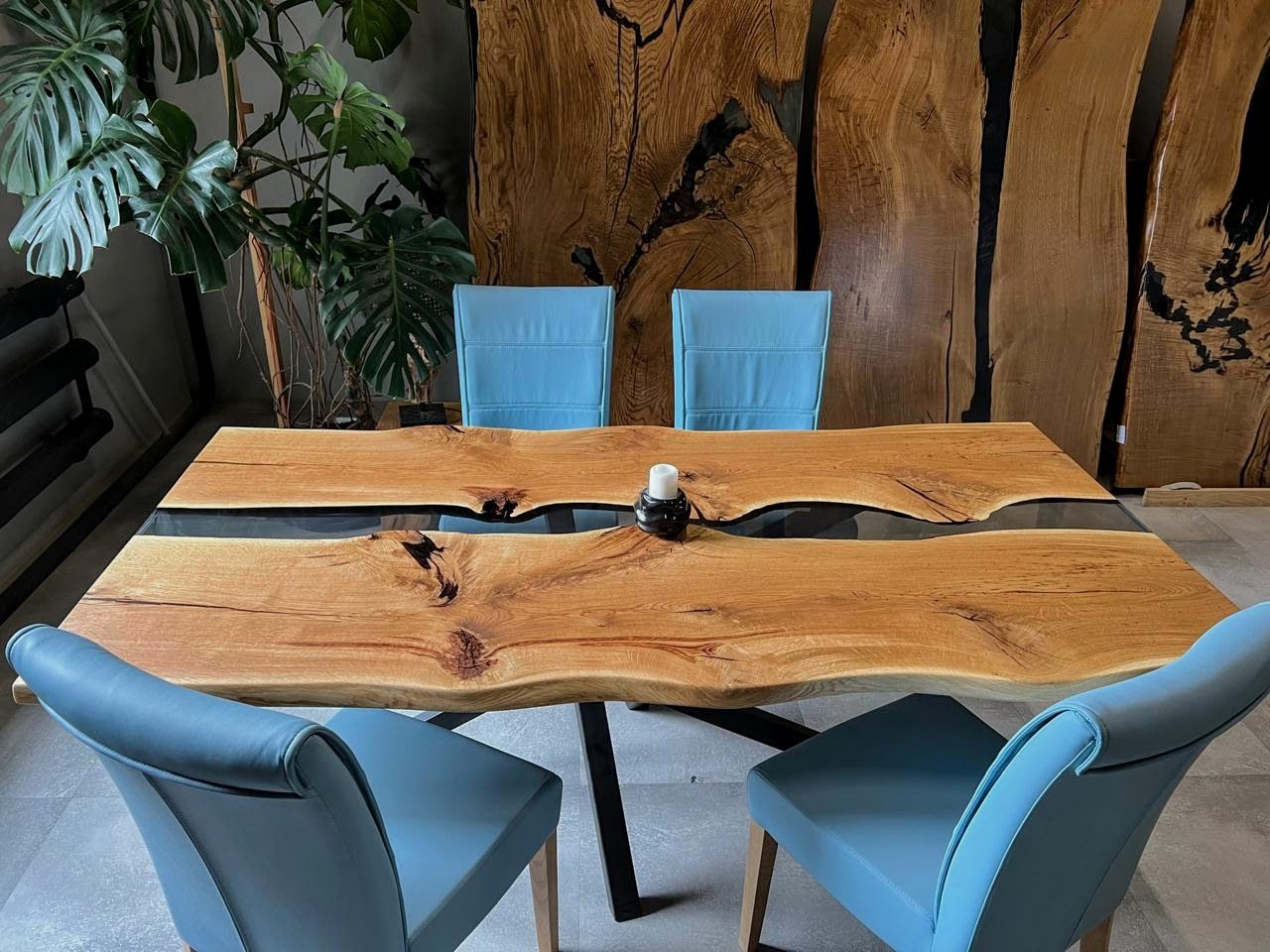
An oval table takes the capacity of a rectangle but removes the corners — and with them the risk of catching a hip in a walk-through room. It seats almost as many as a rectangle of the same length, looks softer and more elegant, and its elongated form fits narrow rooms well. It's the shape recommended when you want both to seat guests and to keep movement around the table smooth.
The oval has a purely visual bonus too: rounded ends make the table look lighter, so a substantial top doesn't press on the room the way a rectangular one of the same size does. In classic and soft contemporary interiors, an oval often looks more fitting than a sharp rectangle.
Square tables — for four and symmetry
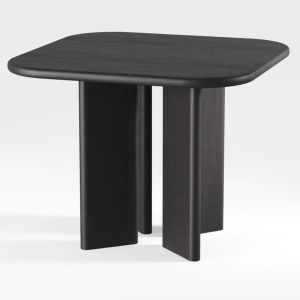
A square table is cosiness for four and perfect symmetry in a square room: one per side, everyone at an equal distance. It looks calm and intimate but, like the round one, grows badly: a square for six becomes too large and the centre goes out of reach. It's a shape for small families and compact kitchens, not for big gatherings.
A square also reads well as a pair: two small square tables push together into one large one for guests and split apart again on weekdays. For flexible scenarios that's sometimes smarter than a single bulky table.
How shape works with the room
The main rule is simple: the table's shape should echo the room's geometry. A square kitchen or a nook by a window asks for a round or square table in the centre. An elongated room, an island or a long sofa call for a rectangle or oval along them. And if people constantly walk past the table, round and oval shapes without corners are always safer than a rectangle. A shape that argues with the room's plan always looks bigger and more out of place than it is. Once the shape is settled, the next step is checking it against the dimensions: how to choose a dining table size by number of guests we covered separately.
Common mistakes with table shape
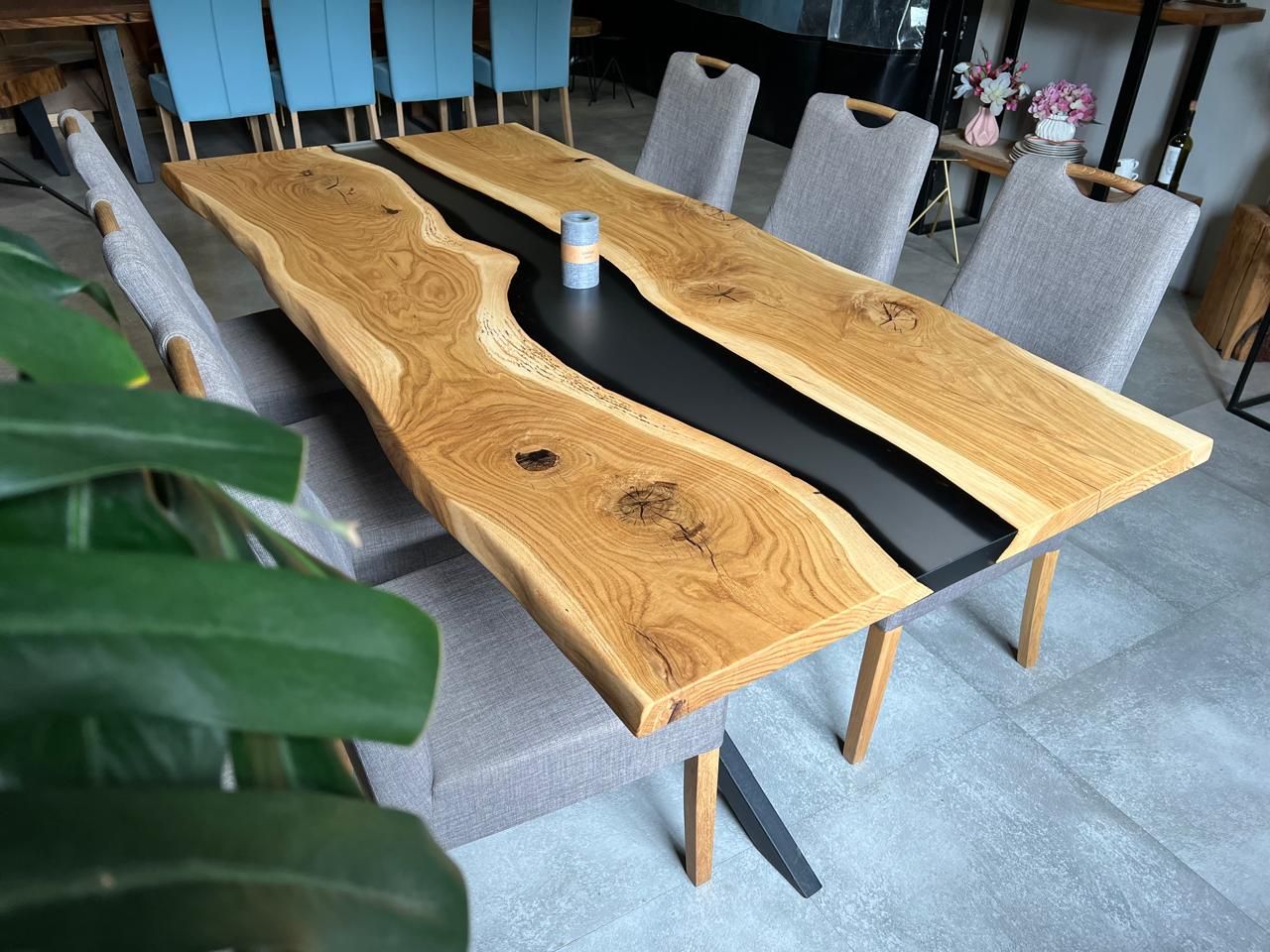
First — forcing a big round shape into a large room: past six people a round table either becomes awkward or turns into a "platform" whose centre you can't reach. Second — putting a rectangle in a small square kitchen where the corners steal the passage and a round shape would sit more freely. Third — forgetting the base: a fine table with legs at the corners can leave guests with nowhere for their knees. Shape isn't about "like it or not" taste — it's about how the table behaves with people and the room every day.
The questions people ask most
What table shape is best for a small kitchen?
Round or square up to 90 cm: no sharp corners and visually lighter. In a narrow kitchen an oval works well too.
Round or rectangular table — which to choose?
Round for an everyday four, conversation and compact rooms. Rectangular when you need more seats, flexibility for guests and seating along a wall or island.
How many people fit at a round table?
A 90 cm diameter seats four, 110 cm five to six, 120 cm six. More than six at a round table is already uncomfortable.
Why is an oval table better than a rectangular one?
It seats almost as many but without corners — safer in a walk-through room and softer to look at.
What table shape is the most versatile?
Rectangular: the most seats per area, easy to extend and suitable for almost any elongated room.
Once the shape matches the room, the pleasant part follows — species, tone and chairs to match. Browsing ready dining tables of different shapes, including extendable models, is easier once you know which shape truly suits your kitchen. And well-chosen dining chairs will complete the dining zone.