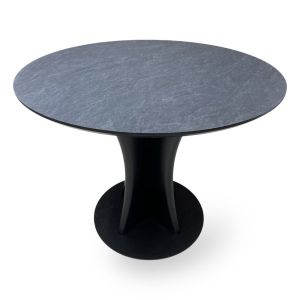
HPL, Solid Wood or Epoxy Resin: What to Make a Dining Table From
- HPL, Solid Wood or Epoxy Resin: What to Make a Dining Table From
- Solid wood — a material that lives
- Solid wood vs veneer: the difference
- HPL — when durability comes first
- Epoxy resin and a slab — when the table becomes the statement
- Epoxy vs slab: the difference
- Which material to choose for your home
- The questions people ask most
HPL, Solid Wood or Epoxy Resin: What to Make a Dining Table From
A tabletop is what you touch every day. It's where palms rest over coffee, where the marks of a hot pan and a child's felt-tip land, where half the household's conversations happen. So the question of what to make a dining table from decides not just the look but how it will age, how much care it will ask for and how much it will cost.
We see it in practice: there is no "best" material — only the one that fits your rhythm of life. So let's go through it honestly: how solid wood, veneer, HPL, epoxy resin and a slab differ, and which dining table material actually suits whom.

Solid wood — a material that lives
Solid wood is full boards through the whole thickness of the top. It's warm to the touch, darkens and gains a patina over the years, and a scratch or mark can be sanded out and refreshed — the table effectively ages along with the home. The price for that is cost and temperament: solid wood reacts to humidity, so in an over-dry room it can warp or crack. It's a material for those willing to care for it a little and who value a living surface.
The care is simple but regular: refresh the protective oil or wax every few months, wipe up moisture at once, and never leave anything hot without a trivet. In return, solid wood gives what no laminate can — a table that looks not worse but more interesting as the years pass.
Solid wood vs veneer: the difference
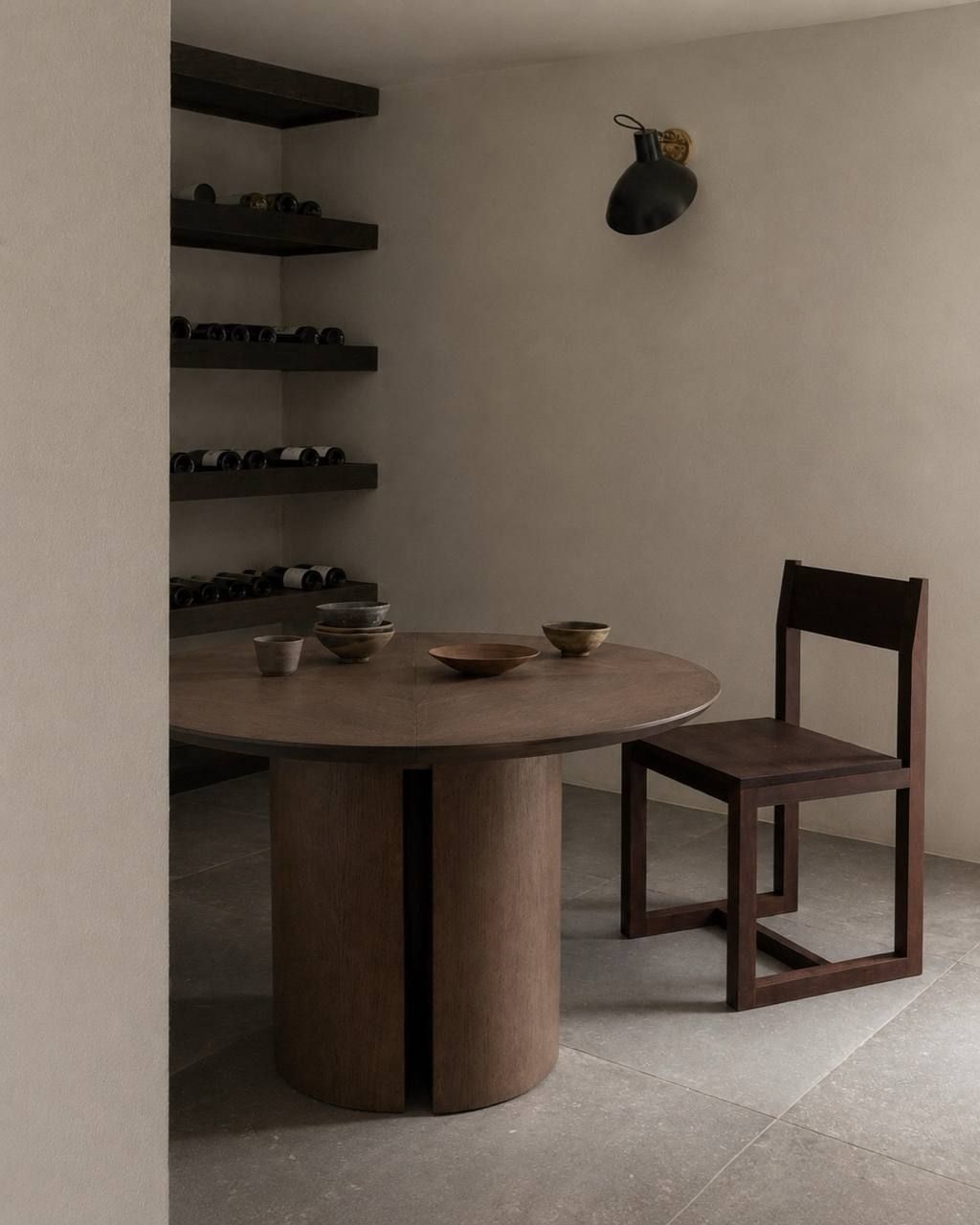
The big misconception here is thinking veneer is "fake wood". In fact veneer is a thin slice of the same natural wood glued to a stable base (plywood or board). The surface is real timber, with the same grain. The difference is elsewhere: solid wood vs veneer is a choice between wood all the way through and wood over a stable "skeleton". Veneer warps less with moisture, allows a large seamless top with matched grain, and costs less. But a thin layer can't be re-sanded many times, and the edge is more vulnerable to knocks. Neither option is "worse" — they're different engineering answers to different problems.
HPL — when durability comes first
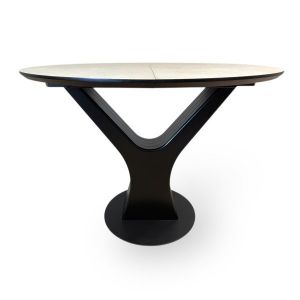
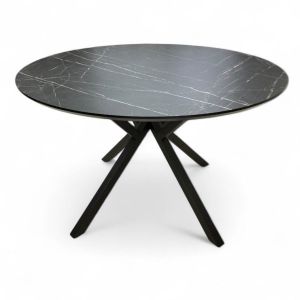
HPL (compact laminate) is layers pressed under high pressure and heat with a decorative top surface. What it's chosen for is durability: it barely fears scratches, hot cookware, moisture, UV or stains, hardly moves with changes in climate, and wipes clean in one stroke. It's a material for families with children, for a heavily used everyday table, for cafés and restaurants.
The surface is even and uniform — without the warm tactility of solid wood, but it can convincingly imitate wood, stone or concrete. There's a signature detail too: the edge of HPL shows a dense dark "sandwich" of layers, and designers often leave that edge exposed as part of the look. If a table has to take life without drama, HPL tables are the calmest choice — which is why they're increasingly chosen not only for venues but for ordinary kitchens too.
Epoxy resin and a slab — when the table becomes the statement
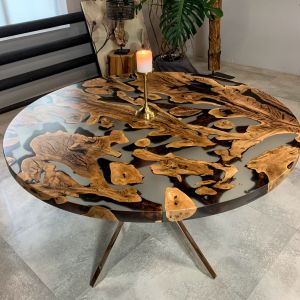
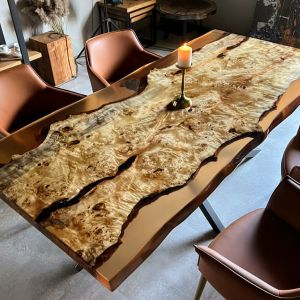
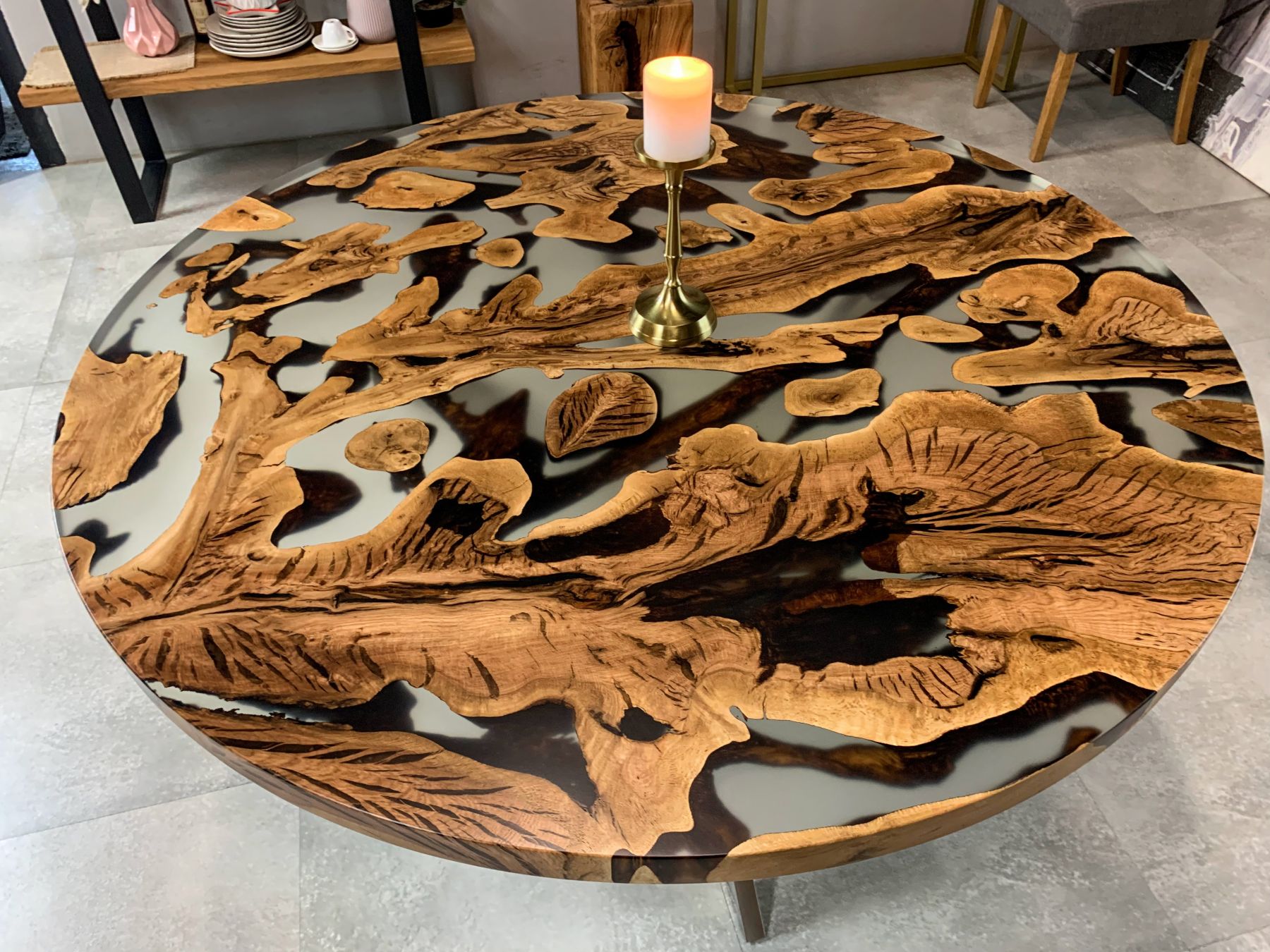
These two aren't about the background — they're about the main object in the room. Epoxy resin in a table is a combination of wood and poured resin, clear or tinted: it forms a "river" or islands, lights up the cut of the wood and fills natural cracks. Each such table is unique, heavy and essentially a piece of art. A slab is a single lengthwise cut of a trunk with a natural "live" edge: pure wood without resin, showing the form as nature intended it.
Epoxy vs slab: the difference
Epoxy vs slab comes down to how much of the table is wood and how much is the maker's design. A slab is about the raw, organic beauty of the wood itself with minimal intervention; it needs well-dried, stabilised timber because it works with the natural edge on show. A table in epoxy resin is already a composition, where the resin becomes a material in its own right: colour, transparency and the pattern of the "river" are planned in advance. The in-between is a slab where resin fills only the cracks: the wood stays the hero, and the resin rescues it.
Which material to choose for your home
Narrowing it to one decision is simpler than it seems. If the home has children, pets and a daily marathon of meals and homework — take HPL, it forgives everything. If you want a warm, living surface that improves with the years and don't mind refreshing it now and then — that's solid wood or a slab. If the table should be the room's main accent and a talking point — epoxy resin. And if you need a large, stable top with a wood grain at a more sensible price — veneer covers that best of all. Material and size are worth deciding together: how to choose a dining table size for the room we covered separately, and that figure often hints at what material the table should be made from at all.
The questions people ask most
Which is better — solid wood or veneer?
It depends on the goal. Solid wood can be sanded and refreshed many times, it's full and alive, but pricier and sensitive to moisture. Veneer is more stable, cheaper and allows large seamless tops, but the thin surface can't be deeply re-sanded.
Does HPL resist heat and scratches?
HPL stands up to hot cookware, scratches, moisture and UV — that's its main advantage. That's why it's often chosen for kitchens, families with children and venues.
What's the difference between an epoxy table and a slab?
A slab is a single cut of wood with a live edge, almost without resin. An epoxy-resin table combines wood and poured resin as a separate material, forming a "river" or islands.
What tabletop material is most practical for a family with children?
HPL: it doesn't fear stains, heat or scratches and wipes clean in one motion. Wooden surfaces need gentler care.
Is a wooden table durable?
Yes — with proper care solid wood lasts for decades, and scratches and marks can be sanded out. The key is a stable humidity level in the room.
Once the material is settled, the pleasant part follows — shape, species and tone for your room. Browsing ready wooden tables and other dining tables is easier once you know which material will take your particular rhythm of life.