Outdoor bar stools


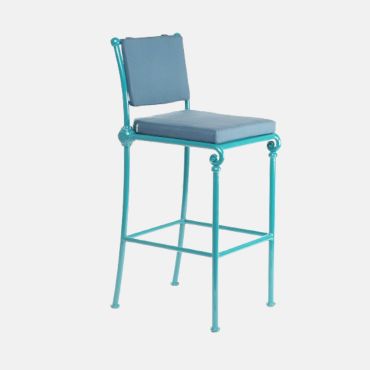
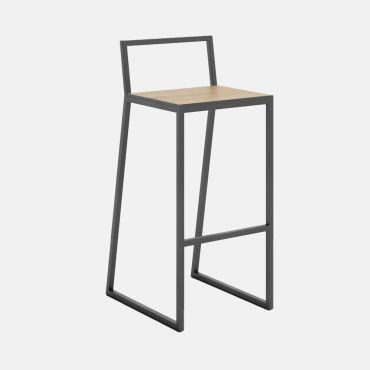
OUTDOOR BAR STOOLS: HOW TO CHOOSE FURNITURE FOR A TERRACE, CAFE, AND OPEN-AIR SPACE
Outdoor bar stools are not just seats for a terrace. They are an element that sets the tone for the entire space. The material and shape you choose will determine whether your terrace becomes a cozy corner or remains just a set of furniture under the open sky.
At MAIIMO, we constantly track what appears on the outdoor furniture market, from mass-market solutions to handcrafted pieces by Ukrainian studios. And in practice, we see that most buyers make a mistake from the very beginning: they choose a bar stool based only on appearance, without thinking about the conditions of use. This article is here to make sure that does not happen to you.
We will look at what types of outdoor bar stools exist, how they differ in materials and construction, which styles they suit, and what to pay attention to before buying.
WHAT ARE OUTDOOR BAR STOOLS AND WHO NEEDS THEM
A bar stool is a raised seat designed for a bar counter or a high table from 90 to 110 cm. In the outdoor version, one more requirement is added: the product must withstand environmental exposure, including sun, rain, temperature changes, and humidity.
Outdoor bar stools are needed primarily when there is a high surface outdoors: a bar counter on a summer terrace, a narrow console table on a balcony, or a windowsill arranged as an open-format bar area. They are bought by cafe and restaurant owners, owners of country houses with terraces, and people with large balconies or rooftop terraces.
But even without a counter, bar stools make sense: combined with suitable tables, they provide more space under the tabletop, reduce the feeling of clutter on a small terrace, and allow you to see farther, which is especially important for terraces with a view.
In practice, we see that bar stools for summer terraces are bought not only by restaurants. They are a common format for country terraces, city balconies, and garden areas where people want to preserve space while creating a zone with character.
TYPES OF CONSTRUCTIONS: WHAT IS AVAILABLE ON THE MARKET
STATIONARY BAR STOOLS
The most common option is four legs, fixed height, no wheels. They are easy to maintain, stable, and stand well on uneven surfaces if the legs have anti-slip pads. They are suitable for terraces with tile, wood, or concrete flooring.
Among stationary models, there are also folding versions, with or without a backrest, with or without footrests. Folding stools are easier to store in winter or move around.
BAR STOOLS WITH A SWIVEL MECHANISM
The seat rotates 360 degrees. This is convenient if access to the space is needed from several sides or if the stool stands in the center of the area rather than being pushed against a counter. But for outdoor use, this format requires special attention: the swivel mechanism must be protected from moisture and rust.
BAR STOOLS WITH ADJUSTABLE HEIGHT
Gas lift or stepped adjustment. This allows the stool to be adapted to different table heights or users of different heights. For outdoor use, it is important that the adjustment mechanism is made of rust-resistant materials, as a standard gas lift will rust outdoors within a season.
BACKLESS STOOLS
A compact, laconic format. They look good in modern and minimalist spaces. Suitable for counters where people sit for a short time. The downside is the lack of back support, which matters when sitting for a long time.
MATERIALS: WHAT CAN WITHSTAND OUTDOOR USE
ALUMINUM
One of the most common materials for outdoor bar stools. It is lightweight, does not rust, and withstands moisture and temperature changes well. Modern aluminum stools can have powder coating in any color, from white to anthracite.
We recommend paying attention to quality: aluminum varies. Thin-walled profiles can deform under load. A good aluminum stool weighs from 3 to 5 kg and does not bend even under significant weight.
STEEL WITH ANTI-CORROSION COATING
Heavier and stronger than aluminum. It holds its shape well and is resistant to deformation. But steel requires a high-quality protective coating, such as galvanizing or epoxy paint. If the coating is damaged, rust appears quickly.
For outdoor use, we recommend stools with powder-coated metal or stainless steel, especially for coastal climates or areas with high humidity.
TEAK AND ACACIA
Solid wood with natural protection against moisture and rot. Teak has a high content of natural oils, so it practically does not require treatment during the first years. Acacia is slightly inferior to teak but is more affordable and looks good.
Wooden bar stools for summer terraces are a classic choice for villas, country houses, and restaurants with natural interiors. They are heavy, stable, and look warm even on a rainy day.
RATTAN AND POLYRATTAN
Natural rattan is not suitable for outdoor use: it rots and cracks under the sun. Polyrattan, an artificial fiber on a metal base, is an outdoor material. It does not rot, does not fade if it is high quality, is easy to clean, and looks good in woven constructions.
In practice, we see that polyrattan varies greatly in quality. Cheap products fade within 2–3 seasons. High-quality polyrattan retains its color for 8–10 years.
PLASTIC AND POLYMER
Lightweight, inexpensive, and easy to maintain. But polypropylene without UV stabilizers fades and becomes brittle. If you choose plastic stools for outdoor use, check whether they have UV protection.
There are also higher-quality polymer stools with reinforcement or fiberglass. They are more durable and look different.
HOW TO CHOOSE OUTDOOR BAR STOOLS: PRACTICAL CRITERIA
STOOL HEIGHT FOR A TABLE OR COUNTER
The standard height of a bar stool is 65–75 cm to the seat. Measure from the floor to the seat, not to the highest point of the backrest. There should be 25–30 cm of free space between the seat and the tabletop so that it is comfortable to sit without your knees hitting the surface.
If you have a non-standard counter or table, measure the table height and subtract 27–28 cm from it: this will be the required seat height.
MATERIAL FOR YOUR CLIMATE
In regions with cold winters and frequent rain, choose aluminum or high-quality steel with good coating. In dry and sunny climates, teak, acacia, or polyrattan are suitable. Near the sea, choose stainless steel or aluminum: salt mist destroys the coating of regular steel.
WEIGHT AND MOBILITY
If the stools need to be moved or stored away for winter, choose aluminum or polymer. If the stool stays in one place, choose wood or heavy steel. Heavier stools are more stable in the wind.
CUSHIONS AND UPHOLSTERY
For outdoor stools with upholstery, use only fabrics marked outdoor or solution-dyed acrylic. These fabrics do not fade and do not absorb water. Cushions are best stored in a protected place during prolonged rain.
OUTDOOR BAR STOOLS IN DIFFERENT INTERIOR STYLES
MINIMALISM
Aluminum or metal stools with thin legs and a seat without decoration. Colors: black, anthracite, white, mocha. No armrests, no unnecessary details. The shape is clean and geometric. They look good combined with concrete or minimalist countertops.
SCANDINAVIAN STYLE
Wooden or combined stools: wooden or metal legs, a wooden seat, or connected polyrattan lines. Colors: natural wood, gray, sand, pastel shades. The forms are soft but not overly decorative.
LOFT
Metal + wood. Rougher textures, open structures, welded seams. Colors: black, rust, dark brown, steel. Outdoor bar stools in loft style look good next to brick walls or wooden surfaces.
MODERN STYLE
Clean forms, neutral or accent colors, combinations of materials such as metal and polymer or metal and fabric. Acrylic or transparent polymer may also be used. They are easy to combine with modern glass or acrylic counters.
JAPANDI
Natural materials: teak, bamboo, light wood species. Forms are simple but clearly ergonomic. Colors: warm beige, natural wood, anthracite. Minimal metal. The seating is lower than in a classic bar stool, so it must be carefully matched to the height of the counter.
MID-CENTURY MODERN
Stools with curved legs or “compass” legs. The seat may be wood or fabric with a geometric pattern. Colors: walnut, terracotta, mustard, olive. Metal elements: matte gold or bronze.
ECLECTIC
A mix of stylistic solutions: different shapes, materials, and colors within one space. Bar stools for summer terraces in eclectic interiors may differ in shape but be unified by a common color or material. A row of different stools in one tone is a common technique.
SOFT MODERN INTERIOR
Rounded forms, soft upholstery for outdoor use, legs made of metal or wood in neutral shades. Colors: smoky pink, dusty tones, mocha, sage, white. This style requires high-quality outdoor cushions or stools with soft polymer shells.
OUTDOOR BAR STOOLS FOR SMALL AND LARGE SPACES
SMALL TERRACE OR BALCONY
Here, compactness and the ability to fold or stack stools are critical. Backless stool models take up less space. If a backrest is needed, look for models that fold or stack into one another.
Weight also matters for balconies: cast-iron or heavy wooden stools should not be used on high-rise balconies without prior consultation with a structural designer.
LARGE OPEN SPACE OR RESTAURANT TERRACE
Here, more massive constructions are possible: wood, heavy metal, voluminous forms. A large space needs furniture with its own character; thin aluminum stools may get visually lost.
For restaurant terraces, we also recommend thinking about logistics: stools should be easy to move between tables, stack for overnight storage, and clean easily.
WHAT TO PAY ATTENTION TO BEFORE BUYING
First, check the labeling. If the manufacturer does not indicate “for outdoor use” or “outdoor,” there is a risk that the material is not designed to withstand weather exposure. Good outdoor stools have clearly stated materials and conditions of use.
Second, check the load capacity. The standard for bar stools is from 100 to 120 kg. If this parameter is not listed in the description, ask the seller.
Third, check the legs and pads. For tile and wood flooring, rubber or silicone pads are essential. Without them, the stool scratches the surface and slips. For uneven surfaces, adjustable legs are needed.
Fourth, check UV resistance. If the stool will stand on a sunny terrace, clarify whether the color is protected from fading. This is important for fabrics, polyrattan, and plastic.
COMMON MISTAKES WHEN CHOOSING OUTDOOR BAR STOOLS
The first mistake is buying indoor bar stools for outdoor use. Even if they look similar, untreated wood, metal without protective coating, and fabrics without outdoor treatment will deteriorate within one or two seasons.
The second mistake is not measuring the height. In practice, we see that people buy stools “by eye” and then discover that they are either too low for the counter or too high, and their feet do not reach the footrest.
The third mistake is ignoring the footrest. A bar stool without a footrest is uncomfortable for long sitting because the legs hang. Even if the stool is beautiful, without a footrest or support, it is uncomfortable to sit on it for more than 20 minutes.
The fourth mistake is buying too few stools. For a 150 cm bar counter, 3–4 bar stools fit comfortably with 40–45 cm between them. If you take fewer, the space will look unfinished.
The fifth mistake is ignoring the color of the floor and walls. Bar stools for summer terraces should be part of the overall color scheme, not a random object. Even a neutral stool color can conflict with the tone of the flooring or walls.
CARE FOR OUTDOOR BAR STOOLS
Aluminum and steel only need to be wiped with a damp cloth. Once a season, check the fastenings and renew the protective coating in scratched areas. In winter, it is better to store them indoors or under a canopy if there is snow.
Wood requires more attention. Teak should be treated with teak oil once a year. Acacia and other wood species should be treated with protective impregnation or wood oil. Without treatment, wood turns gray and cracks, but it does not rot if the material is high quality.
Polyrattan can be washed with a hose; it is not afraid of water. But avoid aggressive chemical products, as they damage the fiber.
Outdoor fabrics should be cleaned with a brush and a mild detergent. If stains are deep, remove the cushions and soak them separately. Do not leave cushions under prolonged rain, even if the fabric is water-repellent.
DESIGNER AND CUSTOM SOLUTIONS: WHEN THEY ARE WORTH IT
If the terrace is part of a carefully planned interior concept, or if it is a restaurant or hotel with a branded style, it makes sense to order stools with a custom design or choose a limited collection from a studio.
A custom order is justified when standard sizes do not fit, when a specific color or material is needed, or when the entire furniture group must feel unified. The price of such a solution is higher, but the result is different: the furniture precisely matches the space.
For smaller projects, such as a house, apartment, or small coffee shop, you can find stools from small Ukrainian studios that produce small-batch collections with their own structural solutions. This is not a mass-market product, but it is also not a full custom order from scratch.
THE PRACTICAL VALUE OF QUALITY OUTDOOR BAR STOOLS
A good outdoor bar stool is a product that serves for 5–10 years without significant maintenance costs. A cheap stool will need replacement after 1–2 seasons and will ultimately cost more.
But it is not only about durability. Outdoor bar stools create the kind of atmosphere you either want or do not want to return to. A terrace where it is comfortable to sit, where materials feel pleasant to the touch, and where the forms do not become tiresome is a terrace you want to recreate. That is why choosing a stool is not only a matter of budget, but also a question of how you see the space in three years.
We have researched the market and see that more and more interesting solutions are appearing in the outdoor bar furniture segment from local manufacturers. They understand climate conditions better, offer more lively design solutions, and are often ready to make small adaptations to order.
WHY YOU SHOULD BUY OUTDOOR BAR STOOLS AT MAIIMO
MAIIMO is a platform that brings together products from Ukrainian design studios and craft brands. There is no mass import without authorship here: every item has been selected based on materials, construction, and compliance with the stated characteristics.
We understand that outdoor bar stools are not a product you can choose blindly. That is why we provide detailed material descriptions, real specifications, and the opportunity to contact the manufacturer directly through the platform if you need consultation or product adaptation.
All stools presented in the MAIIMO outdoor furniture section are made from materials designed for open-air use. If there is an outdoor marking, we verify whether it corresponds to the actual characteristics of the product.
In addition, MAIIMO allows you to choose bar stools as part of a set with other outdoor furniture: tables, loungers, sofa groups, from the same studios or in combinations that match by style. This is convenient if you are designing a terrace or outdoor area as a complete space.
Our managers will help you choose an option for specific dimensions, material, and style, without pressure and without pushing a more expensive solution without reason.
10 FAQ
WHAT HEIGHT OF BAR STOOL IS SUITABLE FOR AN OUTDOOR COUNTER?
The standard height of outdoor bar counters is from 100 to 110 cm. For such a counter, a bar stool with a seat height of 65–75 cm is suitable. Before buying, measure the counter height and subtract 27–30 cm: this will be the required seat height.
If the counter is non-standard or you are buying a table and stools together, choose a set where the manufacturer specifies compatible heights. This will eliminate mistakes from the start.
WHICH MATERIALS ARE BEST FOR OUTDOOR BAR STOOLS IN RAINY REGIONS?
For regions with frequent rainfall, the best choice is powder-coated aluminum or stainless steel. These materials do not rust or deform from moisture. Polyrattan on a metal frame is also suitable, but it is important to check the quality of the welded joints.
Wood in a rainy climate requires regular maintenance: annual oil treatment or protective varnish. Teak performs better than other wood species thanks to the natural oils in its structure.
CAN OUTDOOR BAR STOOLS BE LEFT OUTSIDE IN WINTER?
Aluminum and steel stools with high-quality coating can withstand winter outdoors. But we recommend covering them with protective covers or storing them under a canopy, as this significantly extends the life of the coating.
Wooden stools are better stored in a warm or at least enclosed place. Wood reacts to freezing and thawing, which leads to cracking, especially if there are microcracks in the wood.
WHAT IS THE DIFFERENCE BETWEEN OUTDOOR BAR STOOLS WITH AND WITHOUT A BACKREST?
Stools with a backrest are more comfortable for long sitting because they support the lower back and shoulders. Backless stools are more compact, easier to stack, and take up less space. For restaurant terraces where guests change frequently, backless stools are more practical. For a home terrace where people sit for a long time, stools with a backrest are better.
Structurally, stools with a backrest are slightly more complex and heavier. But if the materials are high quality, the difference in durability is minimal.
HOW DO YOU CARE FOR POLYRATTAN BAR STOOLS OUTDOORS?
Polyrattan is easy to wash with ordinary hose water and a soft brush. For more persistent dirt, use a liquid soap solution without aggressive chemicals. Do not use chlorine-containing products or solvents, as they damage the fiber structure and may discolor the weave.
Once a season, check the metal frame under the weave, especially at the joints. If the coating is scratched, renew it with an anti-corrosion spray to prevent rust.
HOW MANY BAR STOOLS SHOULD BE PLACED AT A COUNTER OR BAR TABLE?
The calculation is simple: each seat needs 40–45 cm of counter or table width. For a 120 cm counter, use 2–3 stools. For 150–180 cm, use 3–4 stools. Leave 5–10 cm between stools on the sides so it is easy to sit down and stand up.
If the stools are wide, with armrests or a massive seat, add another 10 cm per stool. Tight placement makes the area uncomfortable, even if the stools themselves are comfortable.
ARE BAR STOOLS FOR SUMMER TERRACES SUITABLE FOR WINTER USE?
Most outdoor bar stools are not designed for constant use in below-zero temperatures. Even if the material withstands frost, sitting on a metal or plastic stool at low temperatures is uncomfortable.
If the terrace is heated or enclosed, the stools can remain there all year round. For open areas without heating, we recommend moving the stools to a dry enclosed place for winter or covering them with special covers.
WHAT IS SOLUTION-DYED ACRYLIC AND WHY IS IT IMPORTANT FOR OUTDOOR BAR STOOL CUSHIONS?
Solution-dyed acrylic is a fabric in which the pigment is introduced into the fiber during production rather than applied only to the surface. This provides resistance to UV fading: the fabric retains its color even after prolonged exposure to the sun.
For cushions on outdoor bar stools, this is the most practical choice. Ordinary fabrics fade within one or two seasons under active sun exposure. Cushions made of solution-dyed acrylic retain their appearance for 5–7 years.
HOW DO YOU CHOOSE OUTDOOR BAR STOOLS FOR A RESTAURANT TERRACE?
For a restaurant, the priorities are different than for a home: strength under frequent use, ease of movement, stackability, and compliance with sanitary requirements, meaning materials that are easy to wash. Aluminum or steel stools with a minimum of details are the most practical choice.
Pay attention to load capacity: for a public space, it should be at least 120 kg. Also check whether there is a certificate of compliance for use in public places, as some manufacturers indicate this in the documentation.
DOES THE COLOR OF AN OUTDOOR BAR STOOL AFFECT HEATING FROM THE SUN?
Yes, significantly. Dark colors such as black, anthracite, and dark brown heat up in the sun much more than light colors. A black metal stool in direct sunlight can become hot enough to be uncomfortable or even painful to sit on.
For very sunny terraces, we recommend either choosing light colors or using cushions, as they reduce contact with the heated surface. Teak and acacia heat up much less than metal, so wood has an advantage for open sunny areas.