Acoustic Room Dividers
For focus and effecient work
Acoustic room dividers can make an office, home workspace or public interior calmer without adding a permanent wall. They divide an open area, absorb some reflected sound and create visual privacy. MAIIMO presents floor-standing formats and acoustic screens in 16 colours, so acoustic comfort can feel like a considered part of the interior.


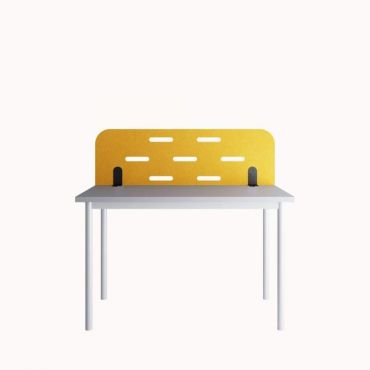
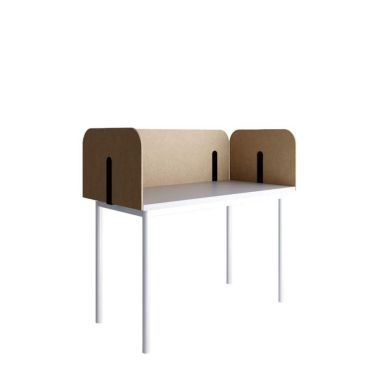
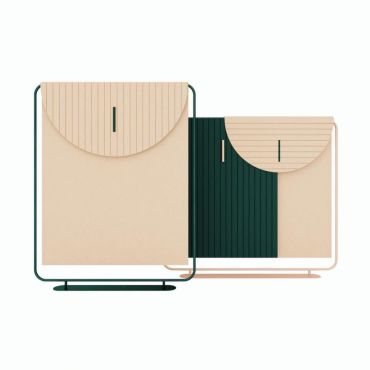
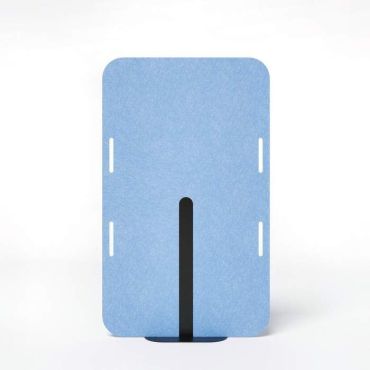
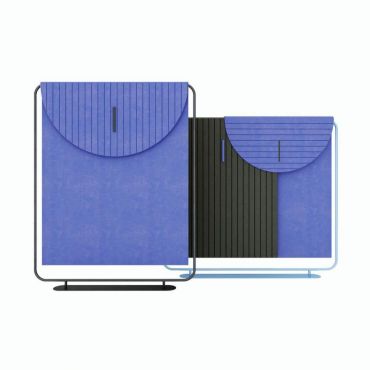
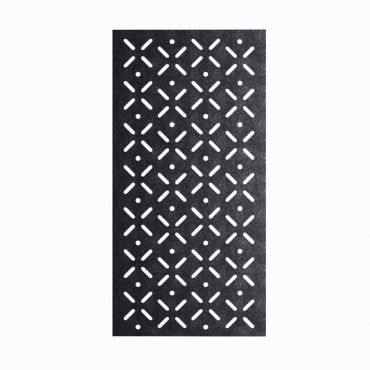
Acoustic room dividers for quieter, more flexible spaces
Quiet does not always require another wall. Acoustic room dividers can separate a workstation, an informal meeting area or a calm corner without locking the interior into one permanent layout. They absorb some sound reflected by hard surfaces, reduce the sense of reverberant noise and work as visible pieces of design rather than hidden building products.
We recommend treating acoustic room dividers as tools for local comfort. They do not create airtight sound insulation between rooms, but they help when nearby conversations, reverberation or constant movement make concentration difficult. A floor-standing screen can sit between teams, while a compact desktop panel can protect the immediate area around one workstation.
What acoustic room dividers are and how they work
Acoustic room dividers are movable or workstation-mounted panels made from a material that absorbs part of the sound energy reaching it. In the models presented here, a porous PET panel performs this task. Less energy returns from hard surfaces as echo. Conversations remain audible, but the acoustic background can feel calmer and speech from nearby desks becomes less intrusive.
The effect of an acoustic partition is easier to notice in rooms with concrete, glass, tile, large windows and little soft furnishing. Hard planes reflect sound repeatedly and extend its decay time. A panel placed close to a person or a recurring source of speech intercepts some of those reflections before they travel through the wider room.
The height and area of acoustic dividers for zoning also matter. A small desktop screen works locally, separating adjacent workstations and absorbing reflections above the desk. A taller floor-standing panel blocks more of the sightline and provides more absorptive surface, which makes it useful between groups of desks or beside an informal meeting point.
One acoustic room divider will not correct a difficult large hall on its own. If sound returns from walls and ceiling, movable zoning can be combined with decorative acoustic panels. The product types are different, but their roles complement each other: screens work close to people, while wall panels address larger reflecting surfaces.
Acoustic partition or sound-insulating wall: what is the difference?
An acoustic partition changes sound within a room. A sound-insulating wall is designed to stop sound passing between separate rooms. A movable PET screen reduces reflections and partly screens direct speech, yet sound can travel above it, around its sides and through the building structure. That physical limit should be clear before any product is selected.
If a confidential meeting room or recording space is required, acoustic room dividers cannot replace sealed doors, massive wall layers, closed junctions and a professional acoustic specification. The purpose in an open office is different: reduce local distraction and visual exposure while keeping teams connected to a shared space.
A simple rule helps. If speech from the next room must not be heard, the project needs building sound insulation. If the goal is less reverberation and better focus in one open room, acoustic dividers for zoning are relevant. Defining the job honestly prevents inflated expectations and directs the budget towards the right type of intervention.
Types of acoustic room dividers
Types of acoustic room dividers differ in more than size. Installation, weight, folding capability and distance from the listener all change how a screen behaves. A stable floor-standing construction suits a regular boundary between teams. A light or modular design supports frequent changes. A desktop screen serves one person or a pair of neighbouring desks.
Freestanding acoustic partitions
Freestanding acoustic partitions use their own supports or frame, so they do not depend on a desk. They can be placed between rows of workstations, beside reception, in a waiting area or within an open living room. Their height gives them a dual role: they manage some reflected sound and create a clearer visual boundary.
Before choosing a freestanding acoustic partition, check the footprint of its base. The panel itself may be slim, while feet or a frame occupy valuable floor area. They should not cross a main route, clash with table legs or catch an office chair. In a narrow zone, low weight is useful, but the construction still needs adequate stability.
Mobile acoustic dividers for offices
Mobile acoustic dividers for offices suit interiors that change during the day. In the morning they can separate focused work, after lunch they can form a small meeting area, and later they can clear space for an event. The most practical versions have a clear place to grip, manageable weight and a base that does not create an awkward obstacle.
Mobility does not mean that office acoustic partitions must be carried constantly. Moving them a few times each week may be enough to respond to different team sizes. A framed screen weighing more than 30 kg needs several planned positions, a level floor and a safe method of handling rather than improvised daily movement.
Desktop acoustic screens for workstations
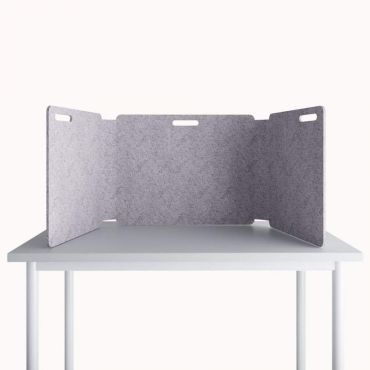
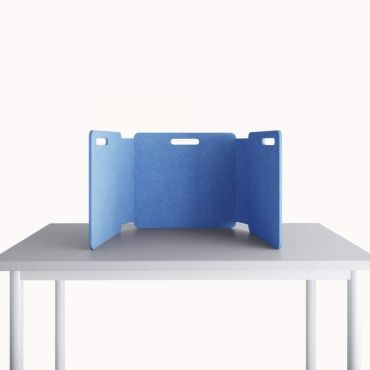
Desktop acoustic screens act close to both speaker and listener. They do not enclose an office, but they create a personal boundary between adjacent desks, remove some movement from the field of view and help define a place for calls, study or concentrated work. Their local scale can be an advantage when only one area causes difficulty.
When selecting desk acoustic dividers, check the thickness of the desktop, the mounting method, cable positions and monitor height. Some models require a separately ordered bracket. The screen should not block computer ventilation, interfere with monitor arms or take away so much usable desk depth that the workstation becomes uncomfortable.
Modular and folding screens for changing layouts
Modular acoustic room dividers can form more than a straight line. Sections of different widths may turn into an angle, create a soft curve or fold into a compact footprint. This format works in an exhibition space, education centre or office where a boundary has to respond to an event rather than remain fixed throughout the year.
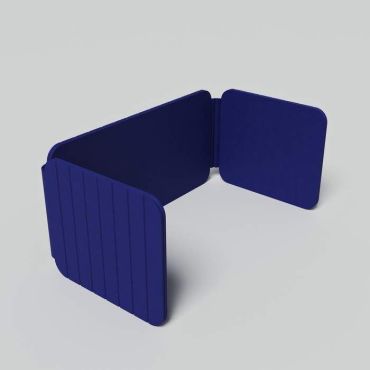
Compact folding acoustic screens operate at a smaller scale. They can wrap around a laptop or temporary work zone and be stored when the task is finished. That makes sense in a hybrid office, a library or a home where the same table returns to dining, making or family use after working hours.
Where acoustic room dividers work best
Acoustic room dividers are most convincing where noise is local and the interior needs to remain open. They can address a particular conflict: neighbouring desks, a queue beside reception, a child's study place or a group of restaurant tables. Position matters as much as the chosen model, because a distant screen may miss the main path of sound entirely.
Open-plan offices, meeting areas and coworking spaces
In an open-plan office, office acoustic partitions should sit between recurring conversations and people who need focus. A tall screen between teams reduces direct visual contact; desktop panels create personal boundaries. Beside an informal meeting area, a divider marks the zone and softens some speech, although it does not make the conversation confidential.
For a coherent workplace, acoustic room dividers should be considered with other office furniture: desk heights, storage, lighting and routes through the room. In a meeting space, compare the screen with table proportions and seating positions so the boundary helps the layout rather than becoming another obstruction.
Restaurants, waiting areas and public interiors
In a restaurant or lobby, acoustic dividers for zoning can separate groups of seats without removing daylight or the ability to rearrange the room. Stability, appearance from both sides and realistic cleaning requirements matter here. A screen that looks good from the entrance but exposes a rough back towards seated guests has not been considered as a complete object.
In a public interior, designer acoustic partitions need to work with colour, lighting and navigation. A graphic model may gently identify a waiting zone, while a restrained metal frame supports a business setting. For a broader acoustic scheme, room dividers can be combined with acoustic lighting that addresses both illumination and sound absorption overhead.
Home office, children's room and open living area
At home, acoustic screens for rooms help when one area carries several functions. A desktop version separates work from domestic activity, a folding screen creates a temporary focus mode, and a light floor-standing panel defines a workspace in an open living room. When work ends, the boundary can be softened or stored.
For a child's room, desktop acoustic screens should be selected for stability, safe mounting and the child's actual seated height. A screen can support reading or homework, but it should not block daylight or contact with adults. A folding model is useful because the table becomes open again after study time.
How to choose acoustic room dividers
How do you choose acoustic room dividers without spending on the wrong format? Start with a map of the space, not a colour chart. Mark repeated sources of speech, positions that require concentration, circulation routes, possible screen positions and surfaces that return echo. The map will show whether the room needs one tall divider, several desktop screens or a layered solution.
Decide whether the priority is calm, zoning or visual privacy
For local calm, acoustic room dividers belong near workstations rather than decoratively along a distant wall. For zoning, the length and shape of the boundary are important. For visual privacy, height comes first: the screen should interrupt movement at the eye level of a seated person without turning an open room into a set of blind corridors.
One model can serve several purposes, but acoustic dividers for zoning always need a primary job. If the main problem is reverberation across a hall, sufficient absorptive area is needed. If the distraction comes from the next monitor and passing colleagues, one compact desktop screen may provide more noticeable daily comfort.
Check height, width, weight and mobility
The size of an acoustic partition should be compared with people, furniture and the sound source. A height of 1300–1400 mm can screen a seated zone, while 1700–2000 mm creates a stronger boundary. Width determines how much of a desk group is covered; one narrow panel may leave large paths around both sides.
Weight determines whether mobile acoustic dividers are genuinely mobile. A screen around 10–12 kg is easier to reposition than a framed model over 30 kg. Desktop products are lighter, though their movement depends on the bracket or folding construction. The grip and balance matter as much as the number printed in the specifications.
Before ordering an acoustic room divider, mark its footprint on the floor with low-tack tape. Check the clear route, chair movement and the width of visual coverage. This quick exercise often reveals that the screen needs to move twenty centimetres or use a narrower base long before delivery creates an expensive problem.
PET panels of 9 or 18 mm, supports and frames
Depending on the construction, the PET acoustic panel may be 9 or 18 mm thick. Thickness contributes to rigidity, but it should not be treated as a ready-made sound insulation rating. The overall area, position, number of screens and verified performance of a specific product are more useful than a single material measurement.
A metal support makes freestanding acoustic partitions independent pieces, while a metal frame adds a defined outline and extra weight. Folding products rely on the geometry of several sections. For desktop screens, always check whether the correct bracket is included and whether it matches the thickness and edge detail of the intended desk.
Some acoustic room dividers use PET material made with recycled plastic. That can be a relevant choice for a contemporary project, but the environmental story should not replace practical checks: durability, cleaning, replacement of individual components and responsible handling at the end of the product's useful life.
Colour, rhythm and the divider's role in the interior
A palette of 16 colours gives designer acoustic partitions two possible roles. A shade close to the wall can make the panel recede; contrast can identify a functional zone. In an office, we often suggest repeating one identity colour in a controlled amount while keeping the larger surfaces calm enough for everyday concentration.
In a minimalist room, acoustic room dividers work well as clear planes on discreet supports. Scandinavian interiors suit soft grey, sand and muted green with timber details. A loft can take a visible metal frame and a deeper colour that holds its presence against concrete, brick and exposed services.
For japandi, acoustic dividers for zoning suit muted natural colours and simple geometry. Mid-century modern can carry warmer accent tones and a stronger repeated rhythm. An eclectic interior may use a graphic silhouette, but repeating its colour in a few other objects helps the screen feel intentional rather than isolated.
In a soft contemporary interior, acoustic screens sit comfortably beside rounded furniture, textiles and diffuse light. The panel should not feel like office equipment accidentally moved into a home. A restrained shade, a small amount of visible frame and accurate scale allow the technical function to join the domestic atmosphere.
How many acoustic room dividers does a space need?
There is no universal quantity formula. Acoustic room dividers interact with floor area, ceiling height, furniture and the way people behave. One desktop screen may be enough for two adjacent desks, while a team of eight may need several local boundaries. Start where distraction happens most often rather than distributing panels evenly for visual symmetry.
We recommend testing one area and observing how acoustic dividers for zoning affect daily work. Do people turn less often towards other conversations? Can colleagues still communicate comfortably? Has the route become too narrow? These observations are more useful than a generic rule such as one panel per desk and can prevent unnecessary purchasing.
Acoustic room dividers in a small space
In a small room, acoustic room dividers must be especially accurate in scale. A high solid plane can take away daylight and make the interior feel tight, while a broad foot may block circulation. A desktop screen, folding model or one narrow floor divider close to the problem source often works better.
Colour can visually lighten acoustic screens for rooms. A tone close to the wall or main furniture reduces contrast, although complete camouflage is not necessary. One calm accent may define a home office and hold the composition together. The screen must still preserve daylight, equipment ventilation and the usual route through the room.
Acoustic room dividers in a large interior
In a large hall, one acoustic room divider rarely changes the overall reverberation. Several panels can instead create local islands: a calmer workstation, a compact meeting zone or quieter seating near a window. Distribute the absorptive area close to people rather than collecting every screen into one decorative wall at the edge.
When individual planning is worthwhile
Individual planning is justified when designer acoustic partitions must support an identity, difficult geometry and a precise pattern of use. This is common at reception desks, restaurants, education spaces and larger offices. Colour, quantity, repeated sections, safe routes and visibility of signs should all be agreed before the products arrive.
Acoustic room dividers: models and practical scenarios
The category contains twelve independent acoustic room dividers: six floor-standing and six desktop models. Separate mounts, supports and decorative additions are accessories rather than extra dividers. That distinction makes it easier to judge the range by genuine use cases instead of an inflated count of line items.
Canvas, Easy Boundary, Stratum and Double Stratum
Canvas is a light acoustic partition with a 9 mm PET panel measuring 1200 × 2400 mm and weighing about 5 kg. It provides a large vertical surface and includes a fixing set. Its height means the installation method, distance from lighting and effect on important sightlines should be checked before ordering.
Easy Boundary is a straightforward mobile acoustic divider with an 18 mm PET panel, metal support, dimensions of 1200 × 300 × 2000 mm and weight of about 11 kg. It suits a boundary between teams, a home workstation or a waiting area that needs height without a very heavy frame.
Stratum and Double Stratum are framed designer acoustic partitions with 9 mm PET panels. Stratum is approximately 1300 × 300 × 1670 mm and 31 kg. Double Stratum is wider at about 1650 × 300 × 1400 mm and weighs 37 kg. Their visual and physical weight suits planned positions rather than frequent casual movement.
Walking Fence and Living Fence
Walking Fence is a modular freestanding acoustic partition with 300, 600 or 900 mm wide sections at a height of 1700 mm. Timber hinges allow the angle to change, while metal feet stabilise the composition. Confirm the current PET panel thickness for the selected configuration before the order is final.
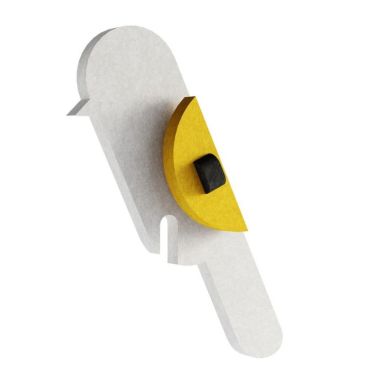
Living Fence turns an acoustic partition into a graphic object with tree and bird motifs. It is about 800 mm wide, has a 400 mm base and comes in several heights from 1300 to 2000 mm. It suits a children's area, library, waiting zone or interior where a plain office screen would feel too dry.
Desktop Border, Keep Top, Boundary Fence and Living Fence D
Desktop Border and Desktop Pattern Border are desktop acoustic screens with 9 mm PET panels, dimensions of 1200 × 400 mm and weight of about 1.2 kg. They can mount above or below the desktop, but the correct fixing is ordered separately. Pattern Border adds graphic rhythm where a solid panel feels too strict.
Keep Top is a folding desk acoustic divider: 1600 × 500 mm when open, 750 × 500 mm when folded and about 1.6 kg. The children's version is smaller at 1200 × 400 mm open and 550 × 400 mm folded. Both support a temporary focus zone that can disappear after use.
Boundary Fence is a self-supporting folding desktop acoustic screen measuring about 800 × 450 × 400 mm and weighing 3 kg. Living Fence D uses metal holders, is 800 mm wide, 450 or 550 mm high and weighs about 1 kg. Its graphic silhouette creates a less formal workstation boundary.
Installation, movement and care
Before installing an acoustic partition, check the floor or desktop, the contents of the package and access to sockets. Floor supports should follow the supplied instructions; desk clamps should tighten without damaging the surface. A tall or heavy model is safer and easier to align when assembled by two people.
Move mobile acoustic dividers by the frame or the part intended for handling, not by pulling the edge of a PET panel. Clear cables, rugs and chairs from the route first. Heavy framed products should not be moved alone, even when the change in position appears small.
Care for the PET acoustic panel starts with regular dry cleaning using a soft brush or a vacuum attachment at low power. Treat marks according to the instructions for the particular material, avoiding aggressive solvents and heavy wetting. Test any cleaning product on a discreet area, especially on a saturated colour.
Common mistakes when choosing acoustic room dividers
The first mistake is expecting complete silence from acoustic room dividers. They address reflected sound and local screening but do not seal a room. Claims of absolute sound insulation without measurements or analysis of the building create unrealistic expectations and usually lead to disappointment.
The second mistake is selecting an acoustic divider for zoning only from a photograph. Scale can be deceptive: heights of 1300 and 2000 mm feel entirely different, while a floor base may occupy a critical 300–400 mm. Transfer the real dimensions to the plan and to the physical room.
The third mistake is forgetting the package. A bracket for desk acoustic dividers may be a separate item, while a floor model depends on the correct support. Before payment, confirm every component, its colour and any necessary accessory. A panel without its intended fixing is not a complete working solution.
The fourth mistake is placing mobile acoustic dividers where they look attractive but do not intersect the path of sound. A panel far from speech and workstations has less influence. Begin at the problem area, test the position, then refine the visual composition around a location that actually works.
Why buy acoustic room dividers from MAIIMO
You can buy acoustic room dividers from MAIIMO as part of a considered interior solution rather than as isolated technical equipment. We compare models by use, dimensions, weight, panel thickness and installation method, helping reduce a broad choice to a small group that fits the room.
There is no single acoustic partition price. Cost depends on the model, dimensions, frame, supports, brackets and selected configuration. We avoid placing unstable figures in editorial copy. The current price belongs on the product page or in a quotation for the exact group of components required.
Selecting office acoustic partitions can form part of a complete workplace plan. We can compare screen height with seated eye level, the base with circulation, colour with furniture and panel quantity with the actual problem zone. This prevents a divider becoming an attractive but awkward accessory.
If you plan to buy acoustic room dividers, prepare a floor plan, several photographs, furniture dimensions and a short description of the noise pattern. This is enough for an initial discussion. We will separate tasks that a movable PET screen can address from situations requiring a wider acoustic or building project.
FAQ about acoustic room dividers
What is an acoustic partition?
An acoustic partition is a floor-standing, desktop or modular panel that absorbs some reflected sound and helps divide a space locally. It may stand on supports, sit within a metal frame, fold in sections or mount to a desk. It also creates visual privacy without becoming a permanent wall.
Do acoustic room dividers provide complete sound insulation?
Acoustic room dividers do not provide complete sound insulation because sound travels above and around the panel. They reduce some reflections, calm local acoustic clutter and partly screen direct speech. Isolation between rooms requires sealed building elements, suitable doors and a professional specification.
How do acoustic room dividers reduce echo?
Acoustic room dividers reduce echo when their porous PET surface accepts part of the sound energy instead of returning all of it from a hard plane. The result depends on the area of material, screen height, quantity and position relative to people and recurring sources of speech.
Which acoustic room dividers suit an office?
Office acoustic partitions should follow the layout. Tall floor models separate teams, desktop screens divide neighbouring workstations, and folding or modular formats support hybrid use. Check circulation, seated eye level, weight, fixing method and who will be responsible for moving the products.
Should I choose a floor divider or a desktop acoustic screen?
A floor divider or desktop acoustic screen should match the scale of the problem. A floor product creates a boundary between larger zones and provides more absorptive area. A desktop screen works locally between adjacent places. An open office may use both without blocking circulation.
How do I choose the size of an acoustic partition?
Choose the size of an acoustic partition with a simple mock-up. Mark the footprint with tape and check the height at seated and standing eye level. Allow for circulation, chairs, cables and opening furniture. For a group of desks, consider the gaps left on both sides.
Can mobile acoustic dividers be repositioned?
Mobile acoustic dividers can be repositioned when the weight and construction allow it. One person may handle a light screen; heavy framed models are safer with two people. Hold the frame or support, clear the route and never drag the product by the edge of the PET panel.
How is a desktop acoustic screen installed?
A desktop acoustic screen is installed with a compatible bracket or according to the design of a self-supporting folding model. Check desktop thickness, cables and monitor arms before tightening the holders evenly. If the bracket is sold separately, include it in the order from the start.
How much do acoustic room dividers cost?
How much acoustic room dividers cost depends on size, construction, frame, supports, brackets and number of sections. Prices may change, and some configurations require a quotation. Check current product pages or ask for a calculation after the model and colour have been selected.
Where can I buy acoustic room dividers in Ukraine?
You can buy acoustic room dividers in Ukraine from MAIIMO. Product pages provide current specifications, photographs, colour options and prices or quotation status. We can compare floor-standing and desktop formats, check the full package and help select a solution for the intended interior.