Tivoli
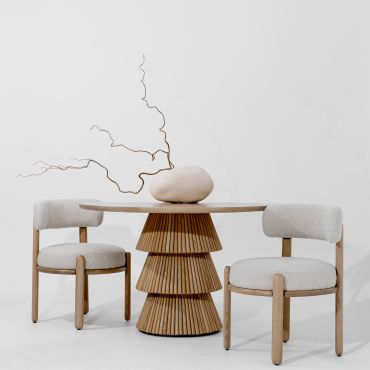
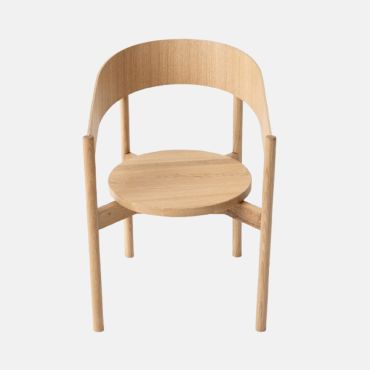

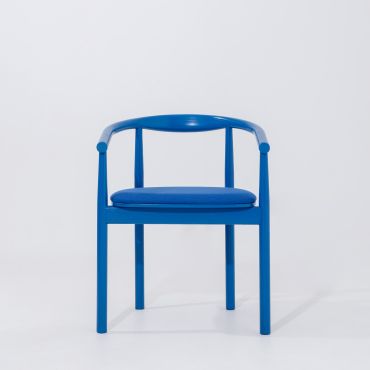
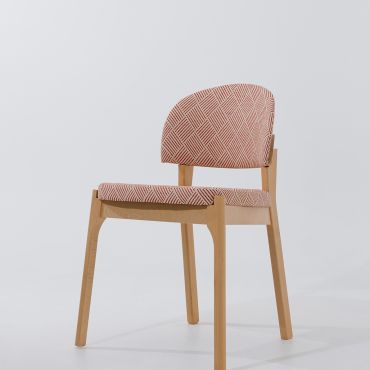
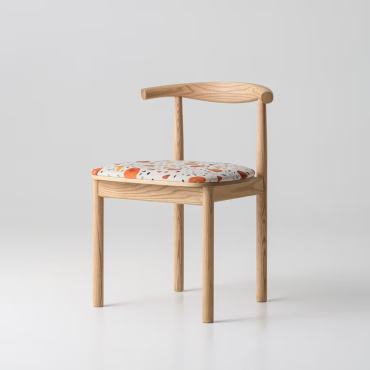


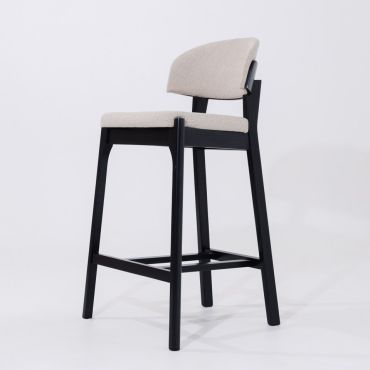
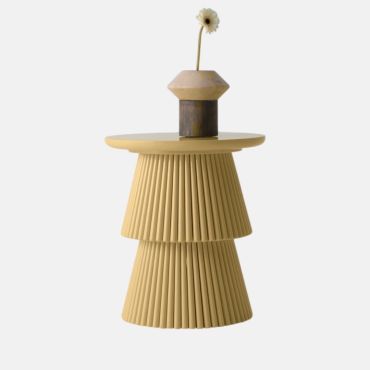
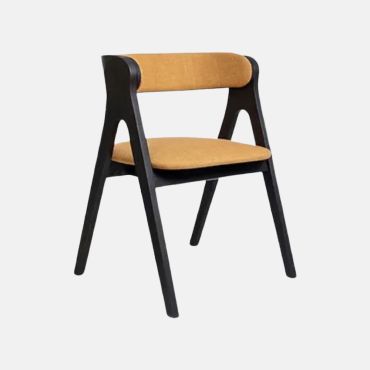
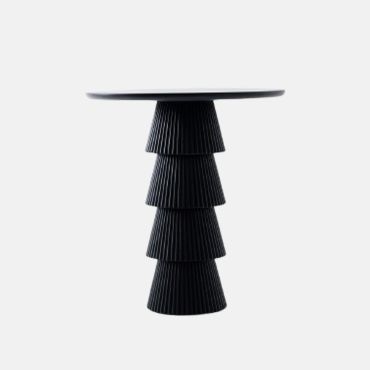
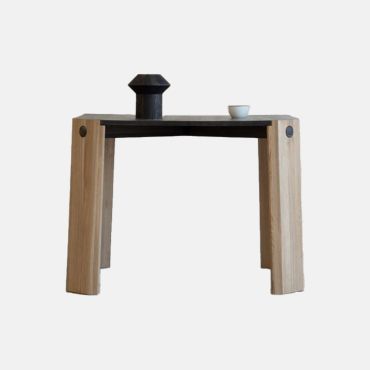


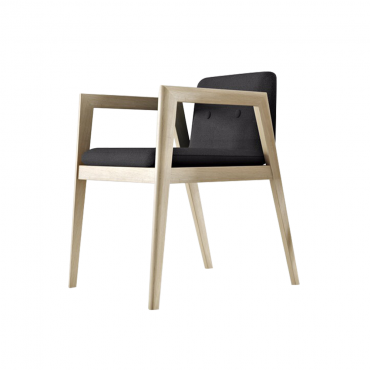
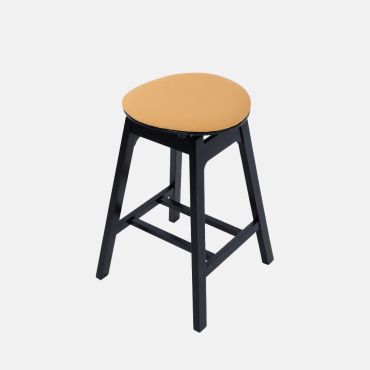
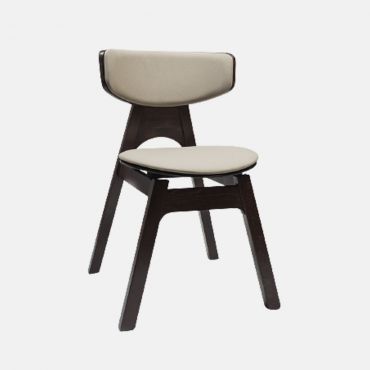
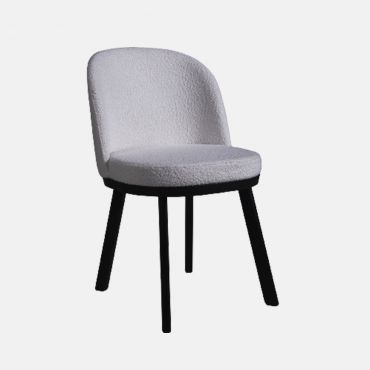
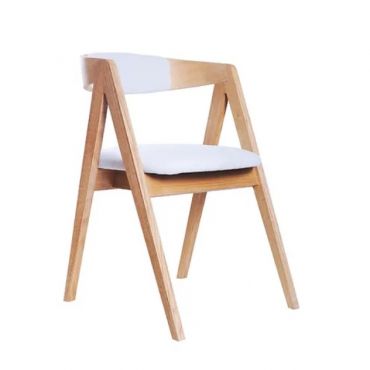
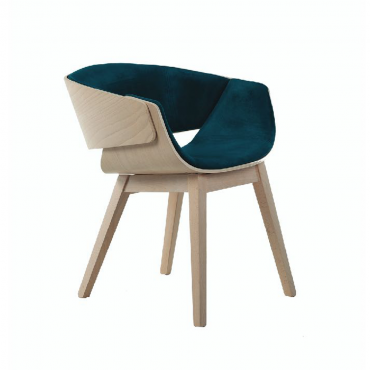

Tivoli: Ukrainian chairs and tables where wood becomes engineered comfort
Tivoli an Ukrainian brand based in Stryi, in Ukraine's Lviv region, specialized in chairs, armchairs, semi-armchairs and tables made from solid beech, oak and ash. It is not a brand built around fast decoration or furniture that exists only for a beautiful photograph. Its objects are built around a stricter idea: wood should be honest, construction should be precise, and comfort should feel so natural that you remember it not at the moment of purchase, but years later, through daily use.
For Ukrainian design, Tivoli matters because it speaks about locality without falling into literal folklore. In Strikha, national memory appears not as ornament, but as the rhythm of slender wooden elements. In Calm, a Ukrainian factory speaks a language close to Scandinavian/ In Moon, soft geometry becomes an argument for emotional but grown-up product design. This is why Tivoli chairs deserve to be preceived not only as dining furniture, but as part of a wider story about contemporary Ukrainian manufacturing.
From Stryi to the international design circuit
The story of Tivoli begins not with a packaged brand myth, but with a place. Stryi and the foothills of the Carpathians have long been a region where timber was not an abstract material, but part of local economy, craft and everyday life. The brand research traces the woodworking roots of the production site back to 1912, when the first woodworking workshops operated near Stryi.
During the Soviet period, the production operated as the Stryi furniture plant. In 1972, its products reached Western European markets, where the culture of drying and radius-processing Carpathian beech was valued. The real turn came in the late 1990s, when the enterprise moved under the direction of Vladyslav Lisovskyi. Instead of a broad, blurred assortment, he chose a narrow specialization: high-quality tables and chairs.
It was an almost unfashionable decision for its time. Not to make everything for the home. Not to become a universal factory. To focus on the object where every compromise is visible: the chair, a piece of furniture that must carry body, movement, weight and repetition every day. That focus shaped the brand's current logic.
In design, the winners are often not the companies with the longest history, but the ones that know how to evolve. Tivoli does not reject its factory past, but it does not turn it into a museum either. There is no nostalgia for the heavy forms of old furniture plants. There is another gesture: take the infrastructure, the knowledge of material, the people who understand wood, and make all of it work for a contemporary object.
A family factory as strategy
Modern Tivoli develops as a family business. Vladyslav Lisovskyi appears in the sources as the general director and founder of the modern company, while his wife and daughters are involved in management. Yuliia Lisovska is responsible for the commercial direction and the brand's international presence.
Here, family ownership is not just a warm biographical detail. It is a model for long decisions. Tivoli does not build its position on discount logic. Its argument is different: a Ukrainian product can compete through material quality, manufacturing precision and design that can stand next to international brands at global fairs.
"TIVOLI is about creating value for clients through design excellence, reliability and flexibility."
Vladyslav Lisovskyi, founder of the modern Tivoli enterprise
There is no unnecessary romance in that sentence. Good. For a brand that makes Tivoli wooden chairs and tables for private and commercial interiors, reliability is as important as silhouette. Here, aesthetics cannot exist separately from construction.
Family furniture businesses always carry a particular tension. On one side, they depend on continuity: knowledge that does not live in a presentation, but in production decisions. On the other, without renewal that continuity can turn into inertia. Tivoli holds both parts. Manufacturing remains in Ukraine, while the brand appears at Oslo Design Fair, Salone del Mobile Milano and Las Vegas Market, speaking the international language of product design.
Yuliia Lisovska's role is telling in this context. Before Oslo Design Fair, she described Norwegian taste as a preference for minimalism, comfort, practicality and natural materials. That is a precise description of the field where Tivoli feels at home. The brand does not remake itself for Scandinavia. It shows that Ukrainian wood, a clean line and well-tuned ergonomics can speak the same language.
The Tivoli philosophy: honest wood and a quiet form
Three words explain almost the entire Tivoli philosophy: material, construction, craft. The material has to be real. The construction has to work without visible strain. The craft has to remain inside the object even when the factory uses contemporary technology.
The brand works with solid hardwoods: beech, oak and ash. Load-bearing frames are not disguised as wood; they are made of wood. It sounds simple, but it changes the feeling of the object. Solid wood has a different density, a different touch and a different way of ageing. It does not simulate naturalness. It is naturalness.
The timber goes through a full preparation cycle: atmospheric seasoning, controlled kiln drying and stabilization to the right moisture level. Then comes digital craft: complex parts are shaped on five-axis CNC machines, while final sanding and finishing with natural oils or water-based eco lacquers remain hand work.
This is why Tivoli furniture feels neither purely industrial nor decoratively handmade. It holds a balance. Minimal noise. Maximum tactile discipline.
The balance is especially visible in the details that are not always obvious in the first photograph. A wooden chair has no right to be beautiful only from the front. It has to be honest from the side, underneath, where the backrest meets the legs, where the hand touches the edge of the seat. That is where the level of production appears: the softness of a radius, the absence of a rough joint, the sense that the structure is intentional.
Material that does not hide behind a finish
Beech, oak and ash behave differently. Beech gives density and stability, essential for chairs that face intensive use. Oak has a more pronounced grain and a stronger sense of weight. Ash feels lighter, with a lively texture that works beautifully in contemporary bright interiors. For a brand whose identity is built around wood, these are not just finish options. They are different voices for an object.
In a good interior, wood is never neutral. It changes the temperature of the room. Even when a chair's form is restrained, the grain of solid wood adds human presence. Tivoli is closer to architecture here than to decoration: the object does not simply dress the space, it works with proportion, light and touch.
The important thing is that Tivoli does not reduce naturalness to a visual effect. Wood has to be dried, stabilized, shaped and finished properly. If those stages are superficial, a chair may look convincing on the day it is bought, but lose its precision in real life. Tivoli's focus is the long behavior of the object: how it stands, how it handles dry air, how it reacts to daily load, how it ages beside the home.
The collaboration with Kononenko ID: when manufacturing gains an authorial voice
A separate and crucial chapter in Tivoli's contemporary history is its collaboration with Kononenko ID, the studio founded by Ukrainian designers Yuliia Kononenko and Artem Kravchenko. This creative partnership helped the brand move from high-quality wooden furniture production to a recognizable authorial design language.
Kononenko ID does not work with Tivoli as with a factory that simply executes a shape. The value is in the synchronization of two competencies: the studio formulates the plastic and cultural idea of an object, while the production team in Stryi tests how that idea behaves in wood, joints, load and serial repetition. This is the moment when design stops being a sketch and becomes construction.
Strikha, Calm and Moon show how this collaboration works. Strikha takes a cultural image and strips it down to rhythm. Calm turns restraint into an ergonomic language. Moon gives the brand a softer, almost architectural emotionality. Thanks to Kononenko ID, Tivoli gained not just beautiful models, but a portfolio of pieces that can be recognized without a logo.
This matters internationally. The global market is no longer surprised by a well-made wooden chair. Quality is the baseline. To be noticed, a brand needs a thought, a line, a position. Kononenko ID helped Tivoli shape exactly that position: Ukrainian design can be contemporary, restrained, technological and culturally charged without resorting to a decorative cliché.
The Tivoli design code: Strikha, Calm and Moon
Tivoli does not have one form that it repeats mechanically. Its design code is built on something else: honest wooden construction, precise silhouette, restrained plasticity, attention to the seated body and cultural memory without illustration. The clearest examples are three collections: Strikha, Calm and Moon.
Strikha: the architecture of memory
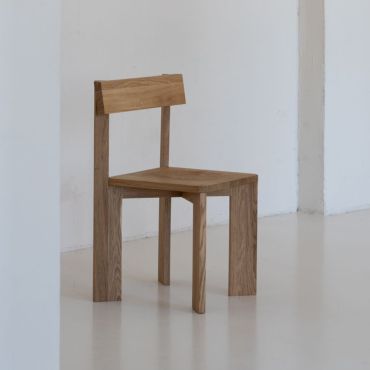
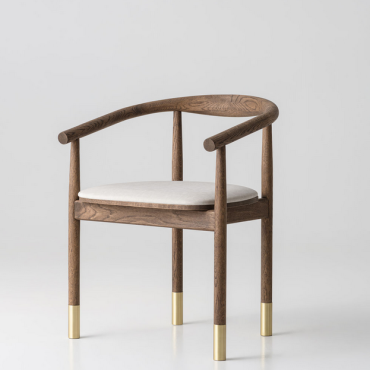
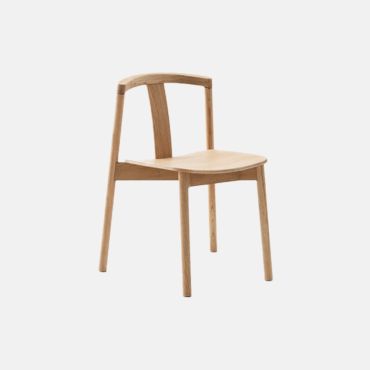
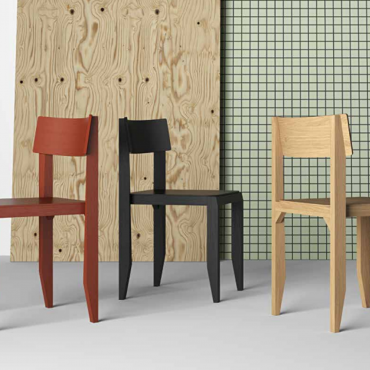
Strikha is the most culturally charged Tivoli model. Its image is connected to traditional Ukrainian architecture and the rhythm of thatched roofs. But the important thing is that Strikha does not look like ethnographic quotation. The slender cylindrical elements of the backrest translate the idea of a roof edge into contemporary graphics.
In 2022, Strikha received the Red Dot Design Award. For Ukrainian product design, this is a strong sign: a local theme can be understood by an international jury when it is reduced to form, proportion and engineering. In Strikha, the national does not become decoration. It becomes structure.
Calm: the chair as a visual pause
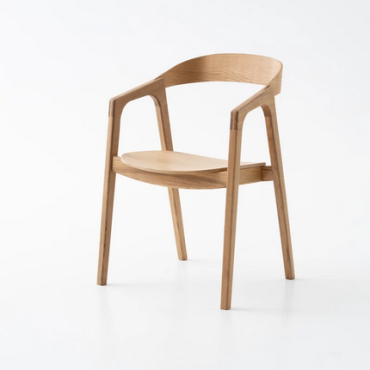
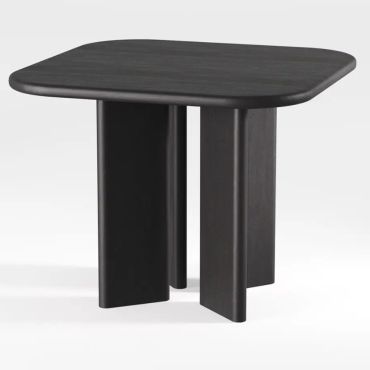
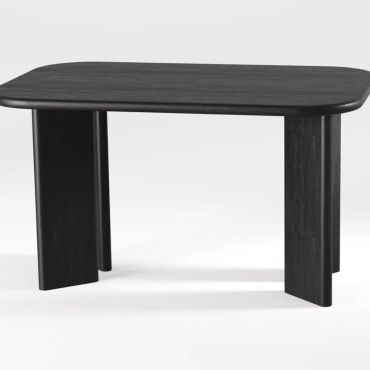
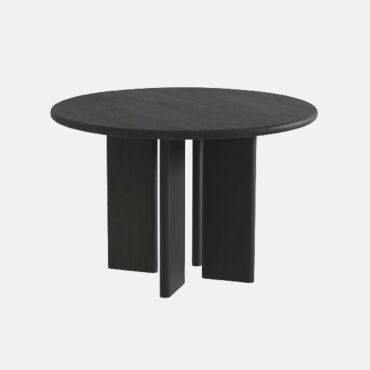
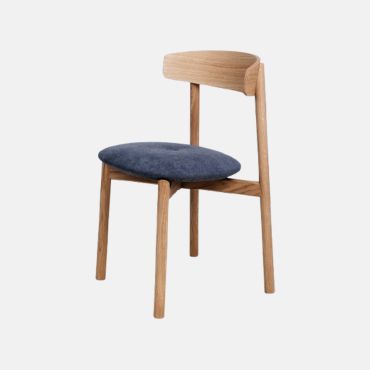
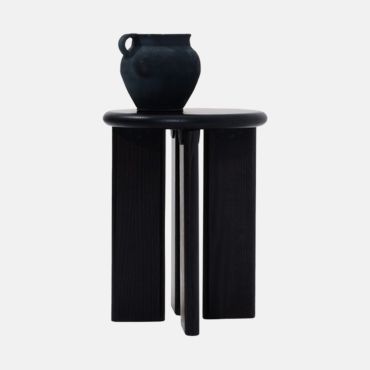
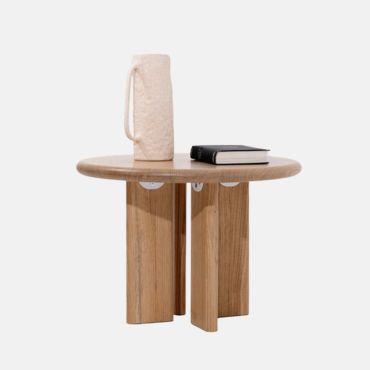
Calm is the Tivoli collection most easily imagined in a lived interior. Its chairs, bar models and tables are built around a quiet line, a soft transition from backrest to legs and the absence of decorative noise.
Calm enters private dining areas, restaurants, hotels, cafes and offices with an ease that feels almost inevitable. This is Tivoli chair design where form does not ask to be the protagonist, but holds the room from within. In 2023, Calm received the DNA Paris Design Award and the European Product Design Award.
Calm can be underestimated in photographs because it is not built around one dramatic gesture. Its strength lies in how everything is assembled: back height, curve radius, distance between legs, softness of the seat, feeling of the posture. These are often the chairs that become favorites in interiors because they do not tire the eye and do not demand constant admiration.
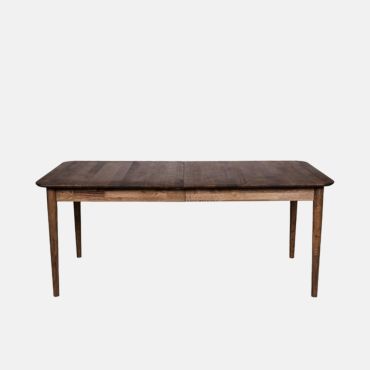
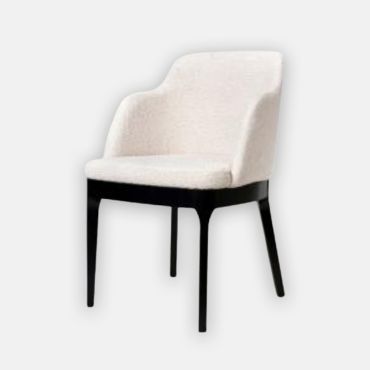
At MAIIMO, you can view the CALM dining chair, the CALM chair with armrests, the CALM bar chair and the CALM table.
Moon: soft geometry and a sense of shelter
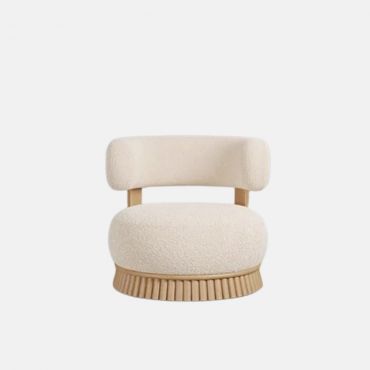
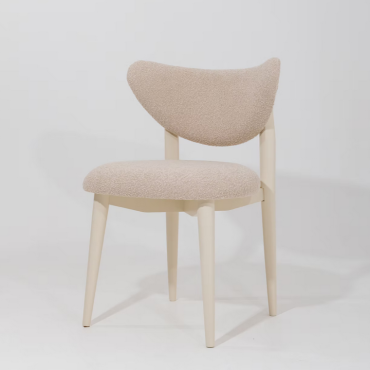
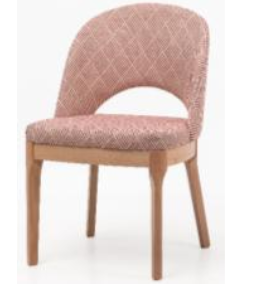
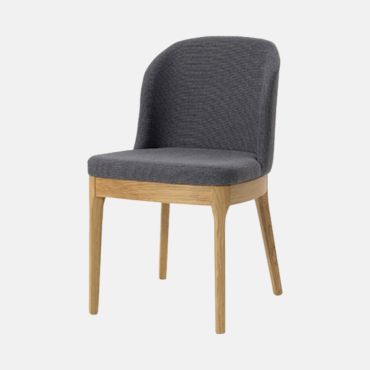
Moon moves toward a more emotional form. Its backrest suggests a soft arc, a half-moon, a shell around the body. This is no longer only a chair as function, but an object with a feeling of shelter. Wood and frame still matter, but so does upholstery: the complex stretching of fabric across a smooth curve leaves no room for accident.
In 2025, Moon received the SIT Furniture Design Award in Milan and a London Design Award. For the brand, this is a logical continuation: from precise wooden chairs to objects that can work in hotel, lounge and private interiors as soft accents.
Moon is important because it reveals Tivoli's more emotional side. The brand has discipline, but discipline does not have to be cold. In Moon, wood steps slightly back, allowing volume, fabric and the feeling of protection to speak. The brand's vocabulary expands: from the chair as exact construction to the armchair as small architecture of comfort.
International recognition without losing locality
Tivoli exports more than 90% of its production to 24 countries. For a factory in Stryi, this is not just an impressive number. It is a daily test of standards: different markets, different climates, different demands for commercial use. In 2018, the brand entered the US market, presented at Las Vegas Market and passed mechanical testing under the BIFMA standard.
The factory can produce more than 20,000 chairs per month. More than 170 specialists work in production. Each new prototype goes through mechanical tests, including load cycles that simulate years of intensive use. For a private interior, this means peace of mind. For HoReCa, it is a practical necessity.
Red Dot, DNA Paris, European Product Design Award, MUSE, SIT Furniture Design Award and London Design Award form a system of external validation. But the more interesting point is this: international recognition does not make Tivoli a faceless global brand. It reveals what is local in it: Carpathian wood, Stryi's production culture, Ukrainian design thinking without decorative cliché.
A chair is not bought because it has an award. It is bought because it fits the table, the body, the room and the rhythm of life. Still, awards help define the scale of the brand. They show that Tivoli is assessed not only locally, but in an environment where Ukrainian furniture stands next to European and global manufacturers.
What interiors Tivoli chairs belong to
Tivoli chairs work well in interiors where furniture is expected to offer more than a good silhouette. In private spaces, that means dining rooms, kitchens, studies, morning coffee corners and evening conversation zones. In commercial interiors, it means restaurants, hotels, cafes, meeting rooms and lounges, where a chair repeats the same movement hundreds of times: sit, move, return, touch the backrest.
Calm is the right direction when the interior needs visual quiet and ergonomic clarity. Strikha works when the space needs a piece with cultural memory, but no literal ethnographic gesture. Moon is worth considering when the room asks for a softer, more enveloping accent.
On MAIIMO, you can view Tivoli chairs in interiors, compare available models, materials, finishes and current prices. This matters because the price of Tivoli furniture depends not only on the model, but also on wood, fabric, configuration and finishing.
For HoReCa, another issue matters: the chair has to look good not only in an empty room before opening. It has to withstand staff movement, frequent relocation, different sitting habits, contact with bags, outerwear and accidental impact. Here, Tivoli's structural honesty is not an abstract advantage. It is a practical condition.
The Tivoli catalog on MAIIMO
The Tivoli brand page on MAIIMO should work as a calm, complete and useful entrance into the brand: history, collections, materials, awards and, next to them, available models for real selection. Not reading in one place and searching in another, but moving from brand philosophy to a specific chair or table.
For a broader selection around Tivoli, it makes sense to explore the categories designer chairs, bar chairs, counter chairs, tables and armchairs. But if the question is specifically where to buy Tivoli chairs, the answer is simple: at MAIIMO, where you can find the brand assortment, interior photos, current prices and professional guidance for your space.
The best selection scenario starts not with price, but with the role of the object. A dining area needs everyday posture. A bar counter needs the right height and footrest. A restaurant needs resistance to repetition. A study or lounge zone needs a balance between softness and a composed silhouette. Once the role is clear, the model becomes easier to choose, and the price stops being an abstract number.
This is where MAIIMO works as a curatorial filter. Here you can open the Tivoli furniture catalog, see which models are available, how they look in space, and which materials and parameters matter for your interior. For those used to selecting online, Tivoli furniture online at MAIIMO should feel like a clear route from brand philosophy to a concrete model.
If you need more than a catalog, if you want to compare models, clarify materials and receive advice, the Tivoli furniture store logic at MAIIMO is not about a random purchase. It is about a curated choice: brand assortment, current prices, interior photos, available parameters and consultation.
Reviews, trust and the real test of an object
When people look for Tivoli chairs reviews, they usually want more than someone's opinion on a specific model. They are testing trust: is it comfortable to sit on, does the construction stay stable, does the form become tiring, does the chair belong in daily life.
With Tivoli, the answer sits in a combination of facts: solid wood, drying control, mechanical testing, BIFMA for selected models, export experience, international awards, and use in private and commercial interiors. That is stronger than a random review line because it shows how the brand works with quality as a system.
FAQ about Tivoli
What is Tivoli?
Tivoli is a Ukrainian brand and manufacturer of wooden chairs, armchairs, semi-armchairs and tables from Stryi, Lviv region. The brand works with solid beech, oak and ash and is known for the Strikha, Calm and Moon collections.
Where is Tivoli furniture made?
Tivoli furniture is made in Stryi, in Ukraine's Lviv region. The brand's connection with the Carpathian woodworking region is part of its production identity and material culture.
Who founded Tivoli?
The modern development of Tivoli is connected with Vladyslav Lisovskyi, founder of the contemporary enterprise and its general director. The company develops as a family business, while Yuliia Lisovska leads the commercial direction and international presence.
What wood are Tivoli chairs made from?
Tivoli chairs are made from solid hardwoods: beech, oak and ash. The wood is prepared, dried and finished to preserve geometry and withstand active daily use.
What is the Strikha chair known for?
Strikha is one of Tivoli's signature models, inspired by traditional Ukrainian architecture and the rhythm of thatched roofs. It received a Red Dot Design Award in 2022 and became an important object for contemporary Ukrainian product design.
What is the Calm collection?
Calm is a collection of Tivoli chairs, bar chairs and tables with a soft minimalist form. It is designed for interiors where visual quiet, ergonomics and natural wood matter more than decorative excess.
What awards has Tivoli received?
Tivoli has received international awards including Red Dot Design Award, DNA Paris Design Award, European Product Design Award, MUSE Design Awards, SIT Furniture Design Award and London Design Award. These awards are connected with the Strikha, Calm and Moon collections.
Where can I buy Tivoli chairs in Ukraine?
You can buy Tivoli chairs in Ukraine at MAIIMO. Here you can view the brand assortment, current prices, interior photos, available models and materials, and receive professional advice for selecting pieces for your space.
What affects the price of Tivoli chairs?
The Tivoli chairs price depends on the model, wood species, upholstery, finish and configuration. The easiest way to check current prices is on MAIIMO, where Tivoli models can be compared side by side.
Are Tivoli chairs suitable for restaurants and hotels?
Tivoli chairs are suitable for HoReCa because the brand works with strong wooden construction, ergonomics and testing for intensive use. The Calm collection is especially relevant for restaurants, hotels, cafes and lobby areas that need a quiet, stable form.