What Size Desk to Choose: Height, Depth and Width
- What size desk to choose: height, depth and width
- Height: the number your back depends on
- Depth: how much room you really need front-to-back
- Width: from a laptop to two monitors
- Size cheat-sheet by format
- Small spaces: wall-mounted and corner solutions
- When you need more: a wide desk and a hutch
- A designer desk that breathes: when storage lives elsewhere
- Before you buy: check the legroom
- Questions that come up most often
What size desk to choose: height, depth and width
A desk is either cramped, with your elbows hanging off the edge, or too big, with half the top sitting empty and eating the room. Between those extremes lie a few simple numbers worth knowing before you buy. So when the question is what desk size to choose, it's better to start not with the design but with three measurements: height, depth and width.
Let's take each in turn — with concrete centimetres — and end with a short cheat-sheet by format. That way choosing a desk to fit your height and your room becomes a two-minute job.
Height: the number your back depends on
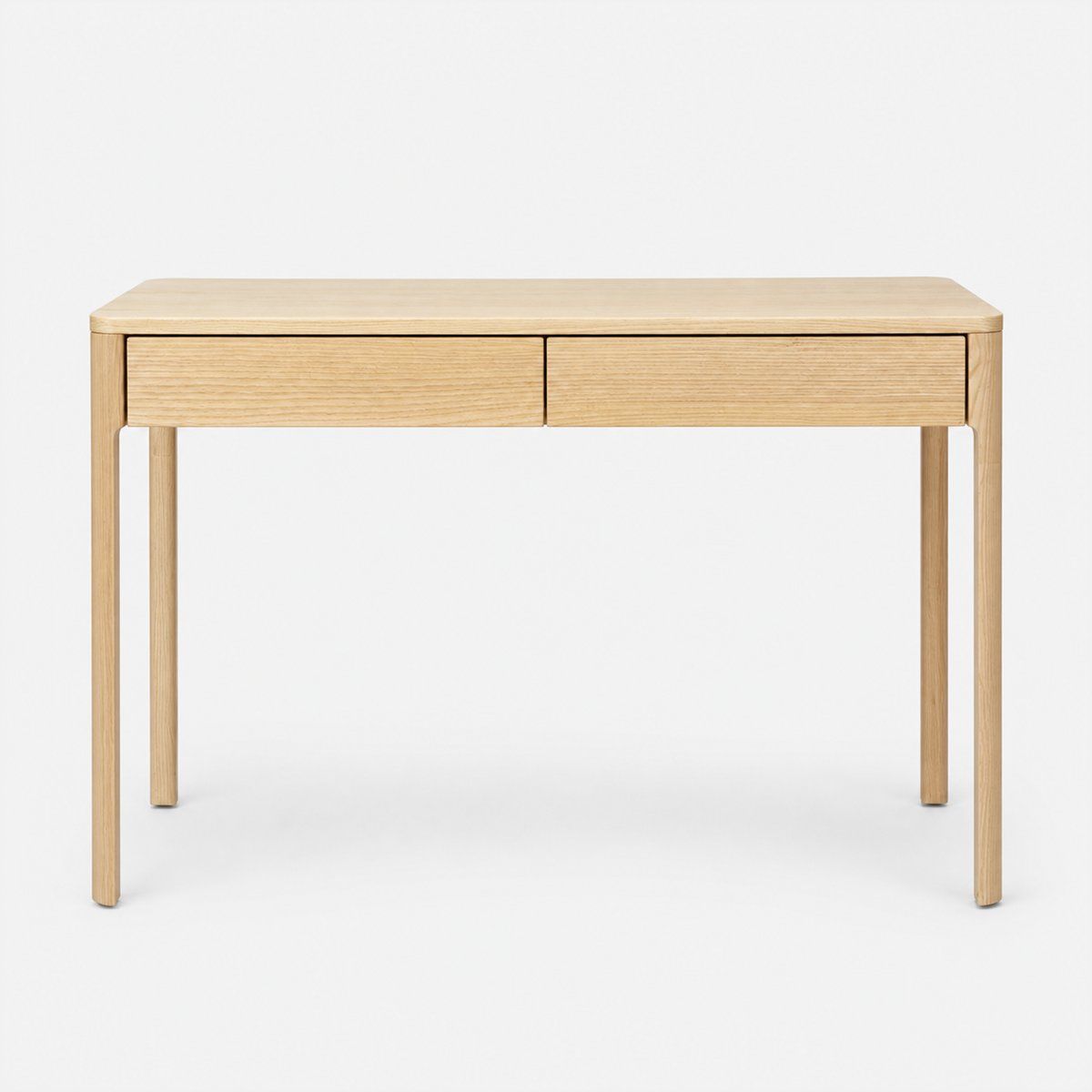
The most important measurement is desk height. The universal norm for an adult is roughly 73–76 cm (most often 74–75). At that height your elbows rest at about 90°, your shoulders don't lift, and your back stays straight. If you're tall, closer to 76–78 cm is more comfortable; if you're shorter, 71–73 cm or an adjustable chair with a footrest.
A simple test: sit down and put your hands on the top — your forearms should be almost parallel to the floor, and your thighs should pass freely underneath. That matters more than any trend in shape.
Depth: how much room you really need front-to-back
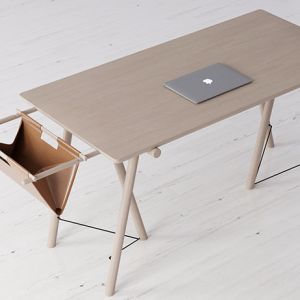
Depth decides whether a monitor fits at a comfortable distance from your eyes. For laptop-only work, 50–55 cm is enough. Add a monitor and you want about 60 cm, so the screen sits 50–70 cm from your eyes with room for your wrists in front of the keyboard. Deeper than 70–80 cm only makes sense for dual monitors or creative work with papers and a tablet.
Width: from a laptop to two monitors
Width is your freedom on the surface. A compact desk of 80–100 cm is just right for a laptop, a lamp and a cup. A standard 110–140 cm gives room for one monitor, a keyboard and documents to the side. And 150–180 cm is space for two screens, or for anyone who likes to spread materials out. Don't chase the maximum "just in case": an empty top fills with clutter fast.
Size cheat-sheet by format
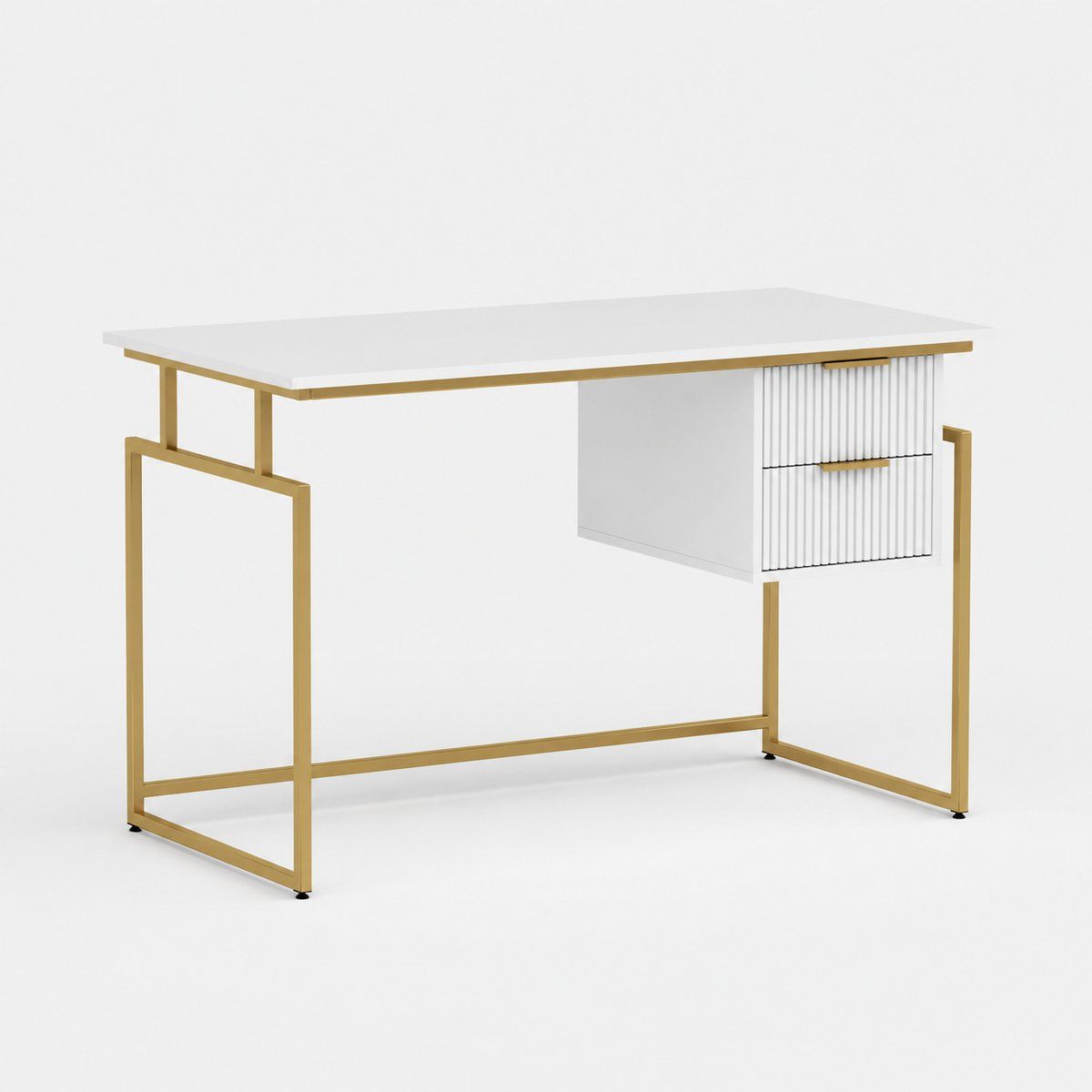
- Compact (laptop only): width 80–100 cm, depth 50–55 cm — for small spaces and short work sessions.
- Standard: width 110–140 cm, depth 60 cm — one monitor, keyboard, documents. The most versatile.
- Spacious: width 150–180 cm, depth 70–80 cm — two monitors or creative work with papers.
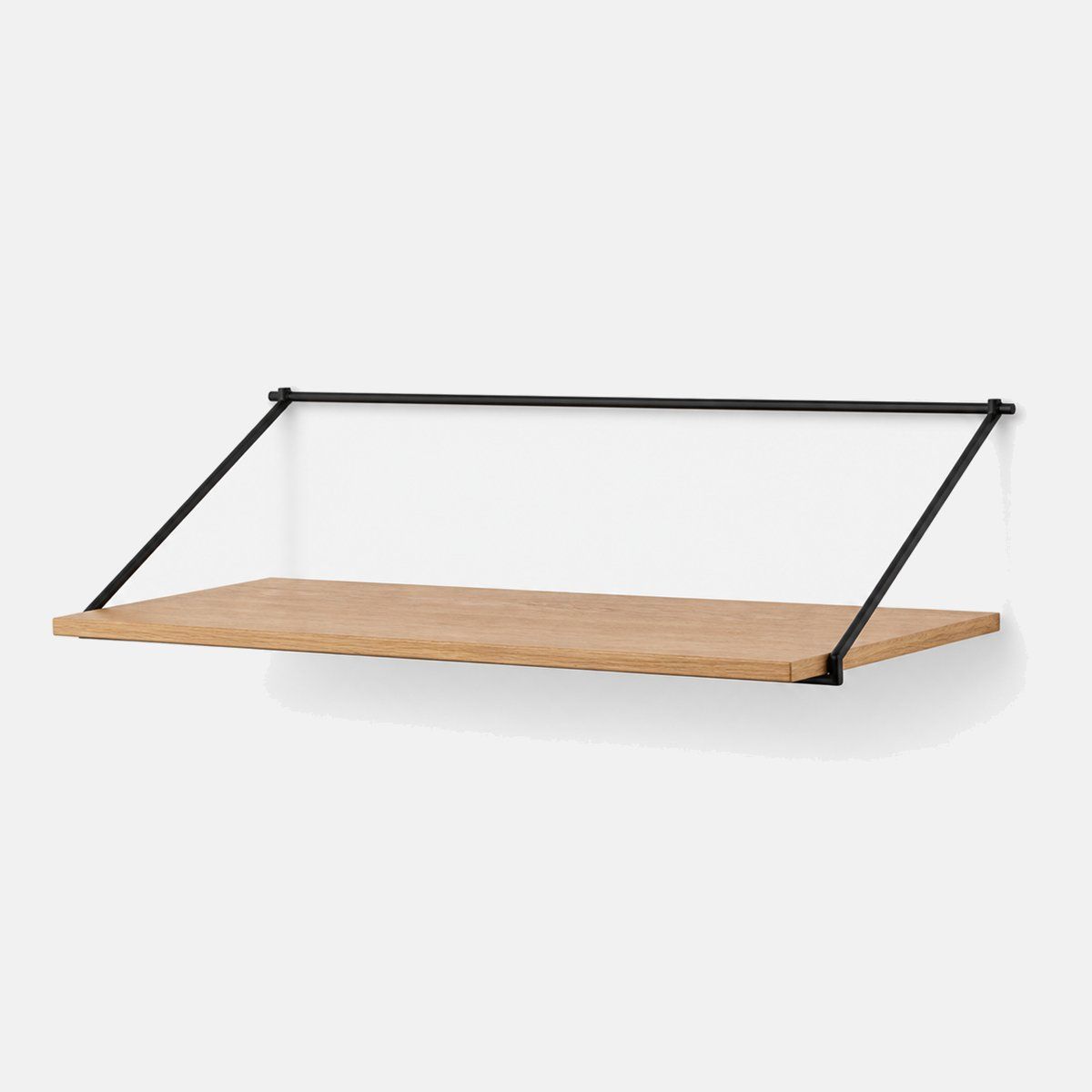
- Wall-mounted / mini: width 60–80 cm, depth 35–45 cm — a narrow wall or corner, when you need to keep the floor clear.
- Top height: 73–76 cm for almost everyone; clearance for your legs under the top — at least 60 cm high.
Small spaces: wall-mounted and corner solutions
When a room is tight, desk size is measured not only in centimetres of the top but in how much floor it frees up. A small desk of the wall-mounted type fixes to the wall with no legs — the space beneath stays open and the corner stops feeling heavy. It slots easily into a bedroom or a niche where a full-size desk simply wouldn't fit.
The second lifesaver for a small flat is a corner desk: it uses the part of the room that usually sits idle and, for the same footprint, gives more working surface than a straight desk along a wall. And if the desk stands on show in a bedroom or living room, choose a shallower depth and a light legged frame — so the piece doesn't visually crowd the room.
When you need more: a wide desk and a hutch
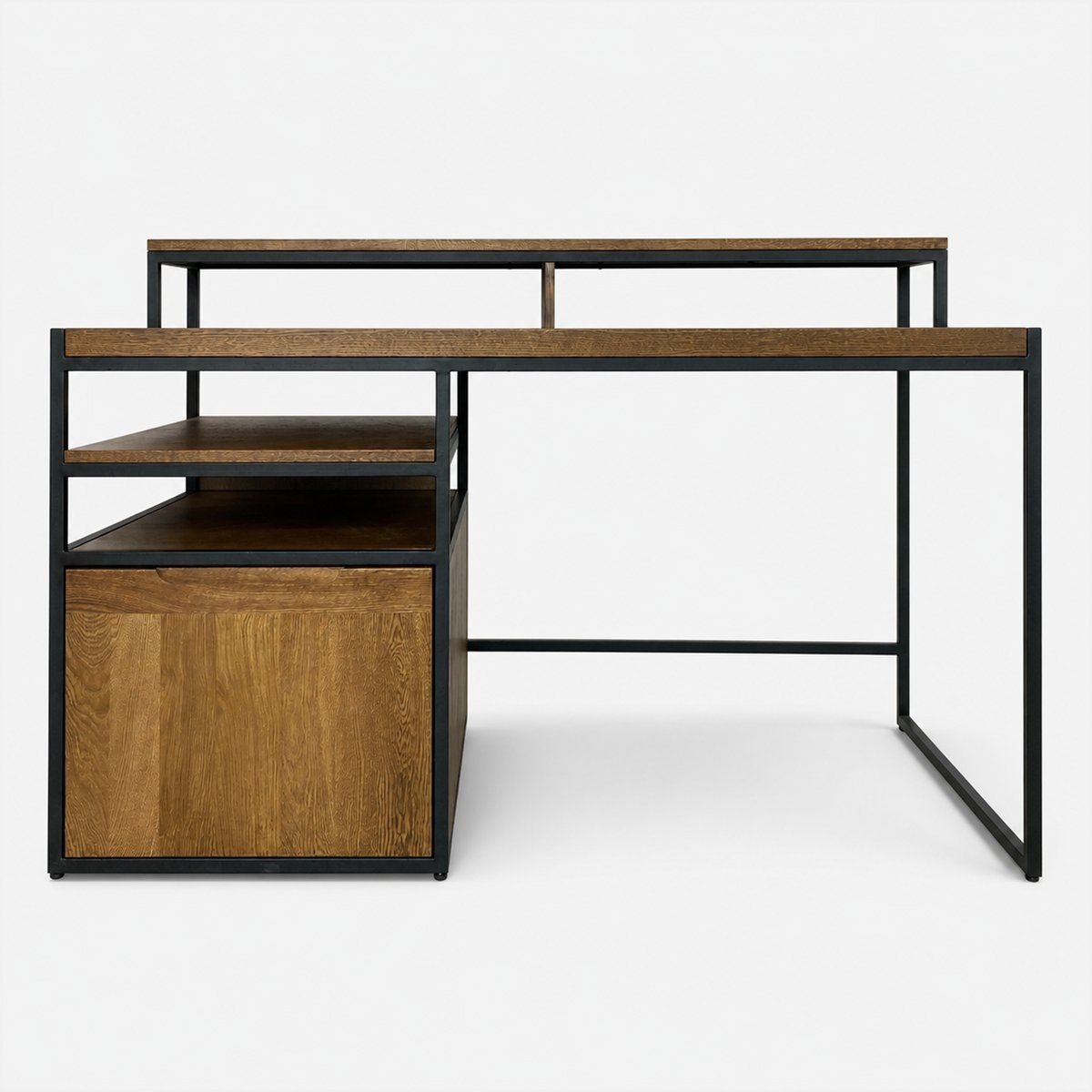
If your work needs space, look toward wider models from 150 cm up — they hold two screens comfortably and leave a clean writing zone. And when there's no more room horizontally, a desk with a hutch saves the day: an upper shelf lifts a monitor or books to a second level, freeing the top for your hands.
A designer desk that breathes: when storage lives elsewhere
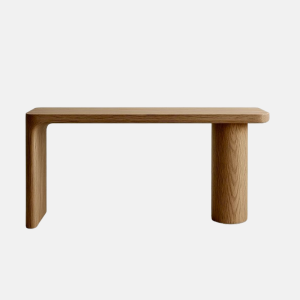
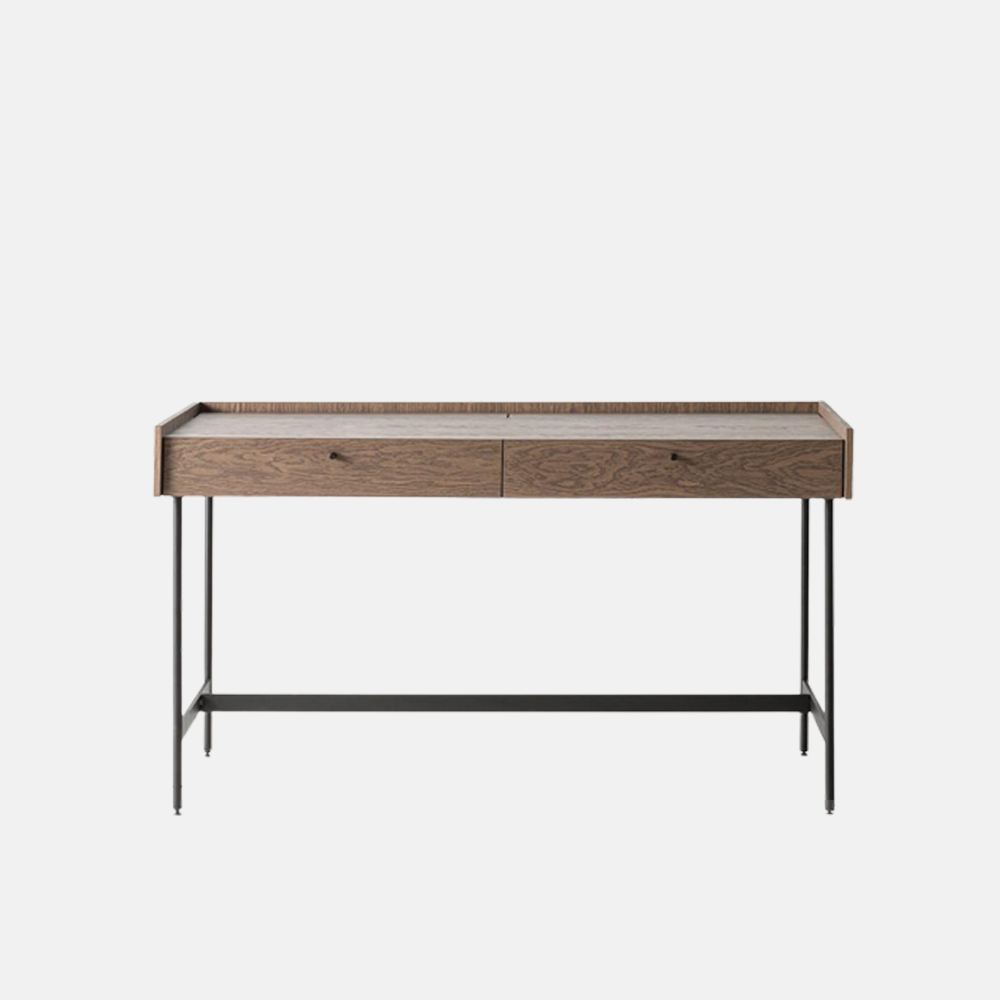
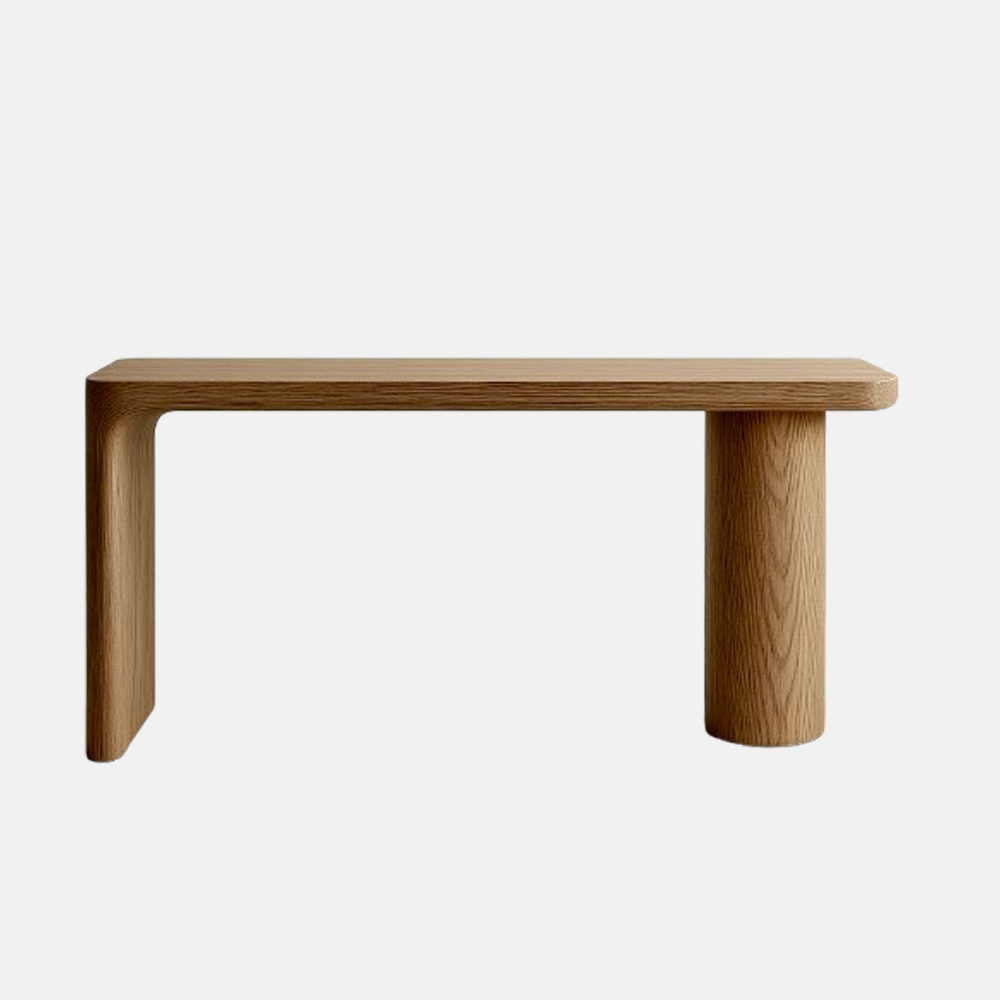
Not every desk has to store something. When a wardrobe or a chest takes storage off its hands, a desk is freed from drawers and shelves — and becomes a clean sculptural surface. Pieces like these don't fill a room; they set its rhythm: an open form, expressive legs, air under the top. It's the choice when what matters isn't volume but how the piece breathes in the space and keeps it light.

Before you buy: check the legroom
The last thing people often forget is what's under the top. Measure the height from the floor to the lower edge: your knees need at least 60 cm, and across, a clear 58–60 cm so you don't hit a cabinet or apron. Measure the room too: leave 70–90 cm behind the chair so you can push back and stand. Once these numbers match your space, colour and material are secondary — pick what you like from the writing desks selection.
Questions that come up most often
What is the standard desk height? Around 73–76 cm for an adult. At that height your elbows bend at about 90° and your back stays straight.
How much depth is enough? For a laptop, 50–55 cm; for a monitor, about 60 cm so the screen sits 50–70 cm from your eyes.
What width do I need for two monitors? Aim for 150–180 cm: that's enough for two screens and a clear zone for the keyboard.
Will a wall-mounted desk work for real work? Yes, if the depth is 40 cm or more and the fixing is solid. It's a rescue in small spaces, but for two monitors a full-size model is still better.
Which desk for a small apartment? A compact straight desk (80–100 cm), a wall-mounted one, or a corner desk. The key is keeping the path to the chair (70–90 cm behind) and not over-sizing the depth.