Bedside Table or Side Table: How to Choose the Right One by Your Bed
- Bedside table or side table: how to choose the right one by your bed
- The difference: a cabinet hides, a table shows
- Start with what you keep by the bed
- When storage is the whole point
- Trend: a table on one side, a cabinet on the other
- Trend: a tile-top bedside table
- How to choose by height and size
- Questions that come up most often
Bedside table or side table: how to choose the right one by your bed
The space beside a bed is small, yet it asks for a lot of decisions. This is where your hand reaches for glasses, a phone, a glass of water in the middle of the night — and what stands here decides whether that morning and evening ritual is easy or annoying. So the question of a bedside table or side table isn't about taste; it's about habits.
Let's be honest about it. A cabinet and a side table by the bed solve the same task differently: one hides, the other shows. Which to choose depends less on trends and more on what exactly you keep within reach every night.
The difference: a cabinet hides, a table shows
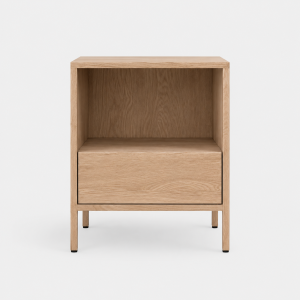
In short, a bedside cabinet is closed storage: a body with drawers or doors behind which everything that shouldn't be on display disappears. A bedside side table, meanwhile, is an open surface on legs — light, movable, often with a lower shelf. The cabinet keeps order behind a front; the table leaves everything in view and barely weighs anything in the room.
Hence their characters. A cabinet looks more grounded, takes up more space and stays tied to one point. A side table is easy to move, it opens up the floor and doesn't press on the eye — a rescue for a small bedroom. Neither is "more correct": they're simply about different ways of living beside a bed.
Start with what you keep by the bed
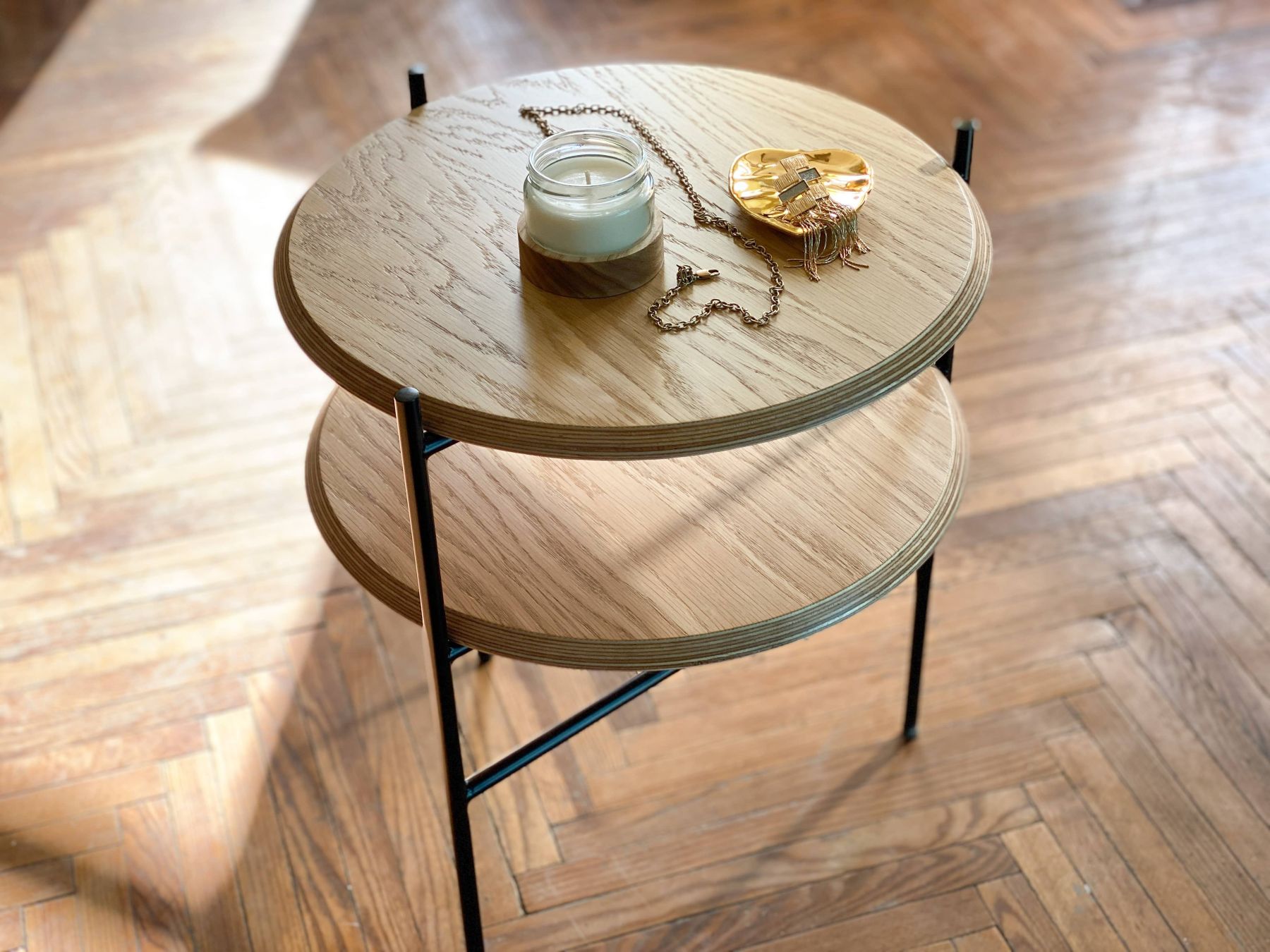
The simplest way to choose is to look at what actually piles up on the bedside surface. If it's a book, glasses, a phone and a glass of water, you don't need a chest of drawers but a light side table with a shelf: a lamp and a cup on top, a couple of books below. That's exactly how a two-tier table with an open reading shelf works.
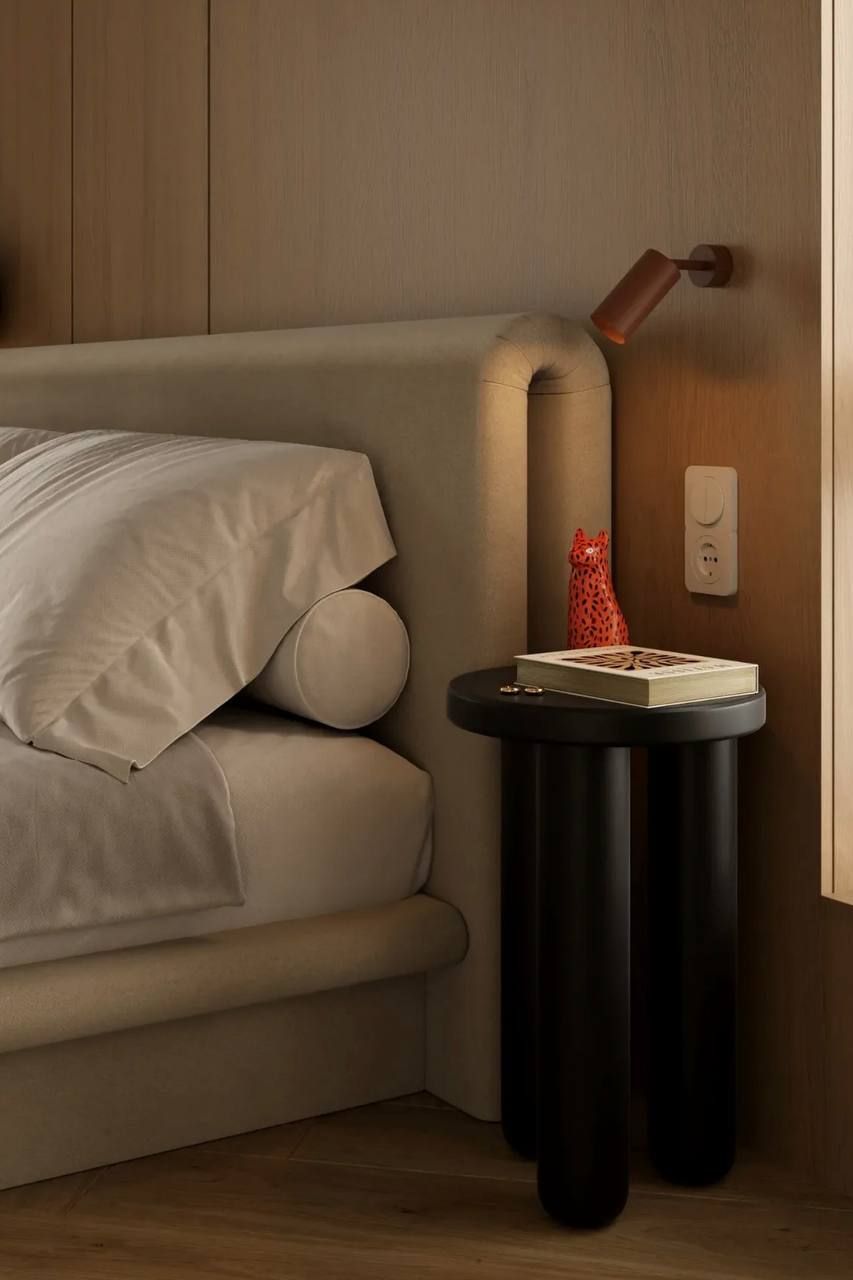
Shape matters here too. A round table with no sharp corners is safer by the headboard and softer on the eye — something pleasant to rest your gaze on each morning. A sculptural base instead of four legs makes even a simple piece stand out.

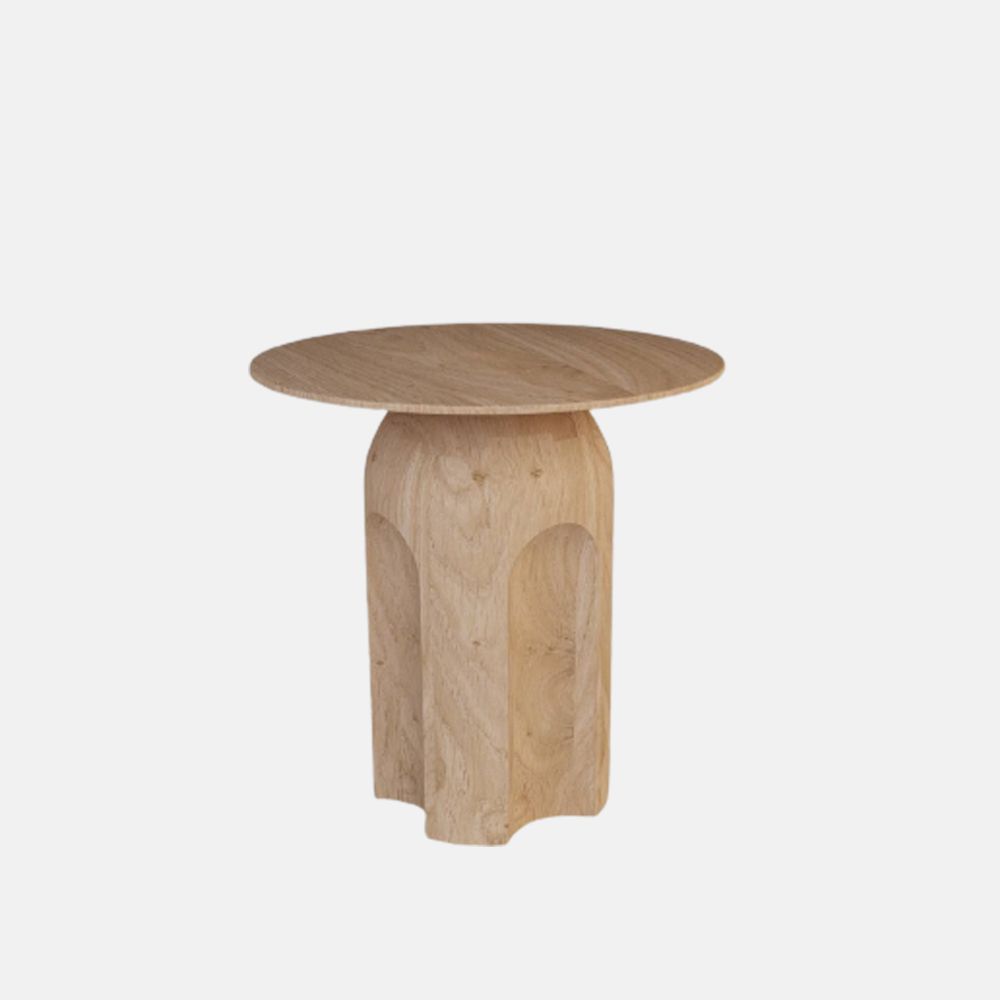
And when you want the piece to be almost architecture, a low form on an arched base holds a lamp and a book just as well but reads like a small sculpture. These and other open options are easy to compare side by side among the bedside side tables.
When storage is the whole point
It's a different story if the bedside is home to medicines, chargers, cream, a book "for later" and a dozen other small things you'd rather not see. Then a cabinet wins — and the more drawers, the better. Some models pair closed drawers with an open niche: the hidden apart, the everyday within reach.
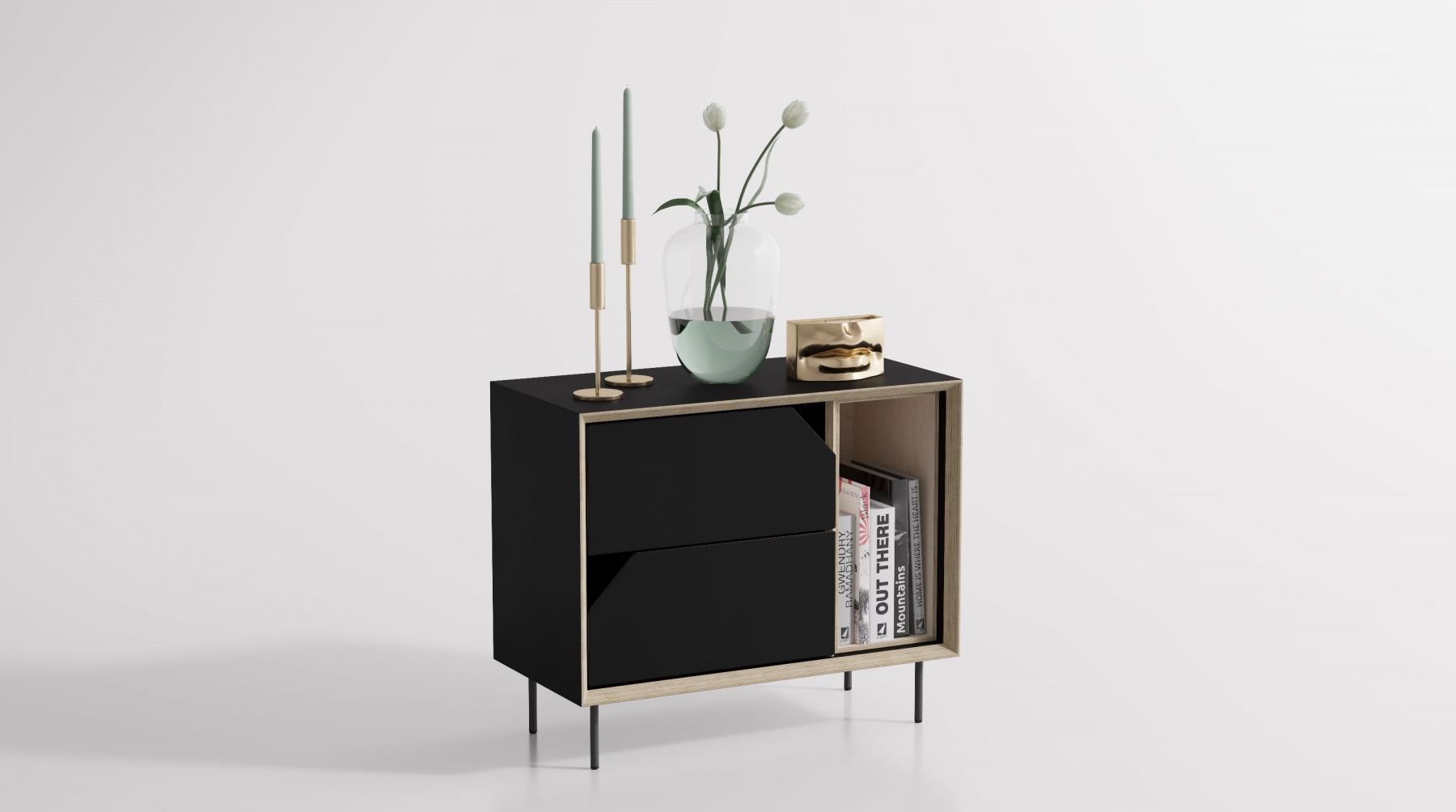
The second thing that matters is size. Beds and walkways vary, so it helps when a cabinet comes in several widths and heights and can be fitted exactly to your space: narrower for a tight passage, taller for a high mattress. The full range of closed storage is gathered among the bedside tables.
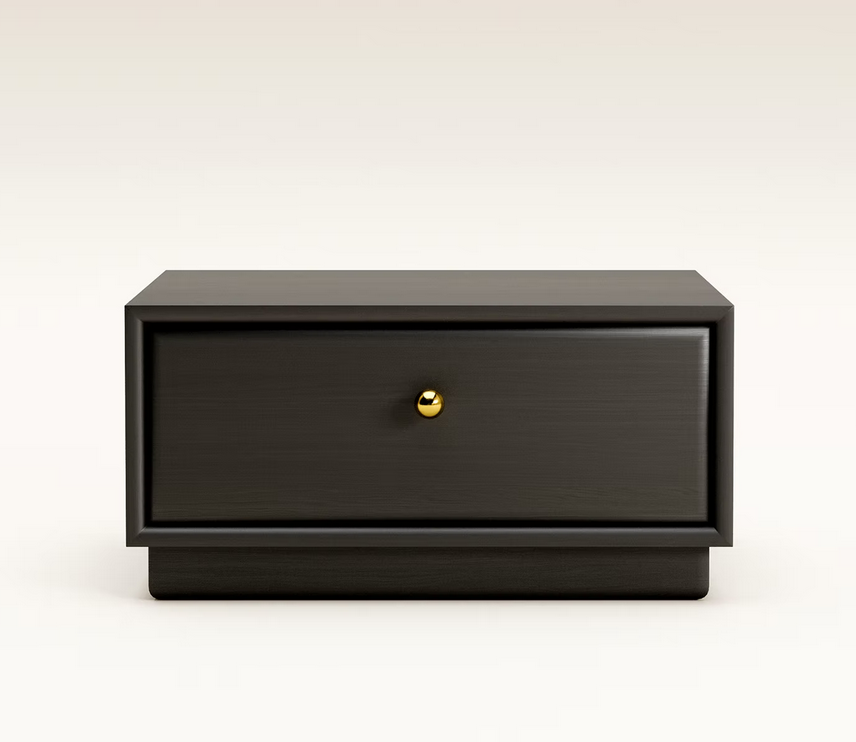
Trend: a table on one side, a cabinet on the other
One of the freshest ideas is to not make the two sides of the bed match at all. On one side goes a light table (for the person who likes space and few things), on the other a cabinet with drawers (for the one who needs storage). The bedroom doesn't look unfinished for it — on the contrary, it gains character, because the furniture is tuned to two different people rather than to symmetry for its own sake.
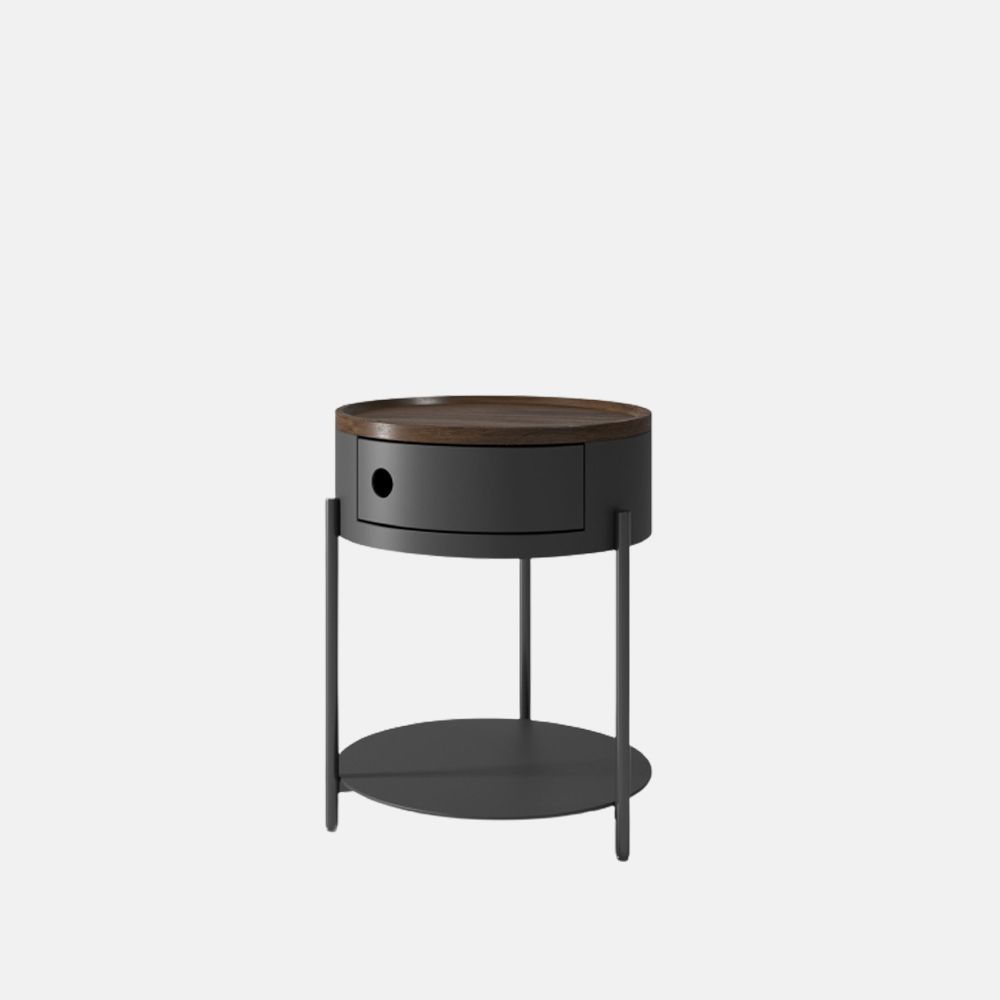
And if you'd like one piece to do both, there are hybrids — a round cabinet-table where a drawer hides under the top and an open shelf stays below. It's a compromise that often turns out to be the smartest choice.
Trend: a tile-top bedside table
Another angle gaining ground is the tile-top bedside table. Small ceramic mosaic across the whole surface gives what wood can't: it isn't afraid of moisture from a glass or morning coffee, it wipes clean easily, and the dense texture of tiny squares is pleasant to the touch and reads surprisingly graphic next to the soft textiles of a bedroom.
Most often these are cube forms, sometimes with a cut-out niche for a book — small, dense, almost an art object by the bed. If that aesthetic speaks to you, take a look at the tile cube tables.

How to choose by height and size
Whatever you pick — a cabinet, a table or a hybrid — two numbers decide the comfort. First: the bedside surface should sit roughly level with the mattress or a few centimetres above it. Then a lamp, phone and glass are easy to reach without sitting up. Second: width. In a tight passage take a narrower model or a round table with no corners; where there's room to spare, a wider cabinet gives you both a surface and storage.
Material and colour come next. First decide whether to hide or to show, then the height and width, and only then look at the shade of wood or the texture. In that order, it's almost impossible to go wrong.
Questions that come up most often
Bedside table or side table — which is better for a small bedroom? Usually a side table: open legs and a light silhouette don't steal space visually. If storage is critical, though, choose a narrow, low cabinet.
What height for a bedside table is comfortable? Aim for the top of the mattress or 2–5 cm above, so you can reach your things lying down.
Do the tables on both sides of the bed have to match? No. Different pieces on each side are a deliberate, on-trend asymmetry: a table for one, a cabinet with drawers for the other.
Why a tile-top bedside table? A ceramic surface shrugs off moisture from a glass or coffee, cleans easily, and adds expressive texture to the bedroom.