What to put on top of a dresser: styling the surface
- What to put on top of a dresser: styling the surface so it looks good, not cluttered
- Start with height: tall, medium, low
- A mirror or art above the dresser gives the surface a "ceiling"
- A little tray for small things, and the mess disappears
- If the dresser is by the bed, less is more
- How to build the look in five minutes
- Questions that come up most often
What to put on top of a dresser: styling the surface so it looks good, not cluttered
A dresser isn't just drawers for clothes. It's a ready-made stage at eye level — the first surface your gaze lands on as you walk into the bedroom or hallway. And it's exactly where clutter is born: keys, cream, a receipt, a charger. Let's work out what to put on top of a dresser so it reads like a shot from an interiors magazine, not a shelf for "I'll just put this here for now".
The good news: to style a dresser beautifully you need neither a florist's talent nor new purchases. You need one rule of height, a little breathing room — and the discipline to leave up top only what has earned its place.

Start with height: tall, medium, low
The classic mistake is lining everything up at the same level in one flat row. The surface goes dull instantly. Designers do the opposite: they use three heights. One tall accent (a vase with branches, dried stems, a slim lamp), something medium beside it (a stack of books, a pillar candle) and a low grounding piece (a flat dish, a box, a book laid flat). The eye reads that step-change as rhythm — and the surface comes alive.
Set objects slightly one behind another, with a little overlap, rather than in a straight line. Small overlaps build depth: the arrangement looks composed, as if placed with an eye rather than in a hurry.
A mirror or art above the dresser gives the surface a "ceiling"
A dresser almost always asks for something above it. A bare wall leaves the composition unfinished, while a mirror above the dresser or a picture closes it off at the top and adds height to the whole scene. One rule of proportion: the mirror or frame should be about two-thirds the width of the dresser. Wider feels heavy, narrower gets lost. And hang it lower than you'd think — the piece should "talk" to the surface, not float alone near the ceiling.
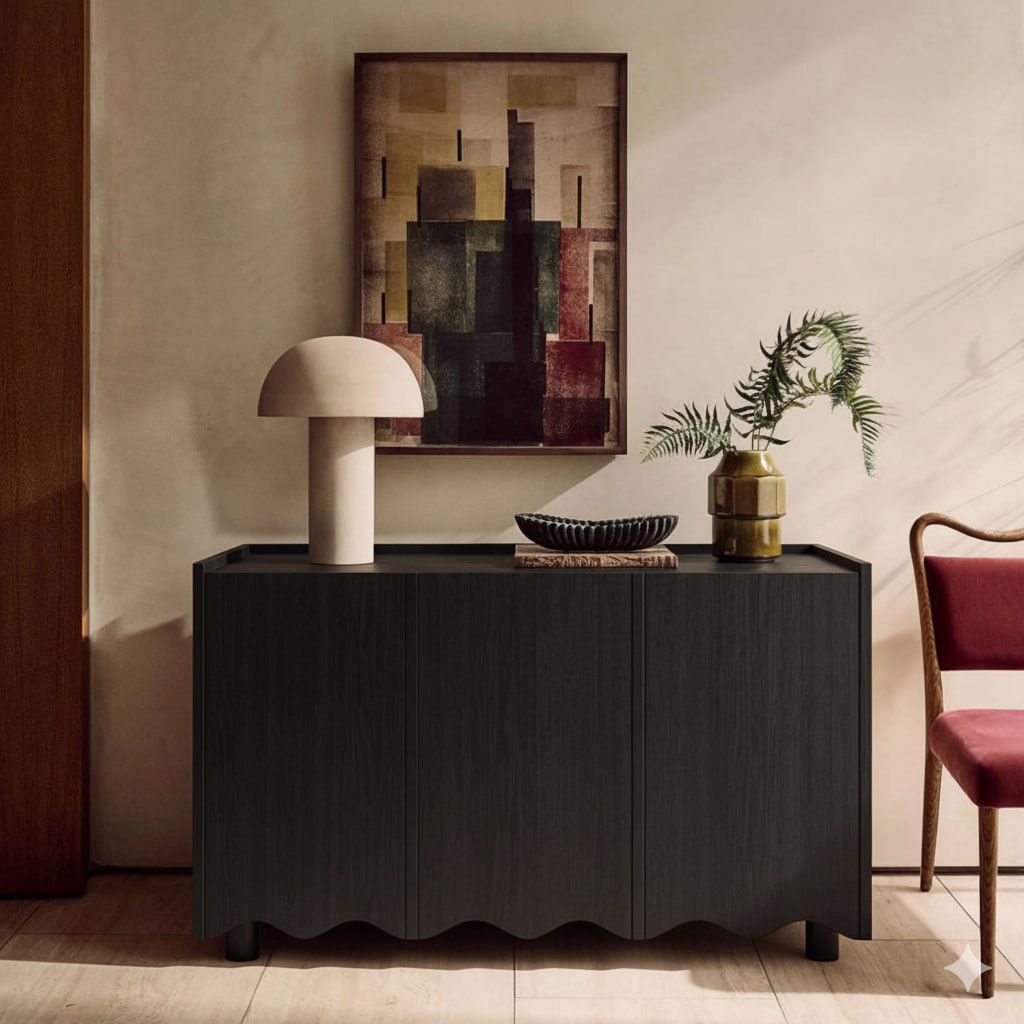
A lamp alongside does two jobs at once: it gives that same vertical accent and switches on a warm evening light. One tall object at one edge, and the whole arrangement stops sliding into the horizontal.
A little tray for small things, and the mess disappears
It's the small things that kill a dresser's look: keys, coins, earbuds, a bottle of perfume drift across the whole surface. The one-move fix is a flat tray or a decorative dish. Everything that used to scatter now lives in one place and reads as intention, not as forgotten bits. That's the difference between things "lying on the dresser" and things "standing on the dresser".
And above all — leave air. Keep about a quarter to a third of the surface free: both so there's somewhere to set things down in the evening, and so the composition can breathe. A cluttered dresser looks smaller and more anxious; empty space around objects is exactly that "expensive" look.
If the dresser is by the bed, less is more
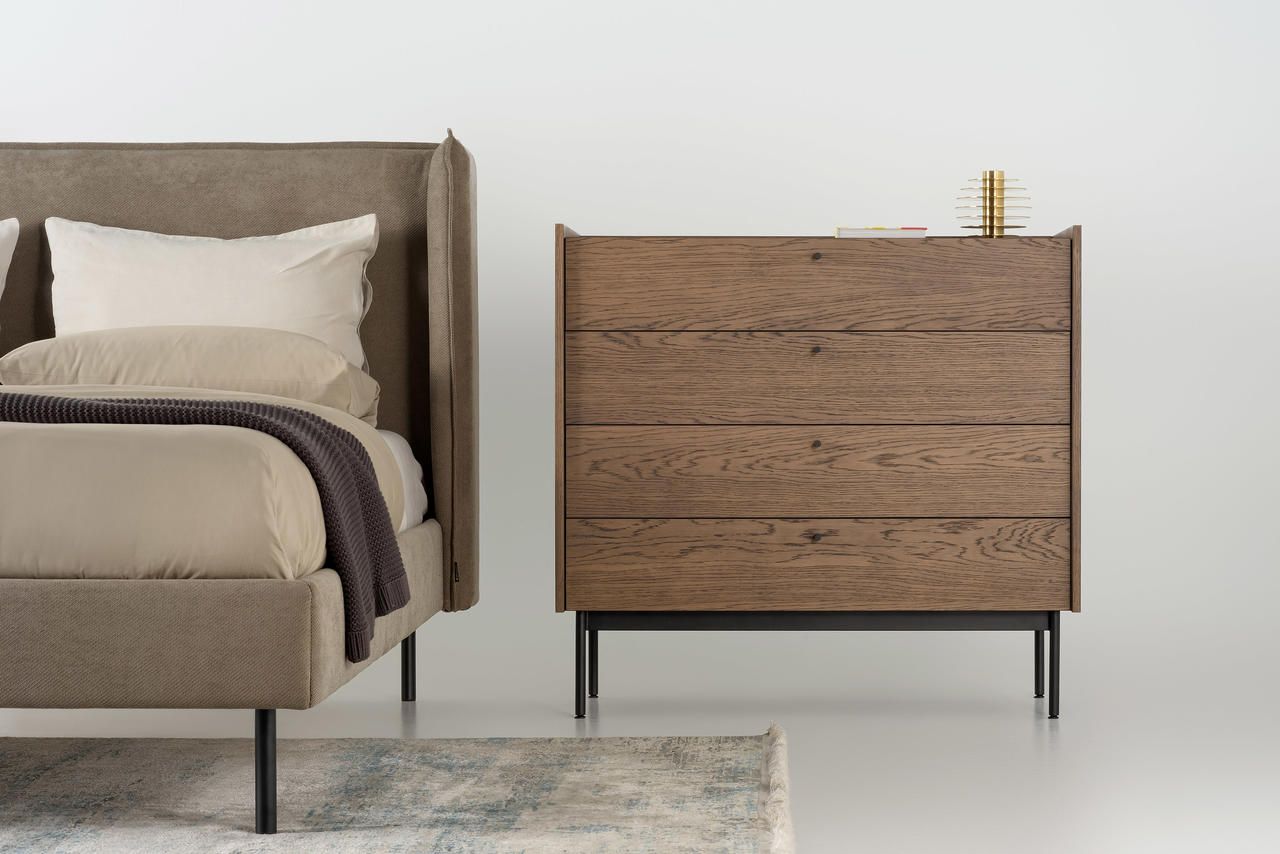
When a dresser stands right by the bed and doubles as a nightstand, the rules get stricter. Here the surface is in daily use, so leave two or three pieces at most: a lamp, a low vase, one book. Everything else hides in the drawers. In a bedroom the eye wants calm, not a still life — and a bare surface works better than any decor.
How to build the look in five minutes
Assemble the composition from a simple kit: one tall accent, one grounding piece, one organic detail — and a tray for small things. Keep a shared line in materials and colour (wood + glass + ceramic in a warm palette looks pricier than a busy mix), and count pieces by width: a narrow dresser needs three or four, a wide one five to seven, gathered into two groups rather than scattered along the length. And when you want the dresser itself to become the room's main accent, it's easy to gather a set of expressive models among designer chests of drawers.
Questions that come up most often
What do you put on top of a dresser so it doesn't look empty? Three heights: a tall accent (vase, lamp), something medium (books, candle) and a low grounding piece (dish, box). Add a tray for small things — and leave a quarter of the surface free.
How many objects should you use? Go by width: a narrow dresser, 3–4 things; a wide one, 5–7, gathered into two groups rather than one row.
What to hang above a dresser? A mirror or picture about two-thirds the dresser's width, lower than it seems — so the piece relates to the surface rather than hanging apart.
How do you keep a dresser tidy every day? Set up one "inbox" tray for keys and small things, and hide everything that isn't decor in the drawers. Order holds on a habit, not on big clear-outs.


