Pouf, Ottoman or Bench: What's the Difference — and Which One You Need
- Pouf, ottoman or bench: what's the difference — and which one you actually need
- Pouf vs ottoman — are they the same thing?
- What a pouf really is
- How a bench differs from a pouf
- Where the line blurs — the bench-pouf with storage
- How to choose: start with the function, not the name
- In short
- Questions that come up most often
Pouf, ottoman or bench: what's the difference — and which one you actually need
The question sounds almost trivial until you're standing in front of a catalogue looking at two nearly identical round pieces: one labelled a pouf, the other an ottoman. Same fabric, same shape, a slightly different height — and you're left wondering whether these are different pieces of furniture or just different words.
Let's answer it plainly, without the jargon. Most of the time the difference between a pouf and an ottoman is less about construction and more about scale and habit. It gets genuinely interesting only when a bench enters the picture: that one really is a different animal.
Pouf vs ottoman — are they the same thing?
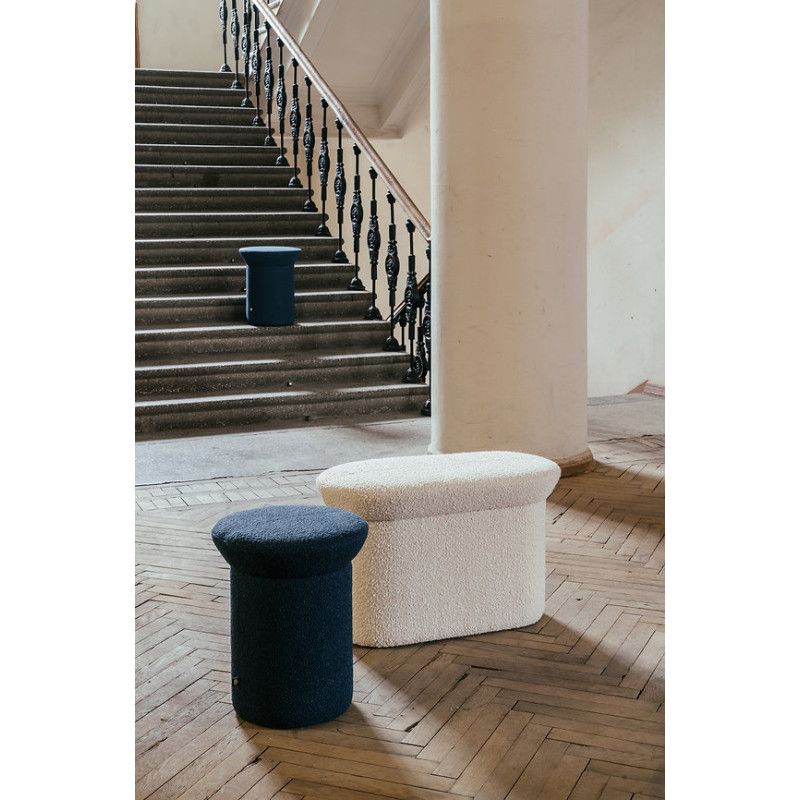
Nearly. In everyday use the two words get swapped freely, and most people won't be wrong either way. If there's a distinction, it's this: a pouf is usually soft all the way through, legless, and sits straight on the floor, while an ottoman tends to be a touch firmer, sometimes on low legs, and often paired with a particular chair. But plenty of pieces are honestly both, and the border is soft.
Look at the photo above: it's literally one model in two sizes. The smaller one you'd call an accent, the larger one seating, yet the construction is identical. There's no hard line here, and that's fine.
What a pouf really is
Strip away the words and look at the object, and a pouf is a soft, upholstered seat with no back and no arms, resting on the floor or on low legs. It's light, easy to move, and that's the whole point: it doesn't claim a permanent spot the way an armchair does, and it doesn't dictate the layout the way a sofa does.
Which is why it plays so many parts. In the morning it's a footrest by the armchair; in the evening it's an extra seat when guests arrive; in between it's a low side table if you set a tray on top. A comfortable sitting height is around 40–45 cm; lower, softer models work better purely as a footrest. Round shapes lean toward seating, square ones give you a flat surface for books or a tray.
How a bench differs from a pouf
A bench, though, is a different piece — not a bigger or smaller word for the same thing. It's elongated: instead of one spot it gives you a wider horizontal seat, enough for two people or for setting things down. The profile is closer to a low bench, often on visible legs, and it usually lands where the same movement repeats daily — by the door, the wardrobe, the mirror or the bed.
That's exactly why a bench earns its place in the hallway: it's comfortable to put your shoes on, because the seat is longer and steadier than a compact pouf. In the bedroom it becomes the spot where a throw lands in the evening and where you sit while getting ready. If that logic fits you better — a longer seat, a broader job — look toward upholstered benches rather than round poufs.
Where the line blurs — the bench-pouf with storage
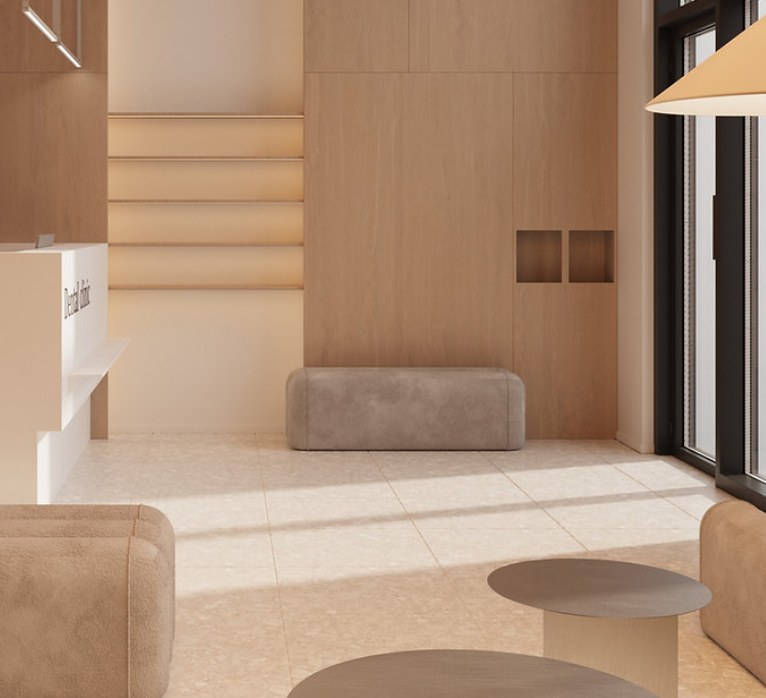
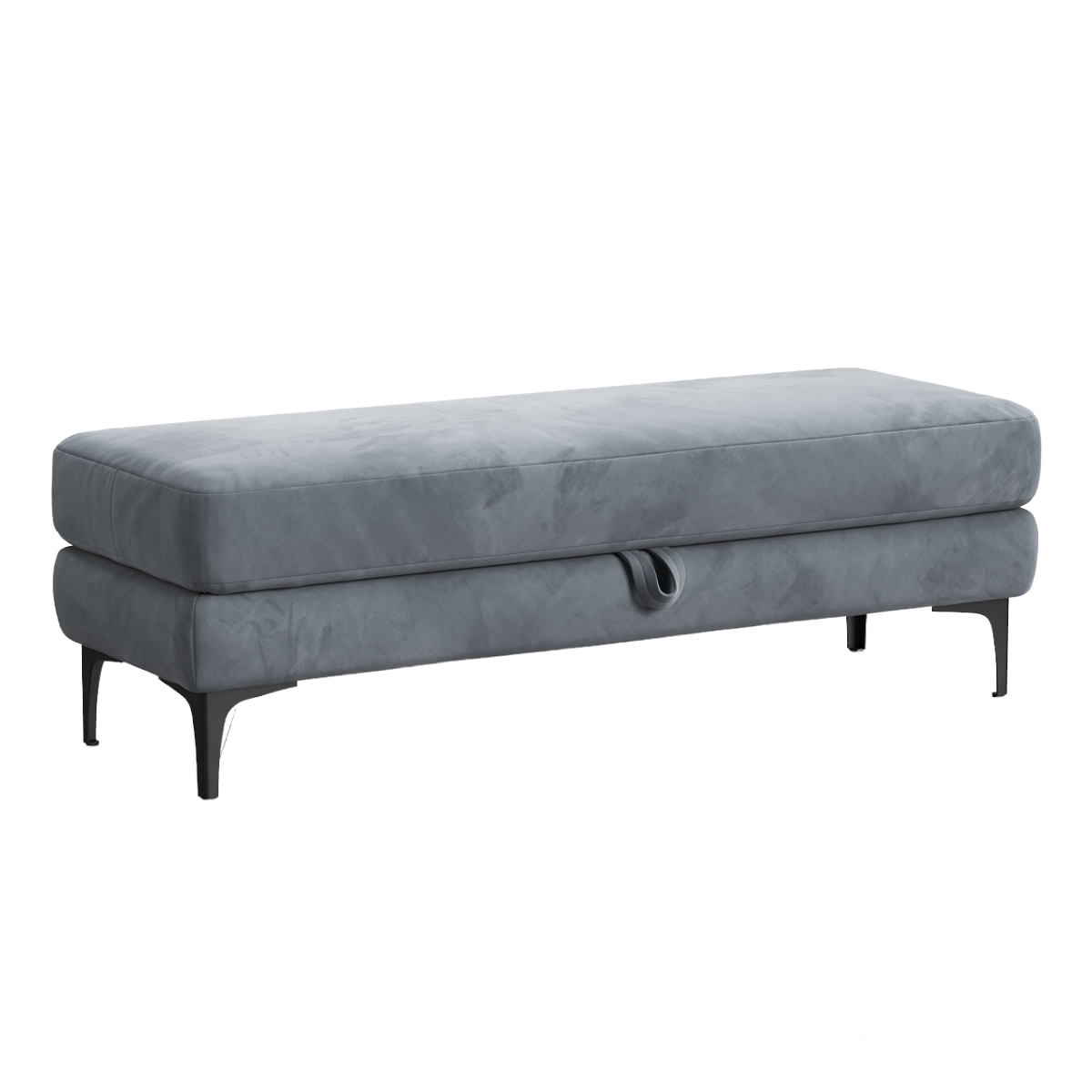
And here's where it gets interesting. Between a pouf and a bench sits a whole middle ground, where a piece borrows the best of both: the elongated soft seat of a bench with the lightness and mood of a pouf. Often it comes with a storage niche too — a hidden space under the seat for shoe care, throws or the small things that otherwise sit out in the open.
How to choose: start with the function, not the name
Here's what we suggest in practice. Don't try to decide first whether it's a pouf or an ottoman — that's the least important question. Start with what the piece has to do, and the rest falls into place.
Need a footrest? Go lower and softer; shape barely matters. Want a proper extra seat? Look for a firmer fill and a height around 40–45 cm. Want it to be seat and surface at once? A square or rectangle with a dense top wins. And when the main job is a seat for putting on shoes by the door or a spot to perch in the bedroom, check the seat length and whether there's a niche inside. Colour and fabric come last, not first — they're easy to match once you know what the piece is actually for.
Different sizes, round and square, with niches and without — you can compare all of them side by side among the poufs from Ukrainian makers, and the choice shifts from "what is this called" to the simpler "what do I need".
In short
A small pouf in the bedroom or a large one in the living room, round or square — it's all the same class of furniture, and the word is secondary. A bench is its own story: longer, wider, often with a back or a niche. And in between lives the bench-pouf, which politely refuses to pick a side. What matters isn't the label on the tag, but how the piece will work in your particular room.
Questions that come up most often
Pouf or ottoman — which is correct? Both are fine. In everyday use the words are interchangeable; if anything, "pouf" leans soft and legless, "ottoman" leans firmer and often paired with a chair.
Can you sit on a pouf instead of a chair? Yes, if the height is around 40–45 cm and the fill is firm enough. Very low, very soft models are nicer as a footrest than as a permanent seat at a table.
What height is comfortable for putting on shoes? Aim for roughly 40–45 cm: it's easy to stand up from, and comfortable to lean down toward your shoes. For a hallway, many people choose an elongated model or a bench-pouf.
Why would a pouf need a niche? A niche turns one seat into two pieces at once: you sit on top and store the small things underneath — from shoe care to throws — that would otherwise be on show.


