Where to put a desk: by the window, in a corner or facing the room
- Where to put a desk: by the window, in a corner or facing the room
- By the window — but light from the side, not in your eyes
- Facing the room or back to the wall
- A desk in the bedroom or a shared room — separate the work
- Into a corner and a small room
- The chair and the walkway — what people forget
- Lighting the work zone
- In short
- Questions that come up most often
Where to put a desk: by the window, in a corner or facing the room
Where a desk stands affects your focus as much as the desk itself. The same piece by a window works quite differently from one wedged into a dark corner with your back to the door. So the question of where to put a desk is really about light, about a wall behind your back, and about how much room is left to pull the chair out.
Let's go through a few working scenarios — from the window to the bedroom — and what to keep in mind for each, so your workspace is comfortable every day, not just good in a photo.
By the window — but light from the side, not in your eyes
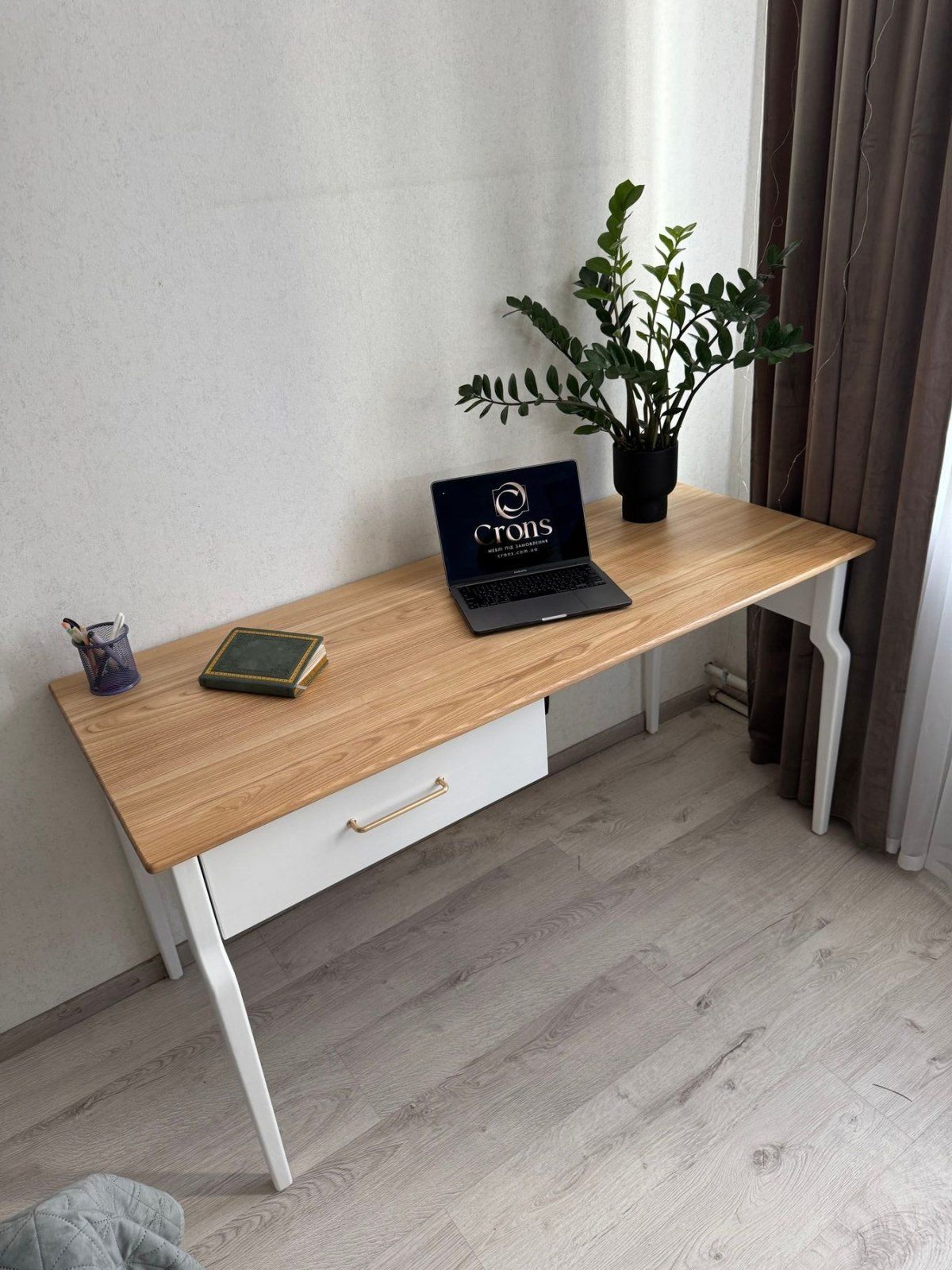
Daylight is the best thing you can give a workspace, so a window nearby almost always wins. But there's a catch. Facing the desk straight at the window is uncomfortable: the bright backdrop tires your eyes and the screen picks up glare. Back to the window isn't ideal either — light reflects onto the monitor from behind. Best of all is a window to the side: daylight falls evenly on the top and doesn't fight the screen. For right-handers, light from the left is nicer — your hand won't cast a shadow on the paper.
If the window faces the sunny side, plan for a sheer curtain or a roller blind: direct midday sun glares on the screen just as a too-dark corner tires the eyes in the evening. Softly diffused daylight is the sweet spot to aim for.
Facing the room or back to the wall
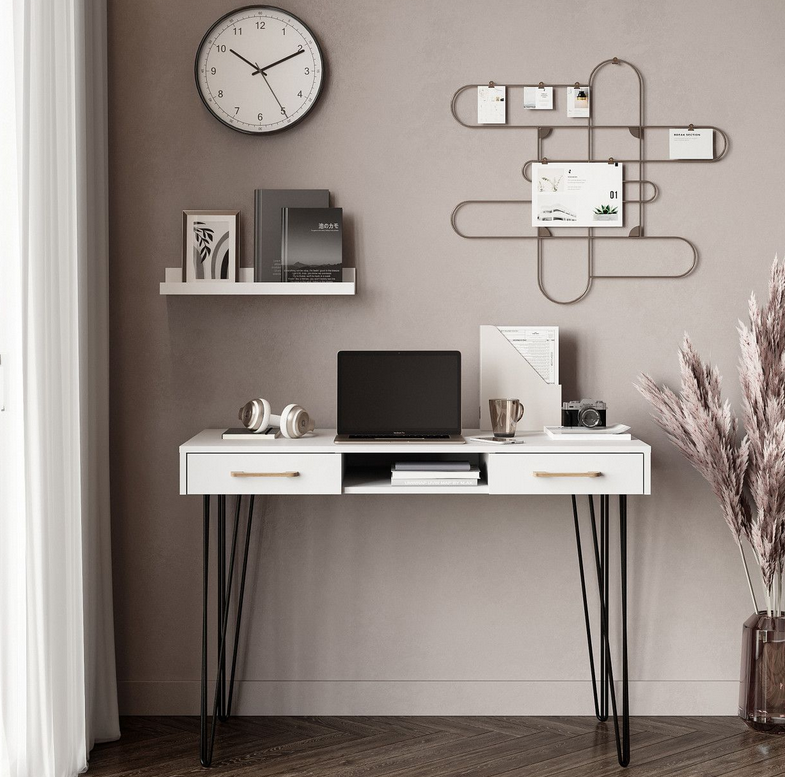
It's psychologically calmer to sit with your back to a wall, facing the room or the door — when the space is "in front of you," it's easier to focus. A desk pushed flush against a wall saves space and works well in small rooms; so the blank wall doesn't feel heavy, hang a shelf, a moodboard or a couple of prints above it — the eye gets a horizon.
A desk in the bedroom or a shared room — separate the work
Often there's no separate study, and the desk lives in the bedroom or living room. Here the key is to gently separate the work zone from the rest zone: a rug under the desk, a light shelf to the side, or turning the top to the wall visually "switches off" work when the day is done. Since a desk like this is always on show, choose a neat model that tones with the room and keep the surface clear — clutter shows more in a shared space.
Into a corner and a small room
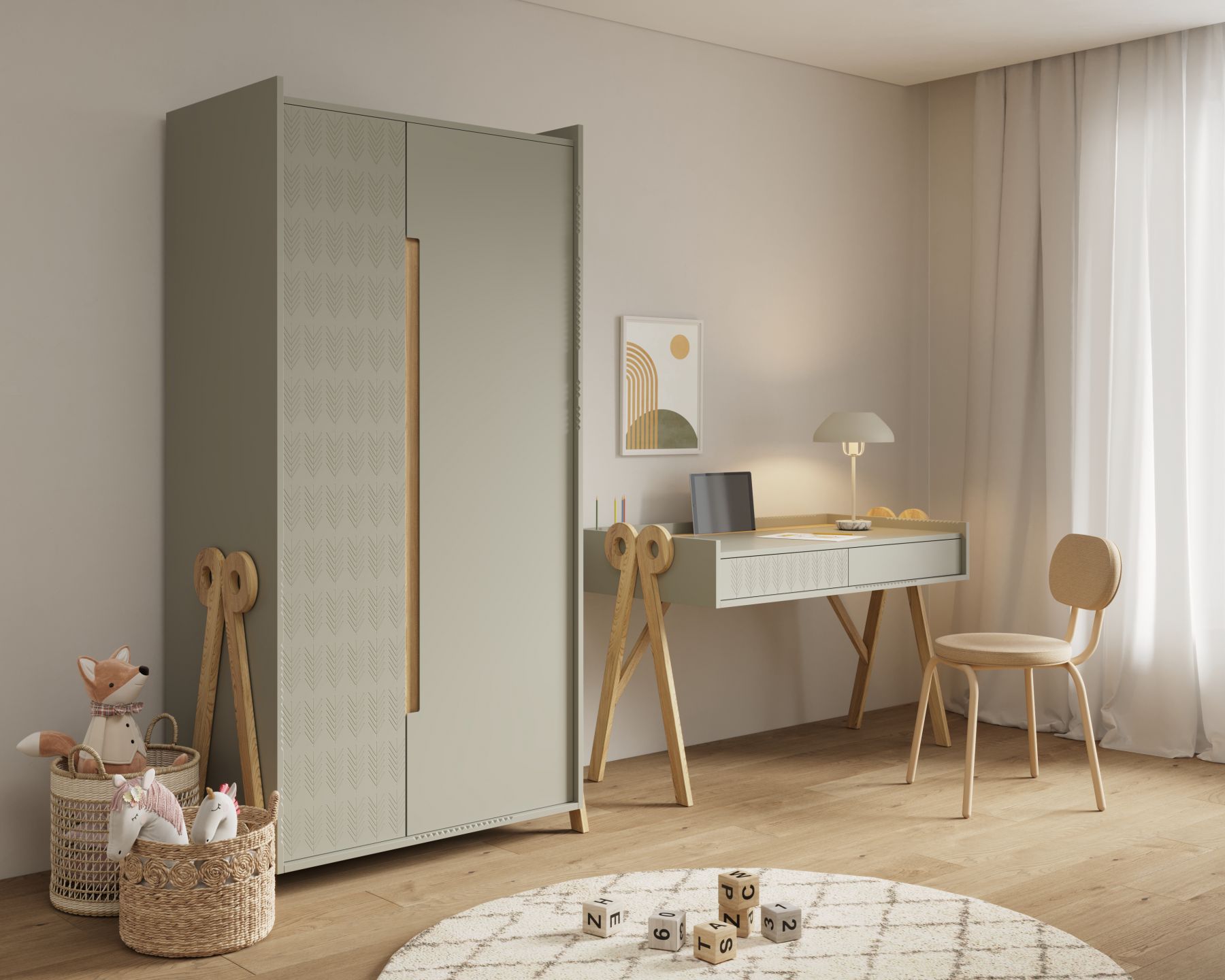
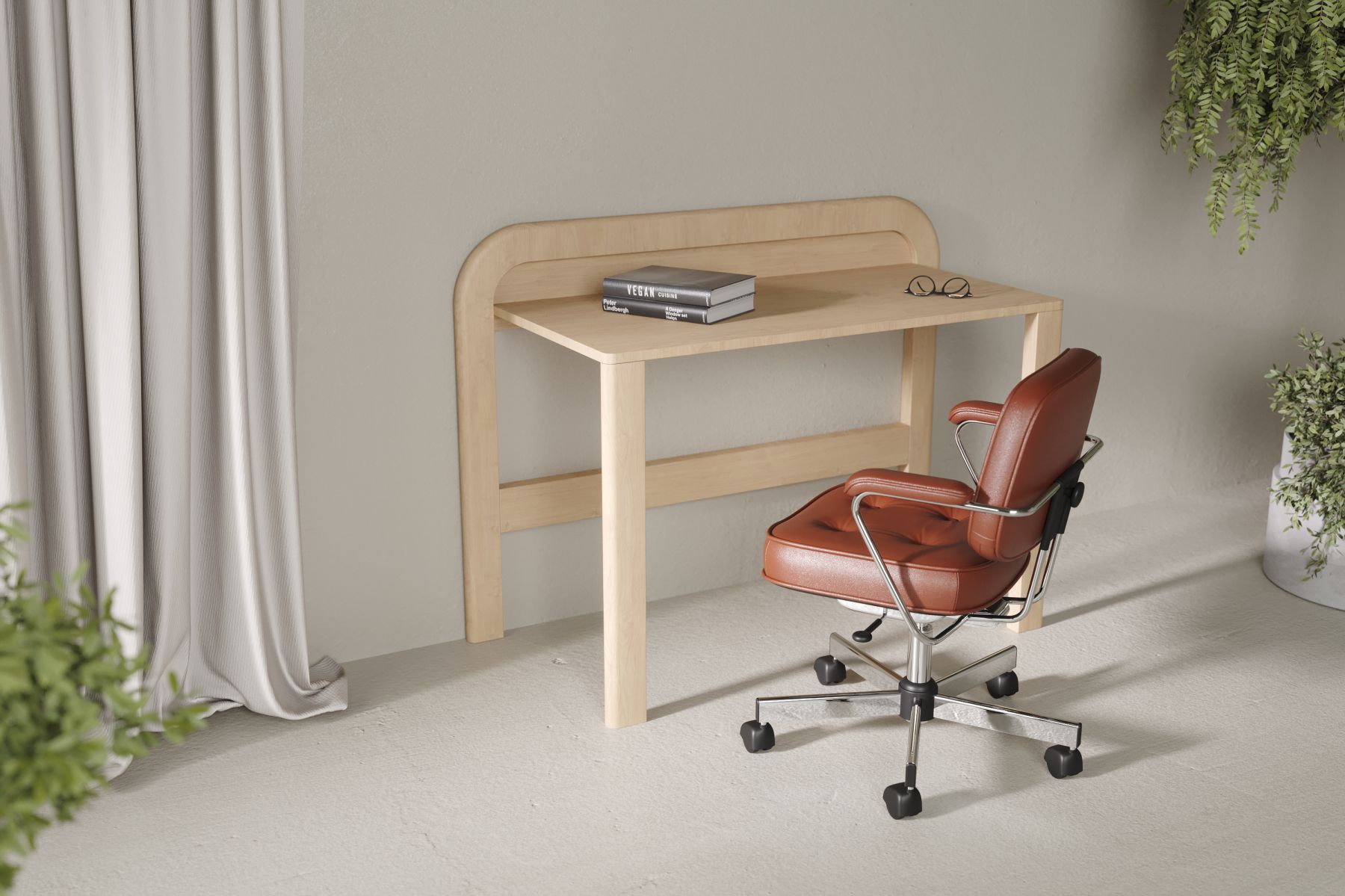
When square metres are tight, a corner is the rescue: it usually sits idle, and a desk there gives more usable surface than one along a wall without blocking the walkway. For really tight rooms, a narrow or wall-mounted model works well — the main thing is to leave room to push back. It's the space behind the chair that people most often forget to measure.
Another neat move for a corner is an L-shaped layout: the short side faces the window for light, the long side runs along the wall, and you get two zones in one footprint. Just don't load both wings so full that there's nowhere to turn in the chair.
The chair and the walkway — what people forget
Wherever you place the desk, leave 70–90 cm behind the chair so you can push back and stand freely; a chair on castors needs a little more. Think right away about the small things that make a spot workable: a socket nearby (so the cable doesn't trail across the room) and a task lamp. These details decide whether you'll actually sit down to work with pleasure.
Lighting the work zone
Even the best spot needs light in the evening. Place a task lamp on the side opposite your writing hand so it casts no shadow; warm-neutral light (3000–4000K) tires the eyes less than cold. One ceiling fixture is usually not enough — it's the local lamp on the desk that makes evening work comfortable.
In short
Find the light first — a window to the side. Then turn the desk with its back to a wall, facing the room. Check the walkway behind the chair and a socket nearby. And only then look at colour and material — in the writing desks selection it's easy to match a model to the spot you've already chosen.
Questions that come up most often
Where is the best place for a desk? By a window, but with light from the side — not facing or backing the window, or you'll get glare on the screen.
Can a desk face away from the room? It can, but most people feel calmer with their back to a wall, facing the room or door — it's easier to focus.
Where to put a desk in a small room? In a corner or a niche; a narrow or wall-mounted model suits. Keep 70–90 cm of walkway behind the chair.
How to place a desk in a bedroom? Separate the work zone with a rug or a shelf, turn the top to the wall, and keep the surface tidy — the desk is always on show.


