How to choose a console table by size: proportions for hallway, living room and bedroom
- How to choose a console table by size: proportions for the hallway, living room and bedroom
- Hallway: a narrow console that doesn't steal the walkway
- Living room behind a sofa: height to the back, length ⅔–¾
- Bedroom: a console as an accent or a dressing table
- Depth of 25–40 cm — the key number for the walkway
- Questions that come up most often
How to choose a console table by size: proportions for the hallway, living room and bedroom
A console is a tricky piece. In photos it always looks light, but in life it either blocks the walkway, gets lost under an oversized mirror, or sticks up half a head above the sofa. The cause is almost always size, not taste. Let's work out how to choose a console table by size so it fits the room just right — separately for the hallway, living room and bedroom, because the proportions differ in each.
There are only three key numbers — height, length and depth — but you read them off whatever the console stands next to: the mirror, the sofa or the bed. Let's go room by room.
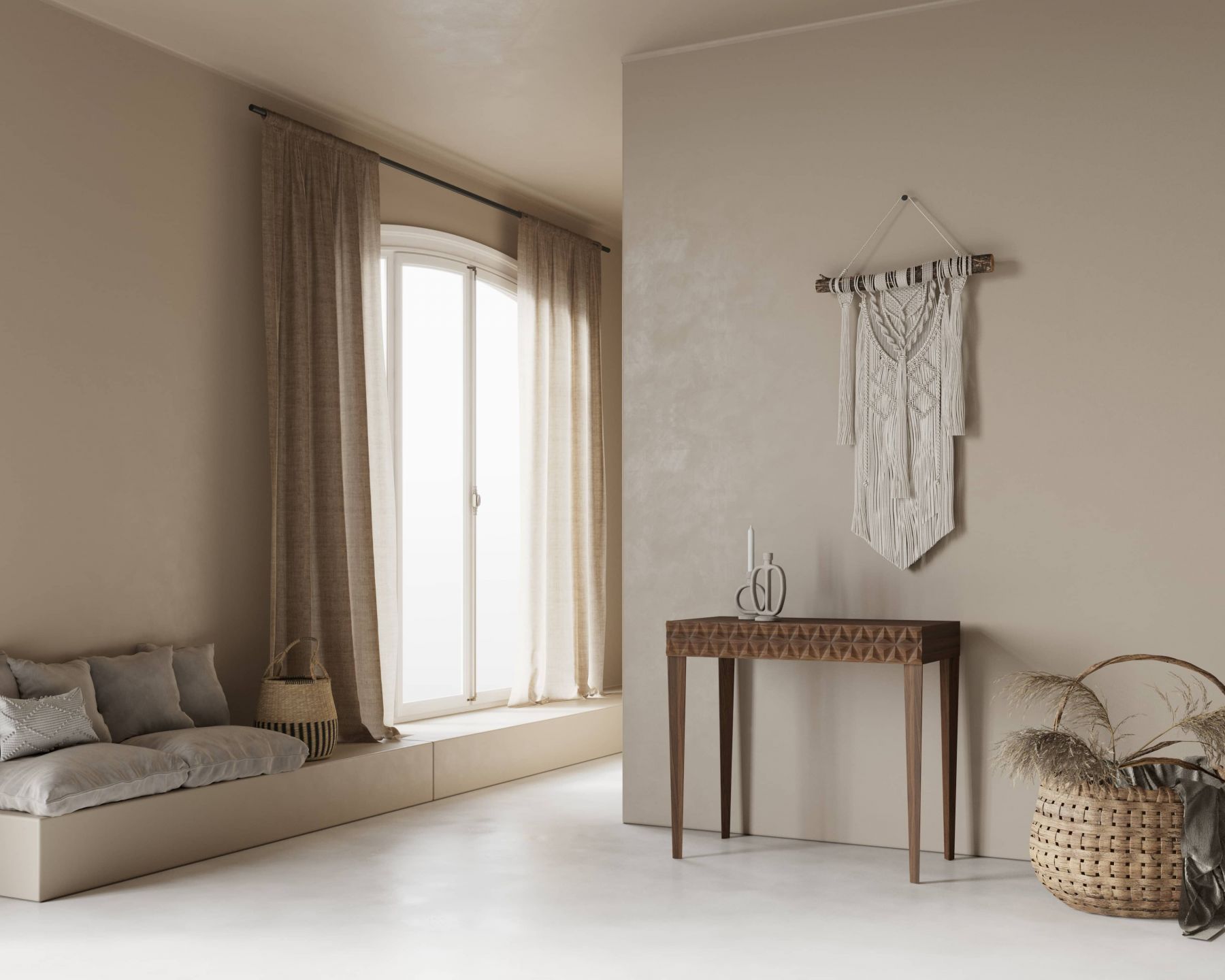
Hallway: a narrow console that doesn't steal the walkway
In a hallway the main enemy is depth. Here a narrow console 25–40 cm deep works: keys, wallet and small things land on it, but it doesn't narrow an already tight passage. For height, aim for 78–90 cm — comfortable to drop things without bending. And a hallway console almost always asks for a mirror above it: then it becomes a proper "exit zone" rather than just a shelf. Take the mirror about as wide as the console or a touch narrower, so they read as a pair.
If the corridor is really narrow, a wall-mounted model with no legs saves the day: the floor beneath stays free and the passage doesn't narrow visually. This is the case where every 5 cm of depth counts.
Living room behind a sofa: height to the back, length ⅔–¾
The classic spot for a console in a living room is behind a sofa that stands away from the wall. Two rules here. First: the top's height should match the sofa's back or sit a couple of centimetres lower — so the console doesn't "peek" over the top but lies level. Second: the length is about two-thirds to three-quarters of the sofa's length, so they look balanced rather than like a big and a small piece side by side.

If the sofa stands against the wall, a console works just as well along a free wall or under a TV — then go by the width of the TV zone rather than the sofa. Keep the depth moderate here too: 30–40 cm is enough for a lamp, books and a couple of objects without turning the console into a chest.
Bedroom: a console as an accent or a dressing table
In a bedroom a console more often plays a slim accent: by the bed instead of a bulky nightstand, under a window, or as a minimalist dressing table. The logic is the same — a small depth so it doesn't weigh the space down, and a height to suit the use: if the console sits by the bed, it's handy when the top is roughly at mattress level. Thin legs or a wall-mounted version are especially fitting here: a bedroom likes air under the furniture.

Depth of 25–40 cm — the key number for the walkway
If you remember one number, make it depth. It's what decides whether it's comfortable to pass the console. For most rooms 25–40 cm is comfortable: enough for the surface to be useful, and little enough not to eat the walkway. And wherever the console stands, leave about 75–90 cm of free space in front of it to pass — that's the distance people most often forget to measure and then bump into every day.
Once height, length and depth are set for a specific spot, choosing the model becomes simple and pleasant. Options for a hallway, living room or bedroom are easy to compare in the selection of console tables.
Questions that come up most often
How deep should a console be? For most rooms 25–40 cm is comfortable — the surface is useful and the walkway doesn't narrow. Leave 75–90 cm of free space in front of the console.
What height for a console behind a sofa? Level with the sofa's back or a couple of centimetres lower — so the console doesn't peek over the top.
What length for a console behind a sofa? About two-thirds to three-quarters of the sofa's length — then the proportion looks balanced.
Which console table to choose for a hallway? Narrow (25–40 cm deep), 78–90 cm tall, ideally with a mirror above. For a tight corridor, wall-mounted to keep the floor free.


