How to set up a dressing table: height, mirror, light
- How to set up a dressing table: height, mirror and light so your makeup works
- Height: 75–80 cm so it's comfortable to sit
- Mirror: how high to hang it
- Light: why overhead lighting isn't enough
- Organising cosmetics: keeping the surface clear
- How to put it all together
- Questions that come up most often
How to set up a dressing table: height, mirror and light so your makeup works
A good dressing table isn't about a carved mirror from a film. It's about three things that actually work every morning: a comfortable height, a mirror hung right, and light in which your tone lands the same way it will outdoors. Miss even one and the prettiest table becomes a place that's awkward to sit at and where you can't really see. So let's work out how to set up a dressing table properly — by the centimetre, not by mood.
The good news: the rules are simple and stick the first time. Let's go through height, mirror, light and organisation — in exactly the order you should decide them.
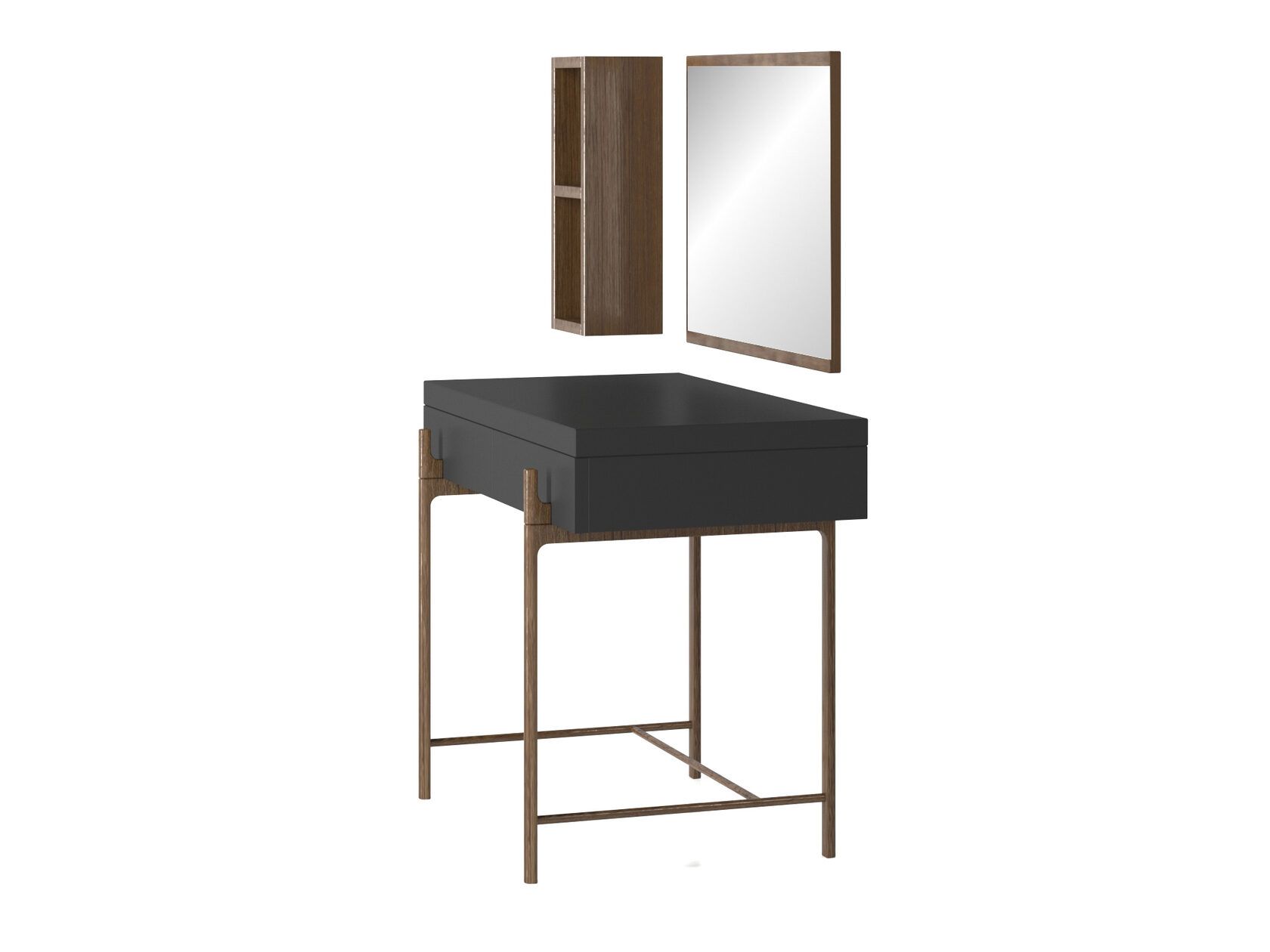
Height: 75–80 cm so it's comfortable to sit
The height of a dressing table is about 75–80 cm, like a writing desk. That's no accident: at this height your knees slide freely under the top and your elbows rest as you lean towards the mirror. Lower and you'll hunch; higher and your arms tire. A simple test before buying: sit down, put your elbows on the top — your shoulders should stay relaxed.

That height needs the right seat too. A pouf or bench with a seat around 45–50 cm slides in neatly, leaving 25–30 cm of knee room. The key is that the seat hides fully under the table when you stand — so the table doesn't eat the walkway. Compact options are easy to find among poufs — they save space and add a soft texture to the room.
Mirror: how high to hang it
The main rule is the centre of the mirror at eye level when you sit. For most people that's about 100–110 cm from the floor to the mirror's centre, but go by yourself: sit and have someone mark where your gaze lands. The mirror should be tall enough to show your face and a little of your shoulders without craning. For width, a handy guide is about two-thirds the width of the top: narrower gets lost, wider turns the table into a chest with a mirror.
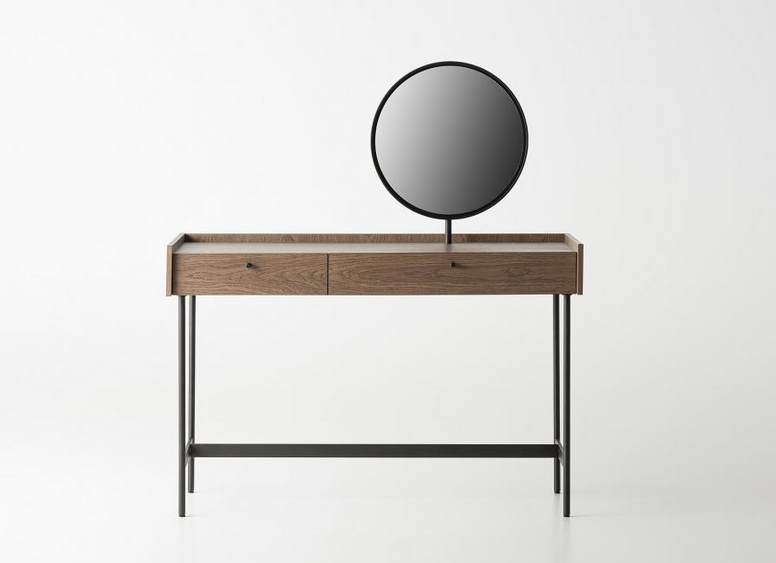
If the table has no mirror of its own, a separate wall mirror gives more freedom — you can match the shape and size to your height and your wall. A round one softens the table's strict geometry, a rectangular one stretches a low wall; options for different rooms are easy to compare among wall mirrors.
Light: why overhead lighting isn't enough
Here's the mistake behind makeup that "looks good in the room but not outside". A single ceiling light shines down and casts shadows: under the eyes, the nose, the cheekbones. You unconsciously correct those shadows with tone — and outdoors, in even daylight, your face looks over-painted. The fix is simple: makeup lighting should fall on both sides of the face, not from above.
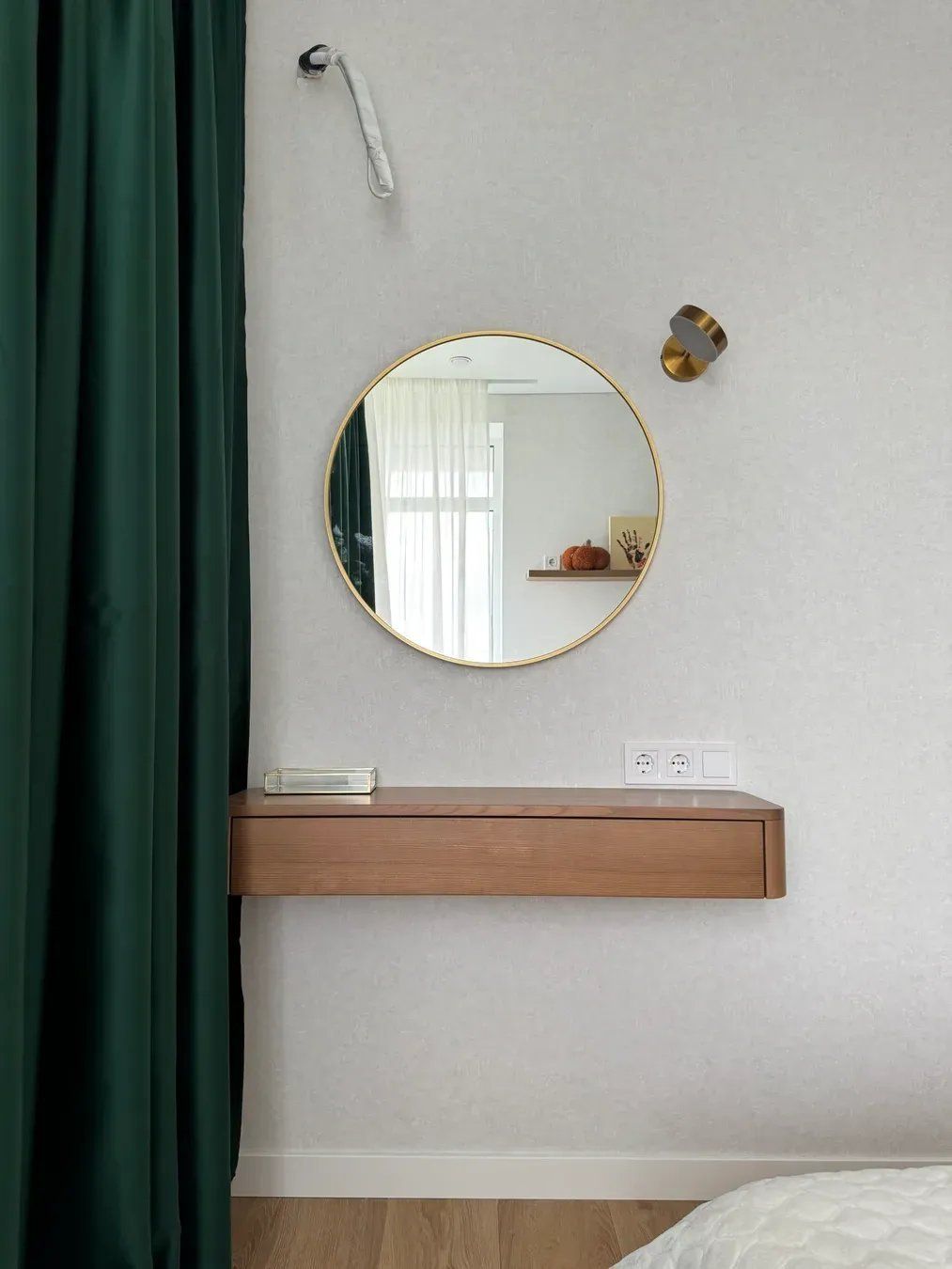
The easiest way is a pair of sconces or a light strip on either side of the mirror, at face level. The second thing that decides colour is the light's temperature: go neutral, around 3500–4500K. Warmer (2700K) yellows and hides blush, too cold (6000K and up) is harsh and adds blue. Neutral is closest to daylight, so your tone lands the way others will see it. Ready pairs of fixtures are easy to find among wall sconces.
Organising cosmetics: keeping the surface clear
A dressing table clutters faster than any other surface — brushes, bottles, palettes multiply on their own. So the main principle is to put the daily things into shallow drawers with dividers, and leave in view only what you use every day. A flat tray gathers perfumes and creams together; an upright cup keeps brushes to hand. When you organise a dressing table so that two-thirds of the top stays clear, the morning routine speeds up by itself.
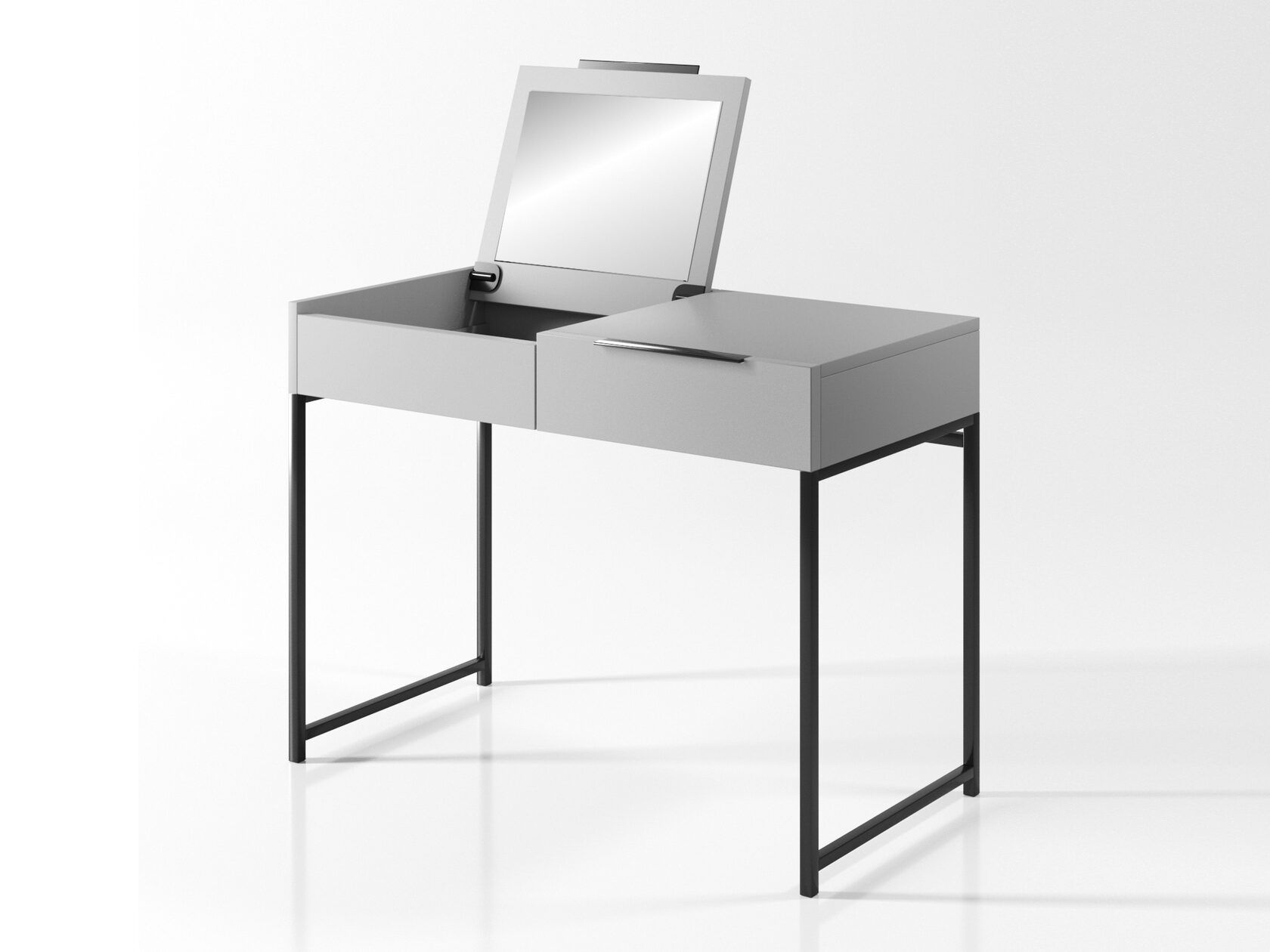
Another handy move is a table with a mirror that folds into the top: when it's not in use it's just a neat console, with everything mirrored and cosmetic tucked inside. For a small bedroom that saves both space and the feeling of order.
How to put it all together
The order is simple: height first (a 75–80 cm table plus a seat that hides under it), then the mirror at eye level, then light from both sides at a neutral temperature — and only then the beauty of the material and the hardware. Once that logic is set, all that's left is choosing character: colour, legs, texture. Models for different bedrooms are easy to compare in the selection of dressing tables.
Questions that come up most often
What is the height of a dressing table? About 75–80 cm, like a writing desk — so your knees slide under the top and your shoulders stay relaxed. The seat is around 45–50 cm.
How high should you hang the mirror above the table? So its centre is at eye level when you sit — usually 100–110 cm from the floor to the centre. Width about two-thirds of the top.
What light do you need for makeup? From both sides of the face (a pair of sconces or a strip), not just from above, and at a neutral 3500–4500K — closest to daylight.
How do you organise a dressing table? Daily items into shallow drawers with dividers, perfumes and creams on a tray, brushes in a cup. Keep two-thirds of the surface clear.


