М'яке дитяче ліжко: з якого віку і як обрати | MAIIMO
- Upholstered children's beds: from what age, practicality and how to choose
- From what age an upholstered bed
- Practicality: a removable cover solves almost everything
- An upholstered bed with a guard rail — for younger ages too
- Soft or wooden: when each wins
- When an upholstered bed is the best choice: teenagers
- Frequently asked questions
Upholstered children's beds: from what age, practicality and how to choose
People love an upholstered bed not for how they sleep on it, but for how they sit on it: with a book, back against the soft headboard, when you want just five more minutes in your own room before bed.
But parents always have one question about an upholstered children's bed — is it practical. Let's be honest about it: from what age it makes sense, how not to lose out on upkeep, what makes a removable guard rail so handy, and when a soft bed beats wood, and when it doesn't.
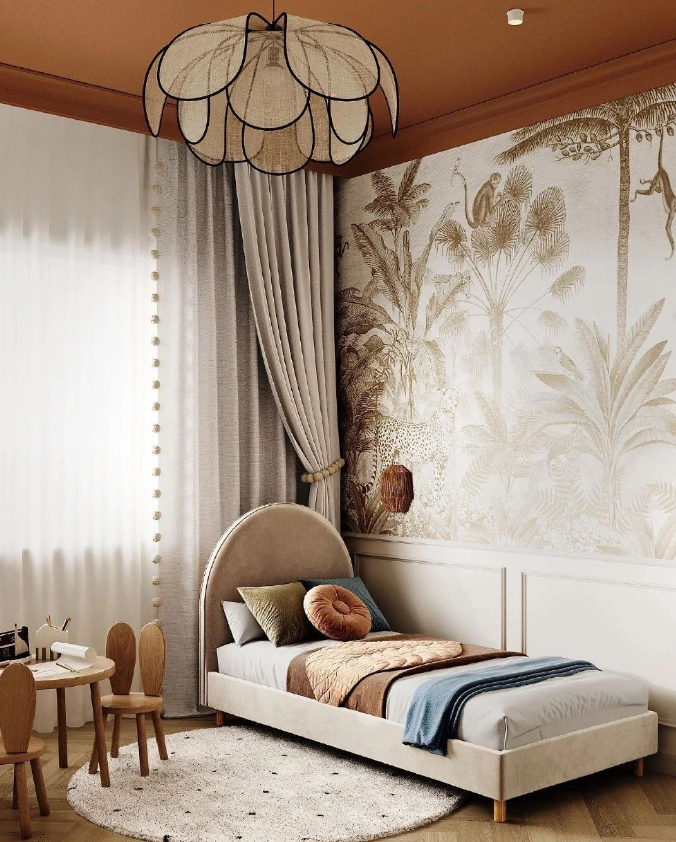
From what age an upholstered bed
Formally — from the same moment as any "grown-up" bed, that is, after moving on from the cot. But in practice an upholstered bed comes into its own later, closer to school age and with teenagers. The reason is purely practical: the first years are years of spills, paints and "night-time adventures", and fabric is harder to clean than wiping down wood. So for the youngest a wooden bed is often the more practical choice, and a soft bed becomes fitting once the risk of stains is behind you and comfort and aesthetics come to the fore.
This isn't a hard rule, just the logic of upkeep. If you really want a soft bed for a younger child — a removable cover and the right fabric come to the rescue, more on which below.
Practicality: a removable cover solves almost everything
The main criterion for an upholstered bed's "survival" in a child's room is whether the cover comes off and whether it can be washed. Ideally, the upholstery unzips in sections and goes in the machine on a delicate cycle. But there's an important nuance: the mere presence of a zip doesn't mean the cover can be washed — sometimes it's only there to fit the cover on. So don't look at the zip, look at the care label: it should state outright that machine or damp cleaning is allowed.
Second — the fabric. For a child's bed it's worth choosing dense, stain-resistant upholstery (performance fabrics with a stain-repellent treatment work well). But "stain-resistant" doesn't equal "impossible to soil": whatever is spilled still has to be dealt with straight away. And a little designer's trick: darker, muted tones hide signs of wear better than a light beige. If the filling's composition matters to you — ask about certification of the foam filling (OEKO-TEX or equivalent), it's a guide to emissions and material safety.
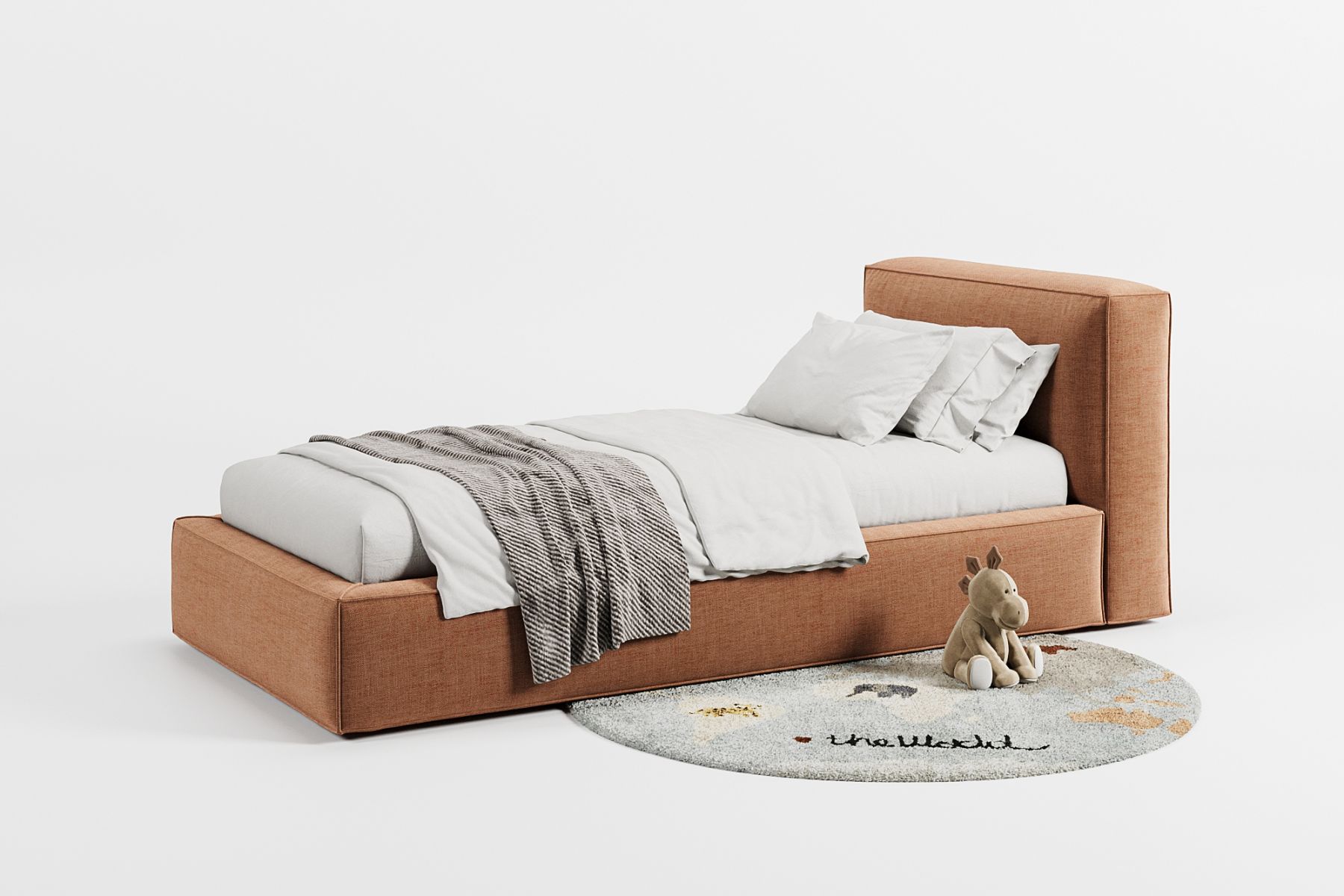
An upholstered bed with a guard rail — for younger ages too
Soft doesn't mean "only for older children". There are models where the guard rail is removable: at first it sits on both sides for a younger child, then stays on one side, and later disappears altogether — and the bed simply grows up along with the child, without replacing the furniture. This is the most flexible scenario: one bed for many years. For the youngest, the safety benchmark is the same as for any bed with a rail — the guard rail should rise noticeably above the mattress along its whole length. You'll find more such models among the beds with guard rails.
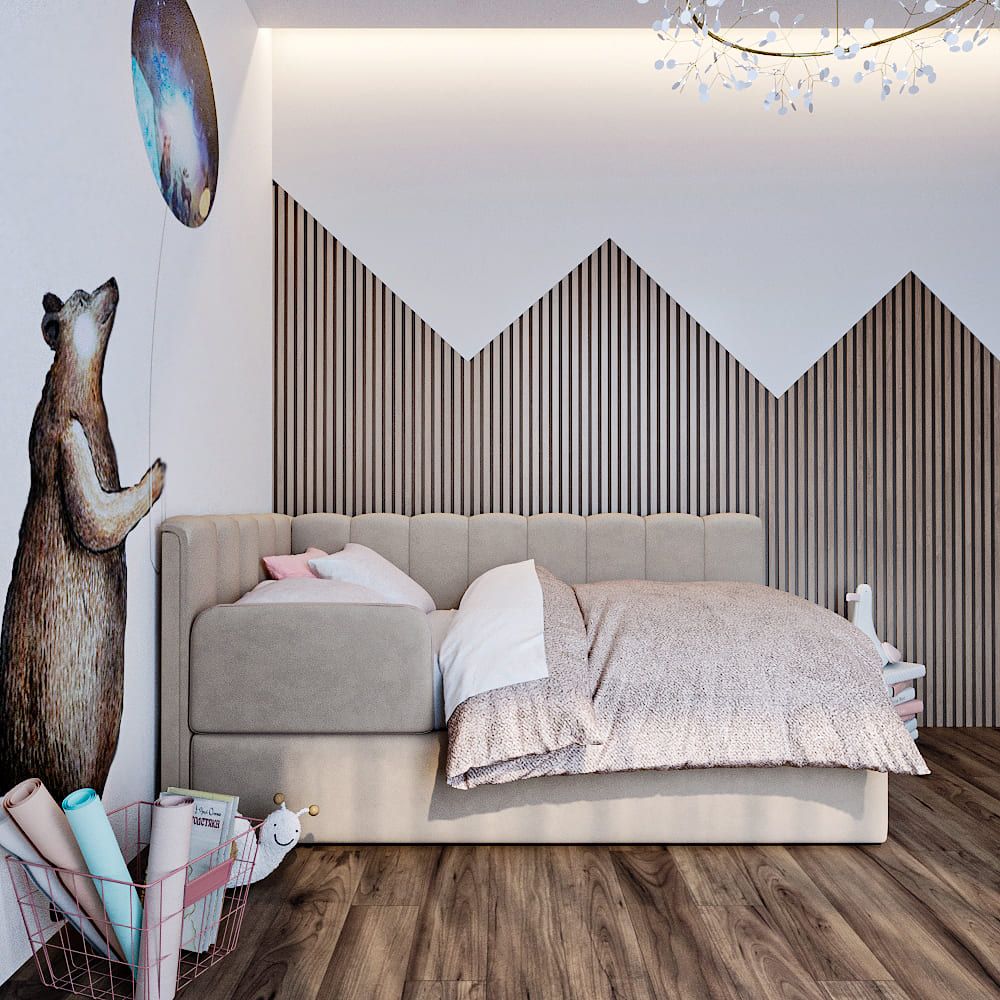
Soft or wooden: when each wins
An upholstered bed has three strengths. Comfort: it's lovely to lean against a padded headboard while reading or playing in bed. Quiet: the fabric muffles sound, and without rigid joints the frame barely creaks — unlike wooden ones, which over time can work loose and "sing". And protection: a soft headboard takes the knocks that would otherwise reach the wall or the child.
To be honest about the flip side: wood usually lasts longer and is easier to refresh, whereas upholstery wears through at the corners over time, and caring for it takes more attention. So the choice isn't "what's better in general", but "what's more fitting right now": for an active pre-school age wood often wins, for a calmer school and teenage age — the soft bed.
In short, what to look for when buying: a removable cover that really can be washed (check the label, not just the zip); dense, stain-resistant fabric; a muted tone that hides marks; a removable guard rail if the bed is for a younger child; and a sleeping surface long enough to grow into.
When an upholstered bed is the best choice: teenagers
An upholstered bed hits its peak in a teenager's room. The risk of spills is behind you, and comfort and the character of the interior come to the fore — an expressive headboard sets the mood for the whole room. Here "grown-up" looking models are just right, sitting easily alongside a work area and a space for friends.
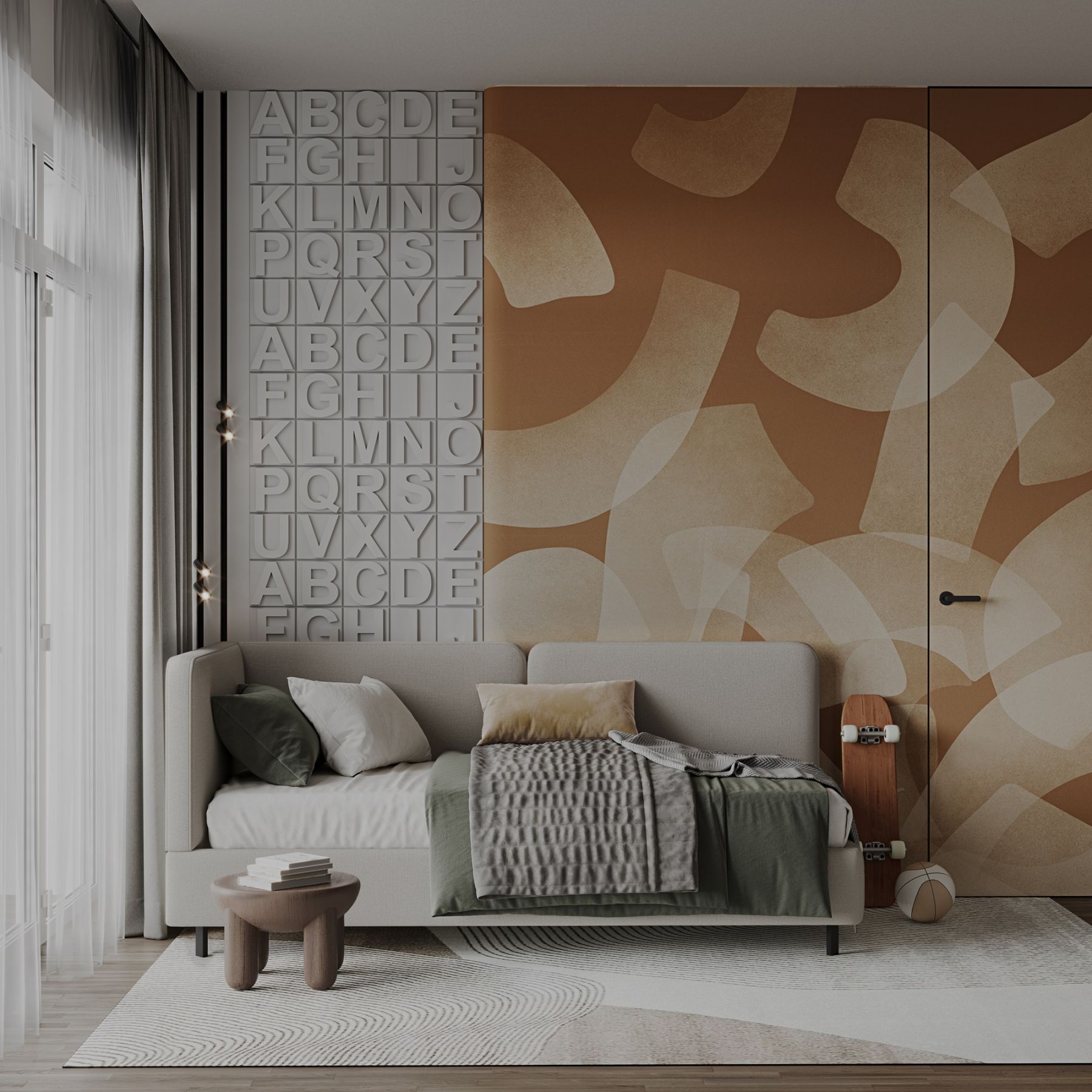
The whole selection of shapes, colours and sizes is in the upholstered children's beds category. When choosing, consider the child's age and temperament, whether the cover and guard rail come off, and the length of the mattress, so the bed lasts more than a year.
Frequently asked questions
From what age can a child have an upholstered bed?
Formally — after moving on from the cot, like any "grown-up" bed. But in practice it's more suitable closer to school age and with teenagers: wood copes better with the early years of spills. For a younger child, a removable cover and a guard rail come to the rescue.
Is an upholstered bed practical — how do you clean it?
It's practical if the cover comes off and can be washed. Look at the care label (machine or damp cleaning), not just at whether there's a zip. Stain-resistant fabric and a darker tone make life noticeably easier.
Does the guard rail come off an upholstered bed?
On many models, yes. You take it off in stages: first from one side, then completely — once the child sleeps confidently and doesn't fall out. That way one bed serves from a younger age right through to school.
Which is better for a child — an upholstered or a wooden bed?
It depends on age. For an active pre-schooler wood is more practical (easier upkeep, a longer lifespan). For a calmer school age and teenagers the soft bed wins — comfort, quiet and aesthetics.


