TV dressers


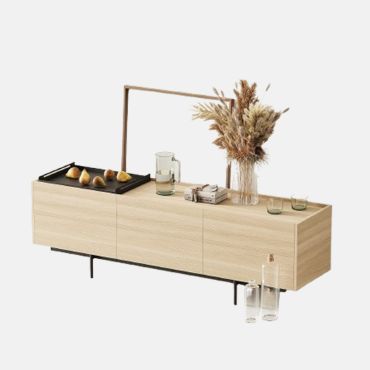
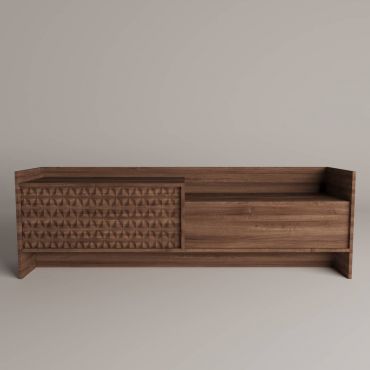
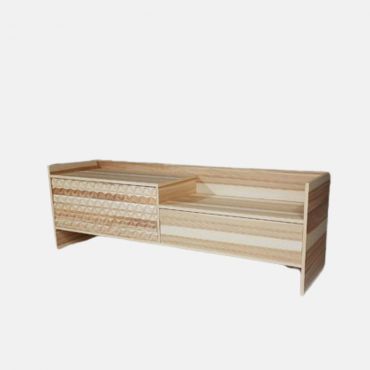
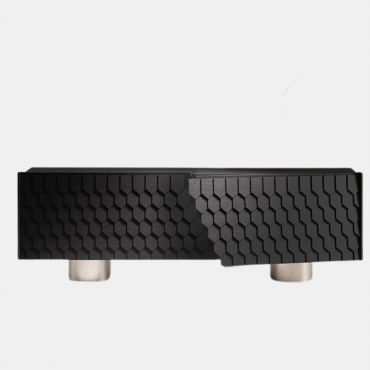



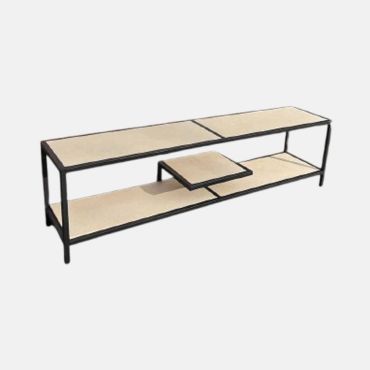
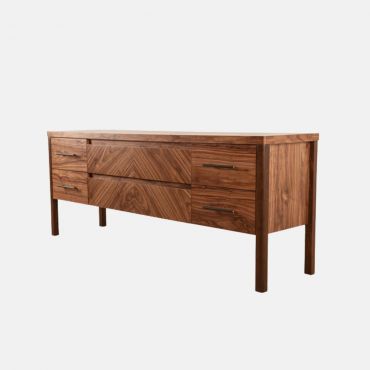


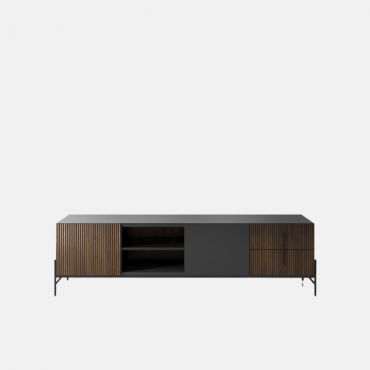
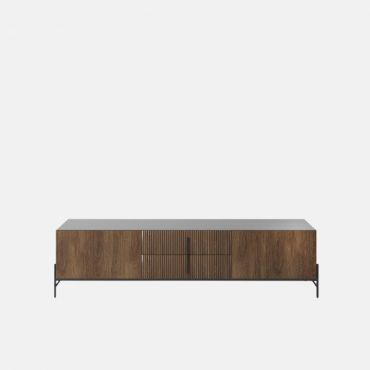

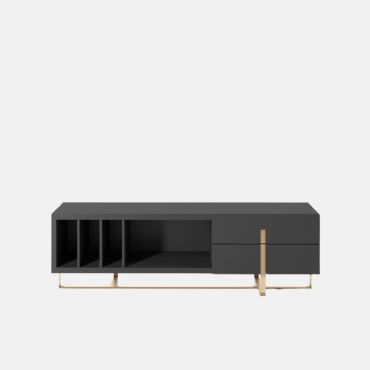
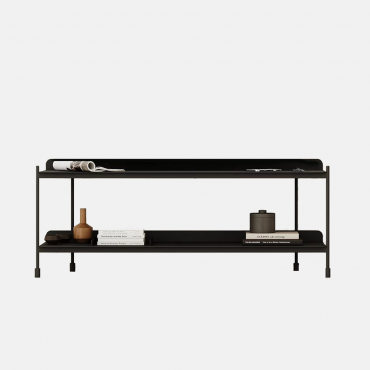
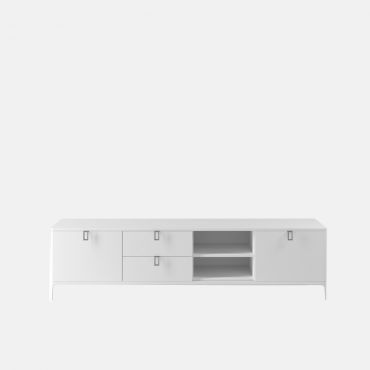
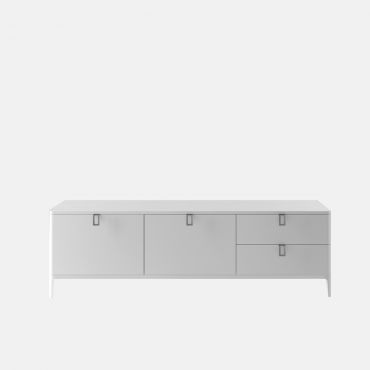
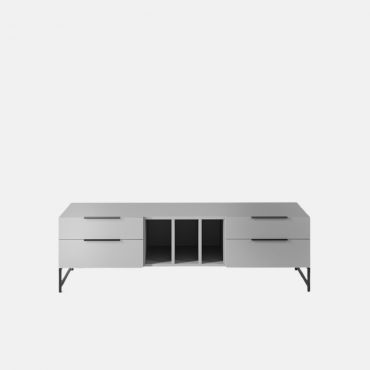
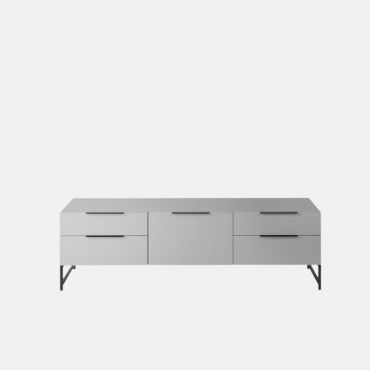
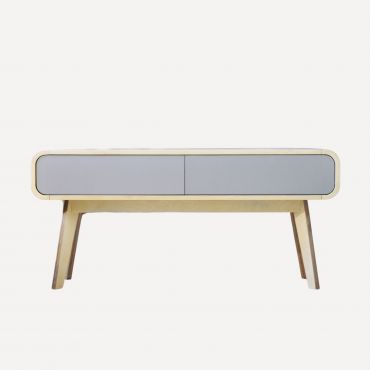

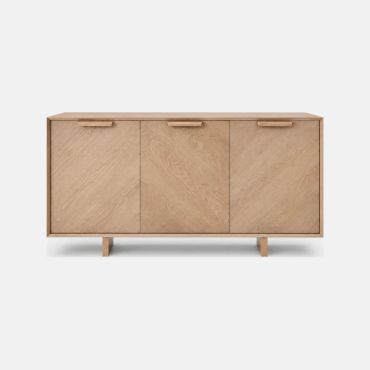
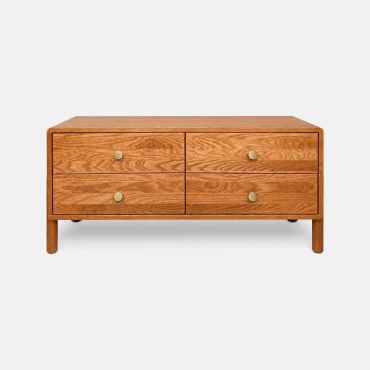

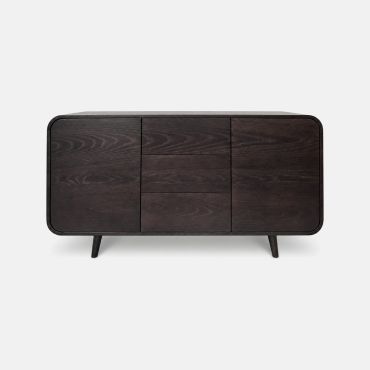
TV DRESSERS: HOW TO CHOOSE, PLACE AND AVOID MISTAKES
A TV dresser is not just a stand for electronics. It is the point around which the entire living room or bedroom is organized. The wrong choice can disrupt even a well-planned interior. The right one becomes its anchor and one of the most noticeable furniture decisions in the room.
At MAIIMO, we studied how people choose, use and make mistakes when buying TV dressers. We understand this not only from the position of a seller, but also from the position of a manufacturer: we design furniture ourselves, know which mistakes are built into the construction stage and which solutions last for years. Answers about sizes, materials, styles and typical mistakes — everything that truly matters before buying — are gathered in this guide.
What exactly does a quality TV dresser change in a room? First, it sets the viewing height, which means comfort. Second, it defines the storage capacity of the entire zone. Third, it shapes the visual weight and tone of the whole wall where the TV hangs or stands. Fourth, the dresser is the furniture piece you see immediately when entering the room. That is why it deserves attention, not a “something will do” approach.
So this article is not just a buying guide. It is an attempt to help you see a TV dresser not as a purely functional object, but as a furniture element that deserves the same level of thought as a sofa or table. Now, concretely and to the point.
WHAT IS A TV DRESSER AND HOW IS IT DIFFERENT FROM A TV STAND?
There is a lot of terminology confusion in the market. TV dresser stand, TV cabinet dresser, TV stand, media box, media cabinet — all these names are often used as synonyms. But there are differences, and they matter when choosing.
A TV dresser is a storage piece 50 to 90 cm high with several sections: drawers, open shelves, doors or a combination of them. It is higher and more substantial than a classic TV stand. This height allows the TV to be positioned at a level that is comfortable for seated viewing.
A TV stand is lower, usually 30–50 cm, often without drawers, and mostly works as a base for the screen. The difference is important: a TV dresser gives much more storage, but occupies more vertical space in the room. If the space is small and the TV is mounted on a wall bracket, a stand may be enough. If storage matters, choose a dresser.
A TV dresser cabinet is a hybrid: medium height, around 45–65 cm, but with full storage sections. This is the most popular format for contemporary living rooms because it balances capacity and viewing ergonomics.
A key reference point: when you are sitting on the sofa, the TV should be at eye level or slightly lower. The standard height of the screen center is 100–120 cm from the floor. This should be considered when choosing furniture height. Many people ignore this rule and then end up looking upward, which strains the neck during long viewing.
TYPES AND CONSTRUCTIONS OF TV DRESSERS
FLOOR-STANDING DRESSERS
The most common option. They stand on legs or directly on the base and rest on the floor. There is a wide choice of materials, configurations and sizes. They suit most interiors.
The main advantages are stability and storage capacity. The downside is that they take up more space and make cleaning slightly more difficult. Floor-standing models on legs partially solve this issue: there is space between the floor and the base for a robot vacuum or mop. From an ergonomic point of view, floor-standing dressers offer the most flexibility in height and configuration.
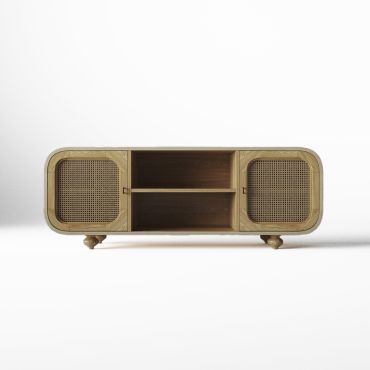
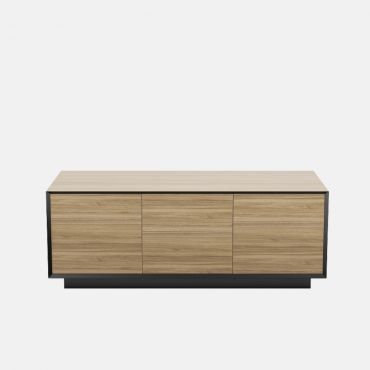
Another advantage is the wide variety of layouts. From a minimalist narrow piece with two doors to a wide three-module dresser with drawers, open shelves and closed compartments. Each configuration works for a different amount of storage and a different room aesthetic.
WALL-MOUNTED DRESSERS
These are fixed to the wall with metal brackets or hidden rails. Visually, they “float” in the air — an effect that lightens the space and makes the room feel larger.
This is a popular choice for small rooms and minimalist interiors. The main requirement is proper installation into a load-bearing wall: a wall-mounted dresser with electronics and decor can weigh 40–80 kg. The advantage is that cleaning underneath is as easy as it gets. Wall-mounted models also allow you to set the exact installation height regardless of floor conditions.
Another argument for the floating format is the visible floor. It gives the room a wider, more open feeling. If the flooring has a beautiful texture or pattern, a wall-mounted dresser keeps it visible instead of hiding it behind furniture.
CORNER TV DRESSERS
Corner TV dressers are a solution for rooms with unusual layouts or spaces where every square meter needs to work harder. They fit into the corner of the room and allow the TV to be placed at an angle.
From a viewing ergonomics perspective, this format does not always work. If the seating area is directly opposite a wall, not the corner, angled viewing can distort the picture. But for bedrooms, where the TV is often watched while lying down, or for rooms with an atypical seating layout, corner TV dressers can be better than any other format. Their construction often has an asymmetrical shape with several levels, which can become an interesting design accent in itself.
DRESSERS WITH OPEN SHELVES
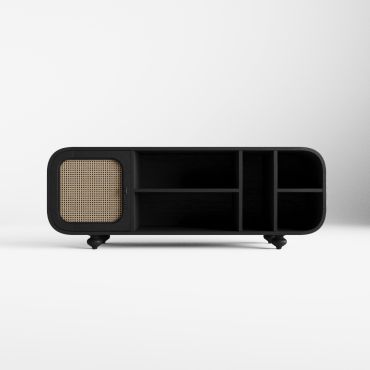
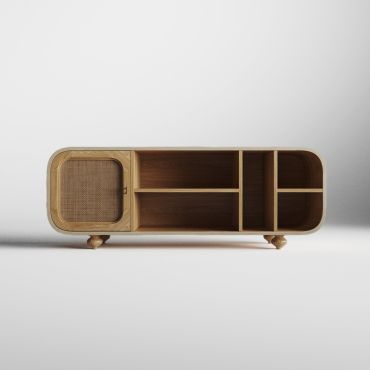
Open shelves instead of doors are a trend that continues to hold its ground. They give easy access to electronics, decor and books, and look lighter than closed constructions. But they require order: open storage does not forgive chaos.
The most practical solution is a combination: open shelves for decor and books, closed drawers or cabinets for “technical” storage such as wires, remotes, game discs and documents. This gives you both the aesthetics of open storage and order that does not need constant maintenance.
HOW TO CHOOSE A TV DRESSER: KEY PARAMETERS
SIZE AND PROPORTIONS
The dresser width should match the TV size or exceed it. General rule: a TV dresser should be wider than the screen or at least equal to it. If the dresser is narrow and the screen is wide, the setup looks unstable even when it is physically secure. The eye reads this imbalance without conscious analysis.
For a 55-inch TV, where the screen width is about 122–125 cm, the minimum recommended dresser width is 140–150 cm. For a 65-inch TV, where the width is about 145–148 cm, choose from 160 cm. If you plan to place decor on both sides, add extra width.
The standard depth of a dresser is 35–45 cm. Less than 35 cm is too shallow for most technical equipment. More than 45 cm can project too far into the room.
Height determines the screen level. With a standard sofa seat height of 42–45 cm and a 55-inch TV with a screen height of about 70 cm, the optimal dresser height is 40–55 cm so the screen center falls around 105–120 cm from the floor.
MATERIALS
Solid oak or ash is the most durable option. It ages well and gains color depth over time. Natural wood veneer is a compromise between price and aesthetics: it looks like solid wood, but is lighter and more accessible. On a quality base, veneer lasts at least 15 years.
MDF with lacquered or matte coating works well for contemporary and minimalist interiors. It is easier to care for and does not react to humidity changes as sharply as solid wood, but it is less resistant to mechanical damage.
HPL, or High Pressure Laminate, is highly resistant to scratches and temperature. It is appearing more often in living rooms. It looks contemporary, cleans easily and does not show fingerprints as much. Metal and glass as accents — glass doors or metal legs — give the piece character and lightness.
COLOR AND FINISH
Wood tones such as walnut, oak, ash and beech are classics that suit most interiors regardless of style. Dark tones — wenge, anthracite, black — are restrained and accent-like. White, beige and sand feel light and airy, especially in smaller rooms.
Matte finishes look more contemporary and hide fingerprints better. Gloss is striking, but scratches and fingerprints are more visible, so it needs more frequent care.
FUNCTIONALITY AND STORAGE
Before buying, define what needs to be stored: wires and cables, technical equipment, receiver, game console, router, remotes, small items, decor, books. Choose the number and type of sections based on the real list of items, not “just in case.” Extra empty drawers simply collect things you do not need.
TV DRESSER IN DIFFERENT INTERIOR STYLES
MINIMALISM
The main requirement is clean form. A TV dresser in a minimalist interior is a straight, low construction without unnecessary details: no carving, profiled fronts or decorative overlays. The form speaks for itself.
Materials: MDF in matte white or gray, oak or walnut veneer without patina. Legs are slim metal or absent completely. Colors are monochrome or close neutral shades. Contrast comes through texture, not color.
SCANDINAVIAN STYLE
Natural materials, warm wood and functionality are the three pillars of the Scandinavian approach. Contemporary TV dressers in this style are made of ash, beech or pine in a light finish, with simple forms and tapered or slightly cylindrical legs.
Decor is minimal, but alive. A few plants, neutral textiles and ceramics — a Scandinavian interior breathes and feels warm even without bright accents.
LOFT
Loft loves contrast. Metal and wood in one piece. Dark shades such as black, anthracite and dark walnut, plus raw texture: an unfinished surface or visible wood grain.
A TV dresser cabinet in a loft interior is substantial, with metal pull handles and open sections for electronics. A concrete wall and dark wood are a pair that needs no explanation. You can add lighting inside the open shelves to enhance the atmosphere.
CONTEMPORARY STYLE
Contemporary style is not the same as minimalism. It has character, but not excess. Contemporary TV dressers combine geometric forms, quality materials and functionality without sacrificing one for another.
This can be walnut veneer with matte lacquer or a white body with metal accents in matte brass or blackened steel. Legs are slim metal, often gold or black. These details make contemporary style recognizable and different from minimalism.
JAPANDI
Japandi is a fusion of Japanese minimalism and Scandinavian functionalism. Natural wood, earthy tones — sand, beige, cream, dark oak — simple geometry and nothing extra.
A Japandi TV dresser is low and wide, often with sliding fronts or handleless push-to-open doors. Wood texture is the best decoration. Nothing more is needed.
MID-CENTURY MODERN
The signature “compass” legs are tapered and angled outward. Warm wood tones: walnut, teak, cherry. A light appearance despite good storage capacity — thanks to the legs, the dresser lifts above the floor and does not weigh down the room.
A TV dresser stand in mid-century style is often wider than it is tall. It may have fiberglass or metal inserts in the fronts. Decor includes ceramics, vintage posters and plants in simple pots. A style where every detail plays a role.
ECLECTIC STYLE
Eclectic style means freedom with a demand for balance. A TV dresser cabinet in an eclectic interior can be bold — cobalt blue, emerald green, terracotta — and it will work if the color accent is supported elsewhere in the room: textiles, decor, art.
Materials can vary, but quality matters. An unusual shape is acceptable if it does not conflict with the scale of the room and if at least one repeating element ties everything together.
SOFT CONTEMPORARY INTERIOR
Soft contemporary means warmth, texture, a neutral palette and no sharp corners. Here, a TV dresser has rounded or slightly softened forms, warm wood or melamine in mocha, beige or terracotta.
The feeling is comfort, not design for the sake of design. It pairs well with fabric sofas, linen textiles and woven baskets. A style you want to stay in.
SMALL AND LARGE SPACES: HOW TO ADAPT A TV DRESSER TO ROOM SIZE
In small rooms up to 15 sq.m, a wall-mounted dresser or a model on slim legs helps preserve the feeling of open space. Legs are your ally: they lift the piece above the floor and create air between the floor and the furniture base. Avoid dark solid colors — they absorb space. Light neutrals or medium-saturation wood tones work better.
In large rooms from 25 sq.m, a compact dresser may look lost. Here it makes sense to consider a complete solution: a dresser plus open shelves on the sides or wall-mounted sections above it. This gives storage, visual scale and a unified wall composition. If the living room is long and narrow, a wide horizontal dresser will emphasize that rhythm and make the space feel more proportionate.
WHAT TO CHECK BEFORE BUYING
Cable management. Wires between the TV, electronics and outlet are not a small thing. Make sure the dresser has cable holes or an open back panel. A mess of wires at the back can ruin even an ideal interior.
Surface load capacity. If you plan to place a TV, soundbar, receiver and decor on the dresser, check the maximum load. A good-quality piece should handle at least 50 kg on the surface.
Ventilation for electronics. If a receiver or media player sits in a closed compartment, air circulation is necessary. Some manufacturers use perforated back panels or ventilation slots. Overheating equipment is a common problem and easy to avoid.
Hardware quality. Smooth drawer movement and soft-closing doors are signs of a piece that will last. Cheap hardware breaks within a year or two, and replacing it often costs more than the initial price difference between a cheap and quality dresser.
Structural stability. If the dresser stands on the floor without wall fixation, check whether it wobbles. In homes with children or pets, wall anchoring is essential.
COMMON BUYER MISTAKES
Choosing a construction that is too low. The result: the TV sits almost at floor level, and your neck hurts after every viewing. Always calculate: dresser height plus half the TV height equals the screen center level you will get.
Forgetting depth. If the dresser is too shallow, technical equipment will stick out or not fit into the compartment at all. A minimum depth of 35 cm is a safe choice for most equipment setups.
Ignoring cable management. People buy the piece first and only then wonder where to hide the wires. It is better to clarify this before purchase: choose a model with planned openings or buy a cable channel immediately.
Choosing “what looks nice” instead of “what fits.” To buy a TV dresser is not just to find a beautiful object. It is to find the one that works with the floor, walls, sofa and overall room concept. Rushing is the most common reason for disappointment.
Ignoring room scale. A massive dark dresser in a small living room becomes a wall that presses down. A light compact piece in a large room becomes a lost point without weight. Furniture scale must match the scale of the space.
Neglecting electronics ventilation. A receiver or game console in a tightly closed compartment without ventilation overheats and fails faster. If electronics are behind doors, keep them open during use or choose a dresser with a perforated back panel.
CARE AND USE
Solid wood and veneer: wipe with a soft damp cloth and avoid aggressive cleaners. Once a year, polish or refresh with wax if the finish is oil-wax. Avoid direct sunlight: wood fades unevenly.
MDF and laminate: wipe with a damp cloth and neutral cleaner. Do not place hot objects directly on the surface without a mat — laminate may bubble.
Metal: soft cloth, minimal moisture. If the surface has patina, do not try to remove it: it may be part of the manufacturer’s design.
Every 6–12 months, check the fittings of doors, legs and drawers. Tighten screws, lubricate hinges — these two minutes extend the life of the furniture by years.
DESIGNER AND CUSTOM SOLUTIONS
When do standard sizes not work? If the room has a niche, projection or unusual proportions, custom production becomes logic, not luxury. The same applies if you need a specific finish color or material that is not available in the standard range.
At MAIIMO, we make custom furniture: we can change width, height, depth, finish color and leg type. You can take a ready-made series model and adapt it to your space without designing from zero.
Another scenario is a complete TV zone: dresser plus wall shelves plus decorative panels or wooden slats. This turns an ordinary wall with a TV into a considered interior element with character and logic. Designer solutions are not justified only in expensive projects. Often one precise detail — the right material or non-standard width — turns an ordinary piece into part of an authored space.
THE PRACTICAL VALUE OF A QUALITY TV DRESSER
Quality TV dressers are not expenses, but long-term investments. A solid wood or veneered piece will last 15–20 years without losing its aesthetic value. Lacquered MDF can serve 10–15 years with proper care.
A cheap solution usually costs twice: once at purchase and again when replacing it after 3–5 years, when the surface peels, drawers tilt and hardware fails. Plus the time and nerves spent looking for a replacement.
A dresser is also a central furniture element in a living room or bedroom. The clarity of the entire space depends on it. Investing in a quality piece changes the impression of the whole room without renovation and without replacing other furniture.
The practical advantage is also that a quality dresser grows with you in the interior. Repaint the walls, replace the sofa, update textiles — and the same walnut veneer dresser will look new again. A neutral, quality base lets you refresh the interior without replacing all the furniture.
WHY BUY TV DRESSERS AT MAIIMO
We do not sell “everything.” We curate the assortment. MAIIMO presents its own collections developed at our production facility in Brovary, as well as pieces from more than twenty selected Ukrainian partner brands and regional workshops that are not found in mass-market chains.
If you need to buy a TV dresser in a specific size, color or material, we can make it to order without unnecessary bureaucracy. We change width, height, finish and leg type. On the website, you will find real photos of pieces in interiors and free 3D models for those planning a space independently or together with a designer.
We help choose a model for your space and coordinate it with flooring, walls and other furniture. If you are looking for TV dressers in Lviv or any other city in Ukraine, we organize delivery nationwide. We also deliver worldwide. If you are planning an interior, write to us: we will advise even if you eventually choose someone else.
We also help with full styling: if you do not know what to place next to the dresser, how to choose shelves or which textiles match veneer, just write. We will suggest. No pressure, no sales scripts. Just advice from people who have been working with furniture for more than 26 years.
10 FAQ
WHAT IS THE OPTIMAL HEIGHT FOR A TV DRESSER?
The optimal height depends on your sofa seat height and TV diagonal. General rule: the center of the screen should be at eye level when seated, usually 100–120 cm from the floor. With a standard sofa seat height of 42–45 cm and a 55-inch TV with a screen height of about 70 cm, the optimal dresser height is 40–55 cm.
If the dresser is higher, the TV will sit too high and the neck will get tired during long viewing. If it is lower, you will be looking almost at the floor. Before buying, measure your sofa height and calculate: dresser height plus half the TV height equals the screen center level. This simple arithmetic prevents disappointment after delivery.
WHAT DRESSER WIDTH IS NEEDED FOR A 55-INCH OR 65-INCH TV?
For a 55-inch TV, where the screen width is about 122–125 cm, the recommended minimum dresser width is 140–150 cm. For a 65-inch TV, where the width is about 145–148 cm, choose from 160 cm. This gives visual stability: the TV does not look wider than the base it stands on or is placed above.
If you plan to add a soundbar or decor on both sides, choose extra width. A soundbar usually takes 70–120 cm and looks better between the screen and the dresser edges rather than extending beyond the piece. Decorative plants or ceramics on the sides also need space, so include that in your choice.
WHAT IS THE DIFFERENCE BETWEEN A TV STAND AND A TV DRESSER?
A TV stand is lower, usually 30–50 cm, often without drawers, and mostly works as a base. A TV dresser is higher, 50–90 cm, and more spacious: several sections with drawers, doors or open shelves. The difference matters for storage: a TV dresser cabinet holds significantly more everyday items.
In practice, the most popular format is hybrid: medium height, 45–65 cm, plus full storage sections. It balances capacity and the correct viewing height. If storage matters, choose a dresser. If you want a minimalist base and the TV is mounted on a bracket, a stand is enough.
When choosing between them, start with your real storage needs. If you have a receiver, game console, remotes, discs and decor, a simple stand will not be enough. If you only have a smart TV and remote, almost any format can work.
CAN I PLACE A TV ON A DRESSER AND ALSO MOUNT IT ON THE WALL?
Yes, and this is a common convenient combination. The TV is fixed to the wall bracket, while the dresser stands below and functions as storage and a decorative element. In this case, dresser height no longer determines screen height — the bracket does, which gives more freedom in choosing furniture height.
With this solution, the bracket must be fixed to a load-bearing wall, not drywall without proper anchors. Also make sure wires between the TV and equipment inside the dresser can be hidden through a wall channel or decorative cable cover. A small detail, but it has a major effect on the final look of the space.
WHICH MATERIALS ARE MOST DURABLE FOR A TV DRESSER?
Solid oak or ash is the most durable option: 20–30 years with normal care. Natural wood veneer on a quality base lasts 15–20 years. MDF in lacquer or matte finish lasts 10–15 years depending on use intensity and storage conditions.
HPL is resistant to scratches and temperature, so it works well for families with children or active use. The least durable option is low-quality particleboard without proper coating: it swells from moisture and crumbles at corners within 3–7 years. Always ask what the body base is made from, not only the front. The base determines the real service life of the piece.
A simple quality check: touch the inner edge of a drawer or compartment. If it feels rough and porous, it is untreated particleboard. If the surface is smooth and dense, it is MDF or solid wood. Quality is visible not only to the eye, but also to the hand.
WHERE CAN I BUY A QUALITY TV DRESSER IN UKRAINE?
Quality TV dressers in Ukraine are available from furniture chains and specialized Ukrainian design platforms. The key difference is that platforms with their own production or curated selection offer pieces from trusted Ukrainian brands, not mass import.
Before buying, check the body and front materials, hardware quality, cable management and warranty conditions. If you are looking for TV dressers in Lviv, Kyiv, Kharkiv or another city, most quality manufacturers and platforms offer delivery across Ukraine, so geography is not a limitation.
HOW DO I CHOOSE A TV DRESSER FOR A SMALL ROOM?
For small rooms up to 15 sq.m, wall-mounted models or TV dressers on slim legs are better: they do not “ground” the space and create openness. Avoid dark solid colors because they absorb space. White, beige, light ash or Scandinavian wood tones work much better.
Do not try to fit the maximum width. In a small room, a narrower dresser with some free space on the sides is better than furniture wall to wall. If storage is critical, consider wall-mounted sections above the dresser instead of expanding it in width. Vertical storage uses less floor space and visually stretches the room upward.
Also, avoid mixing several furniture styles in a small room. It visually breaks the space. One clear color, one wood type, one style — and even a small room looks coherent and spacious.
WHICH TV DRESSER COLORS ARE MOST RELEVANT NOW?
Among contemporary TV dressers, warm wood tones remain consistently popular: walnut, oak in honey or smoky tones, ash. They suit most styles and do not “go out of fashion,” unlike bright colors tied to a specific season.
Among accent colors, matte anthracite, deep green, especially combined with wood veneer, and terracotta tones are current. White and black remain classics for minimalist spaces. If in doubt, choose neutral wood: it is always appropriate and easily fits future interior updates without replacing all furniture.
IS IT WORTH ORDERING A CUSTOM TV DRESSER?
Custom production is justified in several situations: non-standard room size, niche, projection, sloped ceiling, a need for a specific color or material, or the desire to combine the dresser with wall shelves into one system sized precisely for a specific wall.
The cost of a custom piece is usually higher, but not dramatically so: for simple forms and standard materials, the difference from a serial model may be 20–40%. In return, you get the exact size and the exact color or material you were looking for. If the piece is intended for long-term use and should become part of a considered interior, the investment is fully justified.
Start simply: define the exact dimensions of the niche or wall, decide on color and material, and contact the manufacturer with that information. Most questions are solved in one consultation.
HOW CAN I ORGANIZE CABLES AND WIRES NEATLY IN THE TV ZONE?
The best way is to plan it in advance: choose a dresser with a hole in the back panel or an open back, and place the outlet behind the furniture during renovation or layout planning. If the outlet already exists behind the dresser, wires go backward and stay fully hidden.
If the outlet is on the side or wires are visible, consider decorative cable channels — plastic or wood, painted to match the wall or dresser — or routing the wires inside the wall. Wireless connection such as Chromecast, Apple TV or Smart TV without a set-top box solves the video signal issue, but not power: the outlet remains necessary.
Main rule: wires should be planned before buying the furniture, not after. If it is already too late, cable management can still be solved in 30 minutes and for a modest cost. No renovation, no specialist. Just the decision to do it.