Solid wood tables
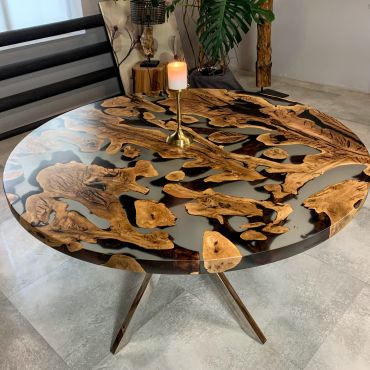
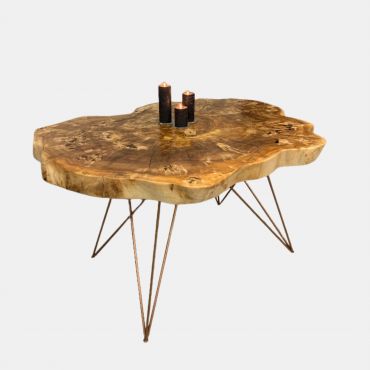
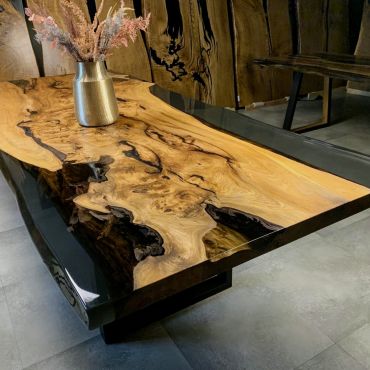
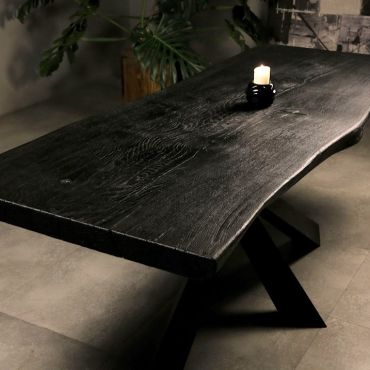

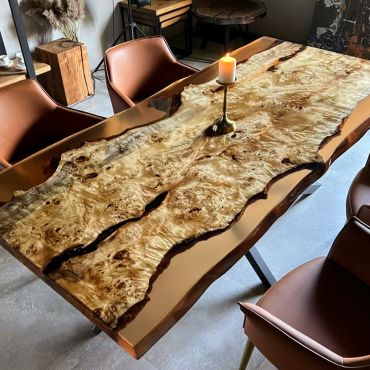
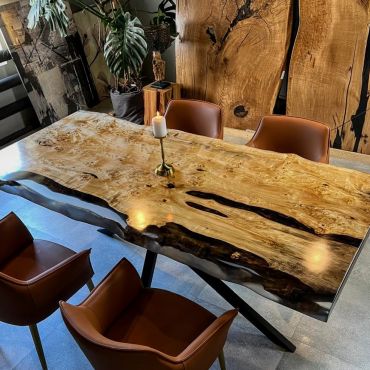
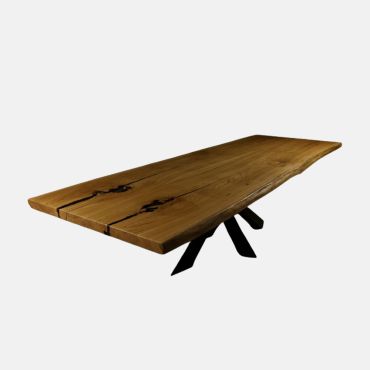
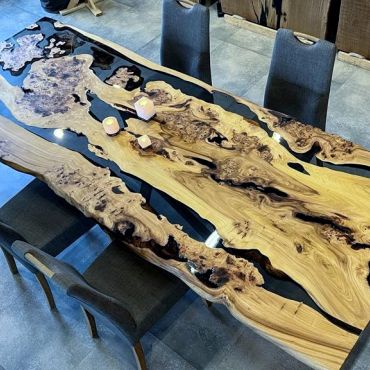
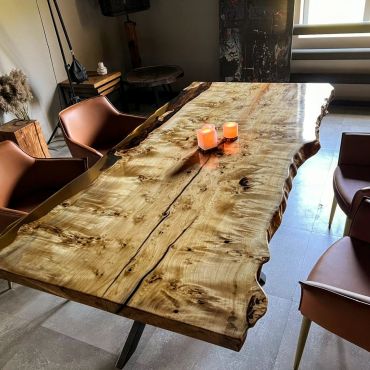
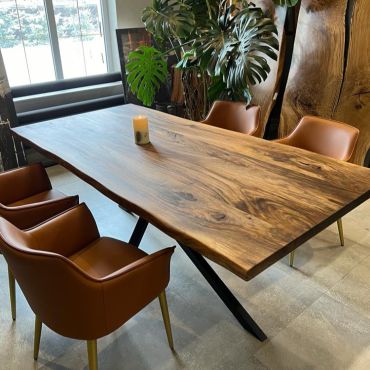
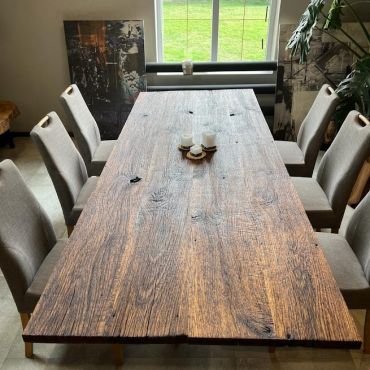
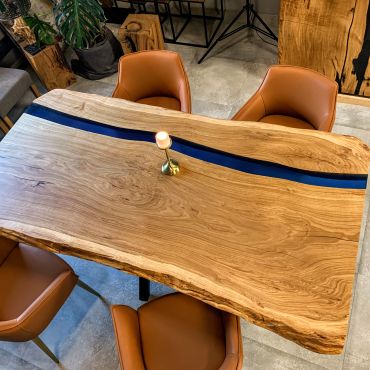
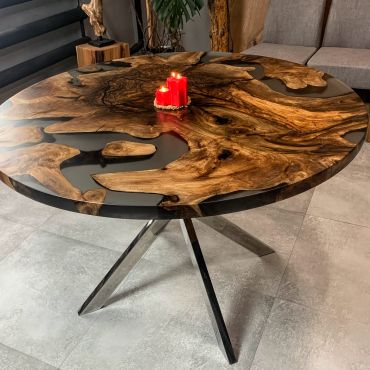
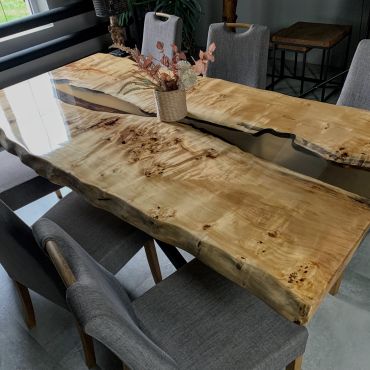
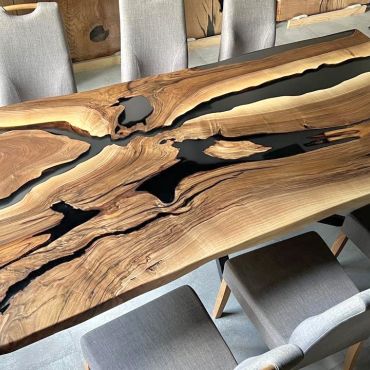
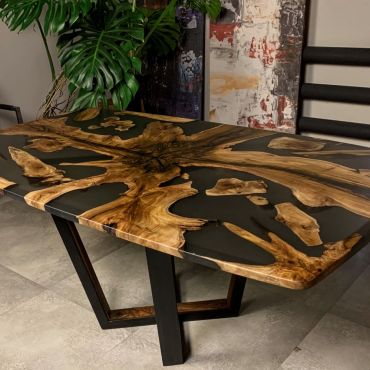
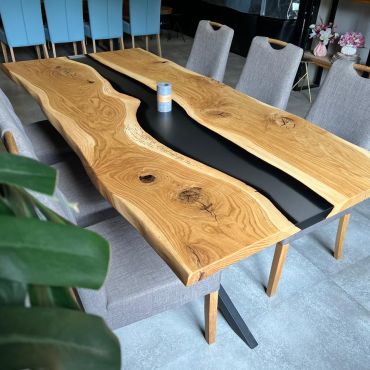
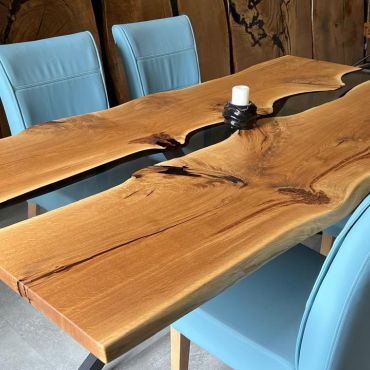
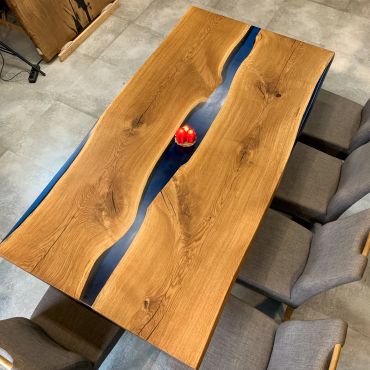
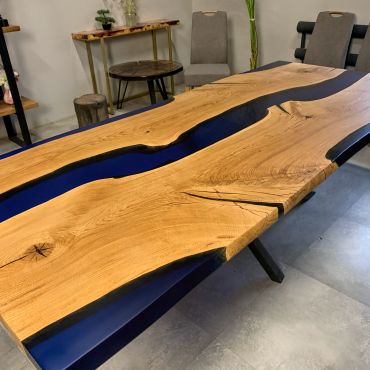
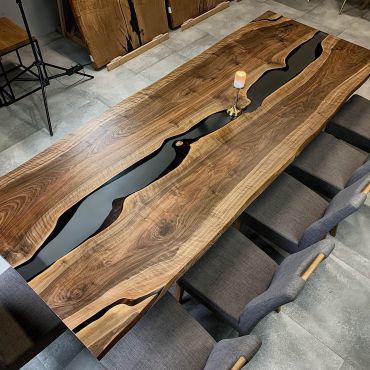
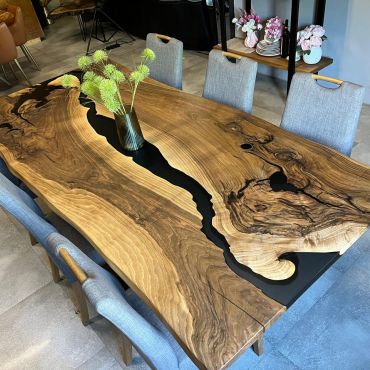
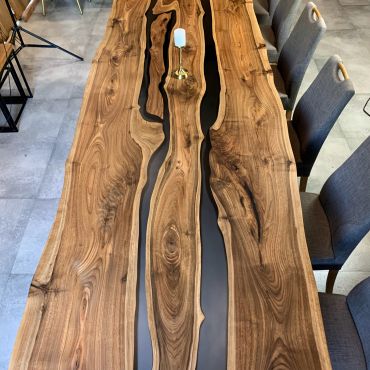
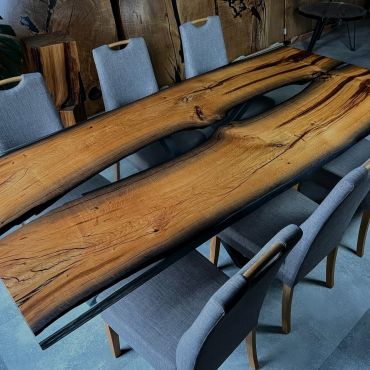
Epoxy Resin Tables: a Design Statement in Wood and Light
People choose epoxy resin tables when they want more than a functional piece of furniture — they want a striking centrepiece for their interior. This kind of table combines the natural texture of wood, the depth of clear or coloured resin, and the feeling of something made by hand rather than on an assembly line. If you're planning to buy an epoxy resin table for a kitchen, dining room, living room or study, it's worth looking beyond the dramatic surface pattern. The species of wood, the thickness of the slab, the quality of the pour, the shape, size, base, care requirements and how comfortable the table will be in daily life all matter equally.
At MAIIMO, we think of these tables as a full part of the interior composition. The table has to work with the space, the light, the chairs, the pendant lights, the textiles and the overall atmosphere of the home. The resin here isn't just a decorative effect — it highlights the wood, preserves the natural edge, can create a "river" between two slab sections, or add a deeper, almost sculptural accent to the interior.
When an epoxy resin table makes sense
An epoxy resin table fits an interior that needs individuality. In a minimalist space it can become the main expressive object. In a modern kitchen or dining room it can bridge the naturalness of wood with clean geometry. In a living room it supports the idea of bespoke furniture where every piece has character. In a study or meeting area it creates a sense of substance without excessive formality.
These tables work particularly well in spaces with natural materials: wood, stone, metal, linen, wool, ceramics, soft diffused light. The resin adds a contemporary edge while the wood stops the piece from feeling cold. That's why tables combining wood and epoxy are so often chosen for interiors that want a balance between the organic and the modern.
There's another important point: almost every such table is unique. Even when a model has a fixed shape, the grain of the wood, the texture of the slab, the tone of the resin and the character of the pour never repeat exactly. This is good for anyone who doesn't want a piece "like everyone else's", but also doesn't want something overly decorative.
How an epoxy resin table differs from a plain wooden table
An ordinary wooden table is usually built around a flat top, a species, a shape and a construction. An epoxy resin table has an additional artistic layer: the resin works as a transparent or coloured plane that interacts with the wood. It can fill natural cracks, highlight a live edge, create contrast between two sections of a slab or produce the "river table" effect.
This changes how the piece is perceived. The table becomes not only a surface for daily use, but also a visual centre of the room. It draws the eye — especially with well-chosen lighting. A pendant light above such a top can bring out the depth of the resin, the texture of the wood and the three-dimensionality of the pattern.
There are practical differences too. A properly made epoxy pour, once fully cured, is strong, stable and safe for furniture use. At the same time the table needs attentive care: don't place very hot cookware directly on the surface without a pad, don't cut without a board, and avoid harsh chemicals. It's not demanding maintenance, but it should be regular and gentle.
Wood, slab and resin: what makes a quality table
The quality of an epoxy resin table starts not with the resin but with the wood. The wood sets the character: warm or restrained, contrasting or calm, graphic or soft. The resin simply reveals that character and adds depth.
Tables like these often use slabs — large longitudinal cross-sections of wood that preserve the natural pattern, live edge, irregularities, cracks and knots. What might be considered a defect in standard production becomes part of the composition in a designer table. A crack can become a transparent resin line, an uneven edge the main feature, and a complex grain pattern the visual foundation of the whole piece.
Oak, ash, walnut and other species
Oak is one of the most popular choices for these tables. It's strong, expressive, holds its shape well and has a recognisable texture. An oak epoxy table looks substantial without necessarily feeling heavy — it all depends on the shape, the resin colour and the base.
Ash has a lighter, often more graphic grain. It suits interiors that need airiness: a modern kitchen, a bright dining room, a space in a Scandinavian or minimalist mood. With clear or light resin, ash looks delicate; with dark resin it becomes contrastingly architectural.
Walnut gives a deeper, warmer tone. It works well in interiors with dark metal, leather, ceramics and rich textiles. A walnut epoxy table can feel very intimate and premium, especially when the resin doesn't compete with the wood but enhances its natural shade.
The choice of species depends on more than taste. Consider where the table will stand, how often it will be used, what chairs and lighting will be nearby, and whether the piece needs to handle years of active daily use or function more as an accent.
Clear, coloured or river epoxy
Clear resin is the quietest option. It's the right choice when the primary role should remain with the wood. A clear pour reveals the depth of cracks, makes the surface coherent, and doesn't add extra colour. This works well in interiors that already have active textures or colours.
Coloured resin is a bolder decision. Blue, black, graphite, amber, green or milky white can support the room's palette or act as a contrast. The key is not overdoing it. The resin colour should look considered, not accidental. We recommend choosing the shade alongside samples of the wood, floor, chairs, lights and textiles rather than in isolation.
A river table has resin running between two sections of wood like a river — this is exactly what people are searching for when they look for an "epoxy river table." It's a striking format, but it demands the right proportions. If the "river" is too wide or the colour too bold, the table quickly starts to dominate the room. When the balance is right, the piece feels alive, deep and genuinely individual.
How to choose an epoxy resin table for a room
The selection starts not with a photograph but with a question: what role does the table need to play in the room? Daily breakfasts call for one logic. Large dinner parties for another. A living room for a third. A study or meeting area for yet another. Epoxy resin tables can be very different from each other, so it's important not to buy just a "beautiful effect" but to find the right piece for a real scenario.
Kitchen epoxy table
A kitchen epoxy table needs to be not only beautiful but practical. In the kitchen the table is used daily: breakfasts, quick coffees, laptop work, conversations, children's homework, dinners for two or family gatherings. Size, stability, easy maintenance, comfortable height and the right shape all matter.
For a compact kitchen, softer shapes work better: round, oval or rectangular with rounded corners. They fit movement more naturally, don't create a sense of obstacle and look less massive. If the kitchen is spacious or open-plan with the living room, a larger table with a slab and a strong resin line is worth considering.
Resin colour for a kitchen is better chosen conservatively. Clear, smoky, graphite, milky or warm amber tends to age better in an interior than overly vivid colours. That said, if the kitchen is minimalist and calm, a coloured resin can be a beautiful accent.
Dining table for a dining room or living room
In a dining room or living room the table often becomes the compositional centrepiece. What matters is not only how many people will sit at it, but how it will read in the space. A large designer epoxy table works well when there's enough air around it. Placing a very active table in a tight area can make it feel heavy.
For a dining room for four, compact rectangular or round formats work well. For six to eight people, longer rectangular or oval tops are better. An oval has a useful advantage: it looks softer than a rectangle but keeps the same capacity. A rectangle is crisper and more architectural — suited to long narrow rooms.
In a living room it's important to consider how the table connects with the chairs, the light fixture and the rug. A resin table often has a complex pattern, so chairs are best chosen so they don't compete with it. If the top is active, keep the chairs quieter. If the resin is clear and the wood restrained, a more expressive chair shape can be added.
Coffee table and accent table
An epoxy coffee table is a good option for those who want to add character to a living room without making a large dining table the central object. In a coffee table format, more experimentation is possible: an unusual shape, a more expressive slab, darker resin, asymmetry.
Even here, balance matters. A coffee table sits alongside the sofa, armchairs, rug and decor, and is constantly in the field of view. If it's too active, the space can feel overloaded. We recommend evaluating a coffee table not against a white catalogue background but in an imagined interior: what colours are nearby, is there wood in other pieces, what rug goes underneath, what light falls on the surface.
For a small accent table beside an armchair or in a reading corner, epoxy can work beautifully. A small piece allows the material to be showcased without the risk of it taking over the whole room.
Size, shape and base: what affects comfort
Even the most beautiful table won't work if it's uncomfortable to sit at. Before ordering, it's worth thinking about the number of people, the room dimensions, the width of walkways, the type of chairs, seating height and whether the table will be used daily.
For comfortable seating, one person generally needs around 60 cm of edge width. If you often host guests, it's better to allow for extra. If the space is compact, it's important not to eat into the walkways. Even a beautiful large table in a tight kitchen quickly becomes frustrating.
Rectangular, round, oval or custom
A rectangular table is the most versatile. It's easy to place against a wall, in the centre of a dining room, alongside a kitchen island or in a long narrow room. It suits families, large dinners, work and mixed scenarios. In the epoxy format, a rectangular top often shows the long grain of the wood best.
A round table creates a softer atmosphere. It's easier to converse around, has no "head of the table" and works well for smaller groups. But a round table needs enough space around it and is harder to push against a wall.
An oval is a compromise between the capacity of a rectangle and the softness of a circle. It's particularly well suited to living rooms or dining rooms where hard corners want to be avoided. An oval shape pairs well with the flowing line of resin.
A custom shape suits individual projects. When ordering an epoxy resin table on commission, the size, edge, resin line, colour and base can all be adapted to the specific space. But custom shouldn't mean impractical — the table must remain comfortable, not just spectacular.
Metal and wooden bases
The base matters as much as the top. Metal legs add a modern, graphic quality and often work better with heavy slabs. They can be slim and almost invisible or sculptural in their own right. For loft, minimalist and contemporary interiors, metal is often the best choice.
Wooden legs make the table warmer and softer. They work well in natural, Scandinavian, Japanese and tactile interiors. If the top is already very active, a wooden base should be restrained so as not to create visual noise.
It's also worth checking the seating clearance. The base shouldn't interfere with legs, chairs or movement around the table. For large tables, stability is especially important: a slab top with epoxy can be heavy, and the base needs to be built for it.
Caring for an epoxy resin table
Caring for an epoxy resin table isn't complicated, but it requires attention. Wipe the surface with a soft damp cloth — no abrasive pads or harsh cleaning products. For daily maintenance, gentle cleaning and dry wiping is enough.
Don't place very hot cookware directly on the surface without a heat pad. Quality cured resin is strong, but sharp temperature changes are best avoided. Don't cut food directly on the surface either. Scratches may not appear immediately, but heavy daily use without protection will affect the appearance over time.
If the table has a wooden section with an oil or lacquer finish, care depends on the finish type. Oil surfaces may need periodic refreshing; lacquered ones need more careful handling around scratches. Before buying, it's worth checking exactly what finish the table has and how to maintain it.
Cured resin is safe for furniture use. It should not release harmful substances in a finished piece if the materials were chosen correctly and the process followed properly. This is exactly why it matters to order such furniture from makers who understand not just the decorative effect but the full technology of working with wood and resin.
Why buy epoxy resin tables at MAIIMO
At MAIIMO you can buy epoxy resin tables for interiors where what matters is not only form and material, but the feeling of a bespoke piece. We work with Ukrainian makers, local workshops, our own collections and individual commissions. For us, a table isn't a standalone image in a catalogue — it's part of a space where people live, gather, work, dine and spend time together.
We help look at the choice more broadly: what size is needed, what shape will be comfortable, what wood tone won't conflict with the floor, whether the resin should be clear or whether a deeper colour would work better, what chairs and lighting will support the table. This is especially important for epoxy tables, because they easily become the central element of a room.
If you need an epoxy resin table made not "roughly like the photo" but for a specific interior, it's worth considering individual parameters — species, size, shape, resin colour, edge character, base type. This approach means getting a piece that looks natural in your home, not just striking in a render.
MAIIMO is also a useful starting point for coordinated selection. Alongside the table you can choose chairs, lighting above the dining area, decor, textiles and adjacent furniture. When all elements are aligned, the interior looks not like a random collection of beautiful things but a considered, finished whole.
For those looking for more classic solutions without epoxy, browse the full catalogue of dining tables in wood, HPL and metal.
FAQ
How do I choose an epoxy resin table for a kitchen or living room?
To choose an epoxy resin table for a kitchen or living room, start with the scenario: daily breakfasts, family dinners, hosting guests, working from home or a decorative accent. For a kitchen, prioritise practicality, size and easy care. For a living room, focus on proportion, how the table connects with the chairs, pendant light and overall style. If the space is small, a compact shape and a restrained resin colour are usually the better choice.
How much does an epoxy resin table cost?
The price of epoxy resin tables depends on the species of wood, the size of the slab, the complexity of the pour, the type of resin, the base, the finish and any custom parameters. A large table in solid wood with a complex river pour and a metal base will cost more than a compact accent table. To get a sense of budget, it's best to start from the size needed, the room and the desired effect.
How does an epoxy resin table differ from a standard wooden table?
An epoxy resin table combines natural wood with a resin pour that can highlight cracks, a live edge, or create the "river" effect. A standard wooden table relies more on shape, species and finish. An epoxy table has an additional artistic layer — it reads as more individual and often becomes the focal point of the room.
What wood is used in epoxy resin tables?
Epoxy resin tables are often made with oak, ash, walnut and other species with expressive grain. Oak gives strength and a distinctive pattern, ash looks lighter and more graphic, walnut adds depth and warmth. The choice depends on the interior style, the desired colour, the size of the table and how active the texture should be.
Can I order an epoxy resin table in custom dimensions?
Yes — epoxy resin tables made to order can be adapted to a specific space: different length, width, shape, resin colour, wood species, base type and edge character. A custom order is especially worth considering when the table is meant to be the centrepiece of a kitchen, dining room or living room and needs to fit the room dimensions precisely.
How do I care for an epoxy resin table?
Care is straightforward but requires attention: wipe with a soft cloth, avoid abrasive pads and harsh products, don't place very hot items directly on the surface, and don't cut without a board. For the wooden section, care depends on the finish — oil or lacquer. Proper care keeps the resin looking clear and the wood beautiful.
Is epoxy resin safe for furniture?
Quality epoxy resin is safe for furniture once fully cured. It should not release harmful substances in a finished piece when the correct materials are used and the process is followed properly. This is why it's important to buy from makers and workshops with genuine experience working with wood and resin.
What resin colour should I choose for my interior?
Choose the resin colour alongside the wood, floor, chairs, lighting and the overall palette of the room. Clear resin emphasises the naturalness of the wood, dark adds graphic depth, blue or teal creates the "river" effect, milky white reads softer. For a long-lasting interior, choose a shade that won't feel dated in a season.
What is a river epoxy table?
A river epoxy table has a resin pour running between two sections of wood, resembling a river. This format highlights the natural edge of the slab and creates a striking decorative effect. The river can be clear, blue, graphite, amber or any other colour depending on the interior style.
Where can I buy an epoxy resin table in Ukraine?
You can buy an epoxy resin table in Ukraine at MAIIMO: we offer designer furniture from Ukrainian makers and help with choosing size, materials, resin colour and style. If you need not a standard piece but a solution for a specific space, individual parameters can be discussed — table alongside chairs, lighting and decor.